I read Sean Fitzgibbon’s history of the 1886 Crescent Hotel & Spa *at* the Crescent Hotel (Room 101, to be specific). Sean’s graphic nonfiction book is one of the best of its genre I’ve read in a long, long time: beautifully illustrated, spooky, and informative. I’m learning so much about the history of Eureka Springs and the odd “Doctor” Norman Baker at the colorful hands of this artist. As Sean noted at a recent talk at the Eureka Springs Carnegie Public Library, Baker was “an evil genius.” He was an inventor, entertainer and a nefarious medical quack (his “guaranteed cure for cancer” was a death sentence for his poor, trusting patients at the Crescent back in the 1930s). Sean expertly brings that death to life in these pages
In this hybrid of memoir and anthropology, Russell Rowland drills down deep into the myth of the western masculine stereotype. The Marlboro Man, John Wayne and Kevin Costner do not fare well in these pages--as well they (or their images) shouldn't. Rowland was "raised in the shadow of cowboys" but managed to overcome his hard, stoic upbringing to become the warm and generous writer he is today. Everyone, no matter their sex, should read this book.
In one of his last books published before he died a year ago this month, N. Scott Momaday issues a plea to remember the earth and all that it has given us before we began systematically destroying it, one blade of grass at a time. This is a small book by the Pulitzer-Prize-winning author; with its one-page chapters, you can easily read it in an hour. I took a week to travel through the pages. It's good to take this book slowly, like a short daily prayer, so that you may linger upon good sentences like this: "Those who deny the spirit of the earth, who do not see that the earth is alive and sacred, who poison the earth and inflict wounds upon it have no shame and are without the basic virtues of humanity." Read this and weep.

"Travels with Charley" proved to be the right book at the right time. Since we sold our house six months ago and started traveling full time in our 17-foot-van with our three cats (vs. one poodle), I've been thinking about this book. Mostly what I thought was, it's about damn time I read it. The timing will never be better.
Steinbeck is a delightful and prescient writer of the road (though the veracity of some of his encounters has since been cast into doubt) and he professionally lays his forefingers across the pulse of America despite his reservations about his ability: "I came out on this trip to try and learn something of America. Am I learning anything? If I am, I don’t know what it is."
The lessons are stark: we're schooled in everything of the human nature from kindness to obscene racism. In the end, he reflects, "This monster of a land, this mightiest of nations, this spawn of the future, turns out to be the macrocosm of microcosm me."
Steinbeck is a delightful and prescient writer of the road (though the veracity of some of his encounters has since been cast into doubt) and he professionally lays his forefingers across the pulse of America despite his reservations about his ability: "I came out on this trip to try and learn something of America. Am I learning anything? If I am, I don’t know what it is."
The lessons are stark: we're schooled in everything of the human nature from kindness to obscene racism. In the end, he reflects, "This monster of a land, this mightiest of nations, this spawn of the future, turns out to be the macrocosm of microcosm me."
As with every Agatha Christie mystery, I'm reluctant to talk about plot and character for fear of giving anything away, but trust me when I tell you that even I, the calloused reader of many an Agatha, was shocked--shocked, I tell you!--by the ending. No, reader, I didn't see it coming. And neither will you, unless you're a flipper-aheader. This is one of the better stand-alone Christies (i.e., without Poirot, Miss Marple, or Tommy & Tuppence) and the narrator, Charles, is a likeable enough character to go sleuthing with. While he's no detective, per se, he does get the job done with the usual cast of Christies living in the titular house, all of them suspects in the murder of the family patriarch--including Charles' own fiancee Sophia, granddaughter of the deceased.
There, I've gone and ruined my promise not to give away anything. Oh well, you'll find out soon enough, I suppose.
There, I've gone and ruined my promise not to give away anything. Oh well, you'll find out soon enough, I suppose.
Heartbreak Is the National Anthem: A Celebration of Taylor Swift's Musical Journey, Cultural Impact, and Reinvention of Pop Music for Swifties by a Swiftie by Rob Sheffield
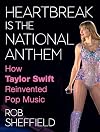
Say what you want about Taylor Swift (and many have!), but there's no denying she's a force to be reckoned with. Love her or loathe her, it makes no difference because she's just going to keep on keeping on. Rob Sheffield's "Heartbreak is the National Anthem" is a long love letter to her music. These pages are, in fact, some of the best liner notes you'll ever read about our Swift artist and her impact on fans and the music industry.
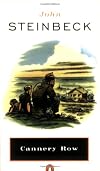
Don't come to "Cannery Row" looking for plot. It went out with the tide. But what you WILL find, washed up on shore and drying in the salty sunlight, is some damn fine writing about urges, misplaced urges, and the crowning satisfaction of love: love for men, women, and starfish. John Steinbeck is a master of the finely-tuned sentence. "Cannery Row" is as packed with them as your average tin of sardines. Here are characters you'll never forget, including Doc, Dora and Mack--the driving forces behind Steinbeck's marvelous little book.
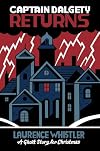
A widowed father living with his young daughter in a remote mansion. Troubled thoughts of a death in childbirth. A restless foreboding in the dark, near-empty house. A walk across the property. A rapid flutter of leaves. A torrential rainstorm, the like of which seldom seen outside of big-budget movies. A drowning downpour. A whipcrack of lightning. A strange light pulling a man into its eternal embrace.
Laurence Whistler's short story has as much atmosphere as the National Weather Service and washes across the reader in a sudden storm of gloomy setting and skin-tingling transformations. To say more would be to ruin the story.
Laurence Whistler's short story has as much atmosphere as the National Weather Service and washes across the reader in a sudden storm of gloomy setting and skin-tingling transformations. To say more would be to ruin the story.
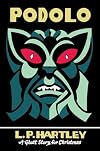
A deserted (or is it?) island off the Venetian coast. A woman with a compassionate heart. A grumbling and reluctant gondolier. A feral cat. A dark dream. A terrible discovery on shore.
L. P. Hartley's "Podolo" is a slim, swift bite of a story. Just wait til it gets its claws in you.
L. P. Hartley's "Podolo" is a slim, swift bite of a story. Just wait til it gets its claws in you.

A winter's night on the moors. A cottage for rent. A history of murder. A locked parlor door that unlocks on its own. Three mysterious visitors at midnight. A scream. A panicked flee across a winter's night on the moors.
Another satisfying ghost story from Biblioasis and Seth.
Another satisfying ghost story from Biblioasis and Seth.
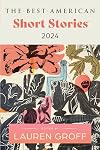
I always look forward to reading the "best" fiction of the year, the literary cream that has risen to the top, as selected first by the series editor and then finally chosen by the guest editor. This year marks the last of the BASS editions edited by Heidi Pitlor, who has been at the helm since 2007--next year's series editor has some wide shoes to fill and I look forward to seeing what direction they'll steer the series in. I hope the legacy of greatness continues. Well, of course the stories don't always hit the mark, and are nearly always first rate. Even when they're merely "good," they are still better than a lot of other short fiction being published these days. In recent years, the choice of authors has been even more diverse, leading to an even more robust chorus of voices every year. The latest 2024 volume, guest edited by Lauren Groff, is no different--I was unfamiliar with at least half of the authors' names before starting to read this year's collection. Those undiscovered (to me) authors were every bit as good as the more established masters chosen alongside them. They took me to fresh and unexpected places. After reading these stories, I'm happy to say--once again, as I feel I must all too often--that the heart of fiction is very much alive and beating. My favorites in this year's harvest: stories by Marie-Helene Bertino, Jamel Brinkley, Katherine Damm, Madeline Ffitch, and Jim Shepard.
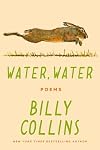
Billy Collins never met an ordinary object he couldn't transmogrify into a reflection on the state of being, a treatise on morality, or simply the catalyst for a swirling trip into his memories. Collins speaks plainly with ornate thought. Some might call his poems "simple" or "unambitious" or "silly." Heavens, no! What looks plain-faced on the outside brims with intellectual activity within. Collins cleverly and subtly turns poems on their heads, bringing meaning full circle with just one well-placed image. "Water, Water" is a near-perfect collection: every poem strikes a big gong with a little bronze hammer.
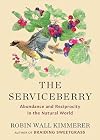
In uncertain economic times (and frankly, when *aren't* we in one of those times?), "The Serviceberry" is the kind of sermon we need. Robin Wall Kimmerer makes a gentle, but impassioned, plea for us to reconsider the ways we spend our paper and plastic money: surely there is more generosity and sacrifice to be found in the bottom of our wallets? The book is short, thought-provoking, and a lasting testament to the power of words to make a difference in a society. May we all heed Kimmerer's urgent call for a sense of greater community.
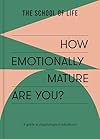
While I generally dislike taking psychology quizzes with their multiple choices of answers, none of which seem to land with me, I did enjoy taking this 150-page "test" to see how emotionally mature I am. Each of the 42 questions here present two options for response and they're generally easy to answer. If you've reached a certain stage of life as I have, you know some things about yourself; maybe not EVERYthing, but most things. While I didn't tally my score for each of the questions, I think I landed somewhere in the "intermittently mature" camp. Which is fine by me; I'm grown up enough to take it.

I picked up this Harper Perennial edition of Blatty's classic horror novel with the perfectly creepy cover at the Barnes and Noble in Sioux Falls, South Dakota early last month, thinking it would make for some good Halloween reading. Little did I realize, it would also become a chilling meditation on the state of America in late 2024.
Frankly, I might not have picked up the book if it weren’t for the grab-you-by-the-(eye)balls cover design by Milan Bozic. The pea-soup green, the high-contrast eyes and mouth, the font configuration into a cross: it’s the visual equivalent of icy fingers down a spine. “Buy me, Pathetic Mortal!”
I have an interesting history with The Exorcist (the novel), dating back to 1979 when I picked up the original classic purple cover with a blurry photo of what looked like a tormented woman. I think I plucked it from the free paperback books rack at my local library. I was 16 and on the edge of teenage rebellion; in fact, this may have been my shining Rebel with a Cause moment. As a shy preacher's kid in my small Wyoming town, reading The Exorcist was my middle finger to conformity. I didn’t drink or swear, but I could read subversive adult books. In fact, I very purposefully read The Exorcist in public, holding it in front of my face like a billboard advertisement for depravity.
And that's when things went south for me.
Read the rest of the story at The Quivering Pen: https://davidabrams.substack.com/p/what-im-reading-the-exorcist
Frankly, I might not have picked up the book if it weren’t for the grab-you-by-the-(eye)balls cover design by Milan Bozic. The pea-soup green, the high-contrast eyes and mouth, the font configuration into a cross: it’s the visual equivalent of icy fingers down a spine. “Buy me, Pathetic Mortal!”
I have an interesting history with The Exorcist (the novel), dating back to 1979 when I picked up the original classic purple cover with a blurry photo of what looked like a tormented woman. I think I plucked it from the free paperback books rack at my local library. I was 16 and on the edge of teenage rebellion; in fact, this may have been my shining Rebel with a Cause moment. As a shy preacher's kid in my small Wyoming town, reading The Exorcist was my middle finger to conformity. I didn’t drink or swear, but I could read subversive adult books. In fact, I very purposefully read The Exorcist in public, holding it in front of my face like a billboard advertisement for depravity.
And that's when things went south for me.
Read the rest of the story at The Quivering Pen: https://davidabrams.substack.com/p/what-im-reading-the-exorcist
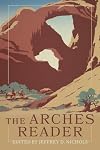
This anthology of essays, poetry, government reports, and short fiction makes for a good trail companion for those wandering the red-rock sculptures of Arches National Park. even if you've never been to the park to wander through the striking examples of erosion, "The Arches Reader" is a pleasant reading guide to the formation of a national park and how government lives uneasily with the local residents surrounding the set-aside acreage. Edward Abbey looms large here, of course--and we hear from both his voice and the echoes of his legacy in other writers. The selections here are good--not all are great, but all are readable. I enjoyed my time hiking through the fins and spires and washes of this book.
Jack Gilbert writes about love in the way a man might describe scooping out his heart with a dull, rusty grapefruit spoon.

This book is for:
!. Die-hard fans of the 1977 movie "Close Encounters of the Third Kind" (aka "The Decade's Greatest Movie")
2. Fans of Francois Truffaut
3. Fans of 1970s filmmaking
4. Anyone who loves a good behind-the-scenes diary.
Bob Balaban, who played Truffaut's interpreter in the movie (and who is constantly mistaken for star Richard Dreyfuss) is a witty, down-to-earth chronicler of a movie being made. Ranging in location from Devil's Tower, Wyoming, to Mobile, Alabama, to Bombay, India, this diary is fun, interesting, and a real delight to read.
!. Die-hard fans of the 1977 movie "Close Encounters of the Third Kind" (aka "The Decade's Greatest Movie")
2. Fans of Francois Truffaut
3. Fans of 1970s filmmaking
4. Anyone who loves a good behind-the-scenes diary.
Bob Balaban, who played Truffaut's interpreter in the movie (and who is constantly mistaken for star Richard Dreyfuss) is a witty, down-to-earth chronicler of a movie being made. Ranging in location from Devil's Tower, Wyoming, to Mobile, Alabama, to Bombay, India, this diary is fun, interesting, and a real delight to read.

I started reading "CE3K: the Novel" when I was camping at Devil's Tower, Wyoming.
Too "on the nose"? Maybe, but like Roy Neary with his living-room sculpture of the Wyoming national monument, I was nerdily obsessed. I began the book with low expectations. I should have kept them even lower.
This is a great book, if you like a textual detailed description of what we got on screen with "Close Encounters." It follows the movie closely with only the smallest of side roads into scenes that we never saw on film. Those were best left on the cutting room floor for the book as well.
This is a book with low self-esteem. It hardly rises to the level of art and in many places, the writing comes across as a high-school freshman trying to impress their English teacher who only ends up cringing with horror that he has not been doing as good a job at teaching as he supposed. In other words, "CE3K: the Novel" is paperback dreck which should only appeal to the most Mothership-obsessed fan who wants to prolong their Spielbergian cinematic masterpiece experience (for the record, I think the movie is pretty close to a masterpiece; the book is not).
For the record, "Steven Spielberg" didn't write this book, he only put some spit and polish on the hard work of Mr. Leslie Waller. As the movie's Wikipedia page explains, quoting Spielberg: "I didn't write the first, second, or third drafts. Those were written, based on my screenplay, by Leslie Waller, a very good* writer. (*eh....The Eds.) When I read show more his drafts, though, I told the publishers that unless it was cleaned up I wouldn't let my name go out with the book. So I sat down and spent less than a week – I wouldn't say rewriting the novel – but polishing it, and taking a lot of the plot and twisting it back into the direction of the screenplay. All told, there's about 20 percent of me in the book. I wish I could say there was more, but there's not. I cringe when I see my name on the cover, and I usually avoid it at bookstores." show less
Too "on the nose"? Maybe, but like Roy Neary with his living-room sculpture of the Wyoming national monument, I was nerdily obsessed. I began the book with low expectations. I should have kept them even lower.
This is a great book, if you like a textual detailed description of what we got on screen with "Close Encounters." It follows the movie closely with only the smallest of side roads into scenes that we never saw on film. Those were best left on the cutting room floor for the book as well.
This is a book with low self-esteem. It hardly rises to the level of art and in many places, the writing comes across as a high-school freshman trying to impress their English teacher who only ends up cringing with horror that he has not been doing as good a job at teaching as he supposed. In other words, "CE3K: the Novel" is paperback dreck which should only appeal to the most Mothership-obsessed fan who wants to prolong their Spielbergian cinematic masterpiece experience (for the record, I think the movie is pretty close to a masterpiece; the book is not).
For the record, "Steven Spielberg" didn't write this book, he only put some spit and polish on the hard work of Mr. Leslie Waller. As the movie's Wikipedia page explains, quoting Spielberg: "I didn't write the first, second, or third drafts. Those were written, based on my screenplay, by Leslie Waller, a very good* writer. (*eh....The Eds.) When I read show more his drafts, though, I told the publishers that unless it was cleaned up I wouldn't let my name go out with the book. So I sat down and spent less than a week – I wouldn't say rewriting the novel – but polishing it, and taking a lot of the plot and twisting it back into the direction of the screenplay. All told, there's about 20 percent of me in the book. I wish I could say there was more, but there's not. I cringe when I see my name on the cover, and I usually avoid it at bookstores." show less
Identify, compartmentalize, and manage. That's the key to working with your own emotions, as put forth by Ethan Kross in this insightful, helpful book. "Shift" came to me at a time when I needed to do some radical self-reflection, which involved looking deep into the sticky tar of my emotions. I won't say I came out of "Shift" being able to skillfully shift my focus between emotions as the title requests I do, but I will say the book gave me a lot of food for thought and some very unique tools to help me begin to make sense of the tar-soup of emotions. "Shift" is very well-written at the sentence level as well: Kross can spin a good story to illustrate his points, and he does so with verve and occasional wit.
Pym by Mat Johnson
A satiric take on E. A. Poe's only novel, "Pym" is biting, thoughtful, and thrilling in its late-in-book action sequences. If you enjoyed Poe's Pym, this one will pique your interest in going deeper into his fictional arctic paradise.
Frankly, one of the most boring and "phoned-in" of all the Jack Reacher books I've read so far (about half of the series). The plot is muddy and convoluted and uninteresting. The fight scenes are uninspired compared to all the conflicts Reacher has handled before. The chemistry between characters is as flat as tapwater. I don't know if it was the contribution of co-author Andrew Child that made the (poor) difference here, but it all comes down to a book you should give a pass to.
I have been writing my entire life--starting well before puberty--and even though I'm now cresting my 60s and heading downhill, I find myself more and more seeking advice from others, particularly writing advice. How in the world has it taken me this long to finally approach Ms. Lamott's classic volume of writing, "Bird by Bird"? It was far too long of a wait.
Lamott writes clearly, sequentially, and inspirationally. She wraps her arms around the entire business of writing--from shitty first drafts to publication--and encourages the reader-writer to practice the craft and art of writing at every step of the way. Things like this: "I believed, before I sold my first book, that publication would be instantly and automatically gratifying, an affirming and romantic experience, a Hallmark commercial where one runs and leaps in slow motion across a meadow filled with wildflowers into the arms of acclaim and self-esteem. This did not happen for me."
Or this: "Knowledge of your characters also emerges the way a Polaroid develops: it takes time for you to know them."
All the way down to the very last words of the book where she offers this encouragement to those doubting the efficacy of writing: "It’s like singing on a boat during a terrible storm at sea. You can’t stop the raging storm, but singing can change the hearts and spirits of the people who are together on that ship."
Lamott writes clearly, sequentially, and inspirationally. She wraps her arms around the entire business of writing--from shitty first drafts to publication--and encourages the reader-writer to practice the craft and art of writing at every step of the way. Things like this: "I believed, before I sold my first book, that publication would be instantly and automatically gratifying, an affirming and romantic experience, a Hallmark commercial where one runs and leaps in slow motion across a meadow filled with wildflowers into the arms of acclaim and self-esteem. This did not happen for me."
Or this: "Knowledge of your characters also emerges the way a Polaroid develops: it takes time for you to know them."
All the way down to the very last words of the book where she offers this encouragement to those doubting the efficacy of writing: "It’s like singing on a boat during a terrible storm at sea. You can’t stop the raging storm, but singing can change the hearts and spirits of the people who are together on that ship."
As a big fan of Emil Ferris' debut, My Favorite Thing Is Monsters (Book One), I had high expectations for this long-awaited sequel.
I should have lowered my bar of expectations.
I was disappointed in Book Two in the way that one is disappointed by having a great meal at a restaurant and then, when you return a year later for a repeat of another meal, you're disappointed by the lack of quality--less attention to the details of the ingredients as before. Book Two, in other words, is a disappointing lackluster "second meal." It doesn't have the freshness of Book One and it lacks narrative focus--following threads of subplots and new characters which I couldn't remember from the first installment.
And "installment" is a good word to use here: Book Two indicates that "My Favorite Thing is Monsters" is a long, continuing saga that will most likely be spread out over a series of books. Perhaps the Future Me would have been better served by waiting for the whole series to be issued and then read all of it at once.
I should have lowered my bar of expectations.
I was disappointed in Book Two in the way that one is disappointed by having a great meal at a restaurant and then, when you return a year later for a repeat of another meal, you're disappointed by the lack of quality--less attention to the details of the ingredients as before. Book Two, in other words, is a disappointing lackluster "second meal." It doesn't have the freshness of Book One and it lacks narrative focus--following threads of subplots and new characters which I couldn't remember from the first installment.
And "installment" is a good word to use here: Book Two indicates that "My Favorite Thing is Monsters" is a long, continuing saga that will most likely be spread out over a series of books. Perhaps the Future Me would have been better served by waiting for the whole series to be issued and then read all of it at once.
Silent Spring Revolution: John F. Kennedy, Rachel Carson, Lyndon Johnson, Richard Nixon, and the Great Environmental Awakening by Douglas Brinkley
This is a full-bodied, deeply-researched, thrillingly-told narrative history of the nation's land (and air and water). Douglas Brinkley does a remarkable job wrapping his historian's arms around the big picture while also stopping every now and then to talk about life at the blade of grass level. First-rate and highly recommended!
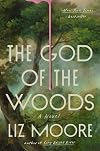
I had high hopes for this multi-POV thriller about the search for a missing teenager at a summer camp and the family dynamics that caused it. The short chapters and shifting timeline seemed right up my alley.
Sorry, wrong alley. In fact, the very factors I thought would work for me only served to work against my enjoyment of the book. Though Liz Moore writes well of her characters in description, dialogue and action, I had trouble keeping track of who was who as the plot loop-de-looped through time and scenario. I constantly flipped back one or two chapters to re-orient myself with the characters and what was going on.
Separately, I lost my patience with the conclusion of the book--the denouement dragged out for thirty pages than it needed to. Instead of crisp, the final pages were a mush of sentiment and conveniently tying up loose ends. It felt too practiced, too much deliberation on the author's part.
There's a lot to appreciate here, but I had trouble navigating the roadmap through setting and character.
Sorry, wrong alley. In fact, the very factors I thought would work for me only served to work against my enjoyment of the book. Though Liz Moore writes well of her characters in description, dialogue and action, I had trouble keeping track of who was who as the plot loop-de-looped through time and scenario. I constantly flipped back one or two chapters to re-orient myself with the characters and what was going on.
Separately, I lost my patience with the conclusion of the book--the denouement dragged out for thirty pages than it needed to. Instead of crisp, the final pages were a mush of sentiment and conveniently tying up loose ends. It felt too practiced, too much deliberation on the author's part.
There's a lot to appreciate here, but I had trouble navigating the roadmap through setting and character.

Though less a history of Helena itself than it is a history of the Broadwater Hotel and Natatorium, this entry in the Images of America series is, as always, a fascinating look into the past in which we see what once was at places we're now so familiar with. The story of the Broadwater is an interesting one, full of hope and despair and, eventually, decline.
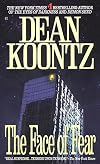
When I was an impressionable teenage reader back in the mid-1970s, I checked a new book out of the county library: "The Face of Fear" written by a guy named Brian Coffey. My friends, I took that book home and I DEVOURED it in two or three sittings (I was a teen--there was no "book in one sitting" in those days). The Face of Fear was a thriller that plunged a needle-sharp icepick into my chest--not unlike the book's serial killer The Butcher himself.
I now know that Brian Coffey was a pseudonym for Dean Koontz in the early days of his writing career. Though I've yet to read any of the later Koontz novels, The Face of Fear has always stuck with me vividly. And so, I thought I'd return to it to see if it held up as well as my 14-year-old self remembered. Though there are several too-convenient plot devices near the end of the book, the nerve-knotting pace still holds up in this story of Graham, a clairvoyant who's been witnessing the Butcher's killing spree, who is forced to rappel down the side of a skyscraper with his girlfriend Connie as the Butcher plays a wicked game of cat and mouse involving elevator shafts, stairwells, and the icy face of a highrise in a midnight winter storm. This is first-rate fear.
I now know that Brian Coffey was a pseudonym for Dean Koontz in the early days of his writing career. Though I've yet to read any of the later Koontz novels, The Face of Fear has always stuck with me vividly. And so, I thought I'd return to it to see if it held up as well as my 14-year-old self remembered. Though there are several too-convenient plot devices near the end of the book, the nerve-knotting pace still holds up in this story of Graham, a clairvoyant who's been witnessing the Butcher's killing spree, who is forced to rappel down the side of a skyscraper with his girlfriend Connie as the Butcher plays a wicked game of cat and mouse involving elevator shafts, stairwells, and the icy face of a highrise in a midnight winter storm. This is first-rate fear.
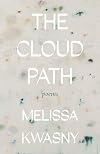
Poems about grief, about nature, about pathways to inner healing. Melissa Kwasny kneels, listens to what the Earth has to say, studies the musical patterns of wind and water, and then transcribes those sensory impressions into a collection centered around her beloved mother's death.

The first installment of the Moosepath League series is, frankly, a delight to read. It's a drink of old-fashioned lemonade on a July day. July, incidentally, is when the action of this novel takes place: in the year of our Lord 1896. The plot moves along swiftly and there is some Keystone Kops sort of mayhem with the members of the Moosepath League, and it can be as nostalgic as a barbershop quartet at times, but I enjoyed the characters and the interweaving of plot strands. I'll be paying the League another visit.