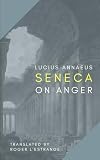
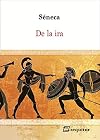
On Anger
by Lucius Annaeus Seneca, the Younger
On This Page
Description
"On Anger" by Seneca is a timeless classic exploring the human emotion of anger and how to manage it. Seneca takes an in-depth look into the psychology of anger and provides invaluable advice on how to control and manage it. He argues that anger is a destructive emotion that can lead to disastrous consequences and provides practical advice on how to identify and address it. The book is a great resource for anyone looking to find a better understanding of this powerful emotion and how to show more manage it. Seneca's wisdom and insight into the nature of anger and its effects on one's life make this an invaluable read. Along with his timeless advice and wisdom, "On Anger" provides readers with an understanding of why anger has such a strong hold on us and how to break free from its grip. This book is an essential resource for anyone looking to better understand and manage their anger, and to lead a more peaceful, productive life. show lessTags
Recommendations






























Member Reviews
This is a great and thorough look at anger.
Many modern books take a neurological or biological perspective, and focus quite a bit on the part of anger where it initially occurs and disrupts you "in the moment". Very few talk about what we do in our own minds to keep anger going, and how unhealthy and ultimately foolish that is. This does, and thoroughly at that.
I "only" gave it 4 stars because it lacks some of the modern angle of "self-compassion". Sometimes, we know what's right but are unable to act on it in the moment. Some of us are overly harsh on ourselves when those moments happen, which can be a new problem in and of itself, which we're only really understanding now.
But, otherwise, for a 2000 year-old text, it holds up really show more really well. show less
Many modern books take a neurological or biological perspective, and focus quite a bit on the part of anger where it initially occurs and disrupts you "in the moment". Very few talk about what we do in our own minds to keep anger going, and how unhealthy and ultimately foolish that is. This does, and thoroughly at that.
I "only" gave it 4 stars because it lacks some of the modern angle of "self-compassion". Sometimes, we know what's right but are unable to act on it in the moment. Some of us are overly harsh on ourselves when those moments happen, which can be a new problem in and of itself, which we're only really understanding now.
But, otherwise, for a 2000 year-old text, it holds up really show more really well. show less
“Ungoverned anger begets madness.”
― Seneca
The Roman Stoic philosopher Seneca (4 AD – 65 AD) held the prime purpose of philosophy as providing us with guidelines to live an enriched, tranquil, virtuous and meaningful life. To this end, he wrote many essays and letters addressing various facets of the Stoic path - among the most notable, his essay On Anger. Below are quotes from the text along with my brief comments.
“Some of the wisest of men have in called anger a short madness: for as there are distinct symptoms which mark madmen, such as a bold and menacing air, a gloomy brow, a stern face, a hurried walk, restless hands, changed color, quick and strongly-drawn breathing, so these same symptoms are seen in men under the spell show more of anger.” ----------- Aristotle said the virtuous man should get angry on the right occasion. This is the commonly held view of modern society as it was for most people in the ancient world. Seneca challenges this opinion, considering anger as a kind of madness and urging us never to surrender ourselves to this most despicable vice.
“The difference between anger and irascibility is evident: it is the same as that between a drunken man and a drunkard; between a frightened man and a coward. It is possible for an angry man not to be irascible ; an irascible man may sometimes not be angry.” --------- Seneca displays subtle insight here – most of us get angry on occasion as most of us can occasionally get drunk; for the irascible person, anger is, so to speak, part of their system the way alcohol is part of a drunkard’s system.
“Mankind is born for mutual assistance, anger for mutual ruin: the former loves society, the latter estrangement. The one loves to do good, the other to do harm ; the one to help even strangers, the other to attack even its dearest friends.” ---------- Greco-Roman philosophers, especially Epicureans and Stoics, placed the highest value on a life lived in accordance with nature. And by Seneca’s reckoning, when we are at our best and in most accord with nature, we are social, genial, warm and kind, the exact opposite of being angry.
“Man's nature is not, therefore, desirous of inflicting punishment; neither, therefore, is anger in accordance with man's nature, because that is desirous of inflicting punishment. . . . Punishment, therefore, does not accord with a good man: wherefore anger does not do so either, because punishment and anger accord one with another. If a good man takes no pleasure in punishment, he will also take no pleasure in that state of mind to which punishment gives pleasure: consequently anger is not natural to man." ---------- There is a word for taking pleasure in punishing or inflicting suffering on others: sadism. Seneca reasons a sadist is unnatural and twisted. Years ago I’ve had the misfortune of being around a sadistic boss. A more warped, nasty, and, yes, angry specimen of humanity I have never encountered.
“May it not be that, although anger be not natural, it may be right to adopt it, because it often proves useful? It rouses the spirit and excites it; and courage does nothing grand in war without it, unless its flame be supplied from this source; this is the goad which stirs up bold men and sends them to encounter perils. Some therefore consider it to be best to control anger, not to banish it utterly.” ---------- The common view and also Aristotle’s line of thinking is anger serves a very positive, utilitarian purpose; matter of fact, when in battle or face-to-face with threat, rousing anger can save our lives. Seneca counters this argument by noting how once we give in to anger, anger is unable to check itself and can spiral us down a deep, dark destructive hole, causing ruin not only to others but also to ourselves.
“Gladiators, too, protect themselves by skill, but expose themselves to wounds when they are angry. Moreover, of what use is anger, when the same end can be arrived at by reason?” --------- To further bolster his objection to rousing anger to our benefit, Seneca provides many examples of how anger is actually counterproductive. One of his telling observations: “Anger, therefore, is not useful even in wars or battles: for it is prone to rashness, and while trying to bring others into danger, does not guard itself against danger.”
“But anger can be put to flight by wise maxims; for it is a voluntary defect of the mind, and not one of those things which are evolved by the conditions of human life, and which, therefore, may happen even to the wisest of us.” --------- Seneca’s advice on effectively dealing with our own anger is vivid and illuminating. He delves into the psychology of how we get angry and why we get angry. One major dilemma: we have an overly optimistic and inaccurate mental picture of other people and the world around us. Case in point: We wake up feeling energized and walk down a crowded street with a broad smile, feeling the joy of being alive. According to Seneca, if we project our own elation and sense of well-being onto others we are overly optimistic - people can be dealing their own heavy negative personal issues or they might be hung over from drinking booze or taking drugs. Thus, if they curse at us or act rudely, no reason for anger on our part since their behavior has very little to do with us personally.
Does all this sound intriguing? Take my word for it here, this is one thought-provoking essay. If you would like to better understand what it means to follow the path of philosophy, you will not encounter a better guide than Seneca.
“Anger, if not restrained, is frequently more hurtful to us than the injury that provokes it.”
― Seneca
On Anger by Seneca available on-line: http://www.sophia-project.org/uploads/1/3/9/5/13955288/seneca_anger.pdf show less
The Roman Stoic philosopher Seneca (4 AD – 65 AD) held the prime purpose of philosophy as providing us with guidelines to live a rich, tranquil, virtuous and meaningful life. To this end, he wrote many essays and letters addressing various facets of the Stoic path. One of his most notable, this essay ‘On Anger’. Below are quotes from the text along with my brief comments.
“Some of the wisest of men have in called anger a short madness: for as there are distinct symptoms which mark madmen, such as a bold and menacing air, a gloomy brow, a stern face, a hurried walk, restless hands, changed color, quick and strongly-drawn breathing, so these same symptoms are seen in men under the spell of anger.” ----------- Aristotle said the show more virtuous man should get angry on the right occasion. This is the commonly held view of modern society as it was for most people in the ancient world. Seneca challenges this opinion, considering anger as a kind of madness and urging us never to surrender ourselves to this most despicable vice.
“The difference between anger and irascibility is evident: it is the same as that between a drunken man and a drunkard; between a frightened man and a coward. It is possible for an angry man not to be irascible ; an irascible man may sometimes not be angry.” --------- Seneca displays subtle insight here – most of us get angry on occasion as most of us can occasionally get drunk; for the irascible person, anger is, so to speak, part of their system the way alcohol is part of a drunkard’s system.
“Mankind is born for mutual assistance, anger for mutual ruin: the former loves society, the latter estrangement. The one loves to do good, the other to do harm ; the one to help even strangers, the other to attack even its dearest friends.” ---------- Greco-Roman philosophers, especially Epicureans and Stoics, placed the highest value on a life lived in accordance with nature. And by Seneca’s reckoning, when we are at our best and in most accord with nature, we are social, genial, warm and kind, the exact opposite of being angry.
“Man's nature is not, therefore, desirous of inflicting punishment; neither, therefore, is anger in accordance with man's nature, because that is desirous of inflicting punishment. . . . Punishment, therefore, does not accord with a good man: wherefore anger does not do so either, because punishment and anger accord one with another. If a good man takes no pleasure in punishment, he will also take no pleasure in that state of mind to which punishment gives pleasure: consequently anger is not natural to man." ---------- There is a word for taking pleasure in punishing or inflicting suffering on others: sadism. Seneca reasons a sadist is unnatural and twisted. Years ago I’ve had the misfortune of being around a sadistic boss. A more warped, nasty, and, yes, angry specimen of humanity I have never encountered.
“May it not be that, although anger be not natural, it may be right to adopt it, because it often proves useful? It rouses the spirit and excites it; and courage does nothing grand in war without it, unless its flame be supplied from this source; this is the goad which stirs up bold men and sends them to encounter perils. Some therefore consider it to be best to control anger, not to banish it utterly.” ---------- The common view and also Aristotle’s line of thinking is anger serves a very positive, utilitarian purpose; matter of fact, when in battle or face-to-face with threat, rousing anger can save our lives. Seneca counters this argument by noting how once we give in to anger, anger is unable to check itself and can spiral us down a deep, dark destructive hole, causing ruin not only to others but also to ourselves.
“Gladiators, too, protect themselves by skill, but expose themselves to wounds when they are angry. Moreover, of what use is anger, when the same end can be arrived at by reason?” --------- To further bolster his objection to rousing anger to our benefit, Seneca provides many examples of how anger is actually counterproductive. One of his telling observations: “Anger, therefore, is not useful even in wars or battles: for it is prone to rashness, and while trying to bring others into danger, does not guard itself against danger.”
“But anger can be put to flight by wise maxims; for it is a voluntary defect of the mind, and not one of those things which are evolved by the conditions of human life, and which, therefore, may happen even to the wisest of us.” --------- Seneca’s advice on effectively dealing with our own anger is vivid and illuminating. He delves into the psychology of how we get angry and why we get angry. One major dilemma: we have an overly optimistic and inaccurate mental picture of other people and the world around us.
Does all this sound intriguing? Take my word for it here, this is one intriguing. probing and thought-provoking essay. If you would like to better understand what it means to follow the path of philosophy, you will not encounter a better guide than Seneca.
On Anger by Seneca available on-line: http://www.sophia-project.org/uploads/1/3/9/5/13955288/seneca_anger.pdf
show less
SB-4
Jul 14, 2021Catalan
RG-3
Feb 15, 2021Catalan
Ratings
Members
- Recently Added By
Lists

Read in 2016
107 works; 6 members
Author Information

Seneca was born in Spain of a wealthy Italian family. His father, Lucius Annaeus Seneca (see Vol. 4), wrote the well-known Controversaie (Controversies) and Suasoriae (Persuasions), which are collections of arguments used in rhetorical training, and his nephew Lucan was the epic poet of the civil war. Educated in rhetoric and philosophy in Rome, show more he found the Stoic doctrine especially compatible. The younger Seneca became famous as an orator but was exiled by the Emperor Claudius. He was recalled by the Empress Agrippina to become the tutor of her son, the young Nero. After the first five years of Nero's reign, Agrippina was murdered and three years later Octavia, Nero's wife, was exiled. Seneca retired as much as possible from public life and devoted himself to philosophy, writing many treatises at this time. But in 65 he was accused of conspiracy and, by imperial order, committed suicide by opening his veins. He was a Stoic philosopher and met his death with Stoic calm. Seneca's grisly tragedies fascinated the Renaissance and have been successfully performed in recent years. All ten tragedies are believed genuine, with the exception of Octavia, which is now considered to be by a later writer. Translations of the tragedies influenced English dramatists such as Jonson (see Vol. 1), Marlowe (see Vol. 1), and Shakespeare (see Vol. 1), who all imitated Seneca's scenes of horror and his characters---the ghost, nurse, and villain. (Bowker Author Biography) show less
Series
Belongs to Publisher Series
Reclams Universal-Bibliothek (18456)
Work Relationships
Is contained in
Common Knowledge
- Canonical title
- On Anger
- Original title
- De ira
- Original language
- Latin
Classifications
- Genres
- Philosophy, Nonfiction
- DDC/MDS
- 179.8 — Philosophy and Psychology Ethics Other ethical norms Pride, Covetousness, Envy, Anger, Sloth, Gluttony, Hate, Jealousy
- LCC
- PA6661 — Language and Literature Greek language and literature. Latin language and literature Roman literature Individual authors Seneca, Lucius Annaeus
- BISAC
Statistics
- Members
- 100
- Popularity
- 321,822
- Reviews
- 5
- Rating
- (4.15)
- Languages
- 8 — Catalan, English, French, German, Hungarian, Italian, Latin, Spanish
- Media
- Paper, Audiobook, Ebook
- ISBNs
- 11
- ASINs
- 2