
Seneca (1) (–0065)
Author of On the Shortness of Life [and other works]
For other authors named Seneca, see the disambiguation page.
Seneca (1) has been aliased into Lucius Annaeus Seneca, the Younger.
About the Author
Image credit: Statue of Seneca in Cordoba, Spain.
Series
Works by Seneca
Works have been aliased into Lucius Annaeus Seneca, the Younger.
Seneca: Tragedies, Volume I: Hercules. Trojan Women. Phoenician Women. Medea. Phaedra (2002) 128 copies
Seneca: Tragedies, Volume II: Oedipus. Agamemnon. Thyestes. Hercules on Oeta. Octavia (2004) 99 copies
Seneca: Naturales Quaestiones, Books 1-3 (Loeb Classical Library No. 450) (1971) 55 copies, 1 review
Seneca: Tragedies, Volume II: Agamemnon. Thyestes. Hercules Oetaeus. Phoenissae. Octavia (1929) 50 copies, 1 review
Seneca: Tragedies, Volume I. Hercules Furens. Troades. Medea. Hippolytus. Oedipus (1917) 45 copies, 1 review
On the Shortness of Life 34 copies
Von der Seelenruhe / Vom glücklichen Leben: Von der Muße, Von der Kürze des Lebens (Geschenkbuch Weisheit, Band 4) (2010) 18 copies
A Student’s Seneca: Ten Letters and Selections from De Providentia and De Vita Beata (2006) 17 copies
Sobre la firmeza del sabio ; Sobre el ocio ; Sobre la tranquilidad del alma ; Sobre la brevedad de la vida (2010) 14 copies
De la providence - De la constance du sage - De la tranquillité de l'âme - Du loisir (2003) 10 copies
Seneca: His Tenne Tragedies Translated into English. Edited by Thomas Newton, introduction by T. S. Eliot. (1966) 9 copies
Sénèque : La Vie heureuse - La Brièveté de la vie - Lettres à Lucilius (1 à 29) - Manuel (Épitecte) - Pensées pour… (2008) 8 copies
Coleção Grandes Obras do Pensamento Universal (sêneca - A Tranquilidade da Alma / A Vida Retirada) (Em Portuguese do Brasil) (2000) 6 copies
Lletres a Lucili, vol. II: llibres VI-IX (Bernat Metge (rústica)) de Séneca (1 ene 1929) Tapa blanda (1929) 5 copies
as relações humanas 5 copies
Briefe an Lucilius über Ethik. 15. Buch / Epistulae morales ad Lucilium. Liber 15. (Lernmaterialien) (1996) 5 copies
Lletres a Lucili, vol. IV i últim: llibres XVI-XX (Bernat Metge (rústica)) de Séneca (1 ene 1931) Tapa blanda (1930) 4 copies
DIALOGJE 4 copies
Sobre el ocio / Sobre la tranquilidad del alma / Sobre la brevedad de la vida (Spanish Edition) (2011) 4 copies
Lettere a Lucilio 4 copies
Sobre a tranquilidade da alma 4 copies
Sobre la felicidad y la brevedad de la vida: Cómo alcanzar la felicidad atreviéndote a ser tu mismo (2022) 3 copies
De Providentia (Latin) 3 copies
Dialogues, tome 4. De la providence - De la constance du sage - De la tranquilité de l'âme - De l'oisiveté. Testo latino a fronte (2002) 3 copies
Briefe an Lucilius über Ethik. 16. Buch. / Epistulae morales ad Lucilium. Liber XVI. (1997) 3 copies
Sénèque pour managers 3 copies
Théâtre complet : Phèdre, Thyeste, Les Troyennes, Agamemnon, Médée, Hercule furieux, Hercule sur l'Oeta, Oedipe, Les Phéniciennes (2012) 3 copies
Briefe an Lucilius über Ethik. 11.-13. Buch / Epistulae morales ad Lucilium. Liber 11-13. (1996) 3 copies
Da Felicidade 3 copies
On Providence 3 copies
Seneca's Letters from a Stoic 3 copies
Medea, Oedipus, Agamemnon, Hercules 3 copies
Of Consolation (Polybius) 3 copies
Lettres a Lucilius 2 copies
Dels Beneficis, Vol. I 2 copies
Dels beneficis, vol. II 2 copies
Medea - Oedipus, Agamemnon, Hercules (Oetaeus). Iteratis curis edidit Humbertus Moricca. (1947) 2 copies
Sobre la firmeza del sabio / Sobre el ocio / Sobre la tranquilidad del alma / Sobre la brevedad de la vida (2024) 2 copies
Medeia 2 copies
Loeb IV: epistulae morales 2 copies
Opere morali: Lettere a Lucilio - Dialoghi - Consolazioni (Radici BUR) (Italian Edition) (2013) 2 copies
Dialogorum libri 9-10 2 copies
Cartas a Lucilio: Epístolas escogidas / Letters to Lucilius: Selected Epistles (Spanish Edition) (2024) 2 copies
Thyestes, Phaedra 2 copies
Divi Claudii Ἀποκολοκύνθωσις 2 copies
Dialogues, tome III. Consolations 2 copies
Cartas Consolatórias 2 copies
De consolatione ad Polybium 2 copies
Briefe an Lucilius / Epistulae Morales ad Lucilium [Epistulae I-LXXV] (Sammlung Tusculum) (2007) 2 copies
Of a Happy Life 2 copies
Cicerón y Séneca: Tratados morales 2 copies
Colecção grandes filósofos - Séneca (os estóicos) - A vida feliz / Manual (Epicteto) / Pensamentos (Marco Aurélio) (2009) 2 copies
Seneca im literarischen Urteil der Antike; Darstellung und Sammlung der Zeugnisse, Volume 2 (1971) 2 copies
Tragedias II 2 copies
la zucca divinizzata 2 copies
Moralske brev til Lucilius 2 copies
Dialogues, tome 2 1 copy
La mort… sereinement : Maximes de sagesse et extraits des lettres à Lucilius (1998) 1 copy, 1 review
As troianas 1 copy
Diálogos - Volume I 1 copy
Of Leisure [De Otio] 1 copy
On Mercy 1 copy
Manuel (Epictète) 1 copy
Epigramas 1 copy
L'arte di essere felici 1 copy
Philosophi scripta 1 copy
Médée 1 copy
Eloge de l'oisiveté 1 copy
Tragédies. Tome II : Oedipe- Agamemnon- Thyeste - Hercule sur l'Oeta- Pseudo-Seneque - Octave 1 copy
Des bienfaits tome I e II 1 copy
La brevita' della vita 1 copy
Los aforismos de oro 1 copy
LA IRA 1 copy
Sêneca - Tragédias 1 copy
Troades 1 copy
Tratados filosóficos. Cartas 1 copy
Séneca De la cólera 1 copy
El arte de mantener la calma: Un manual de sabiduría clásica sobre la gestión de la ira 1 copy, 1 review
Tratados morales 1 copy
On Peace of Mind 1 copy
Sobre la felicidad - De la brevedad de la vida - Sobre la clemencia - Ideario - Ciencias naturales 1 copy
Epistolas morales a lucilo 1 copy
Séneca 1 copy
Ideario 1 copy
Ciencias naturales 1 copy
Selected Letters 1 copy
Aprender a pensar: Séneca 1 copy
QÜESTIONS NATURAL. III 1 copy
Hercules Furens 1 copy
Lletres a Lucili III 1 copy
Lletres a Lucili IV 1 copy
Medea 1 copy
Dels Benefucis I 1 copy
Phaedra 1 copy
Sobre la felicidad, De la brevedad de la vida, Sobre la clemencia, Ideario, Ciencias naturales 1 copy
Troianas 1 copy
Dels Beneficis II 1 copy
Thyestes 1 copy
Le tragedie di Seneca trasportate in verso sciolto dal sig. Hettore Nini Seneca Lucius Annaeus 1 copy
Otium et negotium 1 copy
Stoicism for Beginners: 100 Stoic Quotes on Bravery, Overcoming Obstacles and How To Live (2016) 1 copy
Onkwetsbaarheid 1 copy
Seneca Tragoediae 1 copy
Naturales Quaestiones: Bks.IV-VII v. 2 (Loeb Classical Library) by Seneca (1989-07-01) (1881) 1 copy
Phaedram 1 copy
L. Annaei Senecae Operum Alter Tomus. In quos, quæ catalogus paginæ sequentis continet, habentur 1 copy
Operette Morali, vol. 1 1 copy
I Benefici 1 copy
Medea / Fedra 1 copy
Of Consolation (Marcia) 1 copy
Výbor z listů Luciliovi 1 copy
Tragedias I 1 copy
Glück und Schicksal: Philosophische Betrachtungen. Jubiläumsausgabe (Jubiläumsausgabe UB) (2017) 1 copy
Útěchy 1 copy
Letters and Essays 1 copy
Tratado sobre la ira. Tratado sobre la clemencia. Dos tratados morales de Séneca. (Spanish Edition) (2012) 1 copy
Dialogues. De ira 1 copy
De constantia sapientis 1 copy
Teatro volume primo 1 copy
Varia opera philosophica 1 copy
Philosophi Opera Omnia 1 copy
Des quatres vertus cardinals 1 copy
Des remedes de fortune 1 copy
Opere morali 1 copy
Teatro volume secondo 1 copy
Briefe an Lucilius über Ethik. 17. und 18. Buch / Epistulae morales ad Lucilium. Liber XVII et XVIII. (1998) 1 copy
Stoicism 1 copy
"On Gathering Ideas" 1 copy
Om vrede 1 copy
Epistolae Morales Vol. I 1 copy
Letters and other extracts 1 copy
Octavia Praetexta 1 copy
De la Providence Divine 1 copy
La felicità del saggio : vol. 25 della Collana Classici Copact Filosofia Antica prt Spiriti Moderni 1 copy
Mad Hercules 1 copy
Von der Muße 1 copy
De consolatione ad Marciam 1 copy
Tragédies. 1 1 copy
Seneca's Tradgedies 1 copy
De consolatione ad Helviam 1 copy
Oeuvres complètes de Sénèque le Philosophe - Tome II (Chefs-d'oeuvre des littératures anciennes) 1 copy
SENECA: BRIEVEN AAN LUCILIUS Een Bloemlezing, Van Inleiding En Aanteekeningen Voorzien (1930) 1 copy
LettersfromaStoic 1 copy
The Stoics 1 copy
De la vie heureuse (Sulla vita beata); De la brièveté de la vie (sulla brevità della vita), Dialoghi 1 copy
De Ira (Sull'Ira), Dialoghi 1 copy
Traités philosophiques 1 copy
Tragédies 1 copy
Sobre a Ira [On Anger] 1 copy
Médée - Présentation, chronologie et notes de Charles Guittard - Dossier (Médée dans la littérature grecque, Médée dans la… (1997) 1 copy
Scrisori către Lucilliu 1 copy
Scrisori către Luciliu 1 copy
Opere Vol. IV 1 copy
Výbor z listů Luciliovi 1 copy
Associated Works
Works have been aliased into Lucius Annaeus Seneca, the Younger.
Oogst Der Tijden. keur uit de werken van schrijvers en dichters aller volken en eeuwen (1940) — Contributor — 12 copies
Tagged
Common Knowledge
- Canonical name
- Seneca, Lucius Annaeus
- Other names
- Lucius Annaeus Seneca
Seneca the Younger - Birthdate
- 0004 BCE
- Date of death
- 0065
- Gender
- male
- Occupations
- philosopher
playwright - Organizations
- SPQR
- Relationships
- Seneca the Elder (father)
Lucan (nephew) - Short biography
- Lucius Annaeus Seneca (4 v.Chr.-65 n.Chr.) was een Romeins schrijver en stoïcijns filosoof. Hij bekleedde belangrijke posities in Rome ten tijde van keizer Nero. Om aan diens intriges te ontkomen trad Seneca terug uit de politiek. Enige jaren later werd hij gedwongen tot zelfmoord.
- Nationality
- Rome
- Birthplace
- Cordoba, Hispania (Spain)
- Places of residence
- Rome, Roman Empire
- Disambiguation notice
- VIAF:90637919
Members
Discussions
Fine Press treatment of Seneca in Fine Press Forum (July 2023)
Second Round: On the Shortness of Life by Seneca; profound philosophical meditations in Consensus Press (October 2022)
Reviews
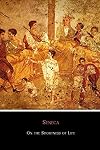
I’ve read this as a Blinkist summary. So my review is based on this summary not on the original book. I actually found it a bit tricky to distinguish between what Seneca actually wrote and what the author had inserted. Certainly the author’s views intrude in places. Seneca was a tutor to Nero, the infamous Roman emperor who–according to legend–played violin while Rome burned to the ground, and was one of his age's most prominent thinkers and playwrights. Adhering to the Stoic show more tradition of accepting one’s place in the world, many of his thoughts ring as true today as they did back then.
Life is short if you waste it on trivialities. Most people spend the majority of their time engaged in trivial activities–even if these activities don’t seem trivial to them. But the thing about trivial activities is that they make life seem short.
People tend to think that, once they’ve achieved all their goals, they’ll have time to enjoy life. But it rarely works out this way. What usually happens is this: people spend their life preparing for life.....The Emperor Augustus is a case in point. He spoke endlessly of quietude, of the calm and rest he’d enjoy upon retirement from his public duties. But this longed-for day never came.
Life will also seem short to those who pursue a life of luxury. These people can't even enjoy their indulgences.
But worst of all are those who seek glory after death. These people get wrapped up in planning for a posterity that’s not even theirs.
Say a ship left port and spent the next year being thrown about by a mighty storm. It would be inaccurate to claim that, during this time, it had steered a successful and purposeful course, even if it did make it safely back to harbor. Well, the same can be said of life.
Of course, it’s important to plot a course and then stick to it, but it’s also worth remembering that not every path should be pursued.
Then there are those who devote their prime years to lust, greed and gluttony. They keep telling themselves that, someday, they’ll amend their ways–but they never do.
It’s pointless working for someone whose aims and convictions don’t agree with your own. Doing so is the surest path to a short life......When stuck in such a situation, people moan that their boss or supervisor doesn’t listen to their wishes or opinions. But if these people can’t find the time to listen to themselves and pursue their own courses, why should anybody else?
You can choose to be educated by the world’s greatest minds.......the fact remains that you can forge your own path in education and self-improvement......Pick your philosopher, and discover new ways to tackle life, from the everyday trifles to universal preoccupations. A great thinker can be both a solace and a companion.....they’re always available. And when you’re done, you can just set them back on the shelf.....And even if you’re nearing the end of life, reading is still a boon, for by reading you can learn not only how to live but how to face death unflinchingly......You have to educate yourself purposefully. Life is long enough to devote yourself to self-knowledge and true wisdom. The great minds are your torchbearers in this task.
True satisfaction springs from within. The wise person is self-reliant and independent. The loss of status or money is no real setback to him, since his sense of self is not founded on external circumstances......The instant you start to covet unnecessary material items, however, you will feel that you are stuck in a sort of poverty......It all boils down to this: the important things in life can’t be removed or diminished by others. It’s simply not within the capacity of a mere mortal to rob you of your critical faculties or to eradicate your ability to appreciate the beauty of the mountains or the sea......So remember: self-worth comes from within. Only you can determine how satisfied you are with the world around you.
To ensure a tranquil mind, tailor your career to your personality and don’t forget to enjoy yourself!
A life filled with doubts and regrets is no life at all. So what should you do? There is no one path that will ensure tranquility. We must each forge our own. No matter how you conduct your life, be sure to serve mankind with actions, writing or your intellect–at least, to the best of your abilities.
Accept only those enterprises that you are sure you will finish.....And don’t be too harsh on yourself once you have selected your course. You will enjoy the journey all the more if you have confidence in yourself and your actions.
The second thing to remember is that overexertion will smother your faculties and sap your spirit. In short, don’t overdo it.....instead, set aside some time for yourself. Relax. Even Cato, the famous Roman, used to drink a glass of wine when he returned home from a long day of statesmanly activity......And Socrates, when he wasn’t philosophizing, enjoyed playing with the local children......So don’t forget the value of pleasure, and don’t think you shouldn’t enjoy yourself.
Moderation is the best policy.
The key message in this book: To live a fulfilling life you shouldn’t seek immediate validation or base your worth upon the judgments of others. Instead, draw on the knowledge and wisdom of those who have gone before you. This will help you find your place in the world and allow you to contribute to the greater good. Mental tranquility should not be underestimated.
Generally speaking, I found myself in accord with most of what Seneca says. Impressive to find such powerful thoughts and writing some 2000 years old. Five stars from me. show less
Life is short if you waste it on trivialities. Most people spend the majority of their time engaged in trivial activities–even if these activities don’t seem trivial to them. But the thing about trivial activities is that they make life seem short.
People tend to think that, once they’ve achieved all their goals, they’ll have time to enjoy life. But it rarely works out this way. What usually happens is this: people spend their life preparing for life.....The Emperor Augustus is a case in point. He spoke endlessly of quietude, of the calm and rest he’d enjoy upon retirement from his public duties. But this longed-for day never came.
Life will also seem short to those who pursue a life of luxury. These people can't even enjoy their indulgences.
But worst of all are those who seek glory after death. These people get wrapped up in planning for a posterity that’s not even theirs.
Say a ship left port and spent the next year being thrown about by a mighty storm. It would be inaccurate to claim that, during this time, it had steered a successful and purposeful course, even if it did make it safely back to harbor. Well, the same can be said of life.
Of course, it’s important to plot a course and then stick to it, but it’s also worth remembering that not every path should be pursued.
Then there are those who devote their prime years to lust, greed and gluttony. They keep telling themselves that, someday, they’ll amend their ways–but they never do.
It’s pointless working for someone whose aims and convictions don’t agree with your own. Doing so is the surest path to a short life......When stuck in such a situation, people moan that their boss or supervisor doesn’t listen to their wishes or opinions. But if these people can’t find the time to listen to themselves and pursue their own courses, why should anybody else?
You can choose to be educated by the world’s greatest minds.......the fact remains that you can forge your own path in education and self-improvement......Pick your philosopher, and discover new ways to tackle life, from the everyday trifles to universal preoccupations. A great thinker can be both a solace and a companion.....they’re always available. And when you’re done, you can just set them back on the shelf.....And even if you’re nearing the end of life, reading is still a boon, for by reading you can learn not only how to live but how to face death unflinchingly......You have to educate yourself purposefully. Life is long enough to devote yourself to self-knowledge and true wisdom. The great minds are your torchbearers in this task.
True satisfaction springs from within. The wise person is self-reliant and independent. The loss of status or money is no real setback to him, since his sense of self is not founded on external circumstances......The instant you start to covet unnecessary material items, however, you will feel that you are stuck in a sort of poverty......It all boils down to this: the important things in life can’t be removed or diminished by others. It’s simply not within the capacity of a mere mortal to rob you of your critical faculties or to eradicate your ability to appreciate the beauty of the mountains or the sea......So remember: self-worth comes from within. Only you can determine how satisfied you are with the world around you.
To ensure a tranquil mind, tailor your career to your personality and don’t forget to enjoy yourself!
A life filled with doubts and regrets is no life at all. So what should you do? There is no one path that will ensure tranquility. We must each forge our own. No matter how you conduct your life, be sure to serve mankind with actions, writing or your intellect–at least, to the best of your abilities.
Accept only those enterprises that you are sure you will finish.....And don’t be too harsh on yourself once you have selected your course. You will enjoy the journey all the more if you have confidence in yourself and your actions.
The second thing to remember is that overexertion will smother your faculties and sap your spirit. In short, don’t overdo it.....instead, set aside some time for yourself. Relax. Even Cato, the famous Roman, used to drink a glass of wine when he returned home from a long day of statesmanly activity......And Socrates, when he wasn’t philosophizing, enjoyed playing with the local children......So don’t forget the value of pleasure, and don’t think you shouldn’t enjoy yourself.
Moderation is the best policy.
The key message in this book: To live a fulfilling life you shouldn’t seek immediate validation or base your worth upon the judgments of others. Instead, draw on the knowledge and wisdom of those who have gone before you. This will help you find your place in the world and allow you to contribute to the greater good. Mental tranquility should not be underestimated.
Generally speaking, I found myself in accord with most of what Seneca says. Impressive to find such powerful thoughts and writing some 2000 years old. Five stars from me. show less
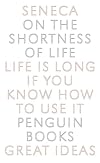
The edition that I possess has three sections.
The first is called “On the Shortness of Life”. The second is “Consolation to Helvia”, and the third is “On Tranquility of Mind”.
Seneca followed a different structure for each.
“On the Shortness of Life” is an essay. This contains gems of wisdom. It is a strange commentary on human nature that we are still repeating what he said about 2,000 years ago. For instance, he writes, “So it is inevitable that life will be not just very show more short but very miserable for those who acquire by great toil what they must great by greater toil.”
This was true then. It is true today.
“Consolation to Helvia” seems to be a letter addressed to his mother, in which he tries to allay her fears about him. He has tried to console her in this letter, and then has moved on to describing some of his own philosophy. He is a Stoic, and repeatedly acknowledges his debt to Zeno, the founder of the Stoic school. Again, while speaking of his lifestyle and philosophy, he leaves us with much food for thought.
For instance, he wrote, “We do not need to scour every ocean, or to load our bellies with the slaughter of animals, or to pluck shellfish from the unknown shores of the furthest sea.”
Our lifestyle today, is unsustainable. We are, as human beings, creating the sixth extinction. Seneca warned us almost 2,000 years ago.
The third section starts almost as a dialogue. Rather, Serenus, a friend of Seneca, has come to Seneca with a problem. His mind is not quiet. He seeks tranquility. Seneca again launched into his essay. He quoted Lucretius at one point, “Thus each man ever flees himself.” Then, he goes on to write, “But, to what end, if he does not escape himself”
He also writes, “He who fears death will never do anything worthy of a living man.”
There is deep philosophy in sentences like this.
The book is short. The writing clear. Not a word is wasted.
This is a book for the keeping. Learn the lessons and apply them. This is when you will discover the gems of wisdom in this book. show less
The first is called “On the Shortness of Life”. The second is “Consolation to Helvia”, and the third is “On Tranquility of Mind”.
Seneca followed a different structure for each.
“On the Shortness of Life” is an essay. This contains gems of wisdom. It is a strange commentary on human nature that we are still repeating what he said about 2,000 years ago. For instance, he writes, “So it is inevitable that life will be not just very show more short but very miserable for those who acquire by great toil what they must great by greater toil.”
This was true then. It is true today.
“Consolation to Helvia” seems to be a letter addressed to his mother, in which he tries to allay her fears about him. He has tried to console her in this letter, and then has moved on to describing some of his own philosophy. He is a Stoic, and repeatedly acknowledges his debt to Zeno, the founder of the Stoic school. Again, while speaking of his lifestyle and philosophy, he leaves us with much food for thought.
For instance, he wrote, “We do not need to scour every ocean, or to load our bellies with the slaughter of animals, or to pluck shellfish from the unknown shores of the furthest sea.”
Our lifestyle today, is unsustainable. We are, as human beings, creating the sixth extinction. Seneca warned us almost 2,000 years ago.
The third section starts almost as a dialogue. Rather, Serenus, a friend of Seneca, has come to Seneca with a problem. His mind is not quiet. He seeks tranquility. Seneca again launched into his essay. He quoted Lucretius at one point, “Thus each man ever flees himself.” Then, he goes on to write, “But, to what end, if he does not escape himself”
He also writes, “He who fears death will never do anything worthy of a living man.”
There is deep philosophy in sentences like this.
The book is short. The writing clear. Not a word is wasted.
This is a book for the keeping. Learn the lessons and apply them. This is when you will discover the gems of wisdom in this book. show less
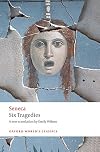
The only other Senecan translator I’m familiar with is Frank Justus Miller. He’s rather old fashioned and likes to thee and thou, but these plays are probably some of the few classical works that can bear that kind of thing. He’s certainly the better poet technically, but whether you prefer him or Wilson is probably a personal thing. I prefer Wilson. She writes with rhythm and a kind of supple strength. This is a line-by-line translation and it’s perhaps moot as to whether this is show more poetry or just rhythmic prose. Either way, it’s very good.
I’d read quite a few of the old Greek plays before it was borne in upon me that everything except for the spoken words are later additions by various editors. One thing I particularly liked about this edition is that Wilson gives you the speakers’ names and the act divisions and nothing else. Stage directions and those ridiculous scene divisions all stripped out. I recognise that a casual reader like me needs stage directions in something like Plautus because you need to know who can overhear what. You don’t need that with Seneca. It made clear some interesting features of the text that I would have missed if it were broken up. Like the chiastic structure of Act One of Phaedra: Speeches, conversation, stichomythia, conversation, speech. It’s also gives the wonderful effect of voices crying out in the darkness.
There seems to be some controversy over whether or not these were written to be staged or not. Either way, unlike all earlier plays they were not intended to be part of a religious festival. Is Seneca writing as part of a now lost tradition of non-religious drama, or is he innovating? These plays are chock-full of the most astounding descriptive passages and general unpleasantness, and are obviously an effective performance of some kind, whether by the actors or Seneca himself, but they don’t always work as drama as I recognise it. Is he doing something I don’t appreciate, or is he not the best playwright?
They only one which really pulls together theme, action, and character and creates a classic for all time is Trojan Women where, in the aftermath of the Trojan war everyone is trying to shift responsibility onto someone else. show less
I’d read quite a few of the old Greek plays before it was borne in upon me that everything except for the spoken words are later additions by various editors. One thing I particularly liked about this edition is that Wilson gives you the speakers’ names and the act divisions and nothing else. Stage directions and those ridiculous scene divisions all stripped out. I recognise that a casual reader like me needs stage directions in something like Plautus because you need to know who can overhear what. You don’t need that with Seneca. It made clear some interesting features of the text that I would have missed if it were broken up. Like the chiastic structure of Act One of Phaedra: Speeches, conversation, stichomythia, conversation, speech. It’s also gives the wonderful effect of voices crying out in the darkness.
There seems to be some controversy over whether or not these were written to be staged or not. Either way, unlike all earlier plays they were not intended to be part of a religious festival. Is Seneca writing as part of a now lost tradition of non-religious drama, or is he innovating? These plays are chock-full of the most astounding descriptive passages and general unpleasantness, and are obviously an effective performance of some kind, whether by the actors or Seneca himself, but they don’t always work as drama as I recognise it. Is he doing something I don’t appreciate, or is he not the best playwright?
They only one which really pulls together theme, action, and character and creates a classic for all time is Trojan Women where, in the aftermath of the Trojan war everyone is trying to shift responsibility onto someone else. show less
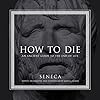
The title, can be a little misleading... In "How to Die: An Ancient Guide to the End of Life" Seneca, (this volume edited by James Romm) reveals and explains to us how death is not to be feared or even cause us anxiety. Seneca, in letters to others breaks down his theories through explanation of his thoughts, gives well thought through reasonings, and uses real-life examples to support his conclusions. Short and to the point "How to Die:..." easily could be a very dour book, but comes away, show more to me anyway, as a positive event that should, after a certain point, be looked forward to and actually be embraced! To do so is a sign that we as an individual have lived a life of worth and lived well.
Now, do I agree with every thing that Seneca lays out? No, especially his views on suicide. There are thoughts there that I do not agree with at all, but that is why I read philosophy. I read it to challenge my thoughts and notions. I read it to get a different point of view. I read it to make me think. This book did just that. Seneca, did not pen how to die physically letters, the title misleads a little there, but how to prepare for death mentally letters, which is much, much more important. Is this book for everyone? No, there are going to be many mentally immature people who cannot handle the topic or his thoughts on it, and that is OK. Philosophy is like that sometime. This is surely not the book to start your Seneca journey with either, there are a few others that one should start with before this. But compared to the book, the audiobook, narrated by P. J. Ochlan was for me not as enjoyable or thought provoking. For whatever reason Ochlan's voice did not move me much. It was like being in a discussion with a monotone individual...it was all the same. I give the audiobook a 2.5 out of 4 stars. Go with the physical book, that is my recommendation. show less
Now, do I agree with every thing that Seneca lays out? No, especially his views on suicide. There are thoughts there that I do not agree with at all, but that is why I read philosophy. I read it to challenge my thoughts and notions. I read it to get a different point of view. I read it to make me think. This book did just that. Seneca, did not pen how to die physically letters, the title misleads a little there, but how to prepare for death mentally letters, which is much, much more important. Is this book for everyone? No, there are going to be many mentally immature people who cannot handle the topic or his thoughts on it, and that is OK. Philosophy is like that sometime. This is surely not the book to start your Seneca journey with either, there are a few others that one should start with before this. But compared to the book, the audiobook, narrated by P. J. Ochlan was for me not as enjoyable or thought provoking. For whatever reason Ochlan's voice did not move me much. It was like being in a discussion with a monotone individual...it was all the same. I give the audiobook a 2.5 out of 4 stars. Go with the physical book, that is my recommendation. show less
Lists
Awards

You May Also Like
Associated Authors
Statistics
- Works
- 515
- Also by
- 4
- Members
- 8,960
- Popularity
- #2,685
- Rating
- 4.0
- Reviews
- 111
- ISBNs
- 608
- Languages
- 20
- Favorited
- 33

