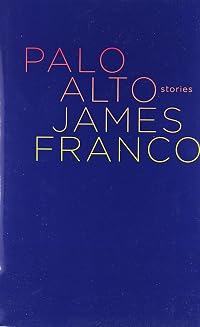
Palo Alto: Stories
by James Franco
On This Page
Description
A fiercely vivid collection of stories about troubled California adolescents and misfits.Tags
Recommendations

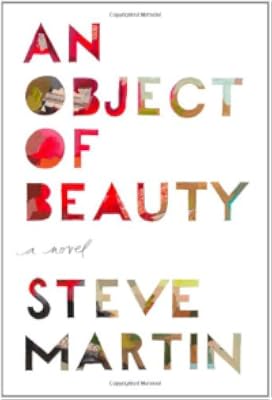
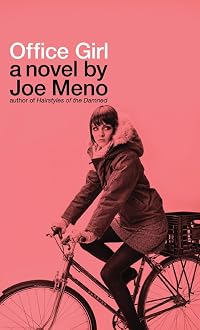
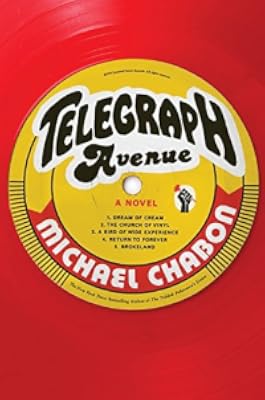
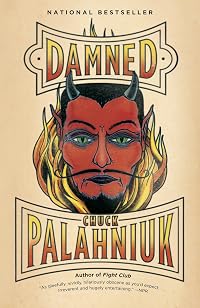

Member Recommendations
Member Reviews
Rating: 3.875* of five
The Book Report: Sixteen short stories about adolescent life in upper middle class America. The author hailing from there, he's written about Palo Alto, California. It could as easily be Cedar Park, Texas, or Rockville Centre, New York. The stories are very much in the vein of adolescence itself, working the same nerve in me as adolescents do: Getting drunk, getting high, hooking up, wondering if you're the only one, being ostracized, being Too Cool for School, realizing you're filled with rage but not knowing why or what you're raging against.
My Review: I hear people say their high school or college years were so great, so amazing, The Best Years of My Life, and I think, “What planet are YOU from?” I hated show more adolescence, and I still do. Clearasil and hormones and emotional devastation. Ugh, no thanks, I been there and feel lucky to have escaped at all, though certainly scathed.
So why read this collection of explicitly adolescence-themed stories? Because James Franco is an artist whose work I find really compelling. If you haven't watched 127 Hours, do. This man isn't just another pretty face, he's got what the Finns call sisu. (Google it, the explanation would take too much space in a short review.) The Academy Awards show he couldn't pull off, but movies yes, and writing yes.
His writing is very good. It's not tricky, or show-offy, or self-conscious. It's direct and it's clear and it's nuanced. He uses words the way cops use fingerprint powder, to show you the shape of his ideas without getting you all greasy with hand-sweat and forehead blood. Make no mistake, it's not easy getting words down to this level of fineness, it takes mental grinding and grinding and grinding until there isn't a lump or a clot or a chunk to be seen. Silky, smooth, sensually exciting as it flows past you to take coherent shape in front of you: Stories, people, goddamned annoying kids formed of smoke and ash and powder, living in flashes of lightning—your attention please, there is something interesting happening over here, and if we're lucky, this thirtysomething writer will give us more. Soon. show less
The Book Report: Sixteen short stories about adolescent life in upper middle class America. The author hailing from there, he's written about Palo Alto, California. It could as easily be Cedar Park, Texas, or Rockville Centre, New York. The stories are very much in the vein of adolescence itself, working the same nerve in me as adolescents do: Getting drunk, getting high, hooking up, wondering if you're the only one, being ostracized, being Too Cool for School, realizing you're filled with rage but not knowing why or what you're raging against.
My Review: I hear people say their high school or college years were so great, so amazing, The Best Years of My Life, and I think, “What planet are YOU from?” I hated show more adolescence, and I still do. Clearasil and hormones and emotional devastation. Ugh, no thanks, I been there and feel lucky to have escaped at all, though certainly scathed.
So why read this collection of explicitly adolescence-themed stories? Because James Franco is an artist whose work I find really compelling. If you haven't watched 127 Hours, do. This man isn't just another pretty face, he's got what the Finns call sisu. (Google it, the explanation would take too much space in a short review.) The Academy Awards show he couldn't pull off, but movies yes, and writing yes.
His writing is very good. It's not tricky, or show-offy, or self-conscious. It's direct and it's clear and it's nuanced. He uses words the way cops use fingerprint powder, to show you the shape of his ideas without getting you all greasy with hand-sweat and forehead blood. Make no mistake, it's not easy getting words down to this level of fineness, it takes mental grinding and grinding and grinding until there isn't a lump or a clot or a chunk to be seen. Silky, smooth, sensually exciting as it flows past you to take coherent shape in front of you: Stories, people, goddamned annoying kids formed of smoke and ash and powder, living in flashes of lightning—your attention please, there is something interesting happening over here, and if we're lucky, this thirtysomething writer will give us more. Soon. show less
I know, I should totally bag on this collection of stories because they are written by a goofy and famous actor. I personally have no opinion of James Franco, either way. I mean, I thought he was great in Freaks and Geeks back in the early 00's but none of his movies have really done anything for me. Going into this book, I was completely ambivalent.
But, I mean, I should be snarky and take ol' Mr. Franco down a peg or two, right? That's kind of a problem when the stories in this books are actually pretty decent. None of them reach anywhere close to Fitzgerald but who says that everyone needs to aspire to be someone else? These are just simple stories that intertwine together about a dude and his friends in California as they party, show more drink, fuck, kill things, destroy property, and wonder why life is the way it is. For that, I give it three stars.
"Halloween" opens up the book and it's about a drunk-driver who possibly kills a woman, but does not stop to find out. "Lockheed" is about rivalries coming to a head at a teenage party. "American History" is about mistaken racism. "Killing Animals" is self descriptive and "Emily" is written from the perspective of a young girl head over heels for a sleazy dude. "Camp" is a nostalgic trip about summer and summer camp and crushes and girls. "Chinatown" ends the first part of the book and is a tragic, sometimes surreal tale about a girl who has sex with any and everyone. "April" is simply about unrequited love and "Tar Baby" is about being friends with someone you can't stand, while "I Could Kill Someone" stands as the most disappointing of all the stories; it builds to an unresolved climax that made it feel like an incomplete work. The last story, "Jack-O'" is a throwaway and ends the book on a whimper-not-bang.
It'd be pretty cool to see another offering from the young actor. show less
But, I mean, I should be snarky and take ol' Mr. Franco down a peg or two, right? That's kind of a problem when the stories in this books are actually pretty decent. None of them reach anywhere close to Fitzgerald but who says that everyone needs to aspire to be someone else? These are just simple stories that intertwine together about a dude and his friends in California as they party, show more drink, fuck, kill things, destroy property, and wonder why life is the way it is. For that, I give it three stars.
"Halloween" opens up the book and it's about a drunk-driver who possibly kills a woman, but does not stop to find out. "Lockheed" is about rivalries coming to a head at a teenage party. "American History" is about mistaken racism. "Killing Animals" is self descriptive and "Emily" is written from the perspective of a young girl head over heels for a sleazy dude. "Camp" is a nostalgic trip about summer and summer camp and crushes and girls. "Chinatown" ends the first part of the book and is a tragic, sometimes surreal tale about a girl who has sex with any and everyone. "April" is simply about unrequited love and "Tar Baby" is about being friends with someone you can't stand, while "I Could Kill Someone" stands as the most disappointing of all the stories; it builds to an unresolved climax that made it feel like an incomplete work. The last story, "Jack-O'" is a throwaway and ends the book on a whimper-not-bang.
It'd be pretty cool to see another offering from the young actor. show less
Amy Hempel lied to me. Also: so did Susan Minot, Darcey Steinke, Ben Marcus, and Gary Shteyngart. It was in the back of James Franco's debut collection, Palo Alto, where Hempel said Franco wrote "quotable, unsettling stories," Susan Minot said "Franco is a writer of skill and sensitivity," and Gary Shteyngart said "As a writer, he's here to stay."
I got the book, eagerly anticipating an author who knows the rhytmn of words, the way to really write a short story. I opened it pen in hand to underline passages. What I found was an utter disappointment.
Palo Alto is a collection of semi-interconnected stories set in Franco's hometown of Palo Alto. For those of you who don't know, Palo Alto is in California. The majority of people there are show more white, if not Asian. The median income is $119,046. Just background information. Palo Alto the book, follows the teenage lives of a group of friends as they try to navigate their middle class ennui through sex and drugs.
Some of the stories are excessively explicit, easily comparable (based on content alone) to the likes of Dennis Cooper (Ben Marcus calls him that). For example, "Chinatown" tells the story how the narrator turns a half-Vietnamese girl into the town's slut:
"Pam came over. I got her into Jason's parents' bed. I got her naked. She wasn't even drinking. The guys line up outside the bedroom. We went in, two and three at a time. Everyone fucked her. She got really messy. Some of the guys were so smelly. The room smelled like oysters."
The events are semi-ridiculous and told in a quiet distanced voice. Other stories have the same dead-pan tone while describing these kids' search for something to do. In "Killing Animals," the boys go on a hunting spree in the city. In "Lockheed," the narrator becomes fascinated with the killing of a boy at a party. Violence, death, and sex is everywhere and Franco seems to be trying to make a statement: in an age of ennui, we look to express ourselves in extremes. Or perhaps, in the age of ennui, even shock does not shock us: "In ninth grade we watched a lot of Holocaust stuff. We saw pictures and then a film of the naked bodies being bulldozed. Penises on the men and vaginas and breasts on women. They didn't seem like real penises. I looked close. Some were big."
Yet Dennis Cooper he is not. Kathy Acker he is not. Bret Easton Ellis he is not.
The difference between Cooper et al and Franco is that the formers not only shocked, they experimented with style, they knew prose was something powerful and that sex and violence needed to be explored further. Franco, on the other hand, lacks skills. Beyond the sex and violence is simple shock factor. Educated with multiple MFAs, hobnobbing with minimalists such as Mona Simpson and Amy Hempel (his acknowledgement page is name dropping vomit), Franco's work tries desperately to pay tribute to Raymond Carver and Denis Johnson, but instead fails. Franco's prose is off-rhytmn, they're mouthfulls that rubs in your head the wrong way.
From "Killing Animals": "He got cherry flavor. It came in a red wrapper....We walked back eating our pies. They were crescent shaped and glazed."
From "Emily": "He jumped in the pool and he was in the pool, swimming around naked."
From "Chinatown": "When we got older, I did things in my life and she did things in her life."
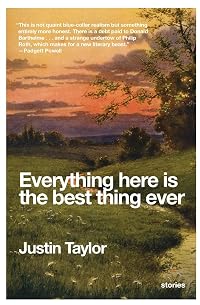
Franco's prose is vague, yet not the same vague as say Justin Taylor's debut (also this year), whose title is Everything Here Is The Best Thing Ever. The vague prose in Palo Alto is unearned.
Arguably, Tao Lin explores the same and his writing has the same types of grammatical loops. Yet Tao Lin (despite being annoying), has humor. Tao Lin is his own thing. He stands on the shoulders of Ann Beattie and Lydia Davis. Tao Lin's work is a painful statement about culture. Franco is plain painful.
Maybe one or two of the stories here are something almost remarkable (for example, the opening story "Halloween"). Yet when read together, it's mundane. The effect pierces the brain. You grow bored.
Franco stories can be summed up like this:
"I had my first drink when I was thirteen, and in the three years since then we had been taking from his cupboard and putting water back into the bottles."
"He has a big dick."
"Jewish, Russian, Jewish, Italian, half Korean/half white."
These phrases are not from one story, but are re-used throughout the book. While this might work in some collections, using key phrases to emphasis themes, Franco doesn't have enough skill to pull it off. His stories are too similar to each other. His narrators (they're voices, not characters--characters imply personality) sound the same despite being different people. His description skill obviously go as far as race (and it does get to the point of racism [I'm not talking about the "N" word in "American History"]; even minimalists had a way of describing things), or else they try to uplift the usual (for example a red wrapper) into a symbol but fail completely: his observations are bland. (Can someone with a good-upbringing and money truly write anything that is not bland? I've always believed that you really need to be truly fucked up in the head to write anything worth reading...)
Fact is, Franco got this book published because of his fame. Unfortunately, Franco wasn't smart enough to hire a ghost writer (who would probably have more skill). Also, Amy Hempel has bad taste. show less
I got the book, eagerly anticipating an author who knows the rhytmn of words, the way to really write a short story. I opened it pen in hand to underline passages. What I found was an utter disappointment.
Palo Alto is a collection of semi-interconnected stories set in Franco's hometown of Palo Alto. For those of you who don't know, Palo Alto is in California. The majority of people there are show more white, if not Asian. The median income is $119,046. Just background information. Palo Alto the book, follows the teenage lives of a group of friends as they try to navigate their middle class ennui through sex and drugs.
Some of the stories are excessively explicit, easily comparable (based on content alone) to the likes of Dennis Cooper (Ben Marcus calls him that). For example, "Chinatown" tells the story how the narrator turns a half-Vietnamese girl into the town's slut:
"Pam came over. I got her into Jason's parents' bed. I got her naked. She wasn't even drinking. The guys line up outside the bedroom. We went in, two and three at a time. Everyone fucked her. She got really messy. Some of the guys were so smelly. The room smelled like oysters."
The events are semi-ridiculous and told in a quiet distanced voice. Other stories have the same dead-pan tone while describing these kids' search for something to do. In "Killing Animals," the boys go on a hunting spree in the city. In "Lockheed," the narrator becomes fascinated with the killing of a boy at a party. Violence, death, and sex is everywhere and Franco seems to be trying to make a statement: in an age of ennui, we look to express ourselves in extremes. Or perhaps, in the age of ennui, even shock does not shock us: "In ninth grade we watched a lot of Holocaust stuff. We saw pictures and then a film of the naked bodies being bulldozed. Penises on the men and vaginas and breasts on women. They didn't seem like real penises. I looked close. Some were big."
Yet Dennis Cooper he is not. Kathy Acker he is not. Bret Easton Ellis he is not.
The difference between Cooper et al and Franco is that the formers not only shocked, they experimented with style, they knew prose was something powerful and that sex and violence needed to be explored further. Franco, on the other hand, lacks skills. Beyond the sex and violence is simple shock factor. Educated with multiple MFAs, hobnobbing with minimalists such as Mona Simpson and Amy Hempel (his acknowledgement page is name dropping vomit), Franco's work tries desperately to pay tribute to Raymond Carver and Denis Johnson, but instead fails. Franco's prose is off-rhytmn, they're mouthfulls that rubs in your head the wrong way.
From "Killing Animals": "He got cherry flavor. It came in a red wrapper....We walked back eating our pies. They were crescent shaped and glazed."
From "Emily": "He jumped in the pool and he was in the pool, swimming around naked."
From "Chinatown": "When we got older, I did things in my life and she did things in her life."
Franco's prose is vague, yet not the same vague as say Justin Taylor's debut (also this year), whose title is Everything Here Is The Best Thing Ever. The vague prose in Palo Alto is unearned.
Arguably, Tao Lin explores the same and his writing has the same types of grammatical loops. Yet Tao Lin (despite being annoying), has humor. Tao Lin is his own thing. He stands on the shoulders of Ann Beattie and Lydia Davis. Tao Lin's work is a painful statement about culture. Franco is plain painful.
Maybe one or two of the stories here are something almost remarkable (for example, the opening story "Halloween"). Yet when read together, it's mundane. The effect pierces the brain. You grow bored.
Franco stories can be summed up like this:
"I had my first drink when I was thirteen, and in the three years since then we had been taking from his cupboard and putting water back into the bottles."
"He has a big dick."
"Jewish, Russian, Jewish, Italian, half Korean/half white."
These phrases are not from one story, but are re-used throughout the book. While this might work in some collections, using key phrases to emphasis themes, Franco doesn't have enough skill to pull it off. His stories are too similar to each other. His narrators (they're voices, not characters--characters imply personality) sound the same despite being different people. His description skill obviously go as far as race (and it does get to the point of racism [I'm not talking about the "N" word in "American History"]; even minimalists had a way of describing things), or else they try to uplift the usual (for example a red wrapper) into a symbol but fail completely: his observations are bland. (Can someone with a good-upbringing and money truly write anything that is not bland? I've always believed that you really need to be truly fucked up in the head to write anything worth reading...)
Fact is, Franco got this book published because of his fame. Unfortunately, Franco wasn't smart enough to hire a ghost writer (who would probably have more skill). Also, Amy Hempel has bad taste. show less
For some reason, I've started off the summer reading books about monsters: Alan Moore's From Hell, Bret Easton Ellis's American Psycho, Tampa by Alissa Nutting, and this one, Palo Alto.
Except for Ellis's book, which is hilarious, I'm getting a little tired of reading about the very worst of human nature, whether banal or novel. And Palo Alto offers both, leavened with only merest slivers of humanity.
Except for Ellis's book, which is hilarious, I'm getting a little tired of reading about the very worst of human nature, whether banal or novel. And Palo Alto offers both, leavened with only merest slivers of humanity.
James Franco is one of those super-multi-talented people that makes you feel bad because you haven't acheived anything in life and in comparison to him, never will. He's a famous actor, having played the bad boy on Freaks and Geeks and most recently seen on the big screen cutting his arm off in 127 hours and being Allen Ginsberg in Howl. He's a painter, he's ridiculously attractive and he's got a masters degree. Wotta man. But don’t let that put you off reading his book. As part of the aforementioned degree, Franco wrote a series of short stories meditating on the lives of teenagers in the American town of Palo Alto. And so Palo Alto the book came about. It’s really very easy to read, with the simplicity of the writing reflecting show more the naivety of most of the characters. It is about bad kids struggling to be good, or maybe it is about good kids struggling to be bad. It is about the things kids get up to in a small town, like drinking and smoking and making friends and going to parties and more drinking and making a move on that guy/girl you like and getting into trouble with the cops or school or your parents and generally trying not to be a weirdo that everybody hates. I enjoyed every story in the book, despite the recklessness , but some of the plots or events in different stories were very similar. People get run over by cars on multiple occasions. Which leads me to conclude that Franco ran over someone with a car once and is pretty hung up about it. But that’s okay because it makes for some interesting reading. show less
I feel as though Palo Alto is James Franco's attempt at being edgy.
That sounds mean. It's a solid effort for a first book, and I did find a lot of the stories readable. The characterisation was consistent and the atmosphere was well-written.
It's sort of what would happen if Brett Easton Ellis and Chuck Pahlaniuk had a baby who grew into a teenager, who liked to exaggerate stories about his friends.
It had a ring of truth to it, but not all of it was as vivid as I'd wanted it to be. This book also deals with some really big issues - sex, non-consensual sex, drugs, death, but it felt as though it didn't deal with them respectfully?
I don't know. I don't really care about political correctness in books, but I don't like big issues being used show more for shock value.
The writing was good, except when he tried to hard, and it was consistent, but I'd have to read something else of his to see how it stacks up. show less
That sounds mean. It's a solid effort for a first book, and I did find a lot of the stories readable. The characterisation was consistent and the atmosphere was well-written.
It's sort of what would happen if Brett Easton Ellis and Chuck Pahlaniuk had a baby who grew into a teenager, who liked to exaggerate stories about his friends.
It had a ring of truth to it, but not all of it was as vivid as I'd wanted it to be. This book also deals with some really big issues - sex, non-consensual sex, drugs, death, but it felt as though it didn't deal with them respectfully?
I don't know. I don't really care about political correctness in books, but I don't like big issues being used show more for shock value.
The writing was good, except when he tried to hard, and it was consistent, but I'd have to read something else of his to see how it stacks up. show less
i always get suspicious of celebrities writing books all of a sudden, like Nicole Richie's Priceless. i don't know why. i get the feeling like they're faking it or riding on fame.
james franco went to ucla for writing before he started acting. he didn't finish. but now he's written this collection of short stories set in his home town, palo alto. and i just can't help but being critical even though i really liked the stories.
for example, i can't tell if it is apropos or ironic that a celebrity wrote these lines: "If only we had a camera on us at all times, we could go and watch each other's tapes and find out what each of us was really like."
or the fact that a lot of the stories have the same characters and some of the same descriptions. show more is that intentional or just bad writing?
but franco is not a bad writer. so i should give him some credit.
his stories are filled with sex and violence and i often found myself asking what message franco wants to convey.
if i were to boil his book down into one scene it would be this one:
"I wrote SHIT FUCK COCK SUCK DIE ASS NOTHINGNESS MEANINGLESS CRY...
'What does all that mean?' said Barry.
'Nothing,' I said, but it was something." show less
james franco went to ucla for writing before he started acting. he didn't finish. but now he's written this collection of short stories set in his home town, palo alto. and i just can't help but being critical even though i really liked the stories.
for example, i can't tell if it is apropos or ironic that a celebrity wrote these lines: "If only we had a camera on us at all times, we could go and watch each other's tapes and find out what each of us was really like."
or the fact that a lot of the stories have the same characters and some of the same descriptions. show more is that intentional or just bad writing?
but franco is not a bad writer. so i should give him some credit.
his stories are filled with sex and violence and i often found myself asking what message franco wants to convey.
if i were to boil his book down into one scene it would be this one:
"I wrote SHIT FUCK COCK SUCK DIE ASS NOTHINGNESS MEANINGLESS CRY...
'What does all that mean?' said Barry.
'Nothing,' I said, but it was something." show less
Members
- Recently Added By
Lists

ban men from writing
8 works; 1 member

Books featured on I Don't Even Own a Television
167 works; 3 members

Florida
366 works; 3 members

Books Read in 2011
684 works; 20 members
Author Information

38+ Works 789 Members
James Franco was born on April 19, 1978 in Palo Alto, California. He enrolled at the University of California, Los Angeles as an English major but dropped out after freshman year to pursue a career as an actor, taking acting lessons with Robert Carnegie at Playhouse West. After 15 months of training, he began auditioning in Los Angeles California show more and got his first break in 1990 after he was cast in the leading role of the television series Freaks and Geeks. His first major film was the romantic comedy Whatever It Takes. He was later cast in the title role of the 2001 TV special James Dean. He received a Golden Globe Award and nominationations for an Emmy Award and a Screen Actors Guild Award. In 2002 the superhero film Spider-Man was released and James Franco played Harry Osborn, the son of the villain. Spider-Man was a commercial and critical success. In the same year he was cast in the drama City by the Sea. The following year he co-starred in Robert Altman's The Company. With the success of the first Spider-Man film he was able to reprise the role in the sequel Spider-Man 2 in 2004. The movie was well received by critics. He continues his acting career with roles in films such as the Great Raid, Annapolis, Flyboys and Wicker Man. He is a successful actor, director and screenwriter. (Bowker Author Biography) show less
Work Relationships
Inspired
Common Knowledge
- Canonical title*
- Palo Alto : novelleja
- Original title
- Palo Alto : stories
- Original publication date
- 2010
*Some information comes from Common Knowledge in other languages. Click "Edit" for more information.
Classifications
Statistics
- Members
- 448
- Popularity
- 68,454
- Reviews
- 22
- Rating
- (3.02)
- Languages
- 5 — English, Finnish, French, German, Italian
- Media
- Paper, Audiobook, Ebook
- ISBNs
- 18
- UPCs
- 1
- ASINs
- 7