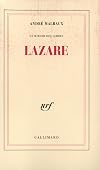
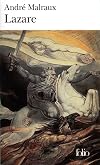
On This Page
Tags
Recommendations























Member Reviews
Megtévesztő könyv. Úgy kezdődik, mintha háborús regény lenne, mégpedig a világirodalom legplasztikusabb háborús regényeinek egyike az első világháború keleti frontjáról: egy német gáztámadás démoni, zsigerig ható ábrázolása. (Jut eszembe: az ember – ember? –, aki a harci gázokat kitalálta, önjogán a világegyetem egyik legaljasabb figurája.) Aztán kiderül, hogy ez mégsem egy háborús regény, hanem betegségkönyv, amiben az elképzelhetetlen borzalmak fejezetei csak egy újabb, tán csendesebb, de ugyanúgy elképzelhetetlen borzalmat vezetnek fel: a szerző kórházi hétköznapjait – haldoklás közben. Malraux szinte szemérmesen kerüli, hogy az esemény testi aspektusait említse, a show more folyamatot inkább egy mozgalmas életre* való visszaemlékezés szilánkjai rajzolják ki, valamint a filozófia-ízű diskurzusok az orvosokkal és önmagával. Helyenként a gesztusok mintha színpadiasak lennének – de ez valahogy csak aláhúzza a leírtak őszinteségét: a férfias helytállás ideája ugyan csak puszta póz az űr és a kétségbeesés peremén, és ezt ő is tudja, meg én is tudom, de ha már nem maradt semmi más, akkor egy póz is sokkal többet ér, mint a semmi, hogy átsegítsen ezen az egészen. Igazán figyelemreméltó könyv a halál árnyékának völgyéből.
(Ui.: A regény alcíme – A kötél és az egerek, VI. fejezet – sejteti, hogy itt egy hosszabb ciklus részletét olvassuk. Igazán jellemző a RaRe sorozatra, hogy arról, mi ez a ciklus, és mit kell tudni róla, konkrétan egy mukkot nem mond. Az meg már a google korlátait jelzi, hogy e téren ő sem tud eligazítani.)
* És Malrauxnak aztán mozgalmas élete volt: utazások, spanyol polgárháború, francia ellenállás, no és a miniszteri poszt. Korának ikonikus figurája volt ő. show less
(Ui.: A regény alcíme – A kötél és az egerek, VI. fejezet – sejteti, hogy itt egy hosszabb ciklus részletét olvassuk. Igazán jellemző a RaRe sorozatra, hogy arról, mi ez a ciklus, és mit kell tudni róla, konkrétan egy mukkot nem mond. Az meg már a google korlátait jelzi, hogy e téren ő sem tud eligazítani.)
* És Malrauxnak aztán mozgalmas élete volt: utazások, spanyol polgárháború, francia ellenállás, no és a miniszteri poszt. Korának ikonikus figurája volt ő. show less
Ratings
Members
- Recently Added By
Author Information

Andre (Georges) Malraux, 1901- 1976 French novelist Andre Malraux was born in Paris to a wealthy family. His father was Fernand-Georges Malraux, a stockbroker, and his mother was Berthe (Lamy) Malraux. He attended the Lycee Condorcet and studied oriental languages at the Ecole des Langues Orientales. His parents separated when he was a child, and show more his mother brought him up. His father committed suicide in 1930. Malraux was also considered an adventurer, art historian, and statesman. He was the Minister for Cultural Affairs for eleven years from 1958-1969. He worked as an art editor at Gallimard publishers in Paris. He attended archaeological expeditions in Iran and Afghanistan. At the age of twenty-one, Malraux went to Cambodia with his wife, writer Clara Goldsmidt, where he was imprisoned for taking bas-reliefs from a Khmer temple. In 1925, he went to Saigon and joined the anti-colonial Young Annam League. In World War II, Malraux served in a French tank Unit. He was wounded and captured, but he managed to escape and join the Resistance where he met General Charles de Gaulle. He escaped a second capture in 1944 and received the Medaille de la Resistance, the Croix de Guerre and the British Distinguished Service Order for his service. Malraux's short novel "Le Temps De Mapris" (1935), tells the story of a Communist who's held prisoner in a Nazi concentration camp. In the Spanish Civil War, Malraux fought for the Republicans (1936-1939). He was wounded twice in the effort to stop Franco's advance on Madrid. His novel "L'Espoir" (1937) tells of Republican Spain in combat. This was also adapted for the screen in 1938 and the film was titled Sierrade Teruel. After "L'Espoir", Malraux divorced and had a liaison with Josette Clotis. She died in a railroad accident in 1945. At this time, Malraux broke from communism and began writing non-fiction. In 1948, Malrauxe married Marie-Madeline Lioux, a concert pianist and widow of his half-brother. In 1961, he lost his two sons in an accident. In 1958, when de Gaulle came to power, he was appointed first Minister of Information and then, a year later, Minister of State for Cultural Affairs. In 1967, Malraux's autobiography "Anti-Memoires" was published. In it, Malraux mixed fact with fiction and excerpts from his novels. Later volumes of his personal recollections involved Pablo Picasso, Leopold Sedar Senghor and de Gaulle. In "Felled Oaks" (1971), Malraux tells of his conversations with de Gaulle, his political idol. After leaving politics, Malraux retired to a suburb of Paris and continued to write until his death on November 23, 1976. (Bowker Author Biography) show less
Series

Belongs to Publisher Series
Work Relationships
Common Knowledge
- Canonical title*
- Le miroir des limbes. Lazare
- Alternate titles*
- Lazare
- Original publication date
- 1974-10-25 (1e édition originale française ∙ Blanche ∙ Gallimard) (1e édition originale française ∙ Blanche ∙ Gallimard); 2004-10-21 (Réédition française, Folio, Gallimard) (Réédition française, Folio, Gallimard)
- Original language*
- Français
*Some information comes from Common Knowledge in other languages. Click "Edit" for more information.
Classifications
Statistics
- Members
- 68
- Popularity
- 460,894
- Reviews
- 1
- Rating
- (4.00)
- Languages
- 6 — Dutch, English, French, German, Hungarian, Romanian
- Media
- Paper, Ebook
- ISBNs
- 11
- ASINs
- 7