
Vercors (1902–1991)
Author of The Silence of the Sea
About the Author
Image credit: Jean Bruler (Vercors) le 18 mars 1991
Works by Vercors
Picasso: Oeuvres des Musées de Leningrad et de Moscou, et de Quelques Collections Parisiennes. (1955) 7 copies
De droom 3 copies
Le sable du temps 3 copies
Put out the light 2 copies
Le Silence de la mer et autres nouvelles: Livre audio 1 CD MP3 - Suivi d'un entretien avec François Bruller, fils de l'auteur (2011) 2 copies
Mens of geen mens 2 copies
Milczenie morza 2 copies
You Shall Know Them 2 copies
Mere vaikus 2 copies
Kielwasser Roman 1 copy
Death to the Infadels 1 copy
Il comandante del Prometeo 1 copy
Plus ou moins homme 1 copy
El silenci del Mar 1 copy
Tratwa Meduzy 1 copy
Contes célèbres du 20e siècle: Französische Lektüre für das 4. Lernjahr, Oberstufe (Éditions Klett) (1987) 1 copy
Comme un frère. 1 copy
Ebaloomad : romaan 1 copy
Le Silence De La Mer 1 copy
A Batalha do Silêncio 1 copy
SUSAN DENIZ 1 copy
Les pas dans le sable 1 copy
Figures de résistants:Simone et ses compagnons, Lettres en guise de préface du Général de Gaulle 1 copy
SOYSUZLASMIS HAYVANLAR 1 copy
Le Silence de la Mer - La Marche à l'Etoile - Les Armes de la Nuit. Illustrations de Hermine DAVID. 1 copy
Goetz : treize reproductions 1 copy
Associated Works
Pétanque de Toulon — Illustrator — 1 copy
Tagged
Common Knowledge
- Legal name
- Bruller, Jean Marcel Adolphe
- Other names
- Vercors
- Birthdate
- 1902-02-26
- Date of death
- 1991-06-10
- Gender
- male
- Education
- Ecole Alsacienne
- Occupations
- illustrator
graphic artist
engraver
novelist
essayist
memoirist (show all 7)
publisher - Organizations
- Éditions de Minuit
- Relationships
- Lescure, Pierre de (colleague)
- Short biography
- Vercors was the pseudonym of Jean Marcel Bruller, born in Paris. He attended the École Alsacienne and worked as a graphic artist and engraver until being drafted into the French army at the start of World War II. In 1941, with Pierre de Lescure, he founded Éditions de Minuit, an underground press. He also worked with the French Resistance, passing messages for the British intelligence service. While recuperating from a broken leg, he wrote the novella Le Silence de la Mer (The Silence of the Sea), which Éditions de Minuit published under his Resistance nom de guerre Vercors. Thousands of copies were circulated throughout Occupied France, much to the annoyance of the Nazis -- his editor was arrested and executed. The book was published in the USA in 1943, and by 1948 it had sold more than a million copies in 17 languages. He continued to write fiction, plays, and essays under his real name, but never matched the initial success of Le Silence de la mer. His later works included Le Sable du temps (The Sand of Time, 1946), Plus ou moins homme (More or Less Man, 1950), Sylva (1961), Tendre Naufrage (Tender Castaway, 1974), Les Chevaux du temps (The Horses of Time, 1977), and a collection of memoirs.
- Nationality
- France
- Birthplace
- Paris, France
- Places of residence
- Paris, France
Villiers-sur-Morin, Seine-et-Marne (1933-1948)
Saint-Augustin, Seine-et-Marne (1950-1988) - Place of death
- Paris, France
- Burial location
- Cimetière du Montparnasse, Paris, Île-de-France, France
- Map Location
- France
- Associated Place (for map)
- Paris, France
Members
Reviews
The Silence of the Sea / Le Silence De La Mer: A Novel of French Resistance During the Second World War by "Vercors" by Vercors
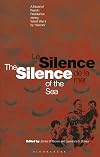
This extraordinary story came my way via a mention of it in Caroline Moorehead's A Train in Winter. The Silence of the Sea is a novel of the French Resistance, written and published underground during the German Occupation. I read it in French in a bilingual edition that came with additional features:
The Introductions make the significance of this short story clear. "Vercors" chose to characterise the German officer billeted in a French home as a handsome, aristocratic, sophisticated and genial man, respectful of French culture and traditions. The point was to show Occupied France that no matter how congenial the occupiers might seem in the early stages, they were invaders who did not share the same culture and values. It was easy to detest hateful, violent, brutish Germans, but the gentlemanly types represent an insidious threat that must also be resisted. The story shows a non-violent form in which even the weakest can express that resistance.
There are just three characters, and only one of them speaks. There is the unnamed narrator, his unnamed niece, and the German officer, Werner von Ebrennac. Ebrennac's arrival is marked by courtesy: he introduces himself and apologises for his presence. He hopes his presence will not inconvenience them. But he is met with total silence, a silence that is maintained throughout his sojourn of over a year. They do not respond to his knocks on the door, and they sit in dignified silence when in the evening he comes into the room where the narrator reads and the niece does her handiwork. The entire story consists of the narrator's observations and Ebrennac's attempts at conversation, with which he persists in good humour even after he has learned the rules by which this silence is maintained.
Vercors makes a point of making explicit the differences between Germany and France. They do not share the same culture and values. When Ebrennac discovers the shelves of French literature he goes into raptures about how many eminent authors there are. If I hadn't read German Literature, a Very Short Introduction, I might have thought that this was just French hubris, but it's true that there's only one great name in German literature that springs to mind, and that's Goethe. As the VSI explains, political and economic aspects of German history were not conducive to the emergence of literary fiction that took place in the 18th, 19th centuries and early 20th century in England, Russia and France. Ebrennac attributes it, however, to the climate. The winter in France, he says, as he warms himself by the fire, is nothing compared to winter in Germany. There, people have to be strong. In France, it is possible to be subtle and poetic.
To read the rest of my review please visit https://anzlitlovers.com/2021/02/27/le-silence-de-la-mer-the-silence-of-the-sea-... show less
- Preface and Acknowledgements, by James W Brown
- Historical Introduction, by Lawrence D Stokes
- Literary Introduction, by James W Brown
- La Silence de la mer (30 pages, including footnotes)
- The
- Silence of the Sea (27 pages), translation by Cyril Connolly
- Select bibliography
The Introductions make the significance of this short story clear. "Vercors" chose to characterise the German officer billeted in a French home as a handsome, aristocratic, sophisticated and genial man, respectful of French culture and traditions. The point was to show Occupied France that no matter how congenial the occupiers might seem in the early stages, they were invaders who did not share the same culture and values. It was easy to detest hateful, violent, brutish Germans, but the gentlemanly types represent an insidious threat that must also be resisted. The story shows a non-violent form in which even the weakest can express that resistance.
There are just three characters, and only one of them speaks. There is the unnamed narrator, his unnamed niece, and the German officer, Werner von Ebrennac. Ebrennac's arrival is marked by courtesy: he introduces himself and apologises for his presence. He hopes his presence will not inconvenience them. But he is met with total silence, a silence that is maintained throughout his sojourn of over a year. They do not respond to his knocks on the door, and they sit in dignified silence when in the evening he comes into the room where the narrator reads and the niece does her handiwork. The entire story consists of the narrator's observations and Ebrennac's attempts at conversation, with which he persists in good humour even after he has learned the rules by which this silence is maintained.
Vercors makes a point of making explicit the differences between Germany and France. They do not share the same culture and values. When Ebrennac discovers the shelves of French literature he goes into raptures about how many eminent authors there are. If I hadn't read German Literature, a Very Short Introduction, I might have thought that this was just French hubris, but it's true that there's only one great name in German literature that springs to mind, and that's Goethe. As the VSI explains, political and economic aspects of German history were not conducive to the emergence of literary fiction that took place in the 18th, 19th centuries and early 20th century in England, Russia and France. Ebrennac attributes it, however, to the climate. The winter in France, he says, as he warms himself by the fire, is nothing compared to winter in Germany. There, people have to be strong. In France, it is possible to be subtle and poetic.
To read the rest of my review please visit https://anzlitlovers.com/2021/02/27/le-silence-de-la-mer-the-silence-of-the-sea-... show less

I'd read the title story at university; re-reading it now I'm less sympathetic to the niece randomly falling in love with this random German angst-boy, but still approve her protest (though I also hope she's secretly doing something else for the Resistance!)
And all these stories I'd never read, especially L'imprimerie de Verdun which so eerily conveys the "But I didn't realise voting for a tiger would mean people would get eaten!" plaints we see repeating themselves today...
And all these stories I'd never read, especially L'imprimerie de Verdun which so eerily conveys the "But I didn't realise voting for a tiger would mean people would get eaten!" plaints we see repeating themselves today...

A mio avviso il secondo e ultimo racconto (Le armi della notte) è MOLTO più bello de "Il silenzio del mare" che dà il titolo al libro.
Perché sono molto più interessanti le parole stentate pronunciate al buio con un fil di voce di un reduce da un campo di sterminio rispetto allo sproloquio odioso di un occupante nazista o al silenzio ostinato di due resistenti francesi. Anche lo stile di Vercors ne guadagna. [pausa di riflessione] Lascia il segno allo stesso modo di "Se questo è un show more uomo". Pierre non si sa proprio come aiutarlo... :-( MA quelo che in questa sede conta è che all'autore riesce di emozionare e di coinvolgere il lettore. E di farlo riflettere.
NAZI SUCK! show less
Perché sono molto più interessanti le parole stentate pronunciate al buio con un fil di voce di un reduce da un campo di sterminio rispetto allo sproloquio odioso di un occupante nazista o al silenzio ostinato di due resistenti francesi. Anche lo stile di Vercors ne guadagna. [pausa di riflessione] Lascia il segno allo stesso modo di "Se questo è un show more uomo". Pierre non si sa proprio come aiutarlo... :-( MA quelo che in questa sede conta è che all'autore riesce di emozionare e di coinvolgere il lettore. E di farlo riflettere.
NAZI SUCK! show less
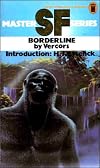
Gosh, hmm.. 3.5 stars. Of course SF abounds with novels about the nature of man. And this one is a little weak, in some ways, because there's lots of talk and not much action - the reader doesn't even meet the tropis. But I really liked the talk, the ideas, the conflicts of philosophical and political and zoological considerations.
Is man defined by his sense of spirituality? If a species has taboos, rituals, or ju-jus, is it human? Or is he defined by his relationship to nature? If he's one show more with it, and does not question or fear it, is he beast? If he's four-handed, is he beast? If he walks upright, is he man? Shall we define him as beast so we can have him work in our mills, or as man because that would be slavery?
There are a few women in the story that are very interesting. All are intelligent and individual, but also (like the men) representative of 'types' that the author wanted to explore with the reader. Not stereotypes, mind you, but each with her own pov. I found them, actually, to be more interesting than the men.
Reads, in tone and British pov, as if decades older than 1953. Many of the concepts and debates are relevant today. Recommended if you like SF for the Ideas, for the Sense of Wonder. show less
Is man defined by his sense of spirituality? If a species has taboos, rituals, or ju-jus, is it human? Or is he defined by his relationship to nature? If he's one show more with it, and does not question or fear it, is he beast? If he's four-handed, is he beast? If he walks upright, is he man? Shall we define him as beast so we can have him work in our mills, or as man because that would be slavery?
There are a few women in the story that are very interesting. All are intelligent and individual, but also (like the men) representative of 'types' that the author wanted to explore with the reader. Not stereotypes, mind you, but each with her own pov. I found them, actually, to be more interesting than the men.
Reads, in tone and British pov, as if decades older than 1953. Many of the concepts and debates are relevant today. Recommended if you like SF for the Ideas, for the Sense of Wonder. show less
Lists
Awards


You May Also Like


Associated Authors
Statistics
- Works
- 93
- Also by
- 3
- Members
- 1,410
- Popularity
- #18,225
- Rating
- 3.7
- Reviews
- 28
- ISBNs
- 100
- Languages
- 14
- Favorited
- 4


