
Alphonse Daudet (1840–1897)
Author of Letters From My Windmill
About the Author
Novelist and short-story writer Alphonse Daudet was born on May 13, 1840 in Nimes, France. At the age of 14, he wrote his first novel. He worked as a teacher in Alais, a journalist in Paris, and as a private secretary for Duke de Morny from 1861 to 1865. He married fellow writer Julia Allard in show more 1867. He enlisted in the army during the Franco-Prussian war. He is primarily remembered for his sentimental tales of provincial life in the south of France. His novel Fromont the Younger and Risler the Elder won an award from the Academie Francaise. He died on December 16, 1897 in Paris. (Bowker Author Biography) show less
Series
Works by Alphonse Daudet
Lire et s'entraîner : Alphonse Daudet : Lettres de mon moulin [book + sound recording] (2008) — Writer — 16 copies
A passion of the South 4 copies
Collection "Lecture Facile" Grandes Oeuvres - Level 2: Lettres De Mon Moulin (French Edition) (1993) 4 copies
Morceaux choisis 4 copies
Stories by Daudet and Coppée 3 copies
A Game of Billiards 3 copies
哀愁のパリ 3 copies
Marhand de bonheur 3 copies
Letters to an absent one 3 copies
Obras Inmortales: Jack. El Nabab. Safo. Cartas desde mi Molino. Tartarín de Tarascón. Cuentos del Lunes (1962) 3 copies
サフォー : 巴里風俗 3 copies
Pisma iz moje vetrenjače 3 copies
Fromont jeune et Risler aîné. tome 2 — Author — 3 copies
Pazartesi Öyküleri I 2 copies
Pazartesi Öyküleri II 2 copies
La chèvre de Monsieur Seguin (Edition pédagogique commentée et complétée de Notes, Belin Boussole) (1866) — Author — 2 copies
Tartarin de Tarascon (Illustré): Alphonse Daudet - Livre illustré pour enfants en famille (French Edition) (2020) 2 copies
Fromont and Risler ; Robert Helmont 2 copies
Numa Roumestan / Rose and Ninette — Author — 2 copies
Thirty years in Paris ; Ultima 2 copies
Oeuvres Complètes - Le Nabab -L'Immortel - Robert Helmont - Les Amoureuses (1890) — Author — 2 copies
The novels and romances of Alphonse Daudet : Monday tales, Letters from my mill, Letters to an absent one. (2009) 2 copies
Sanguinaires Lighthouse 2 copies
Short Stories 2 copies
The Man with the Golden Brain 2 copies
Romans, récits et contes : Le Petit Chose; Tartarin de Tarascon ; Tartarin sur les Alpes ; Port-Tarascon ; Numa Rou (2006) 2 copies
Lettres de mon moulin 2 copies
Oeuvres complètes de Alphonse Daudet. Contes et nouvelles. Tome 2 (Litterature) (French Edition) (2013) 1 copy
L’Arlésienne 1 copy
Quatre Contes Choisi 1 copy
Sidonie 1 copy
Pisme iz moje vetrenjače 1 copy
最後の授業 (ポプラ社文庫―世界の名作文庫) 1 copy
3 - Tartarin sur les Alpes - Collection Alphonse Daudet - Éditions Ararauna: Texte intégral (2024) 1 copy
Taratarino di Tarascona 1 copy
novelas 1 copy
Opere scelte 1 copy
Tartaren w Alpach 1 copy
A Borboleta Azul — Author — 1 copy
Jack. Tomo II 1 copy
Tartarin de Tarascon. Con espansione online. Con File audio per il download: Tartarin de Tarascon + Audio + App (2020) 1 copy
Jack, tome 1. 1 copy
Jack Tome 2 1 copy
Tartarín de Treason 1 copy
Stars&The Last Class( Easy Appreciation of English Masterpieces-Iris tectorum ) (Talking Version) (Chinese Edition) — Author — 1 copy
Tartarin de Tarascon - Tartarin sur les Alpes - Port Tarascon: Romans (French Edition) (2017) 1 copy
Contes du lundi. LaPartie de billard, Le porte-drapeau, le juge de Colmar, La dernière classe (2013) 1 copy
Knauķis : [romāns] 1 copy
The Support of the Family 1 copy
Değirmenimden Hikayeler 1 copy
Rose and Ninette 1 copy
Arlatan's Treasure 1 copy
Œuvres Complètes Illustrées - Tome IV : Tartarin De Tarascon, Contes Du Lundi, Femmes D'Artistes 1 copy
La Fedor 1 copy
değirmenimden mektuplar I 1 copy
Entre Les Frises Et La Rampe: Petites Études De La Vie Théâtrale. Illus. De Marold Et Picard (French Edition) (2010) 1 copy
The Brave Little Goat of Monsieur Seguin: A Picture Story from Provence translated and adapted from a story by Alphonse Daudet (1968) 1 copy
Sapho, mœurs parisiennes 1 copy
Contes - petits drames 1 copy
Y wers Olaf 1 copy
Tartarín 1 copy
Le Midi de la France 1 copy
Théâtre 1 copy
The Colors 1 copy
Studio Love 1 copy
A Bohemian Night 1 copy
Come, Parisians! 1 copy
The Pale Duke 1 copy
Advance Guard 1 copy
A Transitory Tomb 1 copy
Contes choisis pour la jeunesse — Author — 1 copy
Contes d'Hiver 1 copy
The Friend Of Maurice 1 copy
The Child Spy 1 copy
My Neighbor 1 copy
The Poet Mistral 1 copy
The Camargue 1 copy
Trois contes choisis 1 copy
Calendrier pour 1906 1 copy
Tartarin et le lion 1 copy
Antologia do Conto Moderno 1 copy
Five Short Stories 1 copy
Tartarin de Tarascon - Première Partie — Author — 1 copy
The Two Inns 1 copy
The Beaucaire Diligence 1 copy
A Violet! 1 copy
Protected By Stars 1 copy
The Drummer 1 copy
Hortense 1 copy
A Prince Of The Blood 1 copy
Ah! Paris, Paris! 1 copy
The Wreck 1 copy
Loss Of the Semillante 1 copy
The Coast Guards 1 copy
An Escape 1 copy
My First Dress Coat 1 copy
What The Abbe Saw 1 copy
Entre les Frises Et la Rampe: Petites Études de la Vie Théâtrale (Classic Reprint) (French Edition) (2017) 1 copy
La Fédor: pages de la vie 1 copy
Sept nouvelles de la Terre - Classiques et Contemporains: Quand la littérature éveille les consciences (2022) 1 copy
Lettres De Mon Moulin. Douze Contes Par Alphonse Daudet. With Notes, Exercises and Vocabularies. (1929) 1 copy
A l'ombre de mon moulin 1 copy
En ensoms dagbog 1 copy
Thằng Nhóc 1 copy
Les lettres de mon moulin. Tome I — Author — 1 copy
DEĞİRMENİMDEN MEKTUPLAR VE PAZARTESİ HİKAYESİ — Author — 1 copy
Le Petit Chose 1 copy
Cosino 1 copy
Le avventure di Tartarino 1 copy
Wood'stown (French Edition) 1 copy
קטינא 1 copy
In viaggio sul fiume 1 copy
The Stars - The Last Lesson 1 copy
Relatos de humor 1 copy
Thirty Years of Paris; Taratin on the Alps; Taratin of Tarascon; and La Belle Nivernaise (4 volumes) (1887) 1 copy
Jack : moeurs contemporaines ; suivi de La moisson au bord de la mer ; Les courses de Guérande (1998) 1 copy
Sappho : a realistic novel 1 copy
Viimeinen suudelma 1 copy
Tartarin de Tarascon mit Wörterbuch — Author — 1 copy
Safo y Cartas de mi molino 1 copy
El ultimo libro — Author — 1 copy
Les lettres de mon moulin. Tome II — Author — 1 copy
Associated Works
75 Short Masterpieces: Stories from the World's Literature (1961) — Contributor — 319 copies, 2 reviews
Murder on the Menu: Cordon Bleu Stories of Crime and Mystery, Volume 1 (1984) — Contributor — 213 copies, 2 reviews
Fairy Tales for the Disillusioned: Enchanted Stories from the French Decadent Tradition (2016) — Contributor — 82 copies, 1 review
La dimension fantastique, Tome 1 : Treize nouvelles de Hoffmann à Claude Seignolle (1998) — Contributor — 80 copies, 2 reviews
A Very French Christmas: The Greatest French Holiday Stories of All Time (2017) — Contributor — 33 copies, 1 review
Murder on the Menu: Cordon Bleu Stories of Crime and Mystery, Volume 2 (1993) — Contributor — 20 copies
Weird Tales Volume 11 Number 1, January 1928 — Contributor — 3 copies
Tales for a Stormy Night — Author, some editions — 1 copy
Hymne an die Provence — Contributor — 1 copy
Opowiadania Pisarzy Francuskich Dziewiętnastego Wieku — Contributor — 1 copy
Tagged
Common Knowledge
- Canonical name
- Daudet, Alphonse
- Legal name
- Daudet, Alphonse
- Other names
- Baptiste (Pseudonyme)
Gaston-Marie (Pseudonyme)
Froissart, Jehan (Pseudonyme)
de l'Isle, Jehan (Pseudonyme)
Daudet, Alfonz
Daudet, Alfonsus (show all 8)
Dodē, Alfonss
Dodé, Alfons - Birthdate
- 1840-05-13
- Date of death
- 1897-12-16
- Gender
- male
- Education
- Lycée Ampère, Lyon (1850l1855)
Institution Canivet, Nîmes (1845l1847) - Occupations
- novelist
soldier (Garde Nationale ∙ Franco-Prussian War)
short story writer
teacher
private secretary (to Duc de Morny)
poet (show all 7)
playwright - Organizations
- Duc de Morny (Secrétaire particulier, 18 60 l 18 65)
Collège d'Alès (Répétiteur, 18 55 l 18 57)
L'Événement, Journal (Collaborateur)
Le Figaro, Journal (Collaborateur)
L'Universel, Journal (Collaborateur)
Paris-Journal, Journal (Collaborateur) - Relationships
- Daudet, Léon (son)
Daudet, Ernest (brother) - Nationality
- France
- Birthplace
- Nîmes, Gard, Occitanie, France
- Places of residence
- Nîmes, Gard, Occitanie, France (birth)
Paris, France
Algeria
Clamart, France - Place of death
- Paris, Île-de-France, France
- Burial location
- Cimetière du Père-Lachaise, Île-de-France, France
- Map Location
- France
- Associated Place (for map)
- France
Members
Reviews
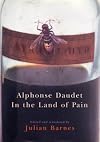
Daudet is referred to, more than once, in Flaubert’s Parrot. Daudet was a friend and compatriot of Turgenev, Flaubert, Edmond de Goncourt, Zola and other writers and poets. He died at the age of 57 (1897) of tertiary syphilis (which he contracted at 17). The disease manifested itself as tabes dorsalis: literally, wasting of the back with progressive loss of motor control and considerable pain. He was diagnosed in 1885 and lived for another 15 years with increasing pain and debility. For show more long periods he could only function with massive doses of morphine.
For Barnes, part of the attraction of Daudet’s book (really a series of notes over ten years, with some gaps of years when he did not write) is the larger question of “How is it best to write about illness, and dying, and death?” Daudet did write about it by making the notes that he hoped to turn into a book about Pain, but that never came to pass. In his writing, Daudet, “had the cold eye and the warm, suffering heart. He also had a sense of the ordinary. What happens around illness may be dramatic, even heroic, but illness itself is ordinary, day-to-day boring. “
Daudet’s other reaction, on a personal level, was to follow the advice of Larkin: “Courage…means not scaring others”. There are many reports of Daudet rallying if only for a few minutes so as not to alarm family. As he once said: “Suffering is nothing. It’s all a matter of preventing those you love from suffering.” In his notes Daudet says: “Pride in not imposing on others the bad moods and the somber injustices of my sufferings.” As Barnes notes, Daudet’s advice was that, “Illness should be treated as an unwelcome guest, to whom no special attention is accorded; daily life should continue as normally as possible.” Positions that Barnes finds, “difficult, correct (and now unfashionable) ...”
Daudet forced himself to write, even a little, even when in considerable discomfort: “My anguish is great, and I weep as I write…The power of actually being there: I have learnt to my cost, since I have become someone unable to walk, someone no longer visible….Nothing but terror and despair at first; then, gradually, the mind, like the body, adjusts to this appalling condition.”
Interesting observations: “The clever way death cuts us down, but makes it look like just a thinning-out. Generations never fall with one blow—that would be too sad and too obvious. Death prefers to do it piecemeal. The meadow is attacked from several sides at the same time. One of us goes one day; another some time afterwards; you have to stand back and look around you to take in what’s missing, to grasp the vast slaughter of your generation.”
Is it indeed even possible to really describe the experience: “How much I suffered last night, in my heel and in my ribs. Sheer torture…there are no words to express it, only howls of pain could do so
Are words actually any use to describe what pain (or passion, for that matter) really feels like? Words only come when everything is over, when things have calmed down. They refer only to memory, and are either powerless of untruthful. No general theory about pain. Each patient discovers his own, and the nature of pain varies, like a singer’s voice, according to the acoustics of the hall.”
On another tangent, it is interesting to see how Daudet reflected the inconsistency of human character. He was, according to Barnes, “viewed as a sunny humorist and clear stylist”; he was highly successful and rich; Charles Dickens called him, “my little brother in France” and Henry James referred to him as, “a great little novelist”. He was, as outlined above and in his notes, stalwart in the face of terrible pain and cared for the well-being of loved ones above his own comfort; he appears to have been a staunch friend to many. And he was a strong anti-Semite. He encouraged the publication of a two volume work, La France juive, which “did much to intensify French anti-semitism in the years before the Dreyfus case.” Barnes notes that the book sold, “shamefully well” with multiple editions including one issued in 1943 as the French were supplying their quota of Jews to the German death camps. His son, Leon, became a leading rightist figure in France and supporter of the Vichy regime.
Not surprising, in its way. In nothing to be frightened of, Barnes notes, with respect to writers: “They might indeed be sensitive, perceptive, wise, generalizing and particularizing—but only at their desks and in their books. When they venture out into the world, they regularly behave as if they had left all their comprehension of human behaviour stuck in their typescripts. “ Examples of this abound throughout history. Barnes asks his brother if philosophers are any better: “Not a whit wiser for being philosophers. Worse, in their semi-public lives, far less wise than many other species of academics.”
It is, quite simply the human condition. show less
For Barnes, part of the attraction of Daudet’s book (really a series of notes over ten years, with some gaps of years when he did not write) is the larger question of “How is it best to write about illness, and dying, and death?” Daudet did write about it by making the notes that he hoped to turn into a book about Pain, but that never came to pass. In his writing, Daudet, “had the cold eye and the warm, suffering heart. He also had a sense of the ordinary. What happens around illness may be dramatic, even heroic, but illness itself is ordinary, day-to-day boring. “
Daudet’s other reaction, on a personal level, was to follow the advice of Larkin: “Courage…means not scaring others”. There are many reports of Daudet rallying if only for a few minutes so as not to alarm family. As he once said: “Suffering is nothing. It’s all a matter of preventing those you love from suffering.” In his notes Daudet says: “Pride in not imposing on others the bad moods and the somber injustices of my sufferings.” As Barnes notes, Daudet’s advice was that, “Illness should be treated as an unwelcome guest, to whom no special attention is accorded; daily life should continue as normally as possible.” Positions that Barnes finds, “difficult, correct (and now unfashionable) ...”
Daudet forced himself to write, even a little, even when in considerable discomfort: “My anguish is great, and I weep as I write…The power of actually being there: I have learnt to my cost, since I have become someone unable to walk, someone no longer visible….Nothing but terror and despair at first; then, gradually, the mind, like the body, adjusts to this appalling condition.”
Interesting observations: “The clever way death cuts us down, but makes it look like just a thinning-out. Generations never fall with one blow—that would be too sad and too obvious. Death prefers to do it piecemeal. The meadow is attacked from several sides at the same time. One of us goes one day; another some time afterwards; you have to stand back and look around you to take in what’s missing, to grasp the vast slaughter of your generation.”
Is it indeed even possible to really describe the experience: “How much I suffered last night, in my heel and in my ribs. Sheer torture…there are no words to express it, only howls of pain could do so
Are words actually any use to describe what pain (or passion, for that matter) really feels like? Words only come when everything is over, when things have calmed down. They refer only to memory, and are either powerless of untruthful. No general theory about pain. Each patient discovers his own, and the nature of pain varies, like a singer’s voice, according to the acoustics of the hall.”
On another tangent, it is interesting to see how Daudet reflected the inconsistency of human character. He was, according to Barnes, “viewed as a sunny humorist and clear stylist”; he was highly successful and rich; Charles Dickens called him, “my little brother in France” and Henry James referred to him as, “a great little novelist”. He was, as outlined above and in his notes, stalwart in the face of terrible pain and cared for the well-being of loved ones above his own comfort; he appears to have been a staunch friend to many. And he was a strong anti-Semite. He encouraged the publication of a two volume work, La France juive, which “did much to intensify French anti-semitism in the years before the Dreyfus case.” Barnes notes that the book sold, “shamefully well” with multiple editions including one issued in 1943 as the French were supplying their quota of Jews to the German death camps. His son, Leon, became a leading rightist figure in France and supporter of the Vichy regime.
Not surprising, in its way. In nothing to be frightened of, Barnes notes, with respect to writers: “They might indeed be sensitive, perceptive, wise, generalizing and particularizing—but only at their desks and in their books. When they venture out into the world, they regularly behave as if they had left all their comprehension of human behaviour stuck in their typescripts. “ Examples of this abound throughout history. Barnes asks his brother if philosophers are any better: “Not a whit wiser for being philosophers. Worse, in their semi-public lives, far less wise than many other species of academics.”
It is, quite simply the human condition. show less

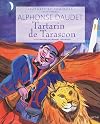
A short and very amusing little novel (88p). Our hero, Tartarin, is a Quixote-like character, his imagination fired by adventure stories and his accumulation of weapons. But while he finds life in provincial southern France dull - at local hunting trips the men are reduced to throwing their caps in the air and shooting at them due to a paucity of wildlife - Tartarin also has a luxury-loving Sancho Panza side to his character, and consequently has never had a real adventure.
"Quixote-Tartarin show more firing up on the stories of Gustave Aimard and shouting "Up and at 'em!" and Sancho-Tartarin thinking only of the rheumatics ahead and murmuring "I mean to stay at home."
But after an encounter with a lion in a local menagerie, the rumour goes about that Tartarin is off to hunt lions in Algeria, and reluctantly he has to make the journey...
His adventures in Africa are highly entertaining and comical featuring a Moorish lady-of-the-night, a camel, a not-to-be-trusted Montenegrin prince ... and even a lion.
Great translation renders the original in convincing Victorian English. show less
"Quixote-Tartarin show more firing up on the stories of Gustave Aimard and shouting "Up and at 'em!" and Sancho-Tartarin thinking only of the rheumatics ahead and murmuring "I mean to stay at home."
But after an encounter with a lion in a local menagerie, the rumour goes about that Tartarin is off to hunt lions in Algeria, and reluctantly he has to make the journey...
His adventures in Africa are highly entertaining and comical featuring a Moorish lady-of-the-night, a camel, a not-to-be-trusted Montenegrin prince ... and even a lion.
Great translation renders the original in convincing Victorian English. show less
10/10
This undoubtedly reflects a nostalgia rating -- but for all of that it has stood the test of time rather well.
I was put back on this magical mystery tour by a chance remark of Fionnuala's in her 2019 year-in-review comments: that a tartarin is both a braggart, and a finely woven cloth. Both connected in my mind with the indefatigable Tartarin de Tarascon, who, braggart though he was, took us all on a (finely-woven) magic carpet ride, in the year when we were 10 or 11.
Other than the show more fact that 39 children (yes, class sizes were that big, back then, and more) probably didn't understand half of the nuances and jokes that were delivered, we were all completely mesmerized by the adventure, the journey and the delivery. You couldn't hear a pin drop, in that classroom, for a half hour every afternoon, as M. Dufault became Tartarin for us.
I would suggest that never had we heard, in our little hamlet, stories that were so rich, wherein the words and descriptions were swimming with such meaning and taste one could almost eat them with a spoon.
Enfin, devant le guéridon, un homme était assis, de quarante à quarante-cinq ans, petit, gros, trapu, rougeaud, en bras de chemise, avec des caleçons de flanelle, une forte barbe courte et des yeux flamboyants, d'une main il tenait un livre, de l'autre il brandissait une énorme pipe à couvercle de fer, et, tout en lisant je ne sais quel formidable récit de chasseurs de chevelures, il faisait, en avançant sa lèvre inférieure, une moue terrible, qui donnait à sa brave figure de petit rentier tarasconnais ce même caractère de férocité bonasse qui régnait dans toute la maison. Cet homme, c'était Tartarin, Tartarin de Tarascon, l'intrépide, le grand, l'incomparable Tartarin de Tarascon.
This was the first of many stories that M. Dufault would read to us, through the full of one scholastic year: alternating between French and English novels, we explored the furthest horizons of the imagination. More than most, Daudet remained in our hearts and engendered in us a desire to immerse ourselves in books -- to explore every corner of where these magical pages would take us.
More than half of that class of schoolmates became teachers: professors, instructors, lecturers, in various levels of schools, from elementary to university. They didn't all specialize in literature, of course, but they certainly brought their flare for the dramatic into their students' lives.
Daudet's rich imaginings, his deliberate exaggeration of the mundane and trivial; his colourful, exotic, incandescent descriptions of bird, beast and man, all gave us the breath to pursue our dreams.
Daudet was a much troubled soul; and no doubt, some of his literature would not gain an audience in today's more culturally sensitive world. (Thank goodness humankind does have the capacity to evolve in a positive way, from time to time.) But for all of that, I don't care, because I can distinguish between what was and what is; and I can distinguish between the spirit of adventure, and the cold heart facts of a cruel society.
He will always remain both Quichotte and Pansa for me -- the best of both worlds -- as I suspect he has remained for the other 38 that listened with me, in those old school days. Merci, M. Dufault, wherever you are. show less
This undoubtedly reflects a nostalgia rating -- but for all of that it has stood the test of time rather well.
I was put back on this magical mystery tour by a chance remark of Fionnuala's in her 2019 year-in-review comments: that a tartarin is both a braggart, and a finely woven cloth. Both connected in my mind with the indefatigable Tartarin de Tarascon, who, braggart though he was, took us all on a (finely-woven) magic carpet ride, in the year when we were 10 or 11.
Other than the show more fact that 39 children (yes, class sizes were that big, back then, and more) probably didn't understand half of the nuances and jokes that were delivered, we were all completely mesmerized by the adventure, the journey and the delivery. You couldn't hear a pin drop, in that classroom, for a half hour every afternoon, as M. Dufault became Tartarin for us.
I would suggest that never had we heard, in our little hamlet, stories that were so rich, wherein the words and descriptions were swimming with such meaning and taste one could almost eat them with a spoon.
Enfin, devant le guéridon, un homme était assis, de quarante à quarante-cinq ans, petit, gros, trapu, rougeaud, en bras de chemise, avec des caleçons de flanelle, une forte barbe courte et des yeux flamboyants, d'une main il tenait un livre, de l'autre il brandissait une énorme pipe à couvercle de fer, et, tout en lisant je ne sais quel formidable récit de chasseurs de chevelures, il faisait, en avançant sa lèvre inférieure, une moue terrible, qui donnait à sa brave figure de petit rentier tarasconnais ce même caractère de férocité bonasse qui régnait dans toute la maison. Cet homme, c'était Tartarin, Tartarin de Tarascon, l'intrépide, le grand, l'incomparable Tartarin de Tarascon.
This was the first of many stories that M. Dufault would read to us, through the full of one scholastic year: alternating between French and English novels, we explored the furthest horizons of the imagination. More than most, Daudet remained in our hearts and engendered in us a desire to immerse ourselves in books -- to explore every corner of where these magical pages would take us.
More than half of that class of schoolmates became teachers: professors, instructors, lecturers, in various levels of schools, from elementary to university. They didn't all specialize in literature, of course, but they certainly brought their flare for the dramatic into their students' lives.
Daudet's rich imaginings, his deliberate exaggeration of the mundane and trivial; his colourful, exotic, incandescent descriptions of bird, beast and man, all gave us the breath to pursue our dreams.
Daudet was a much troubled soul; and no doubt, some of his literature would not gain an audience in today's more culturally sensitive world. (Thank goodness humankind does have the capacity to evolve in a positive way, from time to time.) But for all of that, I don't care, because I can distinguish between what was and what is; and I can distinguish between the spirit of adventure, and the cold heart facts of a cruel society.
He will always remain both Quichotte and Pansa for me -- the best of both worlds -- as I suspect he has remained for the other 38 that listened with me, in those old school days. Merci, M. Dufault, wherever you are. show less

Kicsit csodálkozom, hogy ezt a könyvet ilyen kevesen olvassák, holott Daudet ugye a XIX. század második felének fontos (és egykor itthon is népszerű) írója, tulajdonképpen a balzaci, dumas-i hagyomány szerves folytatója. Balzacnál talán kevésbé jól komponálja a drámai jeleneteket, viszont regényen belül egyenletesebb teljesítményt nyújt, Dumas-hoz mérten pedig vontatottabb, ugyanakkor jobban képes fókuszálni saját célkitűzéseire. Amely célkitűzés pedig show more nem más, mint a korszak párizsi valóságának, elsősorban a felső tízezernek a leképezése.
A Numa Roumestan politikusregény, címszereplője délvidéki lótifutiból emelkedik a miniszteri bársonyig – ilyen értelemben pedig ez a könyv simán beilleszthető a „magasra emelkedtél, de mekkorát zuhansz?”-típusú irodalomba, amiből akad egy-kettő rajta kívül a francia (és egyéb) prózában. A jó Numa szuperképességei, melyekkel a célt elérni szándékozik, a következőek: káprázatos beszélőke, simulékonyság, gondolatolvasás (mindig kitalálja, hallgatója mit is akar hallani), felszínesség (a túlságos elmélyültség csak megzavarná abban, hogy gombnyomásra lelkesedni tudjon azért, amiért pillanatnyilag lelkesedni praktikus), szelektív memória (bármit megígér, de azonnal el is felejti), és végül – de nem utolsósorban – beházasodás egy kellően párizsi, kellően magas rangú, de a kelleténél kicsit erkölcsösebb családba. Ezekkel felvértezve pedig hősünk egyszerűen legyőzhetetlen – legalábbis addig, amíg le nem győzi valaki.
Viszont ami a kötetet sajátossá teszi, az nem egy egyéni akarat küzdelme az őt körülvevő világgal, mert ilyet minden bokorban találni. Hanem hogy Daudet e küzdelem örvén déli és északi, latin és gall mentalitás konfliktusát írja meg. Numa ugyanis hangsúlyosan minden ízében délvidéki, habitusa olyan világosan különíti el a párizsiaktól, hogy az már szinte fertelem. Mert ami azt illeti, Daudet nem finomkodik az ábrázolással – az ő délvidékije típus, nem egyén, mégpedig olyan típus, ami leginkább valamiféle bantunak tűnik, aki beszél ugyan franciául (törve), de úgy alapvetően nem sok másban hasonlít a Daudet által elképzelt „normál” franciákhoz. Megjegyzem, az írót láthatóan lenyűgözi zenéjük, öltözködésük, sajátos kultúrájuk, de az is világos, hogy csak addig becsüli ezen elemeket, amíg élőhelyükön vizsgálhatja őket – amint beteszik a lábukat a fővárosba, máris minden, ami szép bennük, valahogy kínossá, komikussá, sőt: kártékonnyá válik.
Azonban ezzel a disszonanciával – vagy nevezzük becézőn egzotikumnak – együtt olvasásra érdemes, mi több, élvezeti értékkel bíró darab, érdemes leporolni, ha belefutunk mondjuk a padláson, az elfelejtett könyvek dobozában. Ha nem is éri el Maupassant vagy Zola szintjét, ott lohol a nyomukban. show less
A Numa Roumestan politikusregény, címszereplője délvidéki lótifutiból emelkedik a miniszteri bársonyig – ilyen értelemben pedig ez a könyv simán beilleszthető a „magasra emelkedtél, de mekkorát zuhansz?”-típusú irodalomba, amiből akad egy-kettő rajta kívül a francia (és egyéb) prózában. A jó Numa szuperképességei, melyekkel a célt elérni szándékozik, a következőek: káprázatos beszélőke, simulékonyság, gondolatolvasás (mindig kitalálja, hallgatója mit is akar hallani), felszínesség (a túlságos elmélyültség csak megzavarná abban, hogy gombnyomásra lelkesedni tudjon azért, amiért pillanatnyilag lelkesedni praktikus), szelektív memória (bármit megígér, de azonnal el is felejti), és végül – de nem utolsósorban – beházasodás egy kellően párizsi, kellően magas rangú, de a kelleténél kicsit erkölcsösebb családba. Ezekkel felvértezve pedig hősünk egyszerűen legyőzhetetlen – legalábbis addig, amíg le nem győzi valaki.
Viszont ami a kötetet sajátossá teszi, az nem egy egyéni akarat küzdelme az őt körülvevő világgal, mert ilyet minden bokorban találni. Hanem hogy Daudet e küzdelem örvén déli és északi, latin és gall mentalitás konfliktusát írja meg. Numa ugyanis hangsúlyosan minden ízében délvidéki, habitusa olyan világosan különíti el a párizsiaktól, hogy az már szinte fertelem. Mert ami azt illeti, Daudet nem finomkodik az ábrázolással – az ő délvidékije típus, nem egyén, mégpedig olyan típus, ami leginkább valamiféle bantunak tűnik, aki beszél ugyan franciául (törve), de úgy alapvetően nem sok másban hasonlít a Daudet által elképzelt „normál” franciákhoz. Megjegyzem, az írót láthatóan lenyűgözi zenéjük, öltözködésük, sajátos kultúrájuk, de az is világos, hogy csak addig becsüli ezen elemeket, amíg élőhelyükön vizsgálhatja őket – amint beteszik a lábukat a fővárosba, máris minden, ami szép bennük, valahogy kínossá, komikussá, sőt: kártékonnyá válik.
Azonban ezzel a disszonanciával – vagy nevezzük becézőn egzotikumnak – együtt olvasásra érdemes, mi több, élvezeti értékkel bíró darab, érdemes leporolni, ha belefutunk mondjuk a padláson, az elfelejtett könyvek dobozában. Ha nem is éri el Maupassant vagy Zola szintjét, ott lohol a nyomukban. show less
Lists
Awards


You May Also Like


Associated Authors
Statistics
- Works
- 379
- Also by
- 43
- Members
- 4,949
- Popularity
- #5,076
- Rating
- 3.6
- Reviews
- 91
- ISBNs
- 985
- Languages
- 28
- Favorited
- 9


