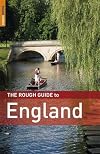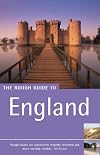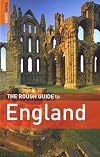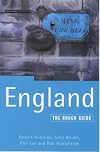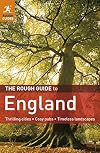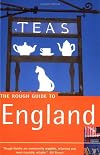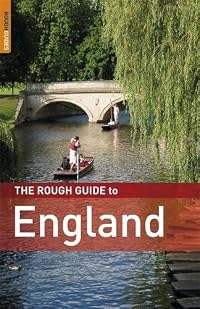
The Rough Guide to England
by Robert Andrews, Rough Guide
Rough Guide Travel Guides (England), Rough Guides (England)
On This Page
Description
The full-color Rough Guide to England is the definitive insider's guide to a country rich in history, heritage and culture.This fully updated Rough Guide to England has clear maps, detailed itineraries, and regional highlights. There's practical information and advice on visiting England's beautiful countryside and coastline, as well as the many diverse cities, towns, and picture-postcard villages.
Don't miss a thing with up-to-date reviews of the best places to stay, from boutique hotels show more to budget hostels, the most authentic pubs and new-on-the-scene restaurants, and the most exciting activities and experiences. Whether you're camping on a remote Cornish peninsula, hiking in the Peak District, being pampered in a spa town or browsing markets in London's East End, explore every corner of this superb country with easy-to-use maps and detailed sights information.
Make the most of your time on Earth™ with The Rough Guide to England.
. show less
Tags
Recommendations





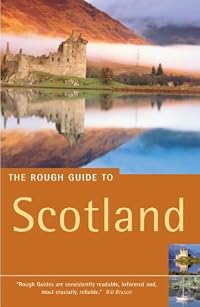

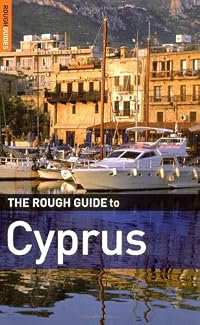
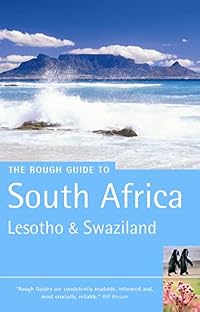
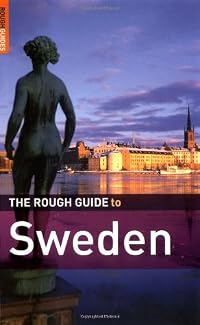





Member Reviews
A 5 star book all the way except for the too tiny print and too small to see easily maps. An e-book is included with this book and perhaps there you can use your fingers change the contents to a readable size. I haven’t tried it yet but might.
Other than those drawbacks I thought that this was a helpful and informative and interesting book.
I liked the history that is included.
Whether or not I get to England it was fun reading about places I’d read about in books and places people I know (living in or visiting England) have been to and talked about and sometimes shared photos.
The eating recommendations in these books are rarely of any use to me. Occasionally a veg*n restaurant is listed but it’s rare. I can’t use these books for show more food suggestions. In a perfect world vegans would write these books and list vegan places. Instead of books I make use of personal and vegan society/groups recommendations and https://www.happycow.net/ and its app.
I hope that I get to the UK but I don’t feel quite as badly that I struggle to plan and make an itinerary. I signed up for these emails (https://uktravelplanning.com/) and no wonder I find it challenging. Wow! Their advice is overwhelming with multiple steps but I’ll bet trips would be better if following at least some of their advice. I’m getting nearly daily emails from them chock full of tips and other information.
I’ve been reading many guidebooks about the UK. This is the last one I plan to read unless/until I make specific plans for an upcoming trip.
I need at least a year in the UK. Five years would be better. I need at least a month in London. A year would be better.
4-1/2 stars show less
Other than those drawbacks I thought that this was a helpful and informative and interesting book.
I liked the history that is included.
Whether or not I get to England it was fun reading about places I’d read about in books and places people I know (living in or visiting England) have been to and talked about and sometimes shared photos.
The eating recommendations in these books are rarely of any use to me. Occasionally a veg*n restaurant is listed but it’s rare. I can’t use these books for show more food suggestions. In a perfect world vegans would write these books and list vegan places. Instead of books I make use of personal and vegan society/groups recommendations and https://www.happycow.net/ and its app.
I hope that I get to the UK but I don’t feel quite as badly that I struggle to plan and make an itinerary. I signed up for these emails (https://uktravelplanning.com/) and no wonder I find it challenging. Wow! Their advice is overwhelming with multiple steps but I’ll bet trips would be better if following at least some of their advice. I’m getting nearly daily emails from them chock full of tips and other information.
I’ve been reading many guidebooks about the UK. This is the last one I plan to read unless/until I make specific plans for an upcoming trip.
I need at least a year in the UK. Five years would be better. I need at least a month in London. A year would be better.
4-1/2 stars show less
Since the 1997 general election, and the rejection of the Conservative party after eighteen years in power, there's been a decidedly upbeat air about England. The election of the "New Labour" government has brought about some genuine changes of atmosphere. There's a lot of talk about the importance of "society", a concept much abused during the laissez-faire years of Thatcherism, and England is now being presented as a component part of Europe, whereas previously the attitude to the continent suggested that the Channel Tunnel was a bridgehead into enemy territory. But in several respects the new world isn't really that new. Many of the less appealing aspects of Conservatism - the under-investment in public services, the assumption that show more big business knows best - are still with us. And, conversely, many of the features that give England its buzz have not sprung into existence overnight - the celebration of "Cool Britannia" began some time before the arrival of Tony Blair, and is, indeed, only a symptom of the dumbing down of culture and the loss of literacy and intelligence in the face of the wholesale dominance of a popular culture of abysmal quality.
However, you only have to scratch the surface and you'll find that England's taste for nostalgia still persists. It's not altogether surprising that the English tend to dwell on former glories - as recently as 1950 London was the capital of the sixth wealthiest nation on the planet, but just three decades later it had slipped from the top twenty. History is constantly repackaged and recycled in England, whether in the form of TV costume dramas or industrial theme parks in which people enact the tasks that once supported their communities. The royal family, though dogged by bad press, continues to occupy a prominent place in the English self-image, a fact demonstrated by the extraordinary manner in which the death of Princess Diana was reported and mourned. The mythical tales of King Arthur and Camelot, the island race that spawned Shakespeare, Drake and Churchill, a golden rural past - these are the notions that lie at the heart of "Englishness", and monuments of the country's past are a major part of its attraction. There's a panoply of medieval and monumental towns; and the countryside yields all manner of delights, from walkers' trails around the hills and lakes, through prehistoric stone circles, to traditional rural villages and their pubs. Virtually every town bears a mark of former wealth and power, whether it be a magnificent Gothic cathedral financed from a monarch's treasury, a parish church funded by the tycoons of the medieval wool trade, or a triumphalist Victorian civic building, raised on the income of the British Empire. In the south of England you'll find old dockyards from which the navy patrolled the oceans, while up north there are mills that employed whole town populations. England's museums and galleries - several of them ranking among the world's finest - are full of treasures trawled from Europe and farther afield. And in their grandiose stuccoed terraces and wide esplanades the old resorts bear testimony to the heyday of the English holiday towns, when Brighton, Bath and diverse other towns were as fashionable and elegant as any European spa.
Contemporary England is at the same time a deeply conservative place and a richly multi-ethnic culture through which runs a strain of individualism that often verges on the anarchic. In essence, England's fascination lies in the tension between its inertia and its adventurousness. Which is the truer image of England at the end of the twentieth century. show less
However, you only have to scratch the surface and you'll find that England's taste for nostalgia still persists. It's not altogether surprising that the English tend to dwell on former glories - as recently as 1950 London was the capital of the sixth wealthiest nation on the planet, but just three decades later it had slipped from the top twenty. History is constantly repackaged and recycled in England, whether in the form of TV costume dramas or industrial theme parks in which people enact the tasks that once supported their communities. The royal family, though dogged by bad press, continues to occupy a prominent place in the English self-image, a fact demonstrated by the extraordinary manner in which the death of Princess Diana was reported and mourned. The mythical tales of King Arthur and Camelot, the island race that spawned Shakespeare, Drake and Churchill, a golden rural past - these are the notions that lie at the heart of "Englishness", and monuments of the country's past are a major part of its attraction. There's a panoply of medieval and monumental towns; and the countryside yields all manner of delights, from walkers' trails around the hills and lakes, through prehistoric stone circles, to traditional rural villages and their pubs. Virtually every town bears a mark of former wealth and power, whether it be a magnificent Gothic cathedral financed from a monarch's treasury, a parish church funded by the tycoons of the medieval wool trade, or a triumphalist Victorian civic building, raised on the income of the British Empire. In the south of England you'll find old dockyards from which the navy patrolled the oceans, while up north there are mills that employed whole town populations. England's museums and galleries - several of them ranking among the world's finest - are full of treasures trawled from Europe and farther afield. And in their grandiose stuccoed terraces and wide esplanades the old resorts bear testimony to the heyday of the English holiday towns, when Brighton, Bath and diverse other towns were as fashionable and elegant as any European spa.
Contemporary England is at the same time a deeply conservative place and a richly multi-ethnic culture through which runs a strain of individualism that often verges on the anarchic. In essence, England's fascination lies in the tension between its inertia and its adventurousness. Which is the truer image of England at the end of the twentieth century. show less
Ratings
Members
- Recently Added By
Author Information
9+ Works 793 Members
225 Works 7,426 Members
Series


Common Knowledge
- Canonical title
- The Rough Guide to England
- Important places
- England, UK
- Original language
- English
Classifications
- Genres
- Travel, Nonfiction, General Nonfiction
- DDC/MDS
- 914.20486 — History & geography Geography & travel Geography of and travel in Europe England and Wales subdivisions and modified standard subdivisions Travel; guidebooks 1837- Victoria & Windsors 2000-
- LCC
- DA650 .R677 — History of Europe, Asia, Africa and Oceania Great Britain History of Great Britain England Description and travel. Guidebooks
- BISAC
Statistics
- Members
- 266
- Popularity
- 121,174
- Reviews
- 2
- Rating
- (3.75)
- Languages
- English
- Media
- Paper, Ebook
- ISBNs
- 24
- UPCs
- 1
- ASINs
- 1