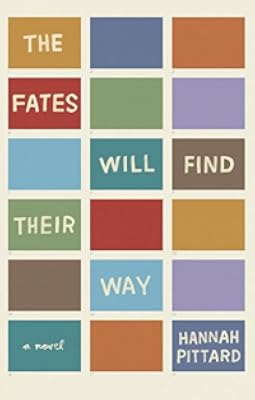
The Fates Will Find Their Way
by Hannah Pittard
On This Page
Description
Nora went missing on Halloween. Far more eager to imagine Nora's fate than to scrutinize their own, the neighborhood boys sleepwalk into an adulthood of jobs, marriages, families, homes, and daughters of their own, all the while pining for a girl-- and a life-- that no longer exists, except in the imagination.Tags
Recommendations






















Member Recommendations
hairball This book was very deja vu for me.
Also recommended by BookshelfMonstrosity
Member Reviews
Let the readers find their way
How often, in this day and age, does an author find a completely original way to tell a story? Avid reader that I am, I’ll tell you: Not very often. And how often, after reading a novel in a single sitting, do write an immediate review? Not very often. And how often does a debut novel—any novel—affect me this powerfully? Not very often.
This is my immediate reaction to The Fates Will Find Their Way by Hannah Pittard. It is, and is not, the story of the disappearance of sixteen-year-old Nora Lindell. More accurately, it is the story of the vacuum left in Nora’s wake, and of how that vacuum is filled. The tale is told in reflection by the men who were the neighborhood boys that Nora left behind, show more and it is told entirely in the first person plural. If you’re wondering how that sounds, it sounds like this:
“It seemed we had all finally stopped looking for her, asking about her. It was a sickness, a leftover from a youth too long protracted. Of course we still thought about her. Late at night, lying awake, especially in early autumn, when we could fall asleep for a few weeks with the bedroom windows open, the curtains pulled halfway, a breeze coming in and the occasional stray dry leaf, we still allowed ourselves the vague and unfair comparisons between what our wives were and what she might have been. At least we were able to acknowledge the futility of the fantasies, even if we still couldn’t control them.”
This novel is a collection of those boys’ fantasies, the fleshed out conjectures based upon shreds of evidence presented by impeachable sources. And, in the sharing of these speculative outcomes for Nora Lindell, we learn the true outcomes of the close-knit group that she left behind—from the immediate aftermath of her disappearance, through the decades that follow. And we see how Nora’s absence shaped each of their lives.
Nora’s friends are a true community, kids who grew up together and stayed local. They have a shared history. And time has transmuted Nora Lindell’s fate from mystery to mythology. Their tale is told in a collective voice, and yet, individuals stand out. Paul Epstein, Jack Boyd, Winston Rutherford, Chuck Goodhue, Stu Zblowski, Drew Price, Marty Metcalfe, Trey Stephens, and Danny Hatchet all have their own stories that unfold along with their theories of what happened to Nora.
Even with the unusual voice, I found this book fully emotionally engaging. Reading it, I couldn’t help but reflect on my own past, my relationships, stories I’ve heard, and so forth. This novel is plot-driven, literary, experimental, spare, and absolutely beautiful. One week into the new year, I’m confident that I’ve just read one of the top books of 2011. show less
How often, in this day and age, does an author find a completely original way to tell a story? Avid reader that I am, I’ll tell you: Not very often. And how often, after reading a novel in a single sitting, do write an immediate review? Not very often. And how often does a debut novel—any novel—affect me this powerfully? Not very often.
This is my immediate reaction to The Fates Will Find Their Way by Hannah Pittard. It is, and is not, the story of the disappearance of sixteen-year-old Nora Lindell. More accurately, it is the story of the vacuum left in Nora’s wake, and of how that vacuum is filled. The tale is told in reflection by the men who were the neighborhood boys that Nora left behind, show more and it is told entirely in the first person plural. If you’re wondering how that sounds, it sounds like this:
“It seemed we had all finally stopped looking for her, asking about her. It was a sickness, a leftover from a youth too long protracted. Of course we still thought about her. Late at night, lying awake, especially in early autumn, when we could fall asleep for a few weeks with the bedroom windows open, the curtains pulled halfway, a breeze coming in and the occasional stray dry leaf, we still allowed ourselves the vague and unfair comparisons between what our wives were and what she might have been. At least we were able to acknowledge the futility of the fantasies, even if we still couldn’t control them.”
This novel is a collection of those boys’ fantasies, the fleshed out conjectures based upon shreds of evidence presented by impeachable sources. And, in the sharing of these speculative outcomes for Nora Lindell, we learn the true outcomes of the close-knit group that she left behind—from the immediate aftermath of her disappearance, through the decades that follow. And we see how Nora’s absence shaped each of their lives.
Nora’s friends are a true community, kids who grew up together and stayed local. They have a shared history. And time has transmuted Nora Lindell’s fate from mystery to mythology. Their tale is told in a collective voice, and yet, individuals stand out. Paul Epstein, Jack Boyd, Winston Rutherford, Chuck Goodhue, Stu Zblowski, Drew Price, Marty Metcalfe, Trey Stephens, and Danny Hatchet all have their own stories that unfold along with their theories of what happened to Nora.
Even with the unusual voice, I found this book fully emotionally engaging. Reading it, I couldn’t help but reflect on my own past, my relationships, stories I’ve heard, and so forth. This novel is plot-driven, literary, experimental, spare, and absolutely beautiful. One week into the new year, I’m confident that I’ve just read one of the top books of 2011. show less
This is a tough book.
It's well written and compelling but it's also confusing and unpleasant. I do not know how true to life this version of life from the POV of boys and men is (especially since it's written by a woman) but I really, really hope that it is way off base. It makes most men seem very unpleasant. Unpleasant and immature to their core.
As for what happened to Nora (an unpleasant, confusing, unlikeable character) I guess I'm not sure. I think I know the truth but like "the boys" who narrate, I will always wonder a little bit about those bones.
It's well written and compelling but it's also confusing and unpleasant. I do not know how true to life this version of life from the POV of boys and men is (especially since it's written by a woman) but I really, really hope that it is way off base. It makes most men seem very unpleasant. Unpleasant and immature to their core.
As for what happened to Nora (an unpleasant, confusing, unlikeable character) I guess I'm not sure. I think I know the truth but like "the boys" who narrate, I will always wonder a little bit about those bones.
Telephone!
It begins as early as preschool with children congregating in a circle. The teacher kneels and whispers information to a girl urging her to motion it onward to her neighbor’s ear. As the children intake, comprehend, and transfer information, the meaning quickly loses significance. Upon revealing the information at the final child, the group chuckles at the distance between the final conclusions and the teacher’s original message. The game of telephone teaches us the ease by which information disintegrates.
Beginning with a group of parents activating the telephone chain, Hannah Pittard introduces her novel, The Fates Will Find Their Way with a clear reference to the misinformation of gossip.
The Void of Life
Set in an show more unspecified suburb, The Fates Will Find Their Way depicts a group of male friends and the lives they lead in the wake of the disappearance of Nora Lindell, a fellow classmate. With time providing the chill of the cold case files, the group of boys must fill in the blanks in their collective psyche.
Did Nora jump in a stranger’s car never to be seen again like the awful scenarios exhibited often in the movies? Pondering the scenario, the boys think,
“They drove away together. It was an adventure, perhaps. But the experience that Nora had no doubt hoped would be intriguing turned quickly into something more menacing than mysterious. Almost immediately after she got in, she probably wanted to get out. It’s the stuff of fantasies, not of real life. In fantasies, you can get into strangers’ cars” (15).
Maybe Nora’s bones are buried in river sediment two counties down.
Leaving on a Jet Plane
Did Nora run away buying a plane ticket to a warm location? As the boys grow up and get married, they still meet and discuss the possibilities,
“We liked to imagine that she’d picked Arizona for the Grand Canyon and the warmth. Maybe she’d though it was possible to live in it, in the canyon. But she never admitted that to anyone, not once she got there and saw how wrong her fantasy had been” (69).
As the group of boys transitions to men with wives, children, and real jobs, the obsession with the disappearance of a teenage girl shifts into slightly creepy territory.
“Like our mothers, our wives were troubled by our refusal to let Nora Lindell go. They thought, perhaps rightly, that it was an indulgence from which only jealousy and regret could come” (191).
The Fates Got Lost on the Way
In all honesty, that’s about it for a plot. Pittard metaphorically links the lives of these boys to the fates of Greek mythology suggesting that this collective desired to control the lives and deaths of those surrounding them.
Even though she mentions specific names of these boys, no protagonist steps forward. In turn, the reader is left with understanding the boys as the protagonist. Sadly, this step left me indifferent to the plight of these characters. Without much connection to any of them, let alone a clear link to why they valued Nora, the narrative frustrated me.
This realization, coupled with the suspension of belief around boys and gossip, left me unimpressed with this novel.
In the end, I found The Fates Will Find Their Way a quick read about gossip and what it means when a group transforms an unexplained event into a fantastical life story. Artistically, I understand where Pittard is going with the novel, but I didn’t enjoy it. Yes, humanity tends to mold information into an understandable box in our mind. No, I do not recommend this book.
Originally published at http://wherepenmeetspaper.blogspot.com show less
It begins as early as preschool with children congregating in a circle. The teacher kneels and whispers information to a girl urging her to motion it onward to her neighbor’s ear. As the children intake, comprehend, and transfer information, the meaning quickly loses significance. Upon revealing the information at the final child, the group chuckles at the distance between the final conclusions and the teacher’s original message. The game of telephone teaches us the ease by which information disintegrates.
Beginning with a group of parents activating the telephone chain, Hannah Pittard introduces her novel, The Fates Will Find Their Way with a clear reference to the misinformation of gossip.
The Void of Life
Set in an show more unspecified suburb, The Fates Will Find Their Way depicts a group of male friends and the lives they lead in the wake of the disappearance of Nora Lindell, a fellow classmate. With time providing the chill of the cold case files, the group of boys must fill in the blanks in their collective psyche.
Did Nora jump in a stranger’s car never to be seen again like the awful scenarios exhibited often in the movies? Pondering the scenario, the boys think,
“They drove away together. It was an adventure, perhaps. But the experience that Nora had no doubt hoped would be intriguing turned quickly into something more menacing than mysterious. Almost immediately after she got in, she probably wanted to get out. It’s the stuff of fantasies, not of real life. In fantasies, you can get into strangers’ cars” (15).
Maybe Nora’s bones are buried in river sediment two counties down.
Leaving on a Jet Plane
Did Nora run away buying a plane ticket to a warm location? As the boys grow up and get married, they still meet and discuss the possibilities,
“We liked to imagine that she’d picked Arizona for the Grand Canyon and the warmth. Maybe she’d though it was possible to live in it, in the canyon. But she never admitted that to anyone, not once she got there and saw how wrong her fantasy had been” (69).
As the group of boys transitions to men with wives, children, and real jobs, the obsession with the disappearance of a teenage girl shifts into slightly creepy territory.
“Like our mothers, our wives were troubled by our refusal to let Nora Lindell go. They thought, perhaps rightly, that it was an indulgence from which only jealousy and regret could come” (191).
The Fates Got Lost on the Way
In all honesty, that’s about it for a plot. Pittard metaphorically links the lives of these boys to the fates of Greek mythology suggesting that this collective desired to control the lives and deaths of those surrounding them.
Even though she mentions specific names of these boys, no protagonist steps forward. In turn, the reader is left with understanding the boys as the protagonist. Sadly, this step left me indifferent to the plight of these characters. Without much connection to any of them, let alone a clear link to why they valued Nora, the narrative frustrated me.
This realization, coupled with the suspension of belief around boys and gossip, left me unimpressed with this novel.
In the end, I found The Fates Will Find Their Way a quick read about gossip and what it means when a group transforms an unexplained event into a fantastical life story. Artistically, I understand where Pittard is going with the novel, but I didn’t enjoy it. Yes, humanity tends to mold information into an understandable box in our mind. No, I do not recommend this book.
Originally published at http://wherepenmeetspaper.blogspot.com show less
I originally passed on The Fates Will Find Their Way by Hannah Pittard, because the summary said it was about a girl who went missing and the effect on those close to her. Then I saw that Indiespensable chose it as their current installment, so I had to read it. I’m glad I did. This book is about so much more than a missing girl. It is about a group of people who share a defining moment in their lives. More importantly, it’s about what they do with that moment. Like all good literature, it is about us.
The book opens with a statement of facts:
"Some things were certain; they were undeniable, inarguable. Nora Lindell was gone, for one thing. There was no doubt about that. For another, it was Halloween when she went missing, which only show more served to compound the eeriness, the mysteriousness of her disappearance."
Those facts are the defining moment shared by the group of neighborhood boys who went to school with Nora- the collective “we” that narrates the book. Those opening sentences set the stage for the fantasies and conjecture that make up much of the rest of the book and the rest of the boys’ lives.
First and foremost, Hannah Pittard is a superb writer technically. As mentioned, the book is written in the collective “we,” which is no easy task to believably sustain. Though the book revolves around Nora Lindell’s disappearance, it does not progress in the usual mystery genre fashion. It is not organized chronologically, and a solution to the mystery (in a traditional sense) does not steadily evolve. Yet, Pittard perfectly crafts every sentence and scene to manage the pace and keep the reader going.
As the book progresses, the boys, who are later middle-aged men, construct possible scenarios to explain Nora’s disappearance based on snippets of details gathered from various sources over the years. The reliability of many of the sources is questionable, but that’s not the point. The point is the boys have a remarkable event in their youth that is open to interpretation and full of possibilities. They share it. They are in control of it. They always return to it.
The boys’ personal lives develop around the collective obsession over what happened to Nora. The reader learns how events surrounding Nora’s disappearance have supposedly affected the boys’ individual lives as they grow older. I say “supposedly” because the boys make the connection to Nora when explaining the unfortunate events surrounding their individual lives. One has sex with another’s 14-year-old daughter. One has an adulterous affair. One becomes obsessed with Nora’s younger sister, and so on. But are the boys reliable narrators? Isn’t their judgment skewed by their obsession? After all, people do these kinds of things all the time without ever knowing a girl who went missing. In fact, the truth is the collective is not really likable, and yet, the reader can’t help but empathize with them.
Nora’s disappearance becomes more than just a passing fantasy to the collective. It becomes something they use to give their lives meaning and purpose. And don’t we all go to some event in our youth, in our past, some decision, and imagine, “what if?” And whether we realize it or not, we partially judge ourselves and where we are by those passing fantasies. I don’t want to go into the boys’ individual stories in detail because I’m afraid it will give away too much. The careful unfolding of their lives around the core of the disappearance is partly what gives the book pace. But the collective narrator ponders the events, not just those regarding Nora but their own lives, during funerals, at dinner parties, even at the grill in the backyard:
"Often it would take a wife’s hand on the shoulder to pull us away from these reveries. “Honey,” she might say, “the coals. Are they ready? The kids are hungry.” And they would always be tender at these moments, always impossibly understanding, as though they could see our thoughts, read our fears, our worries. Sometimes, it’s like they almost understand how incredibly overwhelming it all is—to be a man, to be a father, a husband, a human being, responsible for the lives of others."
And of course, after learning about our collective narrator, we are to read the satire in that statement. The book is full of dark humor, and I will use that as a segue to how I connect it to Cat’s Cradle by Kurt Vonnegut, a personal favorite. Cat’s Cradle is also full of dark humor, but more importantly to this book, one of themes in Cat’s Cradle is how people often believe in the fantasies (lies by any other name) they construct themselves.
In Cat’s Cradle, the people on the island of San Lorenzo have created their own elaborate religion and hero. The people on the island know it is all made up. It is all lies, but they believe it and practice it anyway. When I taught the book, my students often asked, “Why do they believe it if they know it is a lie? That’s stupid.” They believe it because the lie gives them purpose. It makes their mundane lives bearable. It is escape.
In The Fates Will Find Their Way, a reporter believes she has stumbled upon an explanation to the mystery behind Nora’s disappearance, but she needs assistance from Nora’s family. The collective boys, men at this point in the book, do not want the family to give the reporter what she needs. They do not want the reporter to solve the mystery. Why? They have wondered what happened all these years. Ultimately, they do not want it to end. They do not want the truth, because then they would no longer own the fantasy. They would only have the reality around them.
I imagine The Fates Will Find Their Way will find it’s way to many “best of” lists this year. It is published by Ecco, an imprint of HarperCollins publishers. show less
The book opens with a statement of facts:
"Some things were certain; they were undeniable, inarguable. Nora Lindell was gone, for one thing. There was no doubt about that. For another, it was Halloween when she went missing, which only show more served to compound the eeriness, the mysteriousness of her disappearance."
Those facts are the defining moment shared by the group of neighborhood boys who went to school with Nora- the collective “we” that narrates the book. Those opening sentences set the stage for the fantasies and conjecture that make up much of the rest of the book and the rest of the boys’ lives.
First and foremost, Hannah Pittard is a superb writer technically. As mentioned, the book is written in the collective “we,” which is no easy task to believably sustain. Though the book revolves around Nora Lindell’s disappearance, it does not progress in the usual mystery genre fashion. It is not organized chronologically, and a solution to the mystery (in a traditional sense) does not steadily evolve. Yet, Pittard perfectly crafts every sentence and scene to manage the pace and keep the reader going.
As the book progresses, the boys, who are later middle-aged men, construct possible scenarios to explain Nora’s disappearance based on snippets of details gathered from various sources over the years. The reliability of many of the sources is questionable, but that’s not the point. The point is the boys have a remarkable event in their youth that is open to interpretation and full of possibilities. They share it. They are in control of it. They always return to it.
The boys’ personal lives develop around the collective obsession over what happened to Nora. The reader learns how events surrounding Nora’s disappearance have supposedly affected the boys’ individual lives as they grow older. I say “supposedly” because the boys make the connection to Nora when explaining the unfortunate events surrounding their individual lives. One has sex with another’s 14-year-old daughter. One has an adulterous affair. One becomes obsessed with Nora’s younger sister, and so on. But are the boys reliable narrators? Isn’t their judgment skewed by their obsession? After all, people do these kinds of things all the time without ever knowing a girl who went missing. In fact, the truth is the collective is not really likable, and yet, the reader can’t help but empathize with them.
Nora’s disappearance becomes more than just a passing fantasy to the collective. It becomes something they use to give their lives meaning and purpose. And don’t we all go to some event in our youth, in our past, some decision, and imagine, “what if?” And whether we realize it or not, we partially judge ourselves and where we are by those passing fantasies. I don’t want to go into the boys’ individual stories in detail because I’m afraid it will give away too much. The careful unfolding of their lives around the core of the disappearance is partly what gives the book pace. But the collective narrator ponders the events, not just those regarding Nora but their own lives, during funerals, at dinner parties, even at the grill in the backyard:
"Often it would take a wife’s hand on the shoulder to pull us away from these reveries. “Honey,” she might say, “the coals. Are they ready? The kids are hungry.” And they would always be tender at these moments, always impossibly understanding, as though they could see our thoughts, read our fears, our worries. Sometimes, it’s like they almost understand how incredibly overwhelming it all is—to be a man, to be a father, a husband, a human being, responsible for the lives of others."
And of course, after learning about our collective narrator, we are to read the satire in that statement. The book is full of dark humor, and I will use that as a segue to how I connect it to Cat’s Cradle by Kurt Vonnegut, a personal favorite. Cat’s Cradle is also full of dark humor, but more importantly to this book, one of themes in Cat’s Cradle is how people often believe in the fantasies (lies by any other name) they construct themselves.
In Cat’s Cradle, the people on the island of San Lorenzo have created their own elaborate religion and hero. The people on the island know it is all made up. It is all lies, but they believe it and practice it anyway. When I taught the book, my students often asked, “Why do they believe it if they know it is a lie? That’s stupid.” They believe it because the lie gives them purpose. It makes their mundane lives bearable. It is escape.
In The Fates Will Find Their Way, a reporter believes she has stumbled upon an explanation to the mystery behind Nora’s disappearance, but she needs assistance from Nora’s family. The collective boys, men at this point in the book, do not want the family to give the reporter what she needs. They do not want the reporter to solve the mystery. Why? They have wondered what happened all these years. Ultimately, they do not want it to end. They do not want the truth, because then they would no longer own the fantasy. They would only have the reality around them.
I imagine The Fates Will Find Their Way will find it’s way to many “best of” lists this year. It is published by Ecco, an imprint of HarperCollins publishers. show less
Hannah Pittard talked a bit about this book at a reading I went to this evening, in which she shared: if she had it to do over again she would actually leave out the character of Nora Lindell. The initial germ of the novel was her observation that her male friends looked back nostalgically on the past in a way that she didn't notice her female friends doing; and indeed this focus on the past, particularly a certain age range (what Bruce Springsteen was singing about in "Glory Days" I suppose) is what this book is about, not what happens to Nora. Nora, who was supposed to be dead in the novel's conception, except that Pittard couldn't bring herself to actually write Nora's death into creation, leaving her fate up in the air.
I really show more liked this novel when I read it when it came out in 2011; now that it's re-entered my consciousness I'm gonna have to go re-read it, I do believe. show less
I really show more liked this novel when I read it when it came out in 2011; now that it's re-entered my consciousness I'm gonna have to go re-read it, I do believe. show less
Read from February 26 to 27, 2011
Wow.
The Fates Will Find Their Way is the story of a group of men that can't forget the girl that went missing when they were in high school. Their story is told collectively --use of we, our, etc-- and it gives their thoughts about what happened to Nora Lindell. It really says a lot about how we cope and if we can cope when there's no clear conclusion. Since no one knows what happened to Nora, they can only guess...and they have a lot of guesses, some happy, some sad, some outlandish. Very good read.
Wow.
The Fates Will Find Their Way is the story of a group of men that can't forget the girl that went missing when they were in high school. Their story is told collectively --use of we, our, etc-- and it gives their thoughts about what happened to Nora Lindell. It really says a lot about how we cope and if we can cope when there's no clear conclusion. Since no one knows what happened to Nora, they can only guess...and they have a lot of guesses, some happy, some sad, some outlandish. Very good read.
t was Halloween night when 16-year-old Nora Liddell went missing. Last seen (perhaps) getting into a beat-up Catalina near the bus station, Nora vanished from her upper-middle-class suburb, never to be heard from again. But in Hannah Pittard’s debut novel, The Fates Will Find Their Way, her absence renders her present in a way her presence never could have.
This novel takes readers into the shared mind of Nora’s former community, specifically the mind of the boys around her age. Using first-person plural narration, Pittard creates a group consciousness in which each member of the group is both observing and being observed. It’s a technique that could easily seem gimmicky, but I found it surprisingly effective.
The book moves back show more and forth in time, as the boys (and later the men) reflect on the past and note how the present colors their views. There’s a sense that past, present, and future are connected, each one speaking to the other. This lack of a linear story, however, does not make the book any less absorbing; I was riveted almost from the start. There’s a wonderfully compelling quality to Pittard’s prose that made it difficult to put this book down. I wanted to read on, not because I needed to know what would happen next, but because I was interested in the characters’ emotional journeys.
Every few chapters, the book leaves the community of boys to imagine a handful of possible futures for Nora. As the boys learn more of Nora’s last weeks with them and as they get tantalizing glimpses of a woman with Nora’s red hair, they build a whole other life for Nora—and perhaps a dream for themselves. Somehow, Nora got away; these boys have not. It’s striking (and perhaps a little too convenient) that they all stayed in this little community.
Although the mystery of Nora’s disappearance looms large in the lives of the boys, it’s not really the central mystery of the book. Her story, even if it’s complete fantasy, is the clearest one in the novel. A bigger mystery is how we become who we become. But the even bigger mystery is the mystery we are to each other. This is where Pittard’s seemingly self-consciously experimental choice of the third-person point of view really pays off. Although in some respects the boys think as a single unit, as individuals they are unknown to the others. The we telling the story isn’t a single we at all—yet the narrative we still has a voice, the voice of the community. All stand apart from the others, but all are part of the others. The interplay is fascinating. This is definitely a case of a stylistic oddity serving its story well.
See my complete review at Shelf Love. show less
This novel takes readers into the shared mind of Nora’s former community, specifically the mind of the boys around her age. Using first-person plural narration, Pittard creates a group consciousness in which each member of the group is both observing and being observed. It’s a technique that could easily seem gimmicky, but I found it surprisingly effective.
The book moves back show more and forth in time, as the boys (and later the men) reflect on the past and note how the present colors their views. There’s a sense that past, present, and future are connected, each one speaking to the other. This lack of a linear story, however, does not make the book any less absorbing; I was riveted almost from the start. There’s a wonderfully compelling quality to Pittard’s prose that made it difficult to put this book down. I wanted to read on, not because I needed to know what would happen next, but because I was interested in the characters’ emotional journeys.
Every few chapters, the book leaves the community of boys to imagine a handful of possible futures for Nora. As the boys learn more of Nora’s last weeks with them and as they get tantalizing glimpses of a woman with Nora’s red hair, they build a whole other life for Nora—and perhaps a dream for themselves. Somehow, Nora got away; these boys have not. It’s striking (and perhaps a little too convenient) that they all stayed in this little community.
Although the mystery of Nora’s disappearance looms large in the lives of the boys, it’s not really the central mystery of the book. Her story, even if it’s complete fantasy, is the clearest one in the novel. A bigger mystery is how we become who we become. But the even bigger mystery is the mystery we are to each other. This is where Pittard’s seemingly self-consciously experimental choice of the third-person point of view really pays off. Although in some respects the boys think as a single unit, as individuals they are unknown to the others. The we telling the story isn’t a single we at all—yet the narrative we still has a voice, the voice of the community. All stand apart from the others, but all are part of the others. The interplay is fascinating. This is definitely a case of a stylistic oddity serving its story well.
See my complete review at Shelf Love. show less
Members
- Recently Added By
Published Reviews
In this, Ms. Pittard’s debut is less novel than a chorus monologue: There’s no real plot, and the characters don’t develop (or only in superficial ways - the boys start families, buy homes, but their thoughts, attitudes and interactions remain adolescent). Instead, the book is a patchwork of discontinuous recollections, gossip and imaginings about Nora, the boys, their friends and neighbors.
added by lkernagh
Where The Virgin Suicides had a good old gothic wallow in its adolescent turmoil, The Fates Will Find Their Way is more meditative. It leaps back and forth in time, looking forward to the boys' adulthood and back again, nostalgically, as they grow up. It's a coming-of-age story in which everyone is all ages, all the time.
added by lkernagh
By turns, "Fates" is a mystery and a coming of age story, chock-full of sexual innuendo and misconduct that includes rape and possible murder. Although there is a lot of unseemly action in "Fates," there is very little dialogue. Pittard prefers to let her narrators ruminate, allowing her readers to form their own conclusions about what may have happened and why.
added by lkernagh
Lists

Powell's Indiespensable
79 works; 6 members

"We" narration
49 works; 2 members
Author Information

8+ Works 1,196 Members
Common Knowledge
- Canonical title
- The Fates Will Find Their Way
- Original publication date
- 2011-01-25
- People/Characters
- Nora Lindell; Sissy Lindell; Jack Boyd; Sarah Jeffreys; Trey Stephens; Drew Price (show all 10); Winston Rutherford; Paul Epstein; Danny Hatchet; Abja
- Epigraph
- What each man does will shape his trail and fortune. For Jupiter is king to all alike; the fates will find their way. --Virgil, The Aeneid
- Dedication
- For Malcolm Hugh Ringel, who disappeared from our lives June 16, 2006
- First words
- Some things were certain; they were undeniable, inarguable.
- Last words
- (Click to show. Warning: May contain spoilers.)And it gets no more obvious than this: this-this, all around us-is our life.
- Blurbers
- Vida, Vendela; Shepard, Jim; Beattie, Ann; Somerville, Patrick
Classifications
Statistics
- Members
- 537
- Popularity
- 55,760
- Reviews
- 50
- Rating
- (3.45)
- Languages
- Dutch, English, French
- Media
- Paper, Audiobook, Ebook
- ISBNs
- 11
- ASINs
- 5