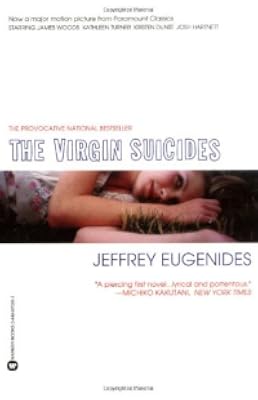
The Virgin Suicides
by Jeffrey Eugenides
On This Page
Description
First published in 1993, The Virgin Suicides announced the arrival of a major new American novelist. In a quiet suburb of Detroit, the five Lisbon sisters--beautiful, eccentric, and obsessively watched by the neighborhood boys--commit suicide one by one over the course of a single year. As the boys observe them from afar, transfixed, they piece together the mystery of the family's fatal melancholy, in this hypnotic and unforgettable novel of adolescent love, disquiet, and death. Jeffrey show more Eugenides evokes the emotions of youth with haunting sensitivity and dark humor and creates a coming-of-age story unlike any of our time. Adapted into a critically acclaimed film by Sofia Coppola, The Virgin Suicides is a modern classic, a lyrical and timeless tale of sex and suicide that transforms and mythologizes suburban middle-American life. show lessTags
Recommendations






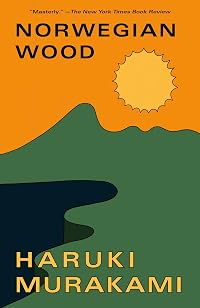
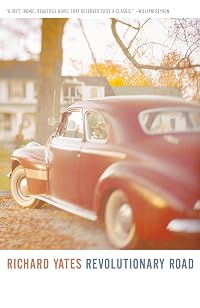
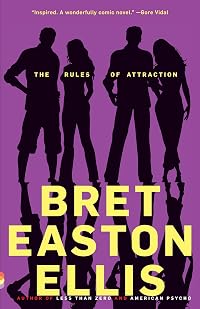
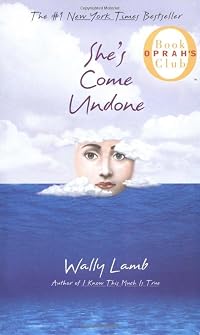
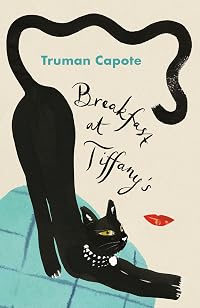
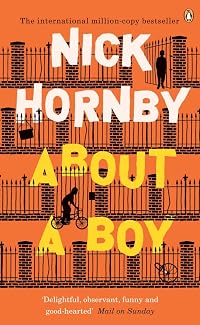

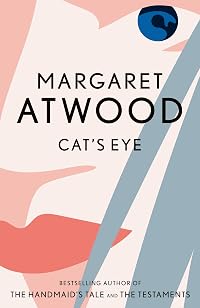
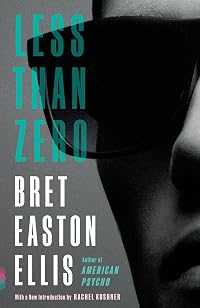
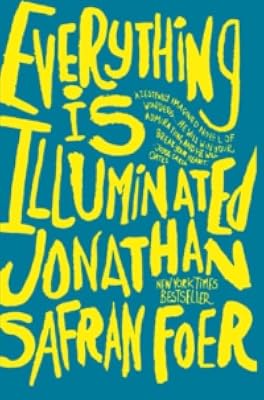
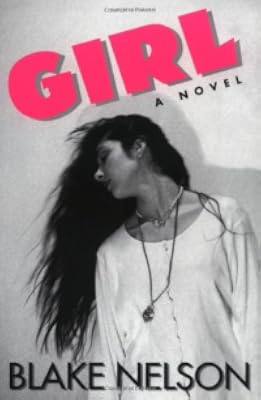
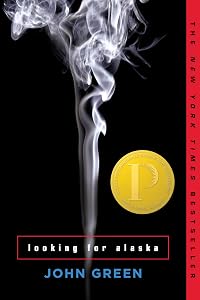
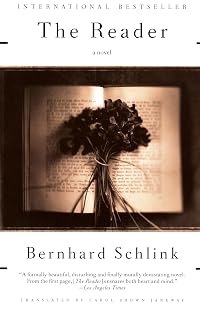
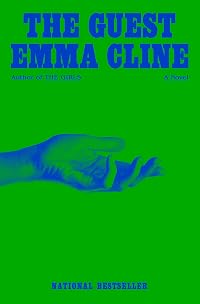

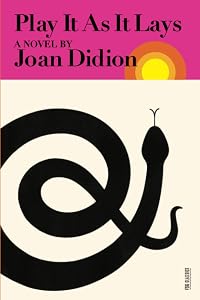
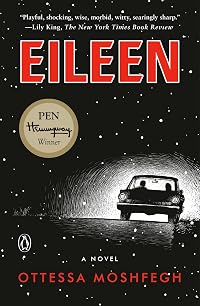
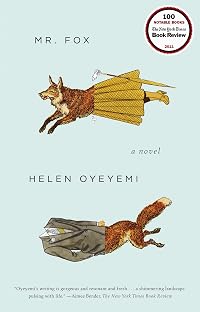
Member Recommendations
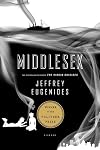
bookmomo share the same exquisite sense of setting: boring, but not terrible suburban America, second half of last century.
102
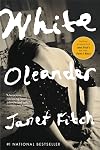
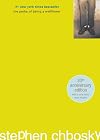
lucyknows Virgin Suicides is pretty heavy going however there are quite a few films about teenage angst they might work. Some are darker than others and some are quite old but they could work with Perks... Breakfast Club, Heathers, Girl Interrupted, Rebel without a cause, Footloose, The Year my Voice Broke, Donnie Darko, Ferris Bueller's Day Off.
20
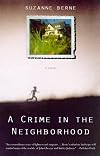
weener Both books with a srong sense of setting, with a sense of foreboding and decay.

bookmomo Both original and intriguing stories about loss and grieving.
freddlerabbit The styles and narrative perspectives of these two books remind me strongly of one another.

Member Reviews
An unsettling, beautifully written fever dream of adolescence and the unknowability of another's life and mind. One of my book clubs chose this, and we all loved it, despite finding it a difficult read. There is so much to unpack in the 250 pages of the novel that it made for a far-reaching and very meaty conversation. Our discussion focused on the themes of voyeurism, the male gaze, adolescence, and emotional and psychological abuse, among other things. Eugenides' prose is rich and lush, and I highlighted dozens of phrases and passages that struck me with their perfection.
4 stars
4 stars
The Virgin Suicides is one of those critically-acclaimed books that, after you read it, you stand back and say “Huh?” And then start beating yourself up for not being intellectual enough or perceptive enough to winkle out the deep and profound meaning, the extended metaphors, and the classical allegory of the novel.
Either that, or the emperor has no clothes.
Eugenides’ debut novel, apparently set in the 70s (as determined by the pop songs and teen fashions being referenced), traces the story of five sisters in one family who all kill themselves over a one-year period of time. That’s not a spoiler, as it's referenced fairly early on while the novel’s structure is being set up. The story is told in flashback from the viewpoint of show more several young men (their exact number and specific identities are never clarified) who were hormone-laden contemporaries of the Lisbon sisters and lusted for them in various ways during the last year of their lives.
One could, I suppose, expound upon the fact that the interior lives and ultimate motivations of the girls are never shown from the girls’ viewpoints. Perhaps this is intended to reflect the notion that women exist only to reflect the ideas of men, or that adolescents are routinely destroyed by the expectations of the adult world. Or maybe that modern families have become so insular that a community no longer sees, or is expected to step in (so much for “it takes a village”) when one nuclear family begins to implode.
One could pretend that the metaphor of the gradual disintegration of the Lisbon home is a brilliant and original way to represent the disintegration of the family and their intertwined manifestations of obsession and madness, except that it’s neither brilliant nor original. Most of the metaphors, in fact – the brief lifespan of the fish-flies whose annual cycle of emergence and death bracket the year-long span of the story, the slow dying of the stately elm trees whose beauty and dignity enhanced the neighborhood – are labored and obvious.
Or one could simply throw up one’s hands and move on to a more satisfying read, where characters develop, interact, and advance the basic plot as they reveal themselves and their relationships. Because one will find none of those qualities in this book. show less
Either that, or the emperor has no clothes.
Eugenides’ debut novel, apparently set in the 70s (as determined by the pop songs and teen fashions being referenced), traces the story of five sisters in one family who all kill themselves over a one-year period of time. That’s not a spoiler, as it's referenced fairly early on while the novel’s structure is being set up. The story is told in flashback from the viewpoint of show more several young men (their exact number and specific identities are never clarified) who were hormone-laden contemporaries of the Lisbon sisters and lusted for them in various ways during the last year of their lives.
One could, I suppose, expound upon the fact that the interior lives and ultimate motivations of the girls are never shown from the girls’ viewpoints. Perhaps this is intended to reflect the notion that women exist only to reflect the ideas of men, or that adolescents are routinely destroyed by the expectations of the adult world. Or maybe that modern families have become so insular that a community no longer sees, or is expected to step in (so much for “it takes a village”) when one nuclear family begins to implode.
One could pretend that the metaphor of the gradual disintegration of the Lisbon home is a brilliant and original way to represent the disintegration of the family and their intertwined manifestations of obsession and madness, except that it’s neither brilliant nor original. Most of the metaphors, in fact – the brief lifespan of the fish-flies whose annual cycle of emergence and death bracket the year-long span of the story, the slow dying of the stately elm trees whose beauty and dignity enhanced the neighborhood – are labored and obvious.
Or one could simply throw up one’s hands and move on to a more satisfying read, where characters develop, interact, and advance the basic plot as they reveal themselves and their relationships. Because one will find none of those qualities in this book. show less
A weird but terribly compelling tale, set in a middle class town in 1970s Michigan. Narrated not by any one character but by a 'Greek chorus' of the local boys; every event told from the 'we' perspective. They recall the Lisbon family - schoolteacher father, overprotective Catholic mother and their five lovely daughters. After the youngest - and strangest - commits suicide, the family begins to crack up. We never really know what propels the other daughters to eventually follow suit: the loss of their sister? their abnormal home life? something genetic? The whole narrative is kind of Gothic, dreamy, other-worldly; just as we never get a real handle on the several narrators, so too the girls are seen only through their eyes and their show more recollections and opinions- like watching them in a mirror rather than really knowing them.
I've never read anything like this, an incredible feat of writing. show less
I've never read anything like this, an incredible feat of writing. show less
Normally, I finish the books I start, especially when, like this one, they are well written and well narrated.
I made it half way through this put book and put it away in disgust. I didn't want any more of it in my head.
This isn't because I felt too emotionally distraught by experiencing a novel that centres around the death by suicide of five young sisters. There is no empathy for those women in this novel. The young women here are displayed as curiosities, barely distinguishable from one another, alien to the boy/man describing them, important because of the impact they have on the boys who observe them rather than because of any intrinsic worth. They are the thunderstorm the boys stand in. How the boys felt in the rain is what Jeffrey show more Eugenides is concerned with, not what it means to be a storm.
The book is set in an American White Middle Class suburb in the 1950's and is told, twenty years after the fact, by a man who was a boy at the time of the suicides and who is still sufficiently obsessed by the events to be investigating them, not so much, it seems, to unravel a mystery as to revive the taste of it in his mouth.
Eugenides writes well. This does not endear his novel to me because he chooses to deploy his skill not to write an elegy that gives meaning to the suicides of the young women, but to write an almost masturbatory reminiscence of what it felt like to be a white boy with no first-hand knowledge of girls, lusting and longing for the Lisbon Sisters, without actually being able to see them as people.
The era itself, including its racism and its sexual repression, is presented with unquestioning love. There seems to be more regret in the author's mind for the loss of a time when nice families raked leaves off their lawns in the Fall than there is for the death of any or all of the Lisbon sisters.
The adult narrator, recalling his own reactions as a boy, seems to long for a time when girls were a mystery and boys spent hours talking to each other about what it might be like to touch them.
The books seemed to me to be steeped in a repressed but deeply felt homoeroticism. The description of Trip Fontaine and his encounter with Lux Lisbon is a good example of this. Trip is described with a tenderness and admiration, bordering on love, both as a beautiful youth and as a middle-aged man, wrecked by drug use. Lux, in her short, frenzied, assault on Trip, is presented as a threat, an unleashed animal, something alien and dangerous and far from human.
The longer I listened to this well written, well narrated book, the more I was repulsed by its nostalgia for ignorance and its voyeuristic delight in treating women as an alien, not quite human, species.
Like all good story tellers, Eugenides is a skilled manipulator. He uses the passive, unquestioning, but articulate romanticism of the narrator to lull the reader into an uncritical assessment of this world and the people in it. He dresses his book with literary allusions, from character names that are amusingly descriptive, through selected quotations from poetry, to a stylistic nod at Steinbeck, and he sets this all back far enough in time that the use of tinted lenses to view the world is seen as appropriate.
Unfortunately, I am repelled by this particular manipulation. It is at best hollow and uncritical and at worst sets out to eulogize a male view of the world that I despise.
O.K., so he's a Pulitzer Prize winner. That wasn't my decision. Putting his book away halfway through was. Life is too short to spend on well expressed ideas that curdle the soul. show less
I made it half way through this put book and put it away in disgust. I didn't want any more of it in my head.
This isn't because I felt too emotionally distraught by experiencing a novel that centres around the death by suicide of five young sisters. There is no empathy for those women in this novel. The young women here are displayed as curiosities, barely distinguishable from one another, alien to the boy/man describing them, important because of the impact they have on the boys who observe them rather than because of any intrinsic worth. They are the thunderstorm the boys stand in. How the boys felt in the rain is what Jeffrey show more Eugenides is concerned with, not what it means to be a storm.
The book is set in an American White Middle Class suburb in the 1950's and is told, twenty years after the fact, by a man who was a boy at the time of the suicides and who is still sufficiently obsessed by the events to be investigating them, not so much, it seems, to unravel a mystery as to revive the taste of it in his mouth.
Eugenides writes well. This does not endear his novel to me because he chooses to deploy his skill not to write an elegy that gives meaning to the suicides of the young women, but to write an almost masturbatory reminiscence of what it felt like to be a white boy with no first-hand knowledge of girls, lusting and longing for the Lisbon Sisters, without actually being able to see them as people.
The era itself, including its racism and its sexual repression, is presented with unquestioning love. There seems to be more regret in the author's mind for the loss of a time when nice families raked leaves off their lawns in the Fall than there is for the death of any or all of the Lisbon sisters.
The adult narrator, recalling his own reactions as a boy, seems to long for a time when girls were a mystery and boys spent hours talking to each other about what it might be like to touch them.
The books seemed to me to be steeped in a repressed but deeply felt homoeroticism. The description of Trip Fontaine and his encounter with Lux Lisbon is a good example of this. Trip is described with a tenderness and admiration, bordering on love, both as a beautiful youth and as a middle-aged man, wrecked by drug use. Lux, in her short, frenzied, assault on Trip, is presented as a threat, an unleashed animal, something alien and dangerous and far from human.
The longer I listened to this well written, well narrated book, the more I was repulsed by its nostalgia for ignorance and its voyeuristic delight in treating women as an alien, not quite human, species.
Like all good story tellers, Eugenides is a skilled manipulator. He uses the passive, unquestioning, but articulate romanticism of the narrator to lull the reader into an uncritical assessment of this world and the people in it. He dresses his book with literary allusions, from character names that are amusingly descriptive, through selected quotations from poetry, to a stylistic nod at Steinbeck, and he sets this all back far enough in time that the use of tinted lenses to view the world is seen as appropriate.
Unfortunately, I am repelled by this particular manipulation. It is at best hollow and uncritical and at worst sets out to eulogize a male view of the world that I despise.
O.K., so he's a Pulitzer Prize winner. That wasn't my decision. Putting his book away halfway through was. Life is too short to spend on well expressed ideas that curdle the soul. show less
Beautiful and disturbing and haunting and frustrating all at the same time. This book tells the tale of the five Lisbon sisters, aged 13-17, over the course of the year between when the youngest kills herself and then as her sisters follow suit. However, it's narrated not from the perspective of the sisters, but of the neighborhood boys who obsess over, love, follow, and ultimately fail to save the Lisbon girls. It's a disconcerting narrative style: the narrator is nameless, and is not even clearly an individual - the first person plural is used exclusively, always "we", never "I". The boys tells the story from years later, after having pieced together evidence and testimony to try to wring some understanding from the tragedy that show more permeated their teen lives. The reader becomes one with the boys' perspective, always wanting to know more about the Lisbon girls, yet always kept at bay by time, distance, and the reality of human nature. At first, it may seem easy to place the blame on the parents, or the community, or the culture, or some genetic disposition, but the boys' ultimate realization is that we will never really know what caused the girls to end their lives. Suicide is ultimately a selfish act, with those on the outside never truly able to understand. It's frustratingly open-ended for the reader, yet this same ambiguity is what makes it so honest, so real, and ultimately so powerful. Very interesting, beautifully written, and poignant book. show less
La narrativa y el estilo me cautivaron lo suficiente para leer el libro entero, pero hay elementos de la trama que no me acaban de convencer. Cuenta la historia de las cinco hermanas Lisbon desde la perspectiva de un grupo de adolescentes que, en pocas palabras, están inexplicablemente obsesionados con ellas. A través de una serie de recolecciones subjetivas y documentos, su objetivo es llegar a la razón por la que se dieron lugar los hechos. ¿Lo consiguen? A pesar de querer transmitir la sensación de que conocían a las chicas mejor que nadie, la verdad es que... no lo consiguen, ni están cerca de hacerlo. El lector comparte en todo momento el papel de espectador; es decir, nunca se llega a indagar en los propios pensamientos de show more las chicas, por lo que nunca conoces realmente la razón o la verdad detrás de sus actos. Realmente, lo único que se podría dar por sentado es la evidente opresión familiar a la que estaban sometidas. A lo mejor ese es también parte del problema: desproveerlas de cualquier atisbo de identidad (en muchas ocasiones, estos mismos chicos afirman que les resulta difícil distinguirlas como individuas como tal) y permitir que toda la historia se rija únicamente bajo las conjeturas e impresiones de, al fin y al cabo, un grupo de desconocidos, dejando solo como resultado un plano puramente superficial de ellas. show less
The narrators' collective voice remind me of a Wes Anderson film where the texture of the story is authenticated through recording of the small details. Where Anderson introduces complex melancholic human situations, he allows them to dissapate into the absurd. I like Anderson. The difference here is the ripening of youth is looked at through a melancholic lens, the absurdities of that time remembered, but those sentiments are not side stepped. I found the focus to be somewhat morbid but I would not describe as dark. Although there are certainly more refined interpretations, for me the "virgins" represent youth itself -- where things, particularly with the opposite sex, take on mythic perfect proportions that we never fully know or show more understand and which must die in order to preserve them in that state. Full recommendation. show less
Members
- Recently Added By
Published Reviews
ThingScore 63
Mr. Eugenides is blessed with the storyteller's most magical gift, the ability to transform the mundane into the extraordinary.
added by stephmo
Adopting a tone simultaneously elegiac and loony, The Virgin Suicides takes the dark stuff of Greek tragedy and reworks it into an eccentric, mesmerizing, frequently hilarious American fantasy about the tyranny of unrequited love, and the unknowable heart of every family on earth — but especially the family next door.
added by stephmo
Lists

1001 Books You Must Read Before You Die
1,448 works; 1,134 members

The Guardian's 1000 Novels Everyone Must Read
1,005 works; 548 members

Read the book and saw the movie
1,170 works; 195 members

Top Five Books of 2013
1,562 works; 721 members

Unread books
1,063 works; 87 members

child hero ~ adult novel
60 works; 12 members

Female Protagonist
1,056 works; 57 members

Best Contemporary Literary Fiction (Around the Last 30 Years)
388 works; 124 members

Best Books With Sisters
130 works; 30 members

Watched the Movie, Probably Won't Read the Book
185 works; 34 members

Dark Books for Winter Reading
71 works; 11 members

1990s
309 works; 17 members

Top Five Books of 2015
811 works; 241 members

1,001 BYMRBYD Concensus
723 works; 27 members

TML 200 Best Books 1950-1999
202 works; 10 members

LOVE LOVE LOVE
2 works; 1 member

Most Disturbing Books
124 works; 27 members
Best of American Literature
146 works; 9 members

A Novel Cure
742 works; 23 members
Literature About Women and Girls
394 works; 39 members

madness prompts and reason writes, says Gide
26 works; 3 members
SHOULD Read Books!
354 works; 9 members

Books Read in 2016
4,666 works; 197 members
First Novels
373 works; 17 members
The Complete Rory Gilmore Reading List
506 works; 5 members

The Modern Library (The Two Hundred Best Novels....
202 works; 1 member
Favourite Books
1,820 works; 316 members

Gen X Library
245 works; 4 members

Books for Birute
39 works; 1 member

Mustich's 1000 Books to Read Before You Die: A Life Changing List
1,001 works; 20 members

sad girl books
51 works; 3 members

el
1,139 works; 1 member
Cult Classics
30 works; 1 member

"We" narration
49 works; 2 members
sad girl books
41 works; 2 members

Books Read in 2021
5,361 works; 114 members

Books Read in 2019
4,052 works; 110 members
Hazel & Katniss & Harry & Starr Podcast
195 works; 1 member

My TBR
371 works; 3 members

Banging Book Club
36 works; 1 member

TBR - Older Books
92 works; 1 member
Anti-heroines in fiction
59 works; 9 members

Steph Laymon's 2016 Read
34 works; 1 member

Books Featured on Gilmore Girls
307 works; 21 members

Books Read in 2013
1,630 works; 51 members

Library List - Pulitzer Adjacent
40 works; 1 member
Talk Discussions
Past Discussions
The Virgin Suicides in Someone explain it to me... (July 2013)
Author Information

34+ Works 51,035 Members
Jeffrey Eugenides was born in Detroit, Michigan on March 8, 1960. He received a B.A. from Brown University and an M.A. in English and creative writing from Stanford University in 1986. His first novel, The Virgin Suicides, was published to in 1993 and was made into a feature film. His other works include Middlesex, which won the 2003 Pulitzer show more Prize for Fiction, and The Marriage Plot. He is a professor of creative writing at Princeton University. (Bowker Author Biography) show less
Some Editions
Awards and Honors
Awards
Distinctions
Notable Lists
Series
Belongs to Publisher Series
Work Relationships
Is contained in
Has the adaptation
Common Knowledge
- Canonical title*
- Las Vírgenes Suicidas
- Original title
- The Virgin Suicides
- Original publication date
- 1993
- People/Characters
- Cecilia Lisbon; Lux Lisbon; Bonnie Lisbon; Mary Lisbon; Therese Lisbon; Ronnie Lisbon (show all 9); Trip Fontaine; Linda Perl; Mrs. Lisbon
- Important places
- Grosse Pointe, Michigan, USA
- Related movies
- The Virgin Suicides (1999 | IMDb)
- Dedication
- For Gus and Wanda
- First words
- On the morning the last Lisbon daughter took her turn at suicide -- it was Mary this time, and the sleeping pills, like Therese -- the two paramedics arrived at the house knowing exactly where the knife drawer was, and the ga... (show all)s oven, and the beam in the basement from which it was possible to tie a rope.
- Quotations
- Obviously, Doctor… you’ve never been a thirteen-year-old girl.
They knew everything about us though we couldn’t fathom them at all.
The girls were right in choosing to love Trip, because he was the only boy who could keep his mouth shut. - Last words
- (Click to show. Warning: May contain spoilers.)It didn't matter in the end how old they had been, or that they were girls, but only that we had loved them, and that they hadn't heard us calling, still do not hear us, up here in the tree house, with our thinning hair and soft bellies, calling them out of those rooms where they went to be alone for all time, alone in suicide, which is deeper than death, and where we will never find the pieces to put them back together.
- Blurbers
- Kakutani, Michiko; McInerney, Jay; Hawkes, John; Sorrentino, Gilbert
- Original language*
- Inglés
- Canonical DDC/MDS
- 813.54
- Canonical LCC
- PS3555.U4
*Some information comes from Common Knowledge in other languages. Click "Edit" for more information.
Classifications
Statistics
- Members
- 14,361
- Popularity
- 514
- Reviews
- 286
- Rating
- (3.79)
- Languages
- 22 — Chinese, Danish, Dutch, English, Estonian, Finnish, French, German, Greek, Hungarian, Indonesian, Italian, Lithuanian, Norwegian (Bokmål), Polish, Romanian, Russian, Croatian, Spanish, Swedish, Turkish, Portuguese (Portugal)
- Media
- Paper, Audiobook, Ebook
- ISBNs
- 99
- UPCs
- 1
- ASINs
- 37