
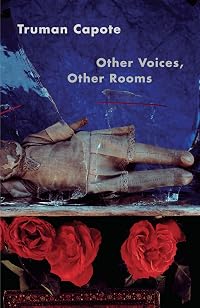
Other Voices, Other Rooms
by Truman Capote
On This Page
Description
Truman Capote's first novel is a story of almost supernatural intensity and inventiveness, an audacious foray into the mind of a sensitive boy as he seeks out the grown-up enigmas of love and death in the ghostly landscape of the deep South. At the age of twelve, Joel Knox is summoned to meet the father who abandoned him at birth. But when Joel arrives at the decaying mansion in Skully's Landing, his father is nowhere in sight. What he finds instead is a sullen stepmother who delights in show more killing birds; an uncle with the face-and heart-of a debauched child; and a fearsome little girl named Idabel who may offer him the closest thing he has ever known to love. show lessTags
Recommendations










Member Recommendations
Member Reviews
13-year-old Joel Knox leaves his aunt's house in New Orleans, where he has been comfortably cared for since his mother's death, ostensibly having been summoned by the father he has never met. His solo journey into the gothic environs of Southern decay leads him to an obscure backwater where he meets blighted characters haunted by the past, struggling with the present and dubious of the future. Joel has long been able to take himself to a "secret room" in his mind, and often has unbidden visions as well. He puts his observations of the new people in his life to good use, eventually realizing basic truths about himself and what matters to him. A brilliant short novel packed with elegant prose, atmosphere and humanity. If only Capote could show more have held on to the wise young man inside himself shown to us here.
"...only hypocrites would hold a man responsible for what he loves" show less
"...only hypocrites would hold a man responsible for what he loves" show less
For starters, My thanks to the folks at the On the Southern Literary Trail group for giving me the opportunity to read and discuss this and many other fine books.
This is Truman Capote’s first novel and it shows, for reasons both good and bad. On the good side, it shows that, even at the tender age of 23, Capote could didn’t need anywhere near a thousand words to paint a picture. With just half a paragraph he could pluck you out of your easy chair and plop you down beside a dusty country road leading to nowhere. It is easy to see the places that he is describing.
It is also easy to see that much of what he is writing is, if not autobiographical, at least about himself. Readers can, with the clarity of hindsight, sense that many parts show more of the story were written by a young man struggling to come to terms with an identity that many are reluctant to accept even today. Also evident was his portrayal of the pain and uncertainty of a boy who spent his life being shuttled from one guardian to another. Those familiar with To Kill a Mockingbird might recall the character of Dill who lived just such a life and, like Joel, was prone to telling imaginative tales about his life. For those who don’t know, Harper Lee based the character of Dill on her lifelong friend, Truman capote.
Unfortunately, Capote’s inexperience shows when it comes to the overall story line. While he is incredible at presenting vignettes, in the long run the story bogs down in a surreal mire that cannot decide between southern gothic or decadent drollery. In either case, it isn’t somewhere that you want a plot to stay it.
Bottom line: I’ve read every Capote story ever published and devoured In Cold Blood twice which is fortunate because I have faith in his ability to write. If I didn’t, this might be the first and last Capote novel I ever read. I’m not saying that you shouldn’t read it or that I don’t recommend it. I’m just saying that you should not judge Truman Capote’s career solely on this book. You would be doing a disservice to both him and yourself.
FYI: On a 5-point scale I assign stars based on my assessment of what the book needs in the way of improvements:
*5 Stars – Nothing at all. If it ain’t broke, don’t fix it.
*4 Stars – It could stand for a few tweaks here and there but it’s pretty good as it is.
*3 Stars – A solid C grade. Some serious rewriting would be needed in order for this book to be considered great or memorable.
*2 Stars – This book needs a lot of work. A good start would be to change the plot, the character development, the writing style and the ending.
*1 Star – The only thing that would improve this book is a good bonfire. show less
This is Truman Capote’s first novel and it shows, for reasons both good and bad. On the good side, it shows that, even at the tender age of 23, Capote could didn’t need anywhere near a thousand words to paint a picture. With just half a paragraph he could pluck you out of your easy chair and plop you down beside a dusty country road leading to nowhere. It is easy to see the places that he is describing.
It is also easy to see that much of what he is writing is, if not autobiographical, at least about himself. Readers can, with the clarity of hindsight, sense that many parts show more of the story were written by a young man struggling to come to terms with an identity that many are reluctant to accept even today. Also evident was his portrayal of the pain and uncertainty of a boy who spent his life being shuttled from one guardian to another. Those familiar with To Kill a Mockingbird might recall the character of Dill who lived just such a life and, like Joel, was prone to telling imaginative tales about his life. For those who don’t know, Harper Lee based the character of Dill on her lifelong friend, Truman capote.
Unfortunately, Capote’s inexperience shows when it comes to the overall story line. While he is incredible at presenting vignettes, in the long run the story bogs down in a surreal mire that cannot decide between southern gothic or decadent drollery. In either case, it isn’t somewhere that you want a plot to stay it.
Bottom line: I’ve read every Capote story ever published and devoured In Cold Blood twice which is fortunate because I have faith in his ability to write. If I didn’t, this might be the first and last Capote novel I ever read. I’m not saying that you shouldn’t read it or that I don’t recommend it. I’m just saying that you should not judge Truman Capote’s career solely on this book. You would be doing a disservice to both him and yourself.
FYI: On a 5-point scale I assign stars based on my assessment of what the book needs in the way of improvements:
*5 Stars – Nothing at all. If it ain’t broke, don’t fix it.
*4 Stars – It could stand for a few tweaks here and there but it’s pretty good as it is.
*3 Stars – A solid C grade. Some serious rewriting would be needed in order for this book to be considered great or memorable.
*2 Stars – This book needs a lot of work. A good start would be to change the plot, the character development, the writing style and the ending.
*1 Star – The only thing that would improve this book is a good bonfire. show less
I wanted to like this book. I tried to understand it and get through the writing which at times was so heavy I felt as though I was living in the deep south with Capote's characters -- sweltering, steamy, humid, heavy and mind numbing.
This is filled with southern Gothic themes of a raggedy plantation, a crazy step mother, an Uncle that is more than bizarre, conversations that float and go no where, snakes, tom boys, dusty antiques, rambling back water roads and, of course black help who are rendered spiritualistic and much to my chagrin, are portrayed derogatorily.
This is his first novel and it starts with the theme that runs through all Capote's books, a person disenfranchised and unloved, searching for love in all the wrong places, show more longing to belong.
When twelve year old Joel receives a communication from a father he never knew, calling him home, he follows. Abandoned at birth, now that his mother dies, the child has no other option.
When he arrives in the deep south, he does not meet his father. Instead, he finds a crazy step mother and a host of others who are just too eccentric to be real. And, that is my quarrel with the book. The writing is much too composed for a twelve year old.
Capote gives too much intelligence to Joel. While there are beautiful phrases and vivid images, overall the characters were over developed, and in the end, nothing happened.
The reader is left with a is that all there is feeling of disappointment.
No stars for this one! show less
This is filled with southern Gothic themes of a raggedy plantation, a crazy step mother, an Uncle that is more than bizarre, conversations that float and go no where, snakes, tom boys, dusty antiques, rambling back water roads and, of course black help who are rendered spiritualistic and much to my chagrin, are portrayed derogatorily.
This is his first novel and it starts with the theme that runs through all Capote's books, a person disenfranchised and unloved, searching for love in all the wrong places, show more longing to belong.
When twelve year old Joel receives a communication from a father he never knew, calling him home, he follows. Abandoned at birth, now that his mother dies, the child has no other option.
When he arrives in the deep south, he does not meet his father. Instead, he finds a crazy step mother and a host of others who are just too eccentric to be real. And, that is my quarrel with the book. The writing is much too composed for a twelve year old.
Capote gives too much intelligence to Joel. While there are beautiful phrases and vivid images, overall the characters were over developed, and in the end, nothing happened.
The reader is left with a is that all there is feeling of disappointment.
No stars for this one! show less
3.5***
Capote’s debut novel is a semiautobiographical coming-of-age story. After the death of his mother, thirteen-year-old Joel Knox leaves New Orleans to travel to rural Alabama, and the home of the father who abandoned him at birth. Skully’s Landing is his stepmother Amy’s dilapidated mansion, set far in the woods, and without electricity or indoor plumbing. Among the residents of the estate are a centenarian Negro, Jesus Fever, his granddaughter Missouri (known as Zoo), who keeps house for the family, and the mysterious cousin Randolph. The person who is obviously missing is Joel’s father. Nearby live two sisters, Florabel and Idabel, the latter a tomboy who provides a glimmer of love and approval to the lonely Joel.
This is show more a classic Southern Gothic novel, full of ghosts, haints, superstitions, secrets and closed off rooms. There are real dangers aplenty as well: poisonous snakes, quicksand, and people with guns. Joel is isolated not only by the remote location, but by the lack of connection with these people. He is confused and cautious, and his loneliness and despair are palpable.
Capote’s writing is wonderfully atmospheric. Here is what Joel sees on his journey to his new home:
Two roads pass over the hinterlands into Noon City; one from the north, another from the south; the latter, known as the Paradise Chapel Highway, is the better of the pair, though both are much the same: desolate miles of swamp and field and forest stretch along either route unbroken except for scattered signs advertising Red Dot 5c Cigars, Dr. Pepper, NEHI, Grove’s Chill Tonic, and 666. Wooden bridges spanning brackish creeks named for long-gone Indian tribes rumble like far-off thunder under a passing wheel; herds of hogs and cows roam the roads at will; now and then a farm-family pauses from work to wave as an auto whizzes by, and watch sadly till it disappears in red dust.
Like Joel, I felt somewhat lost in unfamiliar surroundings. Was Capote trying too hard to be atmospheric? Was he forced by the standards of the day to be so circumspect regarding his message of awakening homosexuality? It makes Cousin Randolph’s statement all the more poignant: ”The brain may take advice, but not the heart, and love, having no geography, knows no boundaries; ... any love is natural and beautiful that lies within a person's nature; only hypocrites would hold a man responsible for what he loves, emotional illiterates and those of righteous envy, who, in their agitated concern, mistake so frequently the arrow pointing to heaven for the one that leads to hell. ” show less
Capote’s debut novel is a semiautobiographical coming-of-age story. After the death of his mother, thirteen-year-old Joel Knox leaves New Orleans to travel to rural Alabama, and the home of the father who abandoned him at birth. Skully’s Landing is his stepmother Amy’s dilapidated mansion, set far in the woods, and without electricity or indoor plumbing. Among the residents of the estate are a centenarian Negro, Jesus Fever, his granddaughter Missouri (known as Zoo), who keeps house for the family, and the mysterious cousin Randolph. The person who is obviously missing is Joel’s father. Nearby live two sisters, Florabel and Idabel, the latter a tomboy who provides a glimmer of love and approval to the lonely Joel.
This is show more a classic Southern Gothic novel, full of ghosts, haints, superstitions, secrets and closed off rooms. There are real dangers aplenty as well: poisonous snakes, quicksand, and people with guns. Joel is isolated not only by the remote location, but by the lack of connection with these people. He is confused and cautious, and his loneliness and despair are palpable.
Capote’s writing is wonderfully atmospheric. Here is what Joel sees on his journey to his new home:
Two roads pass over the hinterlands into Noon City; one from the north, another from the south; the latter, known as the Paradise Chapel Highway, is the better of the pair, though both are much the same: desolate miles of swamp and field and forest stretch along either route unbroken except for scattered signs advertising Red Dot 5c Cigars, Dr. Pepper, NEHI, Grove’s Chill Tonic, and 666. Wooden bridges spanning brackish creeks named for long-gone Indian tribes rumble like far-off thunder under a passing wheel; herds of hogs and cows roam the roads at will; now and then a farm-family pauses from work to wave as an auto whizzes by, and watch sadly till it disappears in red dust.
Like Joel, I felt somewhat lost in unfamiliar surroundings. Was Capote trying too hard to be atmospheric? Was he forced by the standards of the day to be so circumspect regarding his message of awakening homosexuality? It makes Cousin Randolph’s statement all the more poignant: ”The brain may take advice, but not the heart, and love, having no geography, knows no boundaries; ... any love is natural and beautiful that lies within a person's nature; only hypocrites would hold a man responsible for what he loves, emotional illiterates and those of righteous envy, who, in their agitated concern, mistake so frequently the arrow pointing to heaven for the one that leads to hell. ” show less
This review contains spoilers.
After his mother dies, 13-year-old Joel is summoned to live with his father in a decrepit house with eccentric family members and discovers who he is over the course of a sultry summer.
I have read that Truman Capote said about this book that "somebody had to write the fairy Huck Finn." I know a little about Capote, or I think I know something about him. I think he was ambitious and yearned to take what he assumed was his rightful place among the great writers of American literature. I don't think this first novel of his even approaches Huckleberry Finn in terms of influence or achievement. About the only thing the two books have in common is a young male protagonist and a deep South setting. But if we put show more comparisons aside, it is a very interesting novel in its own right, even if I did have ambivalent feelings toward it after finishing it.
I doubt Capote invented the Southern gothic, but this novel is stuffed with the tropes of that genre. Joel goes to live in an isolated, crumbling mansion, stuffed with dusty, heavy, antique furniture and surrounded by a weed-infested overgrown garden. He goes to live with a full complement of eccentric characters as decrepit as the house: the aging, dotty, Southern belle aunt; the effeminate, dissolute uncle; the invalid father hidden away in the back bedroom. The African-American characters, by contrast -- especially Zoo, the housemaid -- are primitive, spiritual, almost caricatures with their bizarre names (Jesus Fever, Little Sunshine). Capote throws in a healthy dose of the Grotesque, culminating in a mule charging off an interior balcony in a crumbling hotel and hanging itself.
Capote's language perfectly mirrors the mood of his book and the humid Alabama summer during which it takes place. His writing is languid, slow-moving, evocative of sultry afternoons when there is nothing to do. Without this wonderful writing, this book wouldn't be nearly as compelling. Not a lot happens, and the reader is left to question what little that does take place. After Joel tries to run away from home and ends up catching pneumonia, the story takes on a surreal aspect where not much is explained. In the end, we are wondering whether Joel consciously chooses to stay in this place, which seems caught in a bubble of time, or is he compelled to stay there because there is really nowhere else where he can fit, similar to Zoo's predicament after she returns from her ill-fated journey to Washington DC?
I may not have fully understood this book, but I am glad I read it. Capote's writing captivated me, and I think Other Voices, Other Rooms earns an important place in Southern literature, although perhaps not the place that Capote envisioned for it. It depicts the decay and dissolution of the old South, an inevitability that Southerners are still perhaps in denial of today. show less
After his mother dies, 13-year-old Joel is summoned to live with his father in a decrepit house with eccentric family members and discovers who he is over the course of a sultry summer.
I have read that Truman Capote said about this book that "somebody had to write the fairy Huck Finn." I know a little about Capote, or I think I know something about him. I think he was ambitious and yearned to take what he assumed was his rightful place among the great writers of American literature. I don't think this first novel of his even approaches Huckleberry Finn in terms of influence or achievement. About the only thing the two books have in common is a young male protagonist and a deep South setting. But if we put show more comparisons aside, it is a very interesting novel in its own right, even if I did have ambivalent feelings toward it after finishing it.
I doubt Capote invented the Southern gothic, but this novel is stuffed with the tropes of that genre. Joel goes to live in an isolated, crumbling mansion, stuffed with dusty, heavy, antique furniture and surrounded by a weed-infested overgrown garden. He goes to live with a full complement of eccentric characters as decrepit as the house: the aging, dotty, Southern belle aunt; the effeminate, dissolute uncle; the invalid father hidden away in the back bedroom. The African-American characters, by contrast -- especially Zoo, the housemaid -- are primitive, spiritual, almost caricatures with their bizarre names (Jesus Fever, Little Sunshine). Capote throws in a healthy dose of the Grotesque, culminating in a mule charging off an interior balcony in a crumbling hotel and hanging itself.
Capote's language perfectly mirrors the mood of his book and the humid Alabama summer during which it takes place. His writing is languid, slow-moving, evocative of sultry afternoons when there is nothing to do. Without this wonderful writing, this book wouldn't be nearly as compelling. Not a lot happens, and the reader is left to question what little that does take place. After Joel tries to run away from home and ends up catching pneumonia, the story takes on a surreal aspect where not much is explained. In the end, we are wondering whether Joel consciously chooses to stay in this place, which seems caught in a bubble of time, or is he compelled to stay there because there is really nowhere else where he can fit, similar to Zoo's predicament after she returns from her ill-fated journey to Washington DC?
I may not have fully understood this book, but I am glad I read it. Capote's writing captivated me, and I think Other Voices, Other Rooms earns an important place in Southern literature, although perhaps not the place that Capote envisioned for it. It depicts the decay and dissolution of the old South, an inevitability that Southerners are still perhaps in denial of today. show less
Prose as thick and tangled as a kudzu vine and Gothic to the point of being grotesque – this is one of the most complex and evocative novels I’ve ever read.
'as if his heart were beating all over his body, and all undefined whisperings had gathered into one yearning roar'
By sally tarbox on 16 May 2012
Format: Paperback
Exquisite descriptive writing abounds in this short novel, a coming of age tale of 13 year old Joel Knox, sent to live with the father he has never met.
This really immerses you in the world of rural Alabama:
'Deep in the hollow, dark syrup crusted the bark of vine-roped sweetgums; like pale apple leaves green witch butterflies sank and rose; a breezy lane of trumpet lilies beckoned like hands lace-gloved and ghostly.'
The boy encounters a weird household- father ill in bed, strange stepmother and Cousin Randolph (an Oscar Wilde type character.) He befriends the house servant and show more Idabel, a local tomboy with her own issues.
Then the latter part of the book becomes hard to follow, but we see Joel starting to come to terms with his homosexuality. show less
By sally tarbox on 16 May 2012
Format: Paperback
Exquisite descriptive writing abounds in this short novel, a coming of age tale of 13 year old Joel Knox, sent to live with the father he has never met.
This really immerses you in the world of rural Alabama:
'Deep in the hollow, dark syrup crusted the bark of vine-roped sweetgums; like pale apple leaves green witch butterflies sank and rose; a breezy lane of trumpet lilies beckoned like hands lace-gloved and ghostly.'
The boy encounters a weird household- father ill in bed, strange stepmother and Cousin Randolph (an Oscar Wilde type character.) He befriends the house servant and show more Idabel, a local tomboy with her own issues.
Then the latter part of the book becomes hard to follow, but we see Joel starting to come to terms with his homosexuality. show less
Members
- Recently Added By
Lists

Great American Novels
158 works; 42 members

Best Gothic Fiction
110 works; 31 members

Southern Fiction
212 works; 51 members

1940s
221 works; 25 members
20th Century Literature
1,161 works; 55 members

Pre-1969 LGBTQ Literature
182 works; 69 members
Best Friendship Stories
205 works; 16 members
Best Family Stories
241 works; 22 members

Houses and Buildings as Characters in Fiction
182 works; 29 members

Books Read in 2014
2,343 works; 89 members
LibraryThingers' 1001 Books You Must Read Before You Die
442 works; 29 members

A Novel Cure
742 works; 23 members

Best of American Literature
146 works; 9 members

Publishing Triangle 100 Best Lesbian and Gay Novels
97 works; 6 members

Best LGBT Fiction
144 works; 24 members
Books Set in Alabama
10 works; 5 members

Favorite Books from the 1940s
38 works; 3 members
Best Books of the 20th Century
193 works; 5 members
First Novels
373 works; 17 members

Good LGBT fiction for LGBT folk and friends
545 works; 54 members

Want to Read
12 works; 1 member

Books Read in 2009
464 works; 11 members

Summer Books
82 works; 9 members

Main Character is aged 10-19
361 works; 6 members
American Lit for Eng 11 Research Project
368 works; 6 members

Beginner's Guide to Southern Gothic
22 works; 4 members
Author Information

175+ Works 57,103 Members
Truman Capote, 1924 - 1984 Novelist and playwright Truman Streckfus Person was born in 1924 in New Orleans to a salesman and a 16-year-old beauty queen. His parents divorced when he was four years old and was then raised by relatives for a few years in Monroeville. His mother was remarried to a successful businessman, moved to New York, and Truman show more adopted his stepfather's surname. He attended Greenwich High School and never went to college. When he was 17, Capote's formal education ended when he was employed at The New Yorker magazine. He belived he did not need to go to college to be a writer, since he was writing seriously since age 11. Capote's first novel was "Other Voices, Other Rooms" (1948), which told the story of a boy growing up in the Deep South. "The Grass Harp" (1951) is about a young boy and his elderly cousin discovering that some compromise is necessary for people to live together in a community and was adapted to screen in 1996. The play "The House of Flowers" (1954) is a musical set in a West Indies bordello. Capote then wrote, "Breakfast at Tiffanys" (1958), which tells the story of how Holly Golightly goes to New York seeking happiness. Capote became preoccupied with journalism and, sparked by the murder of a wealthy family in Holcomb, Kansas, began interviewing the locals to recreate the lives of the murderers and their victims. The research and writing for this novel, "In Cold Blood" (1966), took six years for him to complete. Other works of Capote's include the classic "A Christmas Memory" (1966), which is an autobiographical account of a seven-year-old boy, his cousin, and an eccentric old lady, "Music for Chameleons" (1981), which is a collection of short pieces, interviews, stories and conversations that were published in several magazines, and "One Christmas" (1982). On August 26, 1984 in Los Angeles, Truman Capote died of liver disease complicated by phlebitis and multiple drug intoxication. Published after his death were "Conversations With Capote" (1985) and "Answered Prayers: The Untitled Novel" (1986). (Bowker Author Biography) show less
Some Editions
Awards and Honors
Series
Belongs to Publisher Series
Work Relationships
Is contained in
Common Knowledge
- Canonical title*
- Andere stemmen, andere kamers
- Original title
- Other Voices, Other Rooms
- Original publication date
- 1948
- People/Characters
- Joel Harrison Knox; Idabel Thompkins; Sam Radclif; Florabel Thompkins; Jesus Fever; Randolph (show all 13); Missouri "Zoo" Fever; Amy Skully; Edward R. Sansom; Little Sunshine; Pepe Alvarez; Ellen Kendall; Miss Wisteria
- Important places
- Noon City, Alabama, USA; Alabama, USA
- Epigraph
- The heart is deceitful above all things, and desperately wicked. Who can know it?
Jeremiah 17:9 - Dedication
- For Newton Arvin
- First words
- Now a traveler must make his way to Noon City by the best means he can, for there are no buses or trains heading in that direction, though six days a week a truck from the Chuberry Turpentine Company collects mail and supplie... (show all)s in the next-door town of Paradise Chapel: occasionally a person bound for Noon City can catch a ride with the driver of the truck, Same Radclif.
- Last words
- (Click to show. Warning: May contain spoilers.)She beckoned to him, shining and silver, and he knew he must go: unafraid, not hesitating, he paused only at the garden's edge where, as though he'd forgotten something, he stopped and looked back at the bloomless, descending blue, at the boy he had left behind.
- Original language
- English
*Some information comes from Common Knowledge in other languages. Click "Edit" for more information.
Classifications
Statistics
- Members
- 2,872
- Popularity
- 6,277
- Reviews
- 56
- Rating
- (3.83)
- Languages
- 20 — Catalan, Czech, Danish, Dutch, English, French, German, Hungarian, Icelandic, Italian, Lithuanian, Norwegian (Bokmål), Polish, Portuguese, Romanian, Russian, Slovenian, Spanish, Swedish, Turkish
- Media
- Paper, Audiobook, Ebook
- ISBNs
- 67
- ASINs
- 34