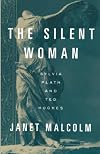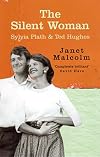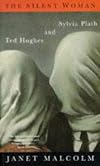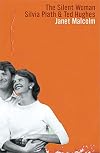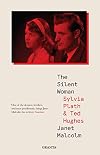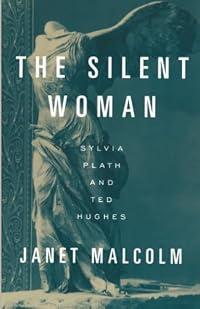
The Silent Woman: Sylvia Plath and Ted Hughes
by Janet Malcolm
On This Page
Description
"Janet Malcolm has produced a brilliant, elegantly reasoned meditation on the art of biography, in which she takes as her example the various biographies of the poet Sylvia Plath." "The Silent Woman is an astonishing feat of criticism and literary detection. It is not a book about the life of Sylvia Plath, but about her afterlife: how her reputation was forged from the poems she wrote just before her suicide; how her estranged husband, the poet Ted Hughes, as executor of her estate, tried to show more serve two masters - Plath's art and his own need for privacy; and how it fell to his sister, Olwyn Hughes, as literary agent for the estate, to protect him by limiting access to Plath's work. The Silent Woman, in the end, embodies a paradox: even as Malcolm brings her skepticism to bear on the claims of biography to present the truth about a life, a portrait of Sylvia Plath emerges that gives us a sense of "knowing" this tragic poet in a way we have never known her before." "The result is a provocative work that will dispel forever the innocence with which most of us have approached the reading of any biography. It will be talked about for years to come."--Jacket. show lessTags
Recommendations










Member Reviews
Sylvia Plath committed suicide in February 1963, and since then her poetry, fiction, and, increasingly, her life, have maintained enormous power over readers' imaginations. Biographies continue to appear with regularity, despite the strong hold the Plath estate has on her work. But because of that hold, each biographer has been forced to accommodate the living (Ted Hughes, who was separated from Plath at the time of her death, and his larger-than-life sister, Olwyn, long the executrix), often at the expense of the dead. In 1989, Anne Stevenson's peculiar hybrid, Bitter Fame, was published, complete with an appendix full of devastating memoirs. It was not your average biography. When Janet Malcolm was first sent the book, she was less show more drawn to it by the Plath legend than by the fact that she had known Stevenson in the 50s, but she soon became captivated by the book's defeatist subtext. The dead woman's voice and writings seemed to overwhelm Stevenson's tentative narrative; and if that wasn't enough, there was also the none-too-angelic choir of those who had known Plath. "These too, said: "Don't listen to Anne Stevenson. She didn't know Sylvia. I knew Sylvia. Let me tell you about her. Read my correspondence with her. Read my memoir."
Bitter Fame was soon garnering some powerfully bad notices, especially that of A. Alvarez in the New York Review of Books. Alvarez, the author of one of the most influential pieces on Plath, in his study of suicide, The Savage God, had some special, personal cards to deal, as have so many others Plath left behind. Because Malcolm's great theme is treachery--that of the interviewer, the journalist, the teller of just about any tale--the Plath mess seemed a perfect fit, and she decided to become a player, too. In 1991, Malcolm was having lunch with Olwyn Hughes in North London, 28 years to the day on which the poet died.
This is only one of the coincidences in The Silent Woman, a postmodern biography par excellence, which is less about the drama of Plath's life and still controversial death than about their continuing effect on the living. For Malcolm, all cards are wild, each one revealing more complexity, human cravenness, and, above all, brilliantly playful aperçus about human agency and writing's deceptions. I look forward to the dictionary of quotations that foregrounds the elegant "The pleasure of hearing ill of the dead is not a negligible one, but it pales before the pleasure of hearing ill of the living." And then there's: "Memory is notoriously unreliable; when it is intertwined with ill will, it may be monstrously unreliable. The "good" biographer is supposed to be able to discriminate among the testimonies of witnesses and have his antennae out for tendentious distortions, misrememberings and outright lies. It's clear that Malcolm doesn't see herself as a "good" biographer-- she openly declares her allegiance, but is more than capable of changing it and of showing her cards. Or is she? In the end, The Silent Woman, is a stunning inquiry into the possibility of ever really knowing anything save that "the game continues."
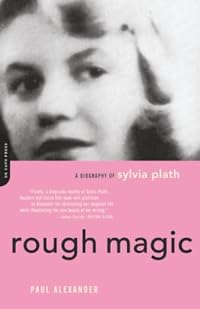
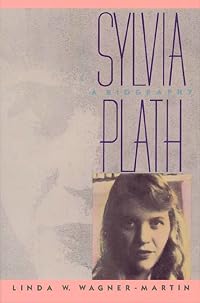
This work provides a biography of Sylvia Plath, whilst also aiming to examine the means by which biographers justify their ends. As well as covering Plath's life, it covers topics such as how her reputation was forged by the poems she wrote just before her suicide.
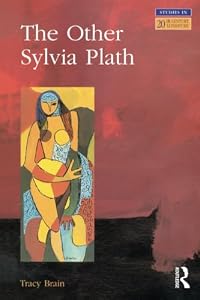
This book can be taken as an examination of the splits and conflicts that occur around those who show the personality characteristics said to typify borderline personality disorder. The literature that is available about the life and relationships of Princess Diana shows the same characteristics. show less
Bitter Fame was soon garnering some powerfully bad notices, especially that of A. Alvarez in the New York Review of Books. Alvarez, the author of one of the most influential pieces on Plath, in his study of suicide, The Savage God, had some special, personal cards to deal, as have so many others Plath left behind. Because Malcolm's great theme is treachery--that of the interviewer, the journalist, the teller of just about any tale--the Plath mess seemed a perfect fit, and she decided to become a player, too. In 1991, Malcolm was having lunch with Olwyn Hughes in North London, 28 years to the day on which the poet died.
This is only one of the coincidences in The Silent Woman, a postmodern biography par excellence, which is less about the drama of Plath's life and still controversial death than about their continuing effect on the living. For Malcolm, all cards are wild, each one revealing more complexity, human cravenness, and, above all, brilliantly playful aperçus about human agency and writing's deceptions. I look forward to the dictionary of quotations that foregrounds the elegant "The pleasure of hearing ill of the dead is not a negligible one, but it pales before the pleasure of hearing ill of the living." And then there's: "Memory is notoriously unreliable; when it is intertwined with ill will, it may be monstrously unreliable. The "good" biographer is supposed to be able to discriminate among the testimonies of witnesses and have his antennae out for tendentious distortions, misrememberings and outright lies. It's clear that Malcolm doesn't see herself as a "good" biographer-- she openly declares her allegiance, but is more than capable of changing it and of showing her cards. Or is she? In the end, The Silent Woman, is a stunning inquiry into the possibility of ever really knowing anything save that "the game continues."
This work provides a biography of Sylvia Plath, whilst also aiming to examine the means by which biographers justify their ends. As well as covering Plath's life, it covers topics such as how her reputation was forged by the poems she wrote just before her suicide.
This book can be taken as an examination of the splits and conflicts that occur around those who show the personality characteristics said to typify borderline personality disorder. The literature that is available about the life and relationships of Princess Diana shows the same characteristics. show less
Como todo lo de Janet Malcolm, este es otro escrito para poner un poco de orden. Pero no para dar órdenes de lo que debemos pensar, sobre todo en este caso, con todas esas polémicas sobre el matrimonio Plath-Hughes. Aún así ella nos dice lo que piensa pero para nosotros nos deja el espacio libre para opinar con todos esos datos sacados de las múltiples biografías, relaciones entre autores y la familia Hughes y sobre todo, las propias relaciones de Malcolm con todos.
Sobre todo, terminas con unas ganas locas de leer tanto a Sylvia como a Ted. Sin acritud.
Sobre todo, terminas con unas ganas locas de leer tanto a Sylvia como a Ted. Sin acritud.
Reviewing this book is going to be a tad difficult and not just because it's been quite a few months since I finished reading it. For starters, I was expecting a more or less straightforward biography of Sylvia Plath, perhaps one focusing on the years of her marriage to Ted Hughes given the book's subtitle. So imagine my surprise when I found a book that is anything but that. The Silent Woman is part literary criticism, part musing on the role of the biographer, and part a defense of past biographers as well as supportive look at Ted Hughes and others. That being said, it's hard to judge a book as a biography when it's not really that at all.
However, in her defense, Malcolm does right away give the reader a clue that this book won't be show more a typical biography. Rather than start her book at the beginning of Plath's life, supplying the reader with historical details as to where and when Plath was born, Malcolm immediately kicks off the book by discussing Hughes's introduction to Plath's posthumous publications and launches from there into a discussion of the troubles in their marriage. Clearly this is going to be no ordinary biography, Malcolm seems to be saying.
The Silent Woman focuses a great deal on past biographies of Plath, with a particular interest in Bitter Fame, a biography written by Anne Stevenson, a former classmate of Malcolm's. Malcolm is at turns supportive and dismissive of this biography. Talking about it brings her to the topic of Olwyn Hughes, sister of Ted, and how much Ms. Hughes had a hand in dictating what could or could not be a part of that biography. A long section of the book includes a great number of details about Malcolm meeting with Stevenson on multiple occasions to discuss her experiences in writing Bitter Fame. I'm not sure that we learn very much about Plath through all this, although we do learn more about Ms. Hughes, Stevenson, and Malcolm herself.
As mentioned earlier, Malcolm is given often to contemplating on the art of biography writing. She rightly points out the problems inherent in writing a biography of a deceased person, reflecting on how much of what a biographer has to go on is hearsay from people in the deceased's social circle, who may or may not have known the subject well or may have vested interest in presenting themselves in a specific light. To that end, she is critical and wary of what some of Plath's friends have to say about her last days. She is more willing to entertain the idea of Plath as a less-than-perfect person with a great deal more problems that are let on by what she refers to as the "Plath myth" or the "Plath legend" (i.e., a sainted woman who is wronged by her husband, thus causing her to commit suicide). While she is more than likely right that Plath has become an idealized victim, Malcolm is almost too kind to the Hugheses. Again, she quite correctly points out how little the public can know of what truly happened in the marriage between Ted and Sylvia and how unfair it is for Hughes to be constantly vilified , but she seems to swing in the opposite direction of painting Ted Hughes as the saint and the victim. She is slightly less sympathetic in her portrayal of the controlling Olwyn Hughes, but she still seems to be willing to give a lot of benefit to Olwyn's unverified portraits of Plath as an aggressor.
Other parts of the book sidebar into critiques of Plath's poetry, occasionally using the poetry as a means to look at a specific event or person in Plath's life. Malcolm appears to suggest that Plath's poetry is inferior to Hughes's and that her shocking death launched her into a greater limelight than her work would have otherwise enjoyed, which seems a rather unknowable - and therefore quite unfair - thing to ponder.
Overall, I'm a bit perplexed by what to make of this book. Sure, I did come away knowing some more things about Plath - and the Hugheses - than I did before reading it. But I also learned far more about Plath's biographers and subjective opinions about her and her family than I gleaned actual facts. Perhaps that was Malcolm's end goal all along - to point out just how deceptive the art of biography writing is. This book did provide plenty of food for thought and did offer various alternative theories and ways of looking at things, although it ultimately failed to make me less "Team Sylvia" - if anything, for all Malcolm's attempts to paint the Hugheses in a better light, I walked away feeling less sympathetic towards them than before reading this book. show less
However, in her defense, Malcolm does right away give the reader a clue that this book won't be show more a typical biography. Rather than start her book at the beginning of Plath's life, supplying the reader with historical details as to where and when Plath was born, Malcolm immediately kicks off the book by discussing Hughes's introduction to Plath's posthumous publications and launches from there into a discussion of the troubles in their marriage. Clearly this is going to be no ordinary biography, Malcolm seems to be saying.
The Silent Woman focuses a great deal on past biographies of Plath, with a particular interest in Bitter Fame, a biography written by Anne Stevenson, a former classmate of Malcolm's. Malcolm is at turns supportive and dismissive of this biography. Talking about it brings her to the topic of Olwyn Hughes, sister of Ted, and how much Ms. Hughes had a hand in dictating what could or could not be a part of that biography. A long section of the book includes a great number of details about Malcolm meeting with Stevenson on multiple occasions to discuss her experiences in writing Bitter Fame. I'm not sure that we learn very much about Plath through all this, although we do learn more about Ms. Hughes, Stevenson, and Malcolm herself.
As mentioned earlier, Malcolm is given often to contemplating on the art of biography writing. She rightly points out the problems inherent in writing a biography of a deceased person, reflecting on how much of what a biographer has to go on is hearsay from people in the deceased's social circle, who may or may not have known the subject well or may have vested interest in presenting themselves in a specific light. To that end, she is critical and wary of what some of Plath's friends have to say about her last days. She is more willing to entertain the idea of Plath as a less-than-perfect person with a great deal more problems that are let on by what she refers to as the "Plath myth" or the "Plath legend" (i.e., a sainted woman who is wronged by her husband, thus causing her to commit suicide). While she is more than likely right that Plath has become an idealized victim, Malcolm is almost too kind to the Hugheses. Again, she quite correctly points out how little the public can know of what truly happened in the marriage between Ted and Sylvia and how unfair it is for Hughes to be constantly vilified , but she seems to swing in the opposite direction of painting Ted Hughes as the saint and the victim. She is slightly less sympathetic in her portrayal of the controlling Olwyn Hughes, but she still seems to be willing to give a lot of benefit to Olwyn's unverified portraits of Plath as an aggressor.
Other parts of the book sidebar into critiques of Plath's poetry, occasionally using the poetry as a means to look at a specific event or person in Plath's life. Malcolm appears to suggest that Plath's poetry is inferior to Hughes's and that her shocking death launched her into a greater limelight than her work would have otherwise enjoyed, which seems a rather unknowable - and therefore quite unfair - thing to ponder.
Overall, I'm a bit perplexed by what to make of this book. Sure, I did come away knowing some more things about Plath - and the Hugheses - than I did before reading it. But I also learned far more about Plath's biographers and subjective opinions about her and her family than I gleaned actual facts. Perhaps that was Malcolm's end goal all along - to point out just how deceptive the art of biography writing is. This book did provide plenty of food for thought and did offer various alternative theories and ways of looking at things, although it ultimately failed to make me less "Team Sylvia" - if anything, for all Malcolm's attempts to paint the Hugheses in a better light, I walked away feeling less sympathetic towards them than before reading this book. show less
I'm a big fan of feminism that can look back on itself and be critical. Malcolm shows that Plath wasn't the faultless victim she was made out to be (because who wants a real person when you can have a symbol?). And Hughes is equally complicated.
Sidenote: Malcolm falls slightly on the side of saying that Plath's Holocaust allusions are problematic. And although I think that's true, listen to her reading of Daddy and Lazy Lazarus. It's so creepy and effective.
Sidenote: Malcolm falls slightly on the side of saying that Plath's Holocaust allusions are problematic. And although I think that's true, listen to her reading of Daddy and Lazy Lazarus. It's so creepy and effective.
Interesting. Not brilliant. No great insights into the biographical form, despite what was promised. Maybe I expect too much.
This is another book that I associate with a particular moment in my life. I read it all in one night, I think, in my dorm room.
The prevailing theory in my class about this one is that Ms. Malcolm was er... interested in Mr. Hughes.
The prevailing theory in my class about this one is that Ms. Malcolm was er... interested in Mr. Hughes.
Read it if…
…You’re a fan of Malcolm, Hughes, or Plath, and have read any of their work and/or biographies of any of them. Also, if you enjoy biographies and want to know more about how they’re put together, you might want to check it out.
http://reviewingwhatever.blogspot.com/2007/03/silent-woman.html
…You’re a fan of Malcolm, Hughes, or Plath, and have read any of their work and/or biographies of any of them. Also, if you enjoy biographies and want to know more about how they’re put together, you might want to check it out.
http://reviewingwhatever.blogspot.com/2007/03/silent-woman.html
Members
- Recently Added By
Lists

Top Five Books of 2016
795 works; 229 members

Tonikat reading completed on Librarything journals
329 works; 2 members

Bibliography for How to be a Heroine
148 works; 12 members

Books Read in 2016
4,666 works; 199 members
Author Information

20+ Works 4,202 Members
Janet Malcolm is the acclaimed author of many books, including In the Freud Archives; Two Lives: Gertrude and Alice; and Burdock, a volume of her photographs of a "rank weed." She is a frequent contributor to The New Yorker and The New York Review of Books.
Some Editions
Awards and Honors
Notable Lists
Common Knowledge
- Original publication date
- 1993
- People/Characters
- Sylvia Plath; Ted Hughes
- First words
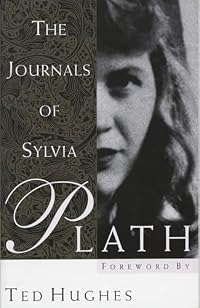
- Ted Hughes wrote two versions of his foreword to 'The Journals of Sylvia Plath', a selection of diary entries covering the years between 1950 and 1962.
- Quotations
- The biographer at work, indeed, is like the professional burglar, breaking into a house, rifling through certain drawers that he has good reason to think contain the jewelry and money, and triumphantly bearing his loot away. ... (show all)The voyeurism and busybodyism that impel writers and readers of biography alike are obscured by the apparatus of scholarship designed to give the enterprise an appearance of banklike blandless and solidity. The biographer is portrayed almost as a kind of benefactor. He is seen as sacrificing years of his life to his task, tirelessly sitting in archives and libraries and patiently conducting interviews with witnesses. There is no length he will not go to, and the more his book reflects his industry the more the reader believes that he is having an elevating literary experience, rather than simply listening to backstairs gossip and reading other people's mail. The transgressive nature of biography is rarely acknowledged, but it is the only explanation for biography's status as a popular genre. The reader's amazing tolerance (which he would extend to no novel written half as badly as most biographies) makes sense only when seen as a kind of collusion between him and the biographer in an excitedly forbidden undertaking: tiptoeing down the corridor together, to stand in front of the bedroom door and try to peep through the keyhole.
Letters are the great fixative of experience. Time erodes feeling. Time creates indifference. Letters prove to us that we once cared. They are the fossils of feeling. This is why biographers prize them so: they are biography'... (show all)s only conduit to unmediated experience. Everything else the biographer touches is stale, hashed over, told and retold, dubious, unathentic, suspect. Only when he reads a subject's letters does the biographer feel he has come fully into his presence, only when he quotes from the letters does he share with his readers his sense of life retrieved. And he shares something else: the feeling of transgression that comes from reading letters not meant for one's eyes. He allowa the reader to be a voyeur with him, to eavesdrop with him, to rifle desk drawers, to take what doesn't belong to him. The feeling is not entirely pleasurable. The act of snooping carries with it a certain discomfort and unease: one would not like to have this happen to oneself. When we are dead, we want to be remembered on our own terms, not on those of someone who has our most intimate, unconsidered, embarrassing letters in hand and proposes to read out loud from them to the world. - Last words
- (Click to show. Warning: May contain spoilers.)I knew that the labyrinth of the Sylvia Plath and Ted Hughes story would eventually lead me back to it - the Aleph of my tale - and that when the time came I would want evidence that I had not merely conjured it up for the purposes of my plot but had seen it as well.
(Click to show. Warning: May contain spoilers.)Then she read - as I felt certain she would - "Ted never bought the property." - From 'Note to the British Edition' - Blurbers
- Lee, Hermione; Benfey, Christopher; Showalter, Elaine; James, Caryn
- Original language
- English
Classifications
Statistics
- Members
- 621
- Popularity
- 46,716
- Reviews
- 7
- Rating
- (4.00)
- Languages
- 5 — English, French, German, Portuguese, Spanish
- Media
- Paper, Ebook
- ISBNs
- 18
- ASINs
- 5