On This Page
Description
What started as a doodle has turned Scott Adams into a superstar of the cartoon world. Dilbert debuted on the comics page in 1989, while Adams was in the tech department at Pacific Bell. Adams continued to work at Pacific Bell until he was voluntarily downsized in 1995. He has lived in the San Francisco Bay area since 1979.Tags
Recommendations


















Member Reviews
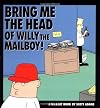
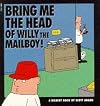
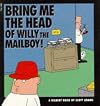
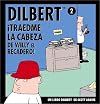
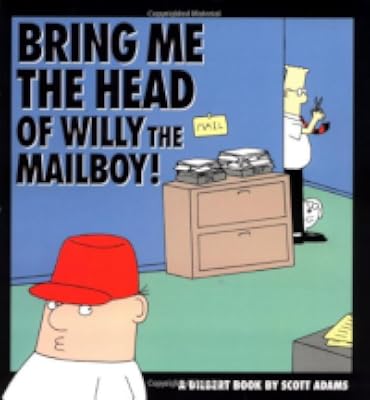
This is a compilation of Dilbert strips. For those who don't know, Dilbert is a long-suffering engineer who must deal with the idiocy of the work environment, personified by his clueless pointy haired boss who is continually trying to make the workplace a more nightmarish and Kafkaesque place with his various instructions and "improvements", while also dealing with his megalomaniacal dog Dogbert at home (and sometimes at work as well).
The comic strips in this volume begin in earnest the brutal satire of the modern office workplace, and employers who don't understand what their employees actually do. Dilbert sends up how bosses make silly decisions to assert their authority, how people deal with incompetent, lazy, or seemingly insane show more coworkers in the office, and other elements that make the workplace an almost surreal place. In the book, the workplace centered humor takes an increasingly greater portion of the strips, as the comic matures from its beginnings as the travails of a nerdy engineer with his wisecracking dog - a sort of Garfield like beginning - to the office satire that it is today.
Despite this increasing focus on work oriented humor, much of this book also deals with Dilbert at home, and the oddities of the life of a poorly socialized nerdy engineer with a dog that wants to rule the world. Alongside the travails of Dilbert as he navigates the insanity of the modern office workplace, we see the travails of Dilbert as he navigates the modern world away from the workplace, and most of Dilbert's difficulties stem from being a square peg that the world around him insists should be rammed in a square hole.
Despite the pressures on Dilbert to conform, he remains resistant, whether due to his own obliviousness, or just his inability to become a beer-swilling sports-loving, "real" man, and fit in where society around him thinks he should. And this, I think, is a large part of Dilbert's success: when you strip away the workplace humor, the satire, and the general insanity of talking animals, you are left with a nerdy guy who thinks it is okay to be a nerdy guy, despite all of the problems this causes him. This book is really good, but then again, almost all Dilbert is really good.
This review has also been posted on my blog Dreaming About Other Worlds. show less
The comic strips in this volume begin in earnest the brutal satire of the modern office workplace, and employers who don't understand what their employees actually do. Dilbert sends up how bosses make silly decisions to assert their authority, how people deal with incompetent, lazy, or seemingly insane show more coworkers in the office, and other elements that make the workplace an almost surreal place. In the book, the workplace centered humor takes an increasingly greater portion of the strips, as the comic matures from its beginnings as the travails of a nerdy engineer with his wisecracking dog - a sort of Garfield like beginning - to the office satire that it is today.
Despite this increasing focus on work oriented humor, much of this book also deals with Dilbert at home, and the oddities of the life of a poorly socialized nerdy engineer with a dog that wants to rule the world. Alongside the travails of Dilbert as he navigates the insanity of the modern office workplace, we see the travails of Dilbert as he navigates the modern world away from the workplace, and most of Dilbert's difficulties stem from being a square peg that the world around him insists should be rammed in a square hole.
Despite the pressures on Dilbert to conform, he remains resistant, whether due to his own obliviousness, or just his inability to become a beer-swilling sports-loving, "real" man, and fit in where society around him thinks he should. And this, I think, is a large part of Dilbert's success: when you strip away the workplace humor, the satire, and the general insanity of talking animals, you are left with a nerdy guy who thinks it is okay to be a nerdy guy, despite all of the problems this causes him. This book is really good, but then again, almost all Dilbert is really good.
This review has also been posted on my blog Dreaming About Other Worlds. show less
A nice, quick, and entertaining read. This is one of the earlier volumes, so, if you have read Dilbert over time, you will notice the differences as the artist improved the comic. There are some classic gems in this volume, including Dilbert's trip to the Accounting Dept. to ask a question about the budget (plus what happens when he finds the Accounting Dept.'s own budget) and more. If you are fan, you will probably like this. A good volume, but there are better out there.
Reading the old Dilbert is a trip and a half, since sometimes they are dated and give clear indications supporting the supposition that they were drawn in the 1990s. But they have aged well and are still very funny.
Dependable humor from Scott Adams, the sole voice of reason and sanity in the corporate world. Adams never fails to deliver barbs of reason that pierce the armor of bureaucratic bullshit that envelopes large organizations.
This is a later compilation of Dilbert strips. It was funny, yes, but I really missed Alice, the Pointy-Haired Boss, Asok, and Catbert. The missing supporting cast and the inevitable laughs I would've enjoyed with them around made lower my score, here.
1 ½ toes up!
1 ½ toes up!
Reading the old Dilbert is a trip and a half, since sometimes they are dated and give clear indications supporting the supposition that they were drawn in the 1990s. But they have aged well and are still very funny.
Reading the old Dilbert is a trip and a half, since sometimes they are dated and give clear indications supporting the supposition that they were drawn in the 1990s. But they have aged well and are still very funny.
Members
- Recently Added By
Author Information

199+ Works 34,778 Members
Scott Adams, Cartoonist Scott Adams was born and raised in Windham, New York in the Catskill Mountains. He received a B.A. in economics from Hartwick College, Oneonta, NY and an MBA from the University of California, Berkeley. He is also a certified hypnotist. Adams worked in a bank for eight years and, while a bank teller, was robbed twice at show more gunpoint. He also worked for Pacific Bell for nine years and describes both jobs as "humiliating and low paying jobs." It was during this time, that Adams created the character Dilbert. He was entertaining himself during meetings by drawing insulting cartoons of his co-workers and bosses. In 1988, he mailed some sample comic strips featuring Dilbert to some major cartoon syndicates. He was offered a contract and Dilbert was launched in approximately fifty papers in 1989. Adams began working on Dilbert full time as well as speaking, writing, doing interviews, and designing artwork for licensed products. Dilbert is published in over 1,200 newspapers and has a hard cover business book called "The Dilbert Principle." (Bowker Author Biography) show less
Series

Common Knowledge
- Canonical title*
- Portami la testa di Willy il fattorino!
- Original title
- Bring me the Head of Willy the Mailboy
- Original publication date
- 1995
- Related movies
- Dilbert (1999 | IMDb)
- First words
- Oh good, Dogbert isn't around.
- Last words
- (Click to show. Warning: May contain spoilers.)That's what I meant to say: "'Bye."
*Some information comes from Common Knowledge in other languages. Click "Edit" for more information.
Classifications
- Genre
- Graphic Novels & Comics
- DDC/MDS
- 741.5973 — Arts & recreation Drawing & decorative arts Drawing Comic books, graphic novels, fotonovelas, cartoons, caricatures, comic strips History, geographic treatment, biography North American United States (General)
- LCC
- PN6727 .A3 .D5526 — Language and Literature Literature (General) Literature (General) Collections of general literature Comic books, strips, etc.
- BISAC
Statistics
- Members
- 844
- Popularity
- 32,674
- Reviews
- 11
- Rating
- (3.80)
- Languages
- 6 — Dutch, English, Finnish, German, Italian, Spanish
- Media
- Paper
- ISBNs
- 7
- UPCs
- 1
- ASINs
- 1