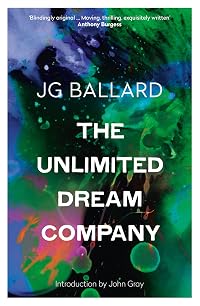
The Unlimited Dream Company
by J. G. Ballard
On This Page
Description
"A remarkable piece of invention, a flight from the world of the familiar and the real into the exotic universe of dream and desire." —New York Times Book ReviewWhen a light aircraft crashes into the Thames at Shepperton, the young pilot who struggles to the surface minutes later seems to have come back from the dead. Within hours everything in the dormitory suburb is transformed. Vultures invade rooftops, luxuriant tropical vegetation overruns the quiet avenues, and the local inhabitants show more are propelled by the young man's urgent visions through ecstatic sexual celebrations toward an apocalyptic climax. In this characteristically inventive novel Ballard displays to devastating effect the extraordinary imagination that has established him as one of the twentieth century's most visionary writers. show less
Tags
Recommendations
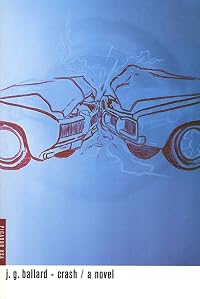
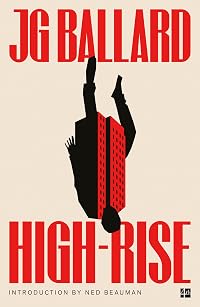


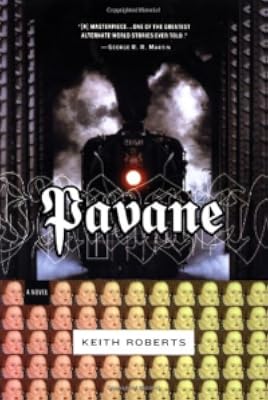
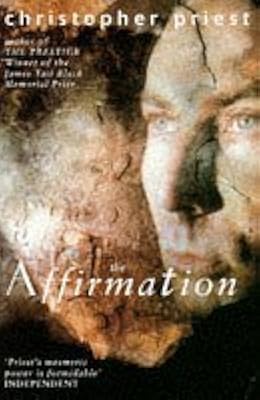
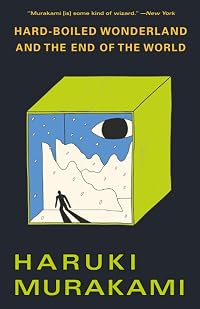


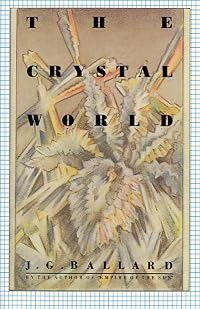
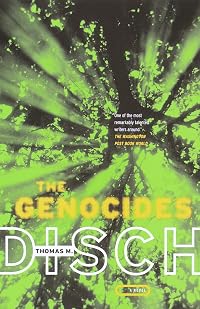
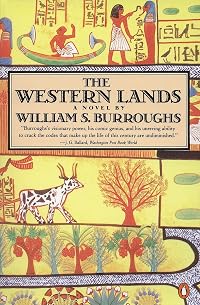



















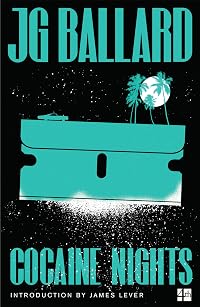
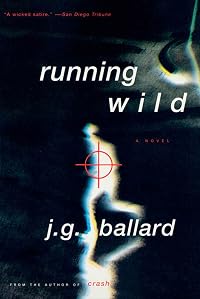
Member Recommendations

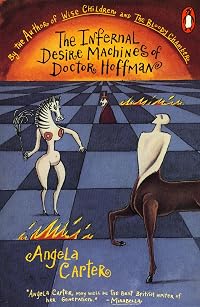
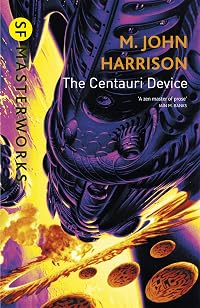
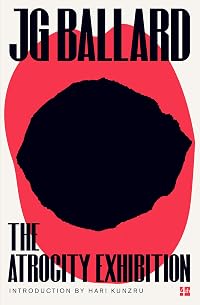
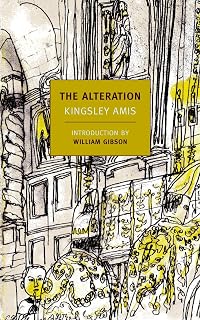
isabelx Similar theme
Member Reviews
Although he had abandoned his church to me, Father Wingate had worked hard that day, assembling the primitive flying creature whose ancient bones he had found on the beach. With its outstretched arms, its slender legs and delicate feet, bones jewelled by time, it more than ever resembled a small winged man — perhaps myself, who had lain these millions of years in the bone bed of the Thames, sleeping there until it was time to be freed by the falling aircraft.
A light aircraft crashes into the Thames at Shepperton and from the moment the pilot struggles ashore, the town begins to be transformed into the Garden of Eden with the pilot as its pagan god. But is it really happening or is it the fantasy of a dying man based on the last images show more he saw before the plane crash? Blake's compulsion to crush the breath from other people mirrors his own experiences when drowning and his obsession with mating with all the people and animals of the town represents his desperation to stay alive, so I incline towards it being his fantasy. Themes of death, flight and water run throughout the story, with Stark's vehicle combining all three; "A hearse converted to carry surf-board and hang-gliding equipment, it was emblazoned with winged emblems and gilded fish".
Blake's experiences in this novel echo those of the female protagonist of that eerie 1960s horror film "Carnival of Souls; the crash into the river, the miraculous escape from drowning, the strange compulsions and visions that beset the survivor after the crash and the inability to relate to other people. show less
A light aircraft crashes into the Thames at Shepperton and from the moment the pilot struggles ashore, the town begins to be transformed into the Garden of Eden with the pilot as its pagan god. But is it really happening or is it the fantasy of a dying man based on the last images show more he saw before the plane crash? Blake's compulsion to crush the breath from other people mirrors his own experiences when drowning and his obsession with mating with all the people and animals of the town represents his desperation to stay alive, so I incline towards it being his fantasy. Themes of death, flight and water run throughout the story, with Stark's vehicle combining all three; "A hearse converted to carry surf-board and hang-gliding equipment, it was emblazoned with winged emblems and gilded fish".
Blake's experiences in this novel echo those of the female protagonist of that eerie 1960s horror film "Carnival of Souls; the crash into the river, the miraculous escape from drowning, the strange compulsions and visions that beset the survivor after the crash and the inability to relate to other people. show less
Blake, a crazy bloke, obsessed with flying, steals a Cessna light aircraft from a maintenance hangar in London Airport. Because the plane is faulty and Blake doesn't know how to fly properly, would-be avaitor and aircraft crash into the Thames at Shepperton shortly afterwards.
After ten minutes, Blake is dragged from the river shore onto the grounds of a mansion. Once his confusion clears, he tries to escape Shepperton and the police he can hear pursuing him but finds he cannot - something prevents him - and the police never arrive to arrest him. Discovering strange urges, some of them disturbing, some of them perverted, Blake lurches from one weird adventure to another, having visions that pre-figure miracles of transformation. Blake show more himself transforms to a bird, a whale and a stag; Shepperton is transformed by him into a tropical realm of birds flowers and other vegetation, where the townsfolk return to a state of innocence reminiscent of Adam and Eve in Eden.
Blake takes the townsfolk into himself, then out again, teaching them to fly in the process only to be shot by the one man who refuses to accept Blake's miracles or even his status as a living man. Blake almost dies but is restored to full health by the plants and animals around him donating their strength. Blake then takes the folk of Shepperton into the sky again, this time to become an incorporeal merged entity in the heavens, before himself falling back into a grave to finally die.
Or does he? Is Blake a Pagan Messiah, come to redeem the people of Shepperton through an almost-death, almost resurrection, and lead them to Heaven or is he in fact drowning in the cockpit of his stolen aircraft, his visions and miracles nothing more than the last sparks of activity in a dying brain?
I went with the latter idea until the last quarter of the book, only then to develop doubts, before, very near the end going back to my original position. I think it is ambiguous enough that the reader can choose which ever interpretation he or she prefers.
In many ways this book is typical Ballard; the protagonist is clearly nuts from the outset and does not comprehend his own motivations or actions, also from the outset. More or less surreal events occur - in this book, extremely surreal events! The book ends somewhat ambiguously. One thing that is strikingly different from most of his books, however, is that rather than having society or the planet or some microcosm of both deteriorating drastically into chaos and irrationality, Shepperton is turned into Paradise, the townsfolk into Innocents. A quote from Time Out's review, printed at the beginning of the book, suggests that The Unlimited Dream Company is Ballard's most optimistic work. I can't argue with that, based on what I've read by Ballard (which is a fair number but probably still not half his books).
Despite the brevity of the book, the middle section, dealing with the transformation of Shepperton is repetative both in incident and in imagery, detracting from the power of the surreal events. The book really needs to be even shorter! This is perhaps the more irritating for being the only thing preventing it being the perfect realisation of the ideas Ballard wants to express in it. show less
After ten minutes, Blake is dragged from the river shore onto the grounds of a mansion. Once his confusion clears, he tries to escape Shepperton and the police he can hear pursuing him but finds he cannot - something prevents him - and the police never arrive to arrest him. Discovering strange urges, some of them disturbing, some of them perverted, Blake lurches from one weird adventure to another, having visions that pre-figure miracles of transformation. Blake show more himself transforms to a bird, a whale and a stag; Shepperton is transformed by him into a tropical realm of birds flowers and other vegetation, where the townsfolk return to a state of innocence reminiscent of Adam and Eve in Eden.
Blake takes the townsfolk into himself, then out again, teaching them to fly in the process only to be shot by the one man who refuses to accept Blake's miracles or even his status as a living man. Blake almost dies but is restored to full health by the plants and animals around him donating their strength. Blake then takes the folk of Shepperton into the sky again, this time to become an incorporeal merged entity in the heavens, before himself falling back into a grave to finally die.
Or does he? Is Blake a Pagan Messiah, come to redeem the people of Shepperton through an almost-death, almost resurrection, and lead them to Heaven or is he in fact drowning in the cockpit of his stolen aircraft, his visions and miracles nothing more than the last sparks of activity in a dying brain?
I went with the latter idea until the last quarter of the book, only then to develop doubts, before, very near the end going back to my original position. I think it is ambiguous enough that the reader can choose which ever interpretation he or she prefers.
In many ways this book is typical Ballard; the protagonist is clearly nuts from the outset and does not comprehend his own motivations or actions, also from the outset. More or less surreal events occur - in this book, extremely surreal events! The book ends somewhat ambiguously. One thing that is strikingly different from most of his books, however, is that rather than having society or the planet or some microcosm of both deteriorating drastically into chaos and irrationality, Shepperton is turned into Paradise, the townsfolk into Innocents. A quote from Time Out's review, printed at the beginning of the book, suggests that The Unlimited Dream Company is Ballard's most optimistic work. I can't argue with that, based on what I've read by Ballard (which is a fair number but probably still not half his books).
Despite the brevity of the book, the middle section, dealing with the transformation of Shepperton is repetative both in incident and in imagery, detracting from the power of the surreal events. The book really needs to be even shorter! This is perhaps the more irritating for being the only thing preventing it being the perfect realisation of the ideas Ballard wants to express in it. show less
It took me a minute to realize what Ballard was doing with his fever-dream book, a post-Freudian, urban version of Blake's 'Milton'. It's a psychedelic inflation of a single dramatic moment—a fatal plane crash—into a novel-length poem, stunningly visual and unapologetically carnal. This has been done before, in An Occurrence at Owl Creek Bridge and Jacob's Ladder, but Ballard abandons the "clever twist" device and instead focuses on weapons-grade symbolism, delivered over and over. In less experienced hands, this would be clumsy, but I was 100% sold on it.
A first person narrative from what seems like a dangerous psychotic as he describes crashing a stolen private plane into the Thames in the suburb region of Shepperton and his rescue/resurrection from the crash. Once revived he begins gradually to exhibit godlike powers -changing into animals, transformative transgressive sexual energy and the capacity for flight. His powers transform the inhabitants of the suburban community. As the title suggests every dream desire is made manifest as the narrator reshapes Shepperton in his own image. Could he be dreaming the whole thing before he dies, as in Bierce's An Occurrence at Owl Creek Bridge, or Lynch's recent films Lost Highway and Mulholland Drive? It never seems to be articulated.
Crash or show more The Atrocity Exhibition are always talked about as his most transgressive works but they seem like intellectual exercises in comparison to this work which in it's poetic excess was as wild for me to experience as something like Lautremont's Maldoror or Jodorowsky's film El Topo. Considering that the narrator's name is Blake, it soon becomes clear that Ballard is referencing William Blake, and that's probably an important key with regard to how to read this one. I'll have to bone up on my Blake in coming months.
A wild ride of impossible excess. Upon reflection, it occurs to me that this novel could be considered a perverse cousin of The Lathe of Heaven.
Up for the John W Campbell Memorial Award in 1980. show less
Crash or show more The Atrocity Exhibition are always talked about as his most transgressive works but they seem like intellectual exercises in comparison to this work which in it's poetic excess was as wild for me to experience as something like Lautremont's Maldoror or Jodorowsky's film El Topo. Considering that the narrator's name is Blake, it soon becomes clear that Ballard is referencing William Blake, and that's probably an important key with regard to how to read this one. I'll have to bone up on my Blake in coming months.
A wild ride of impossible excess. Upon reflection, it occurs to me that this novel could be considered a perverse cousin of The Lathe of Heaven.
Up for the John W Campbell Memorial Award in 1980. show less
Um, ewww. If you read books about the 1960's and various hippies' explorations of acid and other drugs, and then read this book, or if you think of the main character as a kid who has a psychotic break and is having delusions and hallucinations, this book makes a bit more sense. A young man steals an airplane, crashes it, nearly drowns, and when he regains consciousness he is nuts and sexually fixated to such an extent that if he is on acid or otherwise hallucinating he may have never even entered the plane and may simply be slumped on a bench somewhere, drooling. If somehow his story is not hallucination, but is in fact a sort of fantasy adventure, the kid is a pedophile, rapist, and still rather delusional. He thinks he is turned into show more a god, and that he has special powers that require sexually deviant acts and that justify his running around naked, spreading his semen everywhere. Yep, this is a bizarre book. It has elements of other Ballard novels, especially the idea that taboo or criminal acts can be necessary or even good, and a glorification of aggressive male sexuality that turns up in quite a few of this author's novels. I do not recommend this one for most readers I know. Folks who like the idea of this sort of sex-themed adventure might actually enjoy the novel [b:Three Cheers for Boner!|23496332|Three Cheers for Boner!|Amir|https://i.gr-assets.com/images/S/compressed.photo.goodreads.com/books/1415040308l/23496332._SY75_.jpg|43089887](actually a pretty good novel, and funny), but The Unlimited Dream Company has less taste and a less engaging story than Three Cheers for Boner!, by far. show less
A troubled young man crashes a stolen Cessna and is transformed into a pansexual deity, with the power to create jungle flora and fauna from his semen. The novel is somewhat atypical for JG Ballard in its frankly fantastic aspect -- there is no attempt to stay within the bounds of "realism." But the focus is still the usual Ballardian concern, the need for an ecstatic/sexual/violent awakening from the longours of suburbia. All of Ballard's writerly tics are on display as well -- the repetitive piling on of nouns (mostly lists of birds); an overreliance on quasi-surreal simile; and totally flat characters, aside from the protagonist, who is much like the protagonist of any other Ballard novel, cosmic powers notwithstanding.
Dying visions of a crashed aviator. Man wakes to find himself trapped in a town and learns how to manipulate his world, filling the town with birds and plants. His visions of grandeur turning himself into a Messiah, healing the sick and curing the blind and crippled, obsessed with his lust and desire to copulate with everyone he encounters. A disturbing story, full of typical Ballard-isms, the usual props he uses; aircraft, birds, plants, degeneration of a place, cut off from the reality of elsewhere, and flying to the sun. The story reminded me of The Third Policeman by Flann O'Brien, which I enjoyed a lot more than this Ballard story, although I still have a great admiration for Ballard's penmanship and ability to describe the dream show more state of his mind. show less
Members
- Recently Added By
Lists

Anthony Burgess 99 Post War Novels
99 works; 7 members

David Pringle's Modern Fantasy: The 100 Best Novels
100 works; 5 members
Author Information

291+ Works 37,673 Members
J. G. Ballard was born to British parents in Shanghai, China on November 15, 1930. While a child during World War II, he spent four years in a Japanese POW camp. This experience was the basis for the emotionally moving novel Empire of the Sun, which he adapted into a successful movie, directed by Steven Spielberg. Before becoming a full-time show more writer, he studied medicine at Cambridge University and served as a pilot in the British Royal Air Force. Ballard is best known for his science fiction writings. His early works were heavily influenced by surrealism. Most of his novels deal with death and destruction of the human spirit. Novels such as Crash, Concrete Island, and High Rise portray a society that is devolving into barbaric chaos. Crash was made into a movie by David Cronenberg in 1996. The Drowned World describes an apocalyptic society, with a hero that ushers in the destruction of the world. His novel Empire of the Sun was shortlisted for the Booker Prize and awarded the Guardian Fiction Prize and James Tait Black Memorial Prize for fiction. Empire of the Sun was filmed by Steven Spielberg in 1987, starring a young Christian Bale as Jim (Ballard). Ballard moved away from science fiction, but he is still considered one of the leading authors of the genre. He died on April 19, 2009 at the age of 78. (Bowker Author Biography) show less
Some Editions
Awards and Honors
Series
Belongs to Publisher Series
Common Knowledge
- Canonical title
- The Unlimited Dream Company
- Original title
- The Unlimited Dream Company
- Original publication date
- 1979
- Important places
- River Thames, England, UK; Shepperton, Surrey, England, UK; Surrey, England, UK
- Original language
- English
Classifications
Statistics
- Members
- 672
- Popularity
- 42,654
- Reviews
- 19
- Rating
- (3.38)
- Languages
- 11 — English, Estonian, French, German, Italian, Japanese, Polish, Russian, Spanish, Swedish, Turkish
- Media
- Paper, Ebook
- ISBNs
- 27
- ASINs
- 4