On This Page
Description
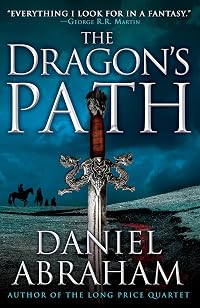
"Everything I look for in a fantasy." — George R. R. MartinAll paths lead to war. . .
Marcus' hero days are behind him. He knows too well that even the smallest war still means somebody's death. When his men are impressed into a doomed army, staying out of a battle he wants no part of requires some unorthodox steps.
Cithrin is an orphan, ward of a banking house. Her job is to smuggle a nation's wealth across a war zone, hiding the gold from both sides. She knows the secret life of show more commerce like a second language, but the strategies of trade will not defend her from swords.
Geder, sole scion of a noble house, has more interest in philosophy than in swordplay. A poor excuse for a soldier, he is a pawn in these games. No one can predict what he will become.
Falling pebbles can start a landslide. A spat between the Free Cities and the Severed Throne is spiraling out of control. A new player rises from the depths of history, fanning the flames that will sweep the entire region onto The Dragon's Path — the path to war.
The Dagger and the Coin
The Dragon's Path
The King's Blood
The Tyrant's Law
The Widow's House
The Spider's War. show less
Tags
Recommendations

Member Recommendations
Member Reviews
This was just plain great. Solid, interesting, faceted characters whose interactions made sense and forwarded plots that were the perfect blend of unavoidable and unexpected. As I read, I drew happy comparisons to Joe Abercrombie (except less hangover-inducingly ruthless) and KJ Parker (in the excitement over banking, in the capability for outrageous but rational reaction) and basically I was extremely pleased with just about every twist, turn, development and consequence.
Only four stars because it didn't catch me up, sweep me away, tie my emotions to the page and yank. I'm still not sure the prologue was necessary - it might actually have been more interesting to watch that element of the story unfold in utter mystery, and it isn't the show more most engaging of starts, offering no hooks to the immediate story. But push past it, and this is a wonderful fantasy read. show less
Only four stars because it didn't catch me up, sweep me away, tie my emotions to the page and yank. I'm still not sure the prologue was necessary - it might actually have been more interesting to watch that element of the story unfold in utter mystery, and it isn't the show more most engaging of starts, offering no hooks to the immediate story. But push past it, and this is a wonderful fantasy read. show less
Epic fantasy prominently featuring bankers! I enjoyed this first book in a planned series greatly, mostly because of Cithrin, the underage ward turned not entirely authorized banker when she’s sent out of a city that’s about to fall with much of the local branch’s wealth. There are also various nobles, including one whose pitiable awkwardness leads him to some very bad choices and another one who hates the proposed farmer’s council with input into governing enough that he’ll betray his king to stop it, and there’s an embittered general-turned-mercenary-with-a-heart-of-gold, but mostly there’s Cithrin. Also a spider goddess with plans to eat the world.
The Dragon’s Path follows four different characters and has a lot of wheelings and dealings that are reminiscent of George R.R. Martin’s A Song of Ice and Fire with some shortcomings. The premise is that the paths all lead to war, but other than the storyline in Vanai, most of this novel is about setting the table, where hopefully in future novels there will be a payoff. Cithrin is a ward of a bank who is given a task of taking out riches from the bank as the city of Vanai is at war. She encounters Marcus, a renown warrior who is lost after his wife and daughter have died, but now sees Cithrin as the daughter he couldn’t save. Geder is an out of shape son of a noble who is much more comfortable with books than with battles.
There show more are plenty of intriguing things that happen in this novel. It held my interest from beginning to end, and the writing was very strong. There were many Game of Thrones type maneuverings in this novel that I appreciated, which is one of the things I always enjoyed about Martin’s novels. Where it suffers is the characterization. The characters are generally unlikeable or very inconsistent. Dawson Kalliam is an example of an unlikeable character who thinks people should be judged by their place of birth and not by their accomplishments or character. Geder is an example of a horribly inconsistent character who seems absence of malice and then massacres an entire city in what was without a doubt the most barbaric and violent act of the novel. The part with the followers of the spider goddess was enjoyable, and I didn’t see the twist coming at the end with the reveal. I would recommend this novel and look forward to reading more in the series.
Carl Alves - author of Two For Eternity show less
There show more are plenty of intriguing things that happen in this novel. It held my interest from beginning to end, and the writing was very strong. There were many Game of Thrones type maneuverings in this novel that I appreciated, which is one of the things I always enjoyed about Martin’s novels. Where it suffers is the characterization. The characters are generally unlikeable or very inconsistent. Dawson Kalliam is an example of an unlikeable character who thinks people should be judged by their place of birth and not by their accomplishments or character. Geder is an example of a horribly inconsistent character who seems absence of malice and then massacres an entire city in what was without a doubt the most barbaric and violent act of the novel. The part with the followers of the spider goddess was enjoyable, and I didn’t see the twist coming at the end with the reveal. I would recommend this novel and look forward to reading more in the series.
Carl Alves - author of Two For Eternity show less
A much better, and much darker, epic fantasy novel than I expected. It has the immersive worldbuilding and inventive plot that I typically enjoy, but I wasn't expecting the characters to be as fascinating as they were. Most strikingly, Abraham was unafraid to let his viewpoint characters be wrong — mistaken, yes, but also *morally* wrong. The protagonists are not necessarily the heroes of the story, a realization that develops in unexpected ways. Though very much a set-up book for the volumes to follow it in the series, it's enjoyable in its own right and engages intelligently with ideas, too.
Daniel Abraham weaves together a plot of kingdoms and individuals. It is a story of deception and truth telling, where orphan girls can smuggle jewels but can become so much more. Where actors and players don the leathers of mercenaries and where lords play the game of the power through puppets.
In actuality, this book is very similar to George R. Martin's series Song of Ice and Fire. It is formatted very similarly, each chapter through a different character's eyes. It jumps from seemingly unrelated story plots to another, but somehow everything that happens in one story line impacts the others. But if I were to truly compare the two, this book is a much easier read - in terms of length yes, but also in writing style (for better or for show more worse). He is less descriptive than Martin, less about the plot. Instead, Abraham focuses on the characters.
This book all about the characters. It's not the plot or the world that makes you read on. The plot was interesting, but at the end of the day, it can be simplified to a couple of sentences. It's the characters and how they react to these situations. You want to learn more about Marcus and his rough care for Cithrin, to know if Cithrin can pull off her deceptions, if Geder will ever stop being used as a puppet and more. But of course there is the flaw that comes with making the books about the characters - I found myself loving some more than others and found myself annoyed reading through "boring" characters. But that's only a minor annoyance because I still wanted to read through it.
One thing I think is wasted potential is the way Abraham portrays the different races in this book. Although it's a new world with all these different sentient beings, one could conceivably remove these races and just have different cultures of humans and the story would be no different. He puts this immense difference in his story world, but doesn't use it at all. There is no mention of hostility between races or really much of anything. So then why did he put this in the story? Perhaps it will reveal itself more in future books, but as of right now, it is only untapped potential. Perhaps not wasted, but untapped.
(But one thing I detest from these types of additions is that it always seems the most humanoid sentient beings are the ones most in power and the animal-like ones are devoted servants. I would imagine unrest bubbling up, but nothing is mentioned at all!)
The ending was perfect. It had the right amount of closure, but included just enough tantalizing uncertainties to make me want to keep reading. I look forward to the next book.
Three stars because I think it's a good book and I liked it. I do think it's about average or slightly above average for a fantasy/sci-fi novel (and perhaps below average for a high fantasy novel). But I enjoyed it very much and I would recommend it for people who like fantasy novels with a large number of characters. show less
In actuality, this book is very similar to George R. Martin's series Song of Ice and Fire. It is formatted very similarly, each chapter through a different character's eyes. It jumps from seemingly unrelated story plots to another, but somehow everything that happens in one story line impacts the others. But if I were to truly compare the two, this book is a much easier read - in terms of length yes, but also in writing style (for better or for show more worse). He is less descriptive than Martin, less about the plot. Instead, Abraham focuses on the characters.
This book all about the characters. It's not the plot or the world that makes you read on. The plot was interesting, but at the end of the day, it can be simplified to a couple of sentences. It's the characters and how they react to these situations. You want to learn more about Marcus and his rough care for Cithrin, to know if Cithrin can pull off her deceptions, if Geder will ever stop being used as a puppet and more. But of course there is the flaw that comes with making the books about the characters - I found myself loving some more than others and found myself annoyed reading through "boring" characters. But that's only a minor annoyance because I still wanted to read through it.
One thing I think is wasted potential is the way Abraham portrays the different races in this book. Although it's a new world with all these different sentient beings, one could conceivably remove these races and just have different cultures of humans and the story would be no different. He puts this immense difference in his story world, but doesn't use it at all. There is no mention of hostility between races or really much of anything. So then why did he put this in the story? Perhaps it will reveal itself more in future books, but as of right now, it is only untapped potential. Perhaps not wasted, but untapped.
(But one thing I detest from these types of additions is that it always seems the most humanoid sentient beings are the ones most in power and the animal-like ones are devoted servants. I would imagine unrest bubbling up, but nothing is mentioned at all!)
The ending was perfect. It had the right amount of closure, but included just enough tantalizing uncertainties to make me want to keep reading. I look forward to the next book.
Three stars because I think it's a good book and I liked it. I do think it's about average or slightly above average for a fantasy/sci-fi novel (and perhaps below average for a high fantasy novel). But I enjoyed it very much and I would recommend it for people who like fantasy novels with a large number of characters. show less
All the ingredients--world-weary hero/warrior opting for obscurity, plucky young woman with a head for numbers (e.g. dagger for him, coin for her), an runaway priest with a special ability become impresario of a travelling group of players, a king who is even wearier than the hero and plotters and schemers up the yin-yang. The one character who is truly a wild card, is named Geder and he has, by virtue of his very passivity, become a central player. No idea really which way he will jump. The main thing is that even with a mostly unexceptionable cast of characters, Abraham can make them into GOOD characters, interesting characters who do surprising things within the confines of the genre. Not deeply original but very solid and very show more entertaining, just right for summertime reading--my summer has intervals of crazy busy interspersed with vaca time. ****1/2 show less
Novels are games to one degree or another.
Most genre books are simple games like tic tac toe. The best of these reveal that checkers can be as strategically complex as chess. The games of gifted authors challenge the reader to figure out what the game is, who the players are and what are the rules.
I like challenging games and I've never read much that is categorized as "Fantasy." If I have to figure out a whole world, I generally prefer a speculative world in a more complex and technologically interesting future. However, I simply couldn't contain my curiosity about Daniel Abraham after reading the Science Fiction trilogy he coauthored under the name James S.A. Corey. Those books were the only ones that could hold my interest after a show more binge diet of Peter F. Hamilton and Iain M. Banks.
I've now read the first three books of Daniel Abraham's series THE DAGGER AND THE COIN. They're terrific.
Like most readers, I just want someone to tell me a story, and Daniel Abraham is a great old-fashioned story-teller. He takes his time dressing the stage, fleshing in the characters and setting the stakes. His game is something like chess by mail. The author takes a while setting up each move, but he does it with skill and wit. Each move counts and advances multiple parts of the story in complex, yet clearly understandable ways. The reader has enough time to think, the plot lines are clearly delineated, the characters are familiar and yet fresh and alive. We care what happens to everyone, even the villains.
There's also none of that endless graphic sex and violence, horrifying suspense and pulse-pounding action that everybody but me wants to see these days. In fact that's one of the reasons that I found these books ultimately more satisfying than Daniel Abraham's excellent, though a bit-too-intense-for-my-tastes science fiction.
Bottom line - a really enjoyable read by a really talented, disciplined pro. I'm hooked. show less
Most genre books are simple games like tic tac toe. The best of these reveal that checkers can be as strategically complex as chess. The games of gifted authors challenge the reader to figure out what the game is, who the players are and what are the rules.
I like challenging games and I've never read much that is categorized as "Fantasy." If I have to figure out a whole world, I generally prefer a speculative world in a more complex and technologically interesting future. However, I simply couldn't contain my curiosity about Daniel Abraham after reading the Science Fiction trilogy he coauthored under the name James S.A. Corey. Those books were the only ones that could hold my interest after a show more binge diet of Peter F. Hamilton and Iain M. Banks.
I've now read the first three books of Daniel Abraham's series THE DAGGER AND THE COIN. They're terrific.
Like most readers, I just want someone to tell me a story, and Daniel Abraham is a great old-fashioned story-teller. He takes his time dressing the stage, fleshing in the characters and setting the stakes. His game is something like chess by mail. The author takes a while setting up each move, but he does it with skill and wit. Each move counts and advances multiple parts of the story in complex, yet clearly understandable ways. The reader has enough time to think, the plot lines are clearly delineated, the characters are familiar and yet fresh and alive. We care what happens to everyone, even the villains.
There's also none of that endless graphic sex and violence, horrifying suspense and pulse-pounding action that everybody but me wants to see these days. In fact that's one of the reasons that I found these books ultimately more satisfying than Daniel Abraham's excellent, though a bit-too-intense-for-my-tastes science fiction.
Bottom line - a really enjoyable read by a really talented, disciplined pro. I'm hooked. show less
Members
- Recently Added By
Published Reviews
ThingScore 100
... [T]his is a subtle intelligent fantasy novel about a world with a long history and fascinating economics, with war, peril, and adventure, and great characters of both genders. It’s exactly what you’d expect from the author of the Long Price Quartet (post) if he’s been asked to produce something a bit more European, a bit more mainstream, a bit more Martinesque.
added by lquilter
Lists

Jean's Sci Fi/Fantasy Reading list
189 works; 12 members
Author Information

130+ Works 13,031 Members
All Editions
Awards and Honors
Distinctions
Series

Work Relationships
Common Knowledge
- Canonical title
- The Dragon's Path
- Original title
- The Dragon's Path
- Original publication date
- 2011-04-07
- People/Characters
- Capt. Marcus Wester; Sir Geder Palliako; Cithrin bel Sarcour; Yardem Hane; Tertian Dossen; Kitap rol Keshmet (show all 47); Jorey Kalliam; Sir Gospey Allintot; Sodai Carvenallin; Sir Alan Klin; Dawson Kalliam; Feldin Maas; Sozlu Veren; Sesil Veren; Darius Sokak; Fallon Broot; Daved Broot; Karol Dannion; Curtin Issandrian; Vincen Coe; Canl Daskellin; Sir Afend Talliakin; Sandr; Magister Imaniel; Clara Kalliam; Phelia Maas; Sir Makiyos of Ainsbaugh; Lord Ternigan; Lord Knightly Terentois; King Simeon; Prince Aster; Alberith Maas; Odder Faskellen; Paerin Clark; Lerer Palliako; Ahariel Akkabrian; Marrisin Oesteroth; Idderigo Bellind Siden; Qahuar Em; Prince Kupe rol Behur; Capt. Barriath Kalliam; Basrahip; Roach; Maestro Asanpur; Charlit Soon; Cousen Mout; Andrash rol Estalan
- Important places
- Vanai of the Free Cities; Camnipol of the Empire of Antea; Bellin of the Free Cities; Porte Oliva, Birancour; Inentai of Sarakal; Osterling Fells, Kingdom of Antea
- Dedication
- To Scarlet
- First words
- The apostate pressed himself into the shadows of the rock and prayed to nothing in particular that things riding mules in the pass below would not look up.
- Last words
- (Click to show. Warning: May contain spoilers.)It's begun.
- Blurbers
- Martin, George R.R.; Diaz, Junot
- Original language
- English
Classifications
Statistics
- Members
- 1,529
- Popularity
- 15,082
- Reviews
- 68
- Rating
- (3.76)
- Languages
- 5 — Czech, Dutch, English, Russian, Spanish
- Media
- Paper, Audiobook, Ebook
- ISBNs
- 20
- ASINs
- 9