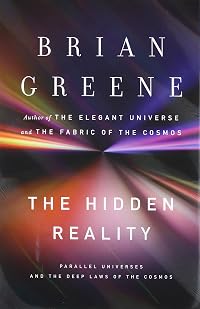
The Hidden Reality: Parallel Universes and the Deep Laws of the Cosmos
by Brian Greene
On This Page
Description
"The Hidden Reality" reveals how major developments in different branches of fundamental theoretical physics -- relativistic, quantum, cosmological, unified, computational -- have all led us to consider one or another variety of parallel universe.Tags
Recommendations

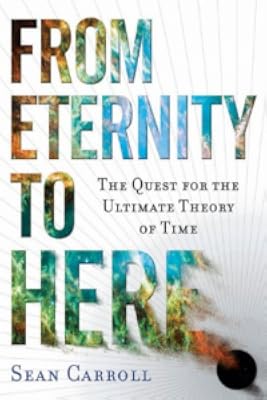

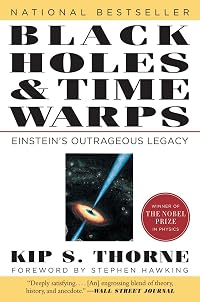
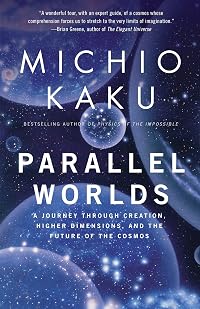
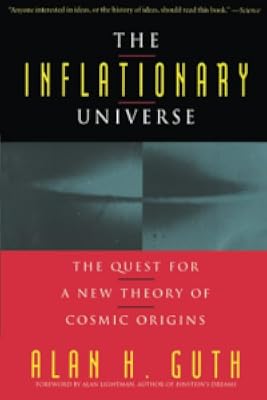
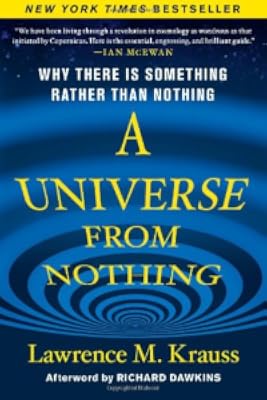



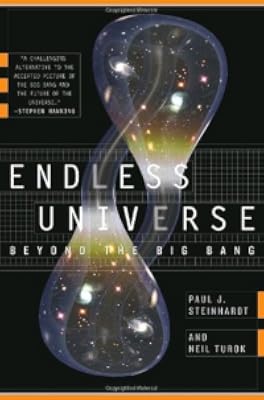
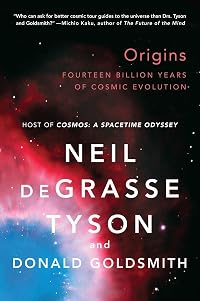
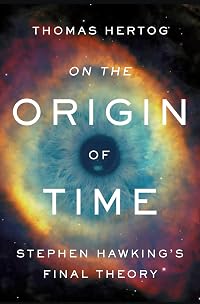
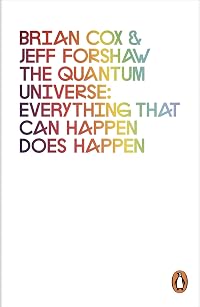

Member Recommendations
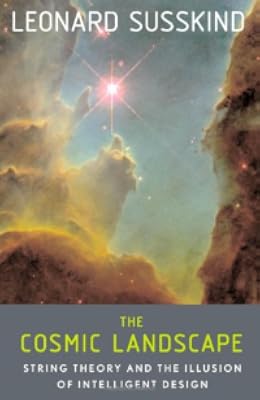
CGlanovsky Touching on similar concepts, including Nozick's "Ultimate Multiverse" (there's isn't something rather than nothing, there's both).
Member Reviews
This is a book about the possibility that there exists an array (ie the multiverse) of universes. Brian Greene skilfully weaves an entertaining tale as he talks about many different conceivable styles for this multiverse. Some are tentative hypotheses, some inferred conjecture and several just wild speculation. Unsurprisingly for the author, string theory features strongly in the latter. He idly ponders on whether the reason such proposals are popping up in quite different theories could be because nature is offering hints about an actual multiversal format beneath our observable cosmos.
Of course it is more likely that such suggestions are a symptom of a general malaise gripping some who are greatly disappointed at the shortage of show more recent telling revelations. After all, multiverse proposals go against every inclination of science. It leaves us without an ultimate justification, cause, explanation or reason for anything. It would mean that things in our universe just are the way they are because we are here in this part or version.
It is difficult to fault Greene but be warned that readers are expected to be familiar with US culture. You will be expected to understand references to a Cartman on a mountaintop, the shape of a pringle, TMI, Blue Man Group, CliffsNotes and terms like get-go, and you had me at hello. show less
Of course it is more likely that such suggestions are a symptom of a general malaise gripping some who are greatly disappointed at the shortage of show more recent telling revelations. After all, multiverse proposals go against every inclination of science. It leaves us without an ultimate justification, cause, explanation or reason for anything. It would mean that things in our universe just are the way they are because we are here in this part or version.
It is difficult to fault Greene but be warned that readers are expected to be familiar with US culture. You will be expected to understand references to a Cartman on a mountaintop, the shape of a pringle, TMI, Blue Man Group, CliffsNotes and terms like get-go, and you had me at hello. show less
Here’s the thing. I am a science nerd. I very nearly went into theoretical physics at university, but instead opted for pure maths. So it is obvious why I could not resist the siren song of Brian Greene’s latest The Hidden Reality: Parallel Universes and the Deep Laws of the Cosmos. (As an aside, I am so tired of lengthy subtitles for non-fiction books. I get that the publisher feels compelled to attract readers by giving them a hint of what the book’s about, but you know, that’s what the blurb on the inside jacket is for. I hope we can start having non-fiction books with just one title someday.) In some ways, Brian Greene is living my dream: a professor of both physics and mathematics doing groundbreaking research in show more superstring theory. (Of course, this is the dream of the me that plays well with others.) And his previous books were well-written, accessible explanations of some of that groundbreaking research with ample background given to ground the reader.
I’m sure that anyone who has read even five pages of science fiction has considered the idea of parallel universes before. It is such a science fiction thing: other worlds, parallel universes! (Explored to great effect, I might add, in Neal Stephenson’s latest, Anathem.) But the thing that Greene does here is make the case for non-fictional parallel worlds. No, seriously. Take a minute to get your head around that. Greene offers up a theoretical framework from established physics and research-in-progress in which other universes are not only plausible, but maybe even necessary. Sadly, here is where science parts again from fiction because even if one of these proposals is correct, chances are we are not going to be able to interact with these universes.
Saving the maths and tricky equations for the endnotes for the most part, Greene casually compares inflation fields to South Park, and turns Samuel Johnson into mathematics. His tone is conversational and he is kind to science-wary readers, offering up brief summaries of complicated ideas and encouraging those timid readers to skip ahead if they need to. And he offers up information in the right place at the right time, so the facts you need to make sense of the theories are fresh in your brain when you need them, something this forgetful brain was grateful for.
What we are faced with is basically nine possible universes, or rather multiverses, since the “uni” in universe can be misleading. We’ve spent a lot of time thinking of “universe” in the singular, but our universe is just one of many universes in this book, so the idea of a universe of universes comes in handy. Welcome to the multiverse! Greene gives these multiverses names like “Quilted Multiverse” and “Holographic Multiverse,” breaking them up into their own chapters and exploring various facets of relativity, quantum mechanics, quantum field theory, M-theory and so much more to make the case for the possibility of their existence. He follows all this up with a needed discussion on the limits of scientific inquiry as we know it, since at least one of these multiverses simply cannot be detected or measured by us ever. So is it scientific to even discuss its existence? This gets into the very nature of science itself, which is fascinating and got me thinking that I should study more about the philosophy of science.
In the midst of all these fantastic and far-reaching ideas, the one thing I was sad to not see was any real appearance by the ladies. This book is a serious sausage fest. I’m sure this was not deliberate on the part of Greene. He probably looked to the people whose work he was most familiar with, people who made the big developments in the fields that he was looking at. But in the further reading list at the back of the book, three and a half of the authors are of the lady persuasion (one was a co-author), and of the scientists that make an appearance in the text itself, only seven are woman, and three of these only made it into the endnotes. I didn’t keep track of every scientist named when I was reading (my bad), but the index at the end lists 195 people and only seven of those are women. This is just flat-out depressing.
I know part of this is just due to the whole history thing, where ladies were kept out of anything requiring five seconds of brain power. If we’re not talking about computing or radiation or stolen DNA thunder, then the famous lady scientists disappear from the scene. (And please feel free to tell me about other famous lady scientists that I am not aware of!) But I’m pretty sure that part of it is that annoying see-through ceiling that people sometimes talk about, the one that somehow ensures people with lady-bits don’t get to climb that ladder all the way to the top. In most research, it’s the research leader that gets cited and talked about, not all the underlings and grad students and whoevers working with that leader. And these leaders still tend to be men. So even if there are more ladies in science now than ever before (and I have no numbers to back that up, I just believe/want it to be true), they are still not in positions of power and so still not getting their names tossed about in best-selling popular science books.
I, for one, would like to see more lady names tossed about in these books. So here is my plea to all would-be popular science authors: try to find ladies working in the field you are writing about. Maybe they will not be so obvious when you are first writing. Maybe theirs are not the names you are so intimately familiar with. Maybe their results overlap with results that are better known. It’s okay. Take some time. Seek them out. And then put their names in your book. It means something to women who might be thinking about careers in science, but who are maybe put off by the giant sausage party that it appears to be. And every time one of you does make an effort to seek out the ladies, it subtly changes the prevailing mindset of science = dudes. And that is something I would be immensely glad to see. show less
I’m sure that anyone who has read even five pages of science fiction has considered the idea of parallel universes before. It is such a science fiction thing: other worlds, parallel universes! (Explored to great effect, I might add, in Neal Stephenson’s latest, Anathem.) But the thing that Greene does here is make the case for non-fictional parallel worlds. No, seriously. Take a minute to get your head around that. Greene offers up a theoretical framework from established physics and research-in-progress in which other universes are not only plausible, but maybe even necessary. Sadly, here is where science parts again from fiction because even if one of these proposals is correct, chances are we are not going to be able to interact with these universes.
Saving the maths and tricky equations for the endnotes for the most part, Greene casually compares inflation fields to South Park, and turns Samuel Johnson into mathematics. His tone is conversational and he is kind to science-wary readers, offering up brief summaries of complicated ideas and encouraging those timid readers to skip ahead if they need to. And he offers up information in the right place at the right time, so the facts you need to make sense of the theories are fresh in your brain when you need them, something this forgetful brain was grateful for.
What we are faced with is basically nine possible universes, or rather multiverses, since the “uni” in universe can be misleading. We’ve spent a lot of time thinking of “universe” in the singular, but our universe is just one of many universes in this book, so the idea of a universe of universes comes in handy. Welcome to the multiverse! Greene gives these multiverses names like “Quilted Multiverse” and “Holographic Multiverse,” breaking them up into their own chapters and exploring various facets of relativity, quantum mechanics, quantum field theory, M-theory and so much more to make the case for the possibility of their existence. He follows all this up with a needed discussion on the limits of scientific inquiry as we know it, since at least one of these multiverses simply cannot be detected or measured by us ever. So is it scientific to even discuss its existence? This gets into the very nature of science itself, which is fascinating and got me thinking that I should study more about the philosophy of science.
In the midst of all these fantastic and far-reaching ideas, the one thing I was sad to not see was any real appearance by the ladies. This book is a serious sausage fest. I’m sure this was not deliberate on the part of Greene. He probably looked to the people whose work he was most familiar with, people who made the big developments in the fields that he was looking at. But in the further reading list at the back of the book, three and a half of the authors are of the lady persuasion (one was a co-author), and of the scientists that make an appearance in the text itself, only seven are woman, and three of these only made it into the endnotes. I didn’t keep track of every scientist named when I was reading (my bad), but the index at the end lists 195 people and only seven of those are women. This is just flat-out depressing.
I know part of this is just due to the whole history thing, where ladies were kept out of anything requiring five seconds of brain power. If we’re not talking about computing or radiation or stolen DNA thunder, then the famous lady scientists disappear from the scene. (And please feel free to tell me about other famous lady scientists that I am not aware of!) But I’m pretty sure that part of it is that annoying see-through ceiling that people sometimes talk about, the one that somehow ensures people with lady-bits don’t get to climb that ladder all the way to the top. In most research, it’s the research leader that gets cited and talked about, not all the underlings and grad students and whoevers working with that leader. And these leaders still tend to be men. So even if there are more ladies in science now than ever before (and I have no numbers to back that up, I just believe/want it to be true), they are still not in positions of power and so still not getting their names tossed about in best-selling popular science books.
I, for one, would like to see more lady names tossed about in these books. So here is my plea to all would-be popular science authors: try to find ladies working in the field you are writing about. Maybe they will not be so obvious when you are first writing. Maybe theirs are not the names you are so intimately familiar with. Maybe their results overlap with results that are better known. It’s okay. Take some time. Seek them out. And then put their names in your book. It means something to women who might be thinking about careers in science, but who are maybe put off by the giant sausage party that it appears to be. And every time one of you does make an effort to seek out the ladies, it subtly changes the prevailing mindset of science = dudes. And that is something I would be immensely glad to see. show less
This, the third major popular physics book by Brian Greene, focuses on the utterly fascinating question of whether this universe is the only one. In great detail and honestly covering many complexities and theoretical holes or flaws,The Hidden Reality begins with the relatively easy multiverses: maybe space is just infinite, in which case everything happening right now might well happen in an identical way, or maybe slightly differently, somewhere else in this universe. Then there is the theory of inflation, which posits possibly infinite bubble universes, of which we are just one. Things start to get more complicated - and strange - when you bring in superstring theory where we may be just one membrane amongst trillions, some of which show more may be hardly recognisable as the universe we see in front of us (and the same may go for those bubble universes too). Quantum mechanics adds its own multiverse strangeness, where any subatomic option that occurs in this universe yields another universe with a different option, and therefore potentially infinite parallel universes splitting off from our own. The holographic principle gets into even weirder territory, where information is the key and the physical state of our 3-D universe is somehow recorded as data on a 2-D surface somewhere else. Perhaps the most baffling suggestion is that our universe is merely a computer simulation, perhaps within another simulation, in turn inside another, many steps removed from an ultimate reality.
There is no question that all these ideas are thrilling and groundbreaking. My worry at times was just how intensely speculative and removed from evidence these ideas are. Greene doesn't shy away from admitting the problems of speculation and carefully and cleverly debates the question of whether these ideas really constitute science or not. Still, although I find the multiverse is of quantum mechanics and inflation theory to be quite plausible, even likely, for superstring multiverses and simulation universes I found it a strain to read such detail about ideas that have so many layers of speculation to build them up, and they may never be able to be verified experimentally.
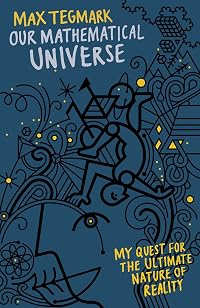
I must admit, having recently read Max Tegmark's book, The Mathematical Universe, where much of the same ground is covered, I much preferred that book, for its somewhat more grounded approach to multiverses, its greater clarity in general, and fewer sections that get heavily bogged down in details.
Still though, reading this book is like an incredible adventure, and an immense feat of creativity, all rolled into one. And just the fact that scientists are debating such wild ideas is one I find utterly thrilling, and there are few better authors than Brian Greene to guide us laypeople through such territory. show less
There is no question that all these ideas are thrilling and groundbreaking. My worry at times was just how intensely speculative and removed from evidence these ideas are. Greene doesn't shy away from admitting the problems of speculation and carefully and cleverly debates the question of whether these ideas really constitute science or not. Still, although I find the multiverse is of quantum mechanics and inflation theory to be quite plausible, even likely, for superstring multiverses and simulation universes I found it a strain to read such detail about ideas that have so many layers of speculation to build them up, and they may never be able to be verified experimentally.
I must admit, having recently read Max Tegmark's book, The Mathematical Universe, where much of the same ground is covered, I much preferred that book, for its somewhat more grounded approach to multiverses, its greater clarity in general, and fewer sections that get heavily bogged down in details.
Still though, reading this book is like an incredible adventure, and an immense feat of creativity, all rolled into one. And just the fact that scientists are debating such wild ideas is one I find utterly thrilling, and there are few better authors than Brian Greene to guide us laypeople through such territory. show less
Brian Greene really is one of the best popular science writers. His books give you a real sense of being guided by someone who genuinely knows what they're talking about, who uses metaphors effectively, and who effectively weaves the traditional material in with the new points he is making. He also approaches science with curiosity untainted by dogmatism. He is very much open to speculation, but equally open to the speculation not panning out.
This book is about different concepts of the Multiverse. Greene devotes a chapter to each of what he defines as the major types and then has one or two additional chapters on questions like whether these theories are testable and broader implications.
The multiverse's he consider include the quilted show more multiverse (which is just our universe extending out infinitely, leaving the possibility of endless accidental repetition -- which follows from some cosmological theories that follow the big bang), the inflationary multiverse (a product of repeated episodes of inflationary expansion, which follows from the addition of inflation to the previous theories), three multiverses that come from different versions of string theory (brane, cyclic and landscape), a quantum multiverse (which is Everett's Many Worlds interpretation, and is more conceptual), a holographic multiverse (which comes from the study of black holes and string theory), and simulated and ultimate multiverses (the last two coming from computer simulations and a deeper mathematical world).
In every case, Greene does a good job of describing the physical theories that lead, usually by accident, to the implication that there is a particular type of multiverse, discusses the scientific status of those theories, and addresses issues around testing them. In the end, Greene has some sympathy with Steven Weinberg's adage that the problem with physics is that we do not take our theories/equations seriously enough as a real description of the world. The example he cites is the Positron, which was a byproduct of Dirac's solution of a math problem that turned out to be real. Greene clearly leans towards the view that the same is true of the multiverse, but he doesn't do much to tip his hand about which one. show less
This book is about different concepts of the Multiverse. Greene devotes a chapter to each of what he defines as the major types and then has one or two additional chapters on questions like whether these theories are testable and broader implications.
The multiverse's he consider include the quilted show more multiverse (which is just our universe extending out infinitely, leaving the possibility of endless accidental repetition -- which follows from some cosmological theories that follow the big bang), the inflationary multiverse (a product of repeated episodes of inflationary expansion, which follows from the addition of inflation to the previous theories), three multiverses that come from different versions of string theory (brane, cyclic and landscape), a quantum multiverse (which is Everett's Many Worlds interpretation, and is more conceptual), a holographic multiverse (which comes from the study of black holes and string theory), and simulated and ultimate multiverses (the last two coming from computer simulations and a deeper mathematical world).
In every case, Greene does a good job of describing the physical theories that lead, usually by accident, to the implication that there is a particular type of multiverse, discusses the scientific status of those theories, and addresses issues around testing them. In the end, Greene has some sympathy with Steven Weinberg's adage that the problem with physics is that we do not take our theories/equations seriously enough as a real description of the world. The example he cites is the Positron, which was a byproduct of Dirac's solution of a math problem that turned out to be real. Greene clearly leans towards the view that the same is true of the multiverse, but he doesn't do much to tip his hand about which one. show less
Brian Greene really is one of the best popular science writers. His books give you a real sense of being guided by someone who genuinely knows what they're talking about, who uses metaphors effectively, and who effectively weaves the traditional material in with the new points he is making. He also approaches science with curiosity untainted by dogmatism. He is very much open to speculation, but equally open to the speculation not panning out.
This book is about different concepts of the Multiverse. Greene devotes a chapter to each of what he defines as the major types and then has one or two additional chapters on questions like whether these theories are testable and broader implications.
The multiverse's he consider include the quilted show more multiverse (which is just our universe extending out infinitely, leaving the possibility of endless accidental repetition -- which follows from some cosmological theories that follow the big bang), the inflationary multiverse (a product of repeated episodes of inflationary expansion, which follows from the addition of inflation to the previous theories), three multiverses that come from different versions of string theory (brane, cyclic and landscape), a quantum multiverse (which is Everett's Many Worlds interpretation, and is more conceptual), a holographic multiverse (which comes from the study of black holes and string theory), and simulated and ultimate multiverses (the last two coming from computer simulations and a deeper mathematical world).
In every case, Greene does a good job of describing the physical theories that lead, usually by accident, to the implication that there is a particular type of multiverse, discusses the scientific status of those theories, and addresses issues around testing them. In the end, Greene has some sympathy with Steven Weinberg's adage that the problem with physics is that we do not take our theories/equations seriously enough as a real description of the world. The example he cites is the Positron, which was a byproduct of Dirac's solution of a math problem that turned out to be real. Greene clearly leans towards the view that the same is true of the multiverse, but he doesn't do much to tip his hand about which one. show less
This book is about different concepts of the Multiverse. Greene devotes a chapter to each of what he defines as the major types and then has one or two additional chapters on questions like whether these theories are testable and broader implications.
The multiverse's he consider include the quilted show more multiverse (which is just our universe extending out infinitely, leaving the possibility of endless accidental repetition -- which follows from some cosmological theories that follow the big bang), the inflationary multiverse (a product of repeated episodes of inflationary expansion, which follows from the addition of inflation to the previous theories), three multiverses that come from different versions of string theory (brane, cyclic and landscape), a quantum multiverse (which is Everett's Many Worlds interpretation, and is more conceptual), a holographic multiverse (which comes from the study of black holes and string theory), and simulated and ultimate multiverses (the last two coming from computer simulations and a deeper mathematical world).
In every case, Greene does a good job of describing the physical theories that lead, usually by accident, to the implication that there is a particular type of multiverse, discusses the scientific status of those theories, and addresses issues around testing them. In the end, Greene has some sympathy with Steven Weinberg's adage that the problem with physics is that we do not take our theories/equations seriously enough as a real description of the world. The example he cites is the Positron, which was a byproduct of Dirac's solution of a math problem that turned out to be real. Greene clearly leans towards the view that the same is true of the multiverse, but he doesn't do much to tip his hand about which one. show less
Took a while to get through. I just recently picked it up again. The third in Greene's trilogy about cutting edge theories in physics, all stemming from the quantum world. This was about the possibility of the various multiverses that could exist. Mostly above my head but still a fascinating read on what is behind or beyond or everyday experience. My big wonder is does mathematics under pin the universe or is it just another descriptive language, defining things that are and are not real? This was written in 2011. I wonder what the current state is.
I found this book to be a very good explanation of the theories of multiple universe that are being bounded about by M-theorists and other modern quantum physicists. This book sets the clear tone that has to be answered by Christians and others who believe in absolutes. But reading this book, one has to remember that physics research/conclusions changes. Books written about black holes in the 1980s, for example, have to be scrapped in light of modern math being worked out.
*SPOILER ALERT*
The book closes with a long diatribe by Greene on how nothing in our world may actually be real, we could all be living in a simulated multiverse. After all, we see how video games like The Sims and research into artificial intelligence are evolving show more quickly; it's not hard to think about how our grandchildren may be manipulating simulated life, so maybe we're actually living in such a scenario and everything we do is more or less dictated by a game player. And what about the world the game player lives in? It could also be simulated, and he could be a simulation himself! You end up with an infinite loop of simulations...until what? Greene doesn't say. Greene doesn't even think to mention DesCartes "I think, therefore I am." If I'm doubting what Greene is saying then I must necessarily be thinking, and I reject the notion that my myriad of doubts are simply simulated by someone running my life like The Sims. It's clear why Stephen Hawking can say that modern philosophy hasn't kept up with physics (The Grand Design). Modern physics would move philosophy back a thousand years.
But I give this book 5 stars for clearly elucidating the theories of the multiverse and explaining where the most modern physics are.
Research into inflation-- the rapid expanse of the universe from proton-sized to the holder of galaxies in the blink of an eye-- has important implications for how we view our world and philosophy. Assumptions that the universe is finite and began at a specific instant in time are being challenged by M-theory. If the universe is infinite, then it has always existed and there are also multiple universes. If the universe is finite, then there are not. Greene writes that experiments with the Hadron collider are basically trying to find out whether we're living on a brane universe. If it can be determined we live on a brane, then it is much more likely that our universe is one of many. Greene states at the outset that he is not sure, and that much cannot be proven. But how you look at cosmology has deep implications for how you view your own humanity. 7 billion years ago, universe sped up its expansion and it's still rapidly expanding. So, what happened 7 billion years ago needs to be explained.
The particals called "inflatons" necessary to explain the process of inflation are theoretical. That's a problem with physics that Greene addresses- is any of this theoretical speculation on things that cannot be actually proven still be classified as "science?" Science means testable hypotheses, can any of these be tested? A hypothesis simply sets conditions that can later be tested (at least in theory), which means that the various ideas thrown about by cosmologists are science, according to Greene.
Greene goes through all the various possibilities for multiverses:
Table 11.1 Summary of Various Versions of Parallel Universes
1. Quilted Multiverse: Conditions in an infinite universe necessarily repeat across space, yielding parallel worlds.
2. Inflationary Multiverse: Eternal cosmological inflation yields an enormous network of bubble universes, of which our universe would be one.
3. Brane Multiverse: In string/M-theory's braneworld scenario, our universe exists on one three-dimensional brane, which floats in a higher-dimensional expanse potentially populated by other branes - other parallel universes.
4. Cyclic Multiverse: Collisions between braneworlds can manifest as big bang-like beginnings, yielding universes that are parallel in time.
5. Landscape Multiverse: By combing inflationary cosmology and string theory, the many different shapes for string theory's extra dimensions give rise to many different bubble universes.
6. Quantum Multiverse: Quantum mechanics suggests that every possibility embodied in its probability waves is realized in one of a vast ensemble of parallel universes.
7. Holographic Multiverse: The holographic principle asserts that our universe is exactly mirrored by phenomena taking place on a distant bounding surface, a physically equivalent parallel universe.
8. Simulated Multiverse: Technological leaps suggest that simulated universes may one day be possible.
9. Ultimate Multiverse: The principle of fecundity asserts that every possible universe is a real universe, thereby obviating the question of why one possibility - ours - is special. These universes instantiate all possible mathematical equations.
The theoretical universe where absolutely nothing exists would exist the set of universes contained in #9 above. (Wrap your head around that.) There is much history on research attempting to determine whether or not the cosmological constant equals zero. The size of the cosmological constant matters greatly for the formation of galaxies and such. Putting it in the equation makes a difference, as does its magnitude. So, a physicists' assumption on the magnitude of the cosmological constant has huge implications for how you look at the universe and humanity. How many universes needed to exist for it to be reasonably possible that one containing our exact cosmological constant could exist? Greene works that out.
Cyclical cosmology purports that the universe had no beginning or end, it exists in an infinite loop. This conflicts with the law of entropy, which is observed in our universe, that things are moving from order to disorder-- necessitating a beginning point. Greene explains how modern views combine the theory of relativity with cyclical cosmology to find a way around the need for a big bang. It's complicated, and he at least explains what the math looks like at some points.
There is plenty on Calabi-Yau shapes, and Calabi-Yau spaces. I don't get it, honestly.
Greene takes a long look at the math's implications for the anthropic principle - the philosophical consideration that observations of the physical universe must be compatible with the conscious and sapient life that observes it. Some proponents of the anthropic principle reason that it explains why the Universe has the age and the fundamental physical constants necessary to accommodate conscious life. As a result, they believe it is unremarkable that the universe's fundamental constants happen to fall within the narrow range thought to be compatible with life (wikipedia). In other words, the universe is as it is because we're here. But Greene explains the multiverse with the analogy of a shoe store-- there are plenty of pairs of shoes and one of them must match your feet. The Milky Way is one of an infinite number of galaxies, and happens to be just the one that can sustain us, which we shouldn't find remarkable.
Also from wikipedia:
The anthropic idea that fundamental parameters are selected from a multitude of different possibilities (each actual in some universe or other) contrasts with the traditional hope of physicists for a theory of everything having no free parameters: as Einstein said, "What really interests me is whether God had any choice in the creation of the world." In 2002, proponents of the leading candidate for a "theory of everything", string theory, proclaimed "the end of the anthropic principle"[33] since there would be no free parameters to select. Ironically, string theory now seems to offer no hope of predicting fundamental parameters, and now some who advocate it invoke the anthropic principle as well.
In the end, Greene hypothesizes that we're all in a simulation. Perhaps even the laws of physics we experience in this world are programmed into the simulation and may not hold in other simulated universes. Perhaps they are also accidents or unsolved problems in the code of the program being run that we inhabit (seriously, this is the best physics can do).
I read a recent interview with Greene that faith and a belief in a Creator are not incompatible with physics (though he rejects any literal interpretation of Genesis) but it's clear that an infinite universe-- with no beginning or end-- needs no creator or creation point. I do not think Greene explained well how to reconcile what we know about a Big Bang -- that there was a beginning of the universe-- with the inflationary infinite loop. Much less how we can pinpoint the increase in the speed of the expansion 7 million years ago when such measurements are pointless if the timeline is infinite in both directions.
Greene makes an interesting point that the human eye only evolved to see certain types of radiation-- like light, which contains information (his only foray into biology). Other types of radiation and information remain hidden to the naked eye. I've never seen an atheist explain how the light came to hold that information, except for Greene's simulated universe explanation. How did the eye know that the information was there to be processed? This is a problem for biologists, much less physicist-philosophers like Greene and Hawking. If Greene's infinite universe with infinite multiverses is correct, then we are all just a random compilation of molecules (as stated by Greene). At this juncture, it would appear physics is incompatible with evolutionary biology. Biologists purport that everything evolved in response to the results of trial-and-error processes that necessitate cells understanding information and responding accordingly (Richard Dawkins & company don't explain where that information came from, either). In the Greene/Hawking philosophy, it was purely random. Yet, they both agree that life is dependent upon information. This seems, to me, to be quite a contradiction (rather than just a paradox).
This book is important because Greene alludes to the implications modern physics has for philosophy, and therefore ethics, human rights, theology, etc. Every Christian should read it as well as every atheist and respond with their own coherent philosophical critiques. I hope to read physicist Lee Smolin's The Trouble with Physics for a critique of Greene's string theory/M-theory from some of his own colleagues. show less
*SPOILER ALERT*
The book closes with a long diatribe by Greene on how nothing in our world may actually be real, we could all be living in a simulated multiverse. After all, we see how video games like The Sims and research into artificial intelligence are evolving show more quickly; it's not hard to think about how our grandchildren may be manipulating simulated life, so maybe we're actually living in such a scenario and everything we do is more or less dictated by a game player. And what about the world the game player lives in? It could also be simulated, and he could be a simulation himself! You end up with an infinite loop of simulations...until what? Greene doesn't say. Greene doesn't even think to mention DesCartes "I think, therefore I am." If I'm doubting what Greene is saying then I must necessarily be thinking, and I reject the notion that my myriad of doubts are simply simulated by someone running my life like The Sims. It's clear why Stephen Hawking can say that modern philosophy hasn't kept up with physics (The Grand Design). Modern physics would move philosophy back a thousand years.
But I give this book 5 stars for clearly elucidating the theories of the multiverse and explaining where the most modern physics are.
Research into inflation-- the rapid expanse of the universe from proton-sized to the holder of galaxies in the blink of an eye-- has important implications for how we view our world and philosophy. Assumptions that the universe is finite and began at a specific instant in time are being challenged by M-theory. If the universe is infinite, then it has always existed and there are also multiple universes. If the universe is finite, then there are not. Greene writes that experiments with the Hadron collider are basically trying to find out whether we're living on a brane universe. If it can be determined we live on a brane, then it is much more likely that our universe is one of many. Greene states at the outset that he is not sure, and that much cannot be proven. But how you look at cosmology has deep implications for how you view your own humanity. 7 billion years ago, universe sped up its expansion and it's still rapidly expanding. So, what happened 7 billion years ago needs to be explained.
The particals called "inflatons" necessary to explain the process of inflation are theoretical. That's a problem with physics that Greene addresses- is any of this theoretical speculation on things that cannot be actually proven still be classified as "science?" Science means testable hypotheses, can any of these be tested? A hypothesis simply sets conditions that can later be tested (at least in theory), which means that the various ideas thrown about by cosmologists are science, according to Greene.
Greene goes through all the various possibilities for multiverses:
Table 11.1 Summary of Various Versions of Parallel Universes
1. Quilted Multiverse: Conditions in an infinite universe necessarily repeat across space, yielding parallel worlds.
2. Inflationary Multiverse: Eternal cosmological inflation yields an enormous network of bubble universes, of which our universe would be one.
3. Brane Multiverse: In string/M-theory's braneworld scenario, our universe exists on one three-dimensional brane, which floats in a higher-dimensional expanse potentially populated by other branes - other parallel universes.
4. Cyclic Multiverse: Collisions between braneworlds can manifest as big bang-like beginnings, yielding universes that are parallel in time.
5. Landscape Multiverse: By combing inflationary cosmology and string theory, the many different shapes for string theory's extra dimensions give rise to many different bubble universes.
6. Quantum Multiverse: Quantum mechanics suggests that every possibility embodied in its probability waves is realized in one of a vast ensemble of parallel universes.
7. Holographic Multiverse: The holographic principle asserts that our universe is exactly mirrored by phenomena taking place on a distant bounding surface, a physically equivalent parallel universe.
8. Simulated Multiverse: Technological leaps suggest that simulated universes may one day be possible.
9. Ultimate Multiverse: The principle of fecundity asserts that every possible universe is a real universe, thereby obviating the question of why one possibility - ours - is special. These universes instantiate all possible mathematical equations.
The theoretical universe where absolutely nothing exists would exist the set of universes contained in #9 above. (Wrap your head around that.) There is much history on research attempting to determine whether or not the cosmological constant equals zero. The size of the cosmological constant matters greatly for the formation of galaxies and such. Putting it in the equation makes a difference, as does its magnitude. So, a physicists' assumption on the magnitude of the cosmological constant has huge implications for how you look at the universe and humanity. How many universes needed to exist for it to be reasonably possible that one containing our exact cosmological constant could exist? Greene works that out.
Cyclical cosmology purports that the universe had no beginning or end, it exists in an infinite loop. This conflicts with the law of entropy, which is observed in our universe, that things are moving from order to disorder-- necessitating a beginning point. Greene explains how modern views combine the theory of relativity with cyclical cosmology to find a way around the need for a big bang. It's complicated, and he at least explains what the math looks like at some points.
There is plenty on Calabi-Yau shapes, and Calabi-Yau spaces. I don't get it, honestly.
Greene takes a long look at the math's implications for the anthropic principle - the philosophical consideration that observations of the physical universe must be compatible with the conscious and sapient life that observes it. Some proponents of the anthropic principle reason that it explains why the Universe has the age and the fundamental physical constants necessary to accommodate conscious life. As a result, they believe it is unremarkable that the universe's fundamental constants happen to fall within the narrow range thought to be compatible with life (wikipedia). In other words, the universe is as it is because we're here. But Greene explains the multiverse with the analogy of a shoe store-- there are plenty of pairs of shoes and one of them must match your feet. The Milky Way is one of an infinite number of galaxies, and happens to be just the one that can sustain us, which we shouldn't find remarkable.
Also from wikipedia:
The anthropic idea that fundamental parameters are selected from a multitude of different possibilities (each actual in some universe or other) contrasts with the traditional hope of physicists for a theory of everything having no free parameters: as Einstein said, "What really interests me is whether God had any choice in the creation of the world." In 2002, proponents of the leading candidate for a "theory of everything", string theory, proclaimed "the end of the anthropic principle"[33] since there would be no free parameters to select. Ironically, string theory now seems to offer no hope of predicting fundamental parameters, and now some who advocate it invoke the anthropic principle as well.
In the end, Greene hypothesizes that we're all in a simulation. Perhaps even the laws of physics we experience in this world are programmed into the simulation and may not hold in other simulated universes. Perhaps they are also accidents or unsolved problems in the code of the program being run that we inhabit (seriously, this is the best physics can do).
I read a recent interview with Greene that faith and a belief in a Creator are not incompatible with physics (though he rejects any literal interpretation of Genesis) but it's clear that an infinite universe-- with no beginning or end-- needs no creator or creation point. I do not think Greene explained well how to reconcile what we know about a Big Bang -- that there was a beginning of the universe-- with the inflationary infinite loop. Much less how we can pinpoint the increase in the speed of the expansion 7 million years ago when such measurements are pointless if the timeline is infinite in both directions.
Greene makes an interesting point that the human eye only evolved to see certain types of radiation-- like light, which contains information (his only foray into biology). Other types of radiation and information remain hidden to the naked eye. I've never seen an atheist explain how the light came to hold that information, except for Greene's simulated universe explanation. How did the eye know that the information was there to be processed? This is a problem for biologists, much less physicist-philosophers like Greene and Hawking. If Greene's infinite universe with infinite multiverses is correct, then we are all just a random compilation of molecules (as stated by Greene). At this juncture, it would appear physics is incompatible with evolutionary biology. Biologists purport that everything evolved in response to the results of trial-and-error processes that necessitate cells understanding information and responding accordingly (Richard Dawkins & company don't explain where that information came from, either). In the Greene/Hawking philosophy, it was purely random. Yet, they both agree that life is dependent upon information. This seems, to me, to be quite a contradiction (rather than just a paradox).
This book is important because Greene alludes to the implications modern physics has for philosophy, and therefore ethics, human rights, theology, etc. Every Christian should read it as well as every atheist and respond with their own coherent philosophical critiques. I hope to read physicist Lee Smolin's The Trouble with Physics for a critique of Greene's string theory/M-theory from some of his own colleagues. show less
Members
- Recently Added By
Lists

Non-Fiction Worth Reading
1,016 works; 262 members

TED 2013 Summer Reading List
190 works; 13 members

Books referenced in Jim Holt's Why Does the World Exist?
119 works; 1 member
Author Information

24+ Works 19,100 Members
Brian Greene was born on February 9, 1963 in New York City. After attending Stuyvesant High School, where he was a classmate of fellow physicist Lisa Randall. Brian Greene entered Harvard in 1980 to major in physics. He graduated with a bachelor's degree, and went on to earn his doctorate from Oxford University as a Rhodes Scholar, graduating in show more 1987. Greene joined the physics faculty of Cornell University in 1990, and was appointed to a full professorship in 1995. The following year, he joined the staff of Columbia University as a full professor; this remains his current position. At Columbia, Greene is co-director of the University's Institute for Strings, Cosmology, and Astroparticle Physics (ISCAP), and is leading a research program applying superstring theory to cosmological questions. He has become known to a wider audience through his books for the general public, The Elegant Universe, Icarus at the Edge of Time, The Fabric of the Cosmos, The Hidden Reality, and a related PBS television special. (Bowker Author Biography) show less
Awards and Honors
Awards
Distinctions
Notable Lists
Common Knowledge
- Canonical title
- The Hidden Reality: Parallel Universes and the Deep Laws of the Cosmos
- Original title
- The Hidden Reality: Parallel Universes and the Deep Laws of the Cosmos
- Original publication date
- 2011-02-01
- Dedication
- To Alec and Sophia
- First words
- If, when I was growing up, my room had been adorned with only a single mirror, my childhood daydreams might have been very different.
- Last words
- (Click to show. Warning: May contain spoilers.)It's only through the rational pursuit of theories, even those that whisk us into strange and unfamiliar domains, that we stand a chance of revealing the expanse of reality.
- Original language
- English
Classifications
Statistics
- Members
- 1,910
- Popularity
- 11,187
- Reviews
- 43
- Rating
- (3.94)
- Languages
- 11 — Chinese, Czech, Dutch, English, French, German, Italian, Polish, Portuguese, Russian, Spanish
- Media
- Paper, Audiobook, Ebook
- ISBNs
- 32
- ASINs
- 11