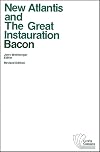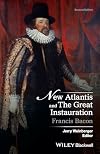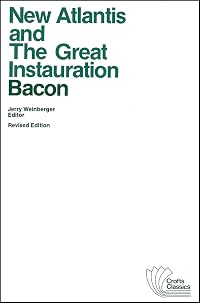
New Atlantis and The Great Instauration
by Francis Bacon
On This Page
Description
This richly annotated second edition of the now-classic pairing of Bacon's masterpieces, New Atlantis and The Great Instauration features the addition of other works by Bacon, including "The Idols of the Mind," Of Unity in Religion" and "Of the True Greatness of Kingdoms and Estates," as well a Summary of the each work and Questions for the reader. S Includes works new to the second edition, including "The Idols of the Mind," "Of Unity in Religion," and "Of the True Greatness of Kingdoms and show more Estates" Updates the layout of the previous edition with a more generous interior design, making this work more student-friendly and easier to navigate in the classroom Each work is introduced and subsequently discussed, revealing the importance of Bacon's work to his contemporaries as well as to modern readers Includes a comprehensive introduction and annotations throughout the text; as well as an appendix of Principal Dates in the Life of Sir Francis Bacon; a selected bibliography; and synopses and questions to accompany each work show lessTags
Recommendations







Member Reviews
Some of Sir Francis Bacon's works. I enjoyed The Great Instauration and the excerpts from Novum Organum, which gave the impression of a great mind at work. The earlier part of New Atlantis was interesting but found myself just skimming the list of research programmes at the House of Salomon. The essays on Religious Unity and the True Greatness of Kingdoms and Empires didn't really grab me either.
Ratings
Members
- Recently Added By
Author Information

368+ Works 8,279 Members
Francis Bacon was born on January 22, 1561 in London. After studying at Cambridge, Bacon began a legal career, ultimately becoming a barrister in 1582. Bacon continued his political ascent, and became a Member of Parliament in 1584. In 1600, he served as Queen Elizabeth's Learned Counsel in the trial of Robert Devereaux, the Earl of Essex. After show more numerous appointments under James I, Bacon admitted to bribery and fell from power. Much of Bacon's fame stems from the belief by some that he was the actual author of the plays of William Shakespeare. While many critics dismissed that belief, Bacon did write several important works, including a digest of laws, a history of Great Britain, and biographies of the Tudor monarchy, including Henry VII. Bacon was also interested in science and the natural world. His scientific theories are recorded in Novum Organum, published in 1620. Bacon's interest in science ultimately led to his death. After stuffing a fowl with snow to study the effect of cold on the decay of meat, he fell ill, and died of bronchitis on April 9, 1626. (Bowker Author Biography) show less
Some Editions
Work Relationships
Contains
Classifications
Statistics
- Members
- 235
- Popularity
- 138,009
- Reviews
- 1
- Rating
- (3.26)
- Languages
- English
- Media
- Paper, Ebook
- ISBNs
- 6
- ASINs
- 2