
The Structures of Everyday Life: The Limits of the Possible
by Fernand Braudel
Civilization and Capitalism, 15th-18th Century (1)
On This Page
Description
Rev. translation of: Civilisation mateÌ#x81;rielle, eÌ#x81;conomie et capitalisme : XVe-XVIIIe sieÌ€cle.Vol. 1: Translation from the French revised by SiaÌ‚n Reynolds; v. 2-3: Translation from the French by SiaÌ‚n Reynolds. Includes bibliographical references and index. v. 1. The structures of everyday life : the limits of the possible -- v. 2. The wheels of commerce -- v. 3. The perspective of the world.Tags
Recommendations


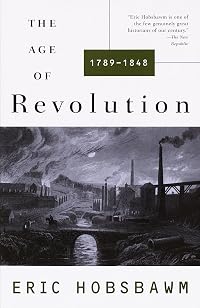




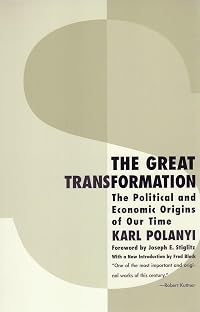
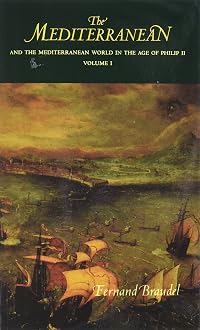

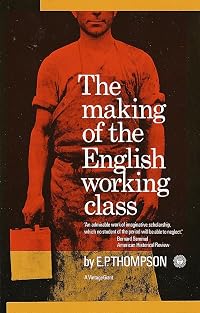














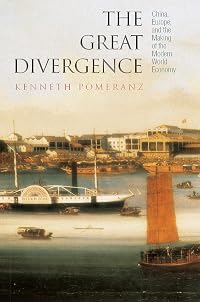
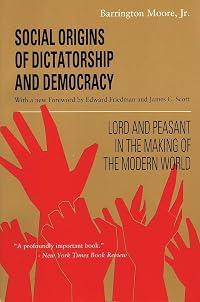
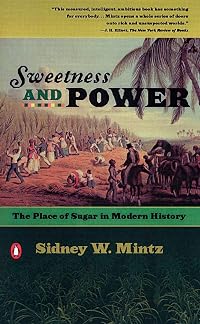





Member Recommendations
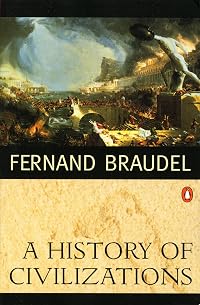
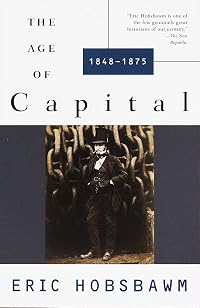
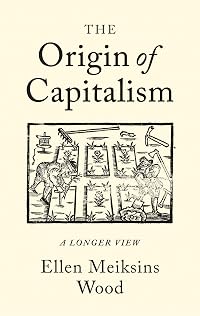
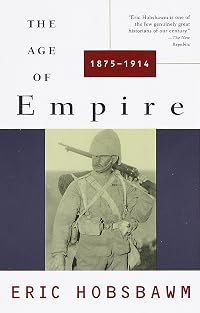
bluepiano If you found one of these deeply interesting you'll almost certainly find the other very interesting.
Member Reviews
Longer review to come after I finish parts II and III. So far, though, I feel comfortable saying that this is one of the most eye-opening and awe-inspiring works of history I've ever read, one of the few that really impresses me with the sheer size of the past, while maintaining readable and pleasant prose throughout. Braudel is a master of giving details on details which slowly cohere into some kind of pattern, and then pulling back to give a smart, crisp conclusion which makes that pattern come completely into focus.
Books, even history books, run away with their authors. This one has run ahead of me. But what can one say about its waywardness, its whims, even its own logic, that will be serious and valid? Our children do as they please. And yet we are responsible for their actions.
I have a discovered a recent treat, finishing a book early in the morning and basking in its brilliance during the day. There is something more indulgent than ascetic in the practice. Braudel's magnificent first volume was completed oh so early today while I listened to obscure chamber music. The effect was nearly intoxicating. Asserting a distinction between the Material Economy and the Market Economy, Braudel attempts to delineate the former as constituted in the daily show more rituals and practices of humans in their disparate environments. It is the toil of the quotidian. It is the gulf between wealth and poverty. The study displayed isn't an evolution but rather a series of processes, inspirations and missteps.
There isn't a narrative here. Adroit GRer Katie noted the abundance of detail and how one should allow it "to breathe." Hundreds of pages on cereal production and furniture conclude without a sense of surfeit. Maybe it is a testament to Braudel's brilliance, but one never thinks, this is too much. The engine of material progress appears to be necessity. But eachproverbial page isn't tured until "it is time." Overcrowding and offshore resources kept pressure on the metaphorical envelope. Cities appear to combust this creative spirit, even as the swells lamented the rising tide of the rabble. China appears to have held all the cards at one time. Did Islam simply run out of trees to maintain its conquering posture? Venice certainly displayed poise and style periodically. Braudel appears a bit cheeky with his notes on revolutions: in this case, artillery, moveable type and oceanic navigation. I was going to separate credit but that would be unwise. Credit is a remarkable agent for developments as well as minatory movement. show less
I have a discovered a recent treat, finishing a book early in the morning and basking in its brilliance during the day. There is something more indulgent than ascetic in the practice. Braudel's magnificent first volume was completed oh so early today while I listened to obscure chamber music. The effect was nearly intoxicating. Asserting a distinction between the Material Economy and the Market Economy, Braudel attempts to delineate the former as constituted in the daily show more rituals and practices of humans in their disparate environments. It is the toil of the quotidian. It is the gulf between wealth and poverty. The study displayed isn't an evolution but rather a series of processes, inspirations and missteps.
There isn't a narrative here. Adroit GRer Katie noted the abundance of detail and how one should allow it "to breathe." Hundreds of pages on cereal production and furniture conclude without a sense of surfeit. Maybe it is a testament to Braudel's brilliance, but one never thinks, this is too much. The engine of material progress appears to be necessity. But eachproverbial page isn't tured until "it is time." Overcrowding and offshore resources kept pressure on the metaphorical envelope. Cities appear to combust this creative spirit, even as the swells lamented the rising tide of the rabble. China appears to have held all the cards at one time. Did Islam simply run out of trees to maintain its conquering posture? Venice certainly displayed poise and style periodically. Braudel appears a bit cheeky with his notes on revolutions: in this case, artillery, moveable type and oceanic navigation. I was going to separate credit but that would be unwise. Credit is a remarkable agent for developments as well as minatory movement. show less
A fascinating work. Assuming one already knows the history of this era (which one probably doesn't, but which one can generally bluff through as one goes along), discusses the mechanics of day-to-day life in Early Modernity, particularly in Europe. Infinitely more interesting than it sounds; a scholarly text, but one well suited to general consumption by the even remotely curious in what at first blush, to a modern American reader, might well be dubbed the "Age of Anachronism."
The work is a wonderful example of the Annales School of historiography. A student of Lucien Febvre (1878-1956), Fernand Braudel (1902-1985) stresses long-term social, geographic and environmental factors. The mass of data provided does appear to give the lie to the importance of Great Men or the struggles of contending "classes".
The author does not actually "skip" details -- the data is abundant. But his encyclopedic focus is on the determinative facts taking shape in Europe over the 15th-18th centuries. He is not shy about interconnected global references. He is looked for information distinct from opinion and theory. He cites many "economists" --mostly Spanish and French [530], but also Adam Smith, Marx--but for their data, not show more their ideology. That may explain the omission of Bastiat and Mises.
The information is continental, not national, in character. Cadastral but not political or class records.
The expertise and data of the working classes and the native inhabitants is not overlooked. For but one example: "not one single nutritious plant of general usefulness has been added to the list of those previously known, so careful and complete was the exploration to which the primitive peoples subjected the plant world".[62]
One can find him tracing frauds and brigandage,usually sponsored or funded by feudal lords or local "nobility, and the mercantile responses. And the vast inventories of inventions, most long delayed in their application, is vetted and exposed, in a detailed explosion on "technology".
This work explodes the myth often repeated that the European "West" knew little about the Islamic world, or China. Here we find the names of travelers and traders and their detailed observations. It is more true that the mullahs and the emperors were indifferent to the West and actively prevented their people from being informed.
1. Weight of Numbers - demographics, scales of reference, biologic events (famine, disease cycles). Documents the fact that from the 15th century on, population fluctuations occurred roughly simultaneously. The globe became a single "stock" as statisticians say. [34]
2. Daily Bread. Data on Wheat, Rice, Maize. Diet between the 15th-18th centuries essentially consisted of vegetable foods. The spectacular population increase in Asia was because land devoted to agriculture feeds 10-20 times as many as stock-raising.
3. Superfluity and Sufficiency -- Food and drink, luxuries, conquest by sugar. Drinks and stimulants. Eternal "class struggle" over luxuries. Cites Bachelard: "the attainment of the superfluous causes greater spiritual excitement than the attainment of necessities." Productivity is the daughter of desire.
Viewed with poverty. It is often thought that hardship increases the farther back towards the middle ages one goes. In fact the opposite is true of the standard of living of the majority. [193] Plate of Velasquez' 1618 Old woman with eggs. [213]
Noting the opium use amongst the Turks and spreading through India to the East Indies along the lines of the Islamic expansion.[261] The Mogul's monopoly of poppy fields thereafter seized by the East India Company.
Tobacco conquered the world between 1600-1700. Violent government restrictions across the globe were ignored. [264] By the end of the 18th century "everyone in China smoked"--men, women and children, rich and poor. Same was true in Bergundy. In 1723, Virginia and Maryland exported through England to the world.
4. Superfluity and Sufficiency -- Houses, clothes, fashion; materials; interiors; costume and fashion. "Where is luxury more conspicuous than in house, furniture and dress?" [266]
"Runaway slaves living in the sertao in independent republics...lived a healthier life in the 19th century than their masters on the plantations". [293]
5. Spread of Technology: Sources of energy, metallurgy.
6. Spread of Technology: Revolution and delays. Great innovations -- gunpowder, printing press, navigation.
7. Money. Currencies, metallic money, capital flight and hoarding, instruments of credit. {Fails to mention Georg Simmel}
8. Towns and Cities. Size, weight, division of labour, newcomers, self-consciousness, artillery and carriages, geography and communications; the case of Islam; originality of Western towns; Free worlds; patterns of development; big cities -- Naples, St Petersburg, Peking, London.
In the second volume, the author turns to the preeminence of economic life and capitalism--with categories of "developed" and "backward" already made familiar to us.[103]
American historians are no longer completely ignoring the Annales school, "Germs, Guns and Steel" written by Diamond, the geologist, was treated the same. show less
The author does not actually "skip" details -- the data is abundant. But his encyclopedic focus is on the determinative facts taking shape in Europe over the 15th-18th centuries. He is not shy about interconnected global references. He is looked for information distinct from opinion and theory. He cites many "economists" --mostly Spanish and French [530], but also Adam Smith, Marx--but for their data, not show more their ideology. That may explain the omission of Bastiat and Mises.
The information is continental, not national, in character. Cadastral but not political or class records.
The expertise and data of the working classes and the native inhabitants is not overlooked. For but one example: "not one single nutritious plant of general usefulness has been added to the list of those previously known, so careful and complete was the exploration to which the primitive peoples subjected the plant world".[62]
One can find him tracing frauds and brigandage,usually sponsored or funded by feudal lords or local "nobility, and the mercantile responses. And the vast inventories of inventions, most long delayed in their application, is vetted and exposed, in a detailed explosion on "technology".
This work explodes the myth often repeated that the European "West" knew little about the Islamic world, or China. Here we find the names of travelers and traders and their detailed observations. It is more true that the mullahs and the emperors were indifferent to the West and actively prevented their people from being informed.
1. Weight of Numbers - demographics, scales of reference, biologic events (famine, disease cycles). Documents the fact that from the 15th century on, population fluctuations occurred roughly simultaneously. The globe became a single "stock" as statisticians say. [34]
2. Daily Bread. Data on Wheat, Rice, Maize. Diet between the 15th-18th centuries essentially consisted of vegetable foods. The spectacular population increase in Asia was because land devoted to agriculture feeds 10-20 times as many as stock-raising.
3. Superfluity and Sufficiency -- Food and drink, luxuries, conquest by sugar. Drinks and stimulants. Eternal "class struggle" over luxuries. Cites Bachelard: "the attainment of the superfluous causes greater spiritual excitement than the attainment of necessities." Productivity is the daughter of desire.
Viewed with poverty. It is often thought that hardship increases the farther back towards the middle ages one goes. In fact the opposite is true of the standard of living of the majority. [193] Plate of Velasquez' 1618 Old woman with eggs. [213]
Noting the opium use amongst the Turks and spreading through India to the East Indies along the lines of the Islamic expansion.[261] The Mogul's monopoly of poppy fields thereafter seized by the East India Company.
Tobacco conquered the world between 1600-1700. Violent government restrictions across the globe were ignored. [264] By the end of the 18th century "everyone in China smoked"--men, women and children, rich and poor. Same was true in Bergundy. In 1723, Virginia and Maryland exported through England to the world.
4. Superfluity and Sufficiency -- Houses, clothes, fashion; materials; interiors; costume and fashion. "Where is luxury more conspicuous than in house, furniture and dress?" [266]
"Runaway slaves living in the sertao in independent republics...lived a healthier life in the 19th century than their masters on the plantations". [293]
5. Spread of Technology: Sources of energy, metallurgy.
6. Spread of Technology: Revolution and delays. Great innovations -- gunpowder, printing press, navigation.
7. Money. Currencies, metallic money, capital flight and hoarding, instruments of credit. {Fails to mention Georg Simmel}
8. Towns and Cities. Size, weight, division of labour, newcomers, self-consciousness, artillery and carriages, geography and communications; the case of Islam; originality of Western towns; Free worlds; patterns of development; big cities -- Naples, St Petersburg, Peking, London.
In the second volume, the author turns to the preeminence of economic life and capitalism--with categories of "developed" and "backward" already made familiar to us.[103]
American historians are no longer completely ignoring the Annales school, "Germs, Guns and Steel" written by Diamond, the geologist, was treated the same. show less
I think it would be helpful if I was more interested in the topic and know the larger picture Braudel was working towards. As it was, it was interesting, if forgettable culmination of a lot of interesting research
1783 The Structures of Everyday Life: The Limits of the Possible Civilization and Capitalism 15th-18th Century Volume I, by Fernand Braudel Translation form the French Revised by Sian Reynolds (read 11 June 1983) I have finally finished reading this. It is a social and economic history of the 15th through the 18th centuries, and I did not like it. It hops and jumps around the whole world, talking about numbers of people, grain, food and drink, houses, clothes, and fashion, sources of energy, the spread of technology, money, and towns and cities. It was a mishmash and I just couldn't keep my mind on it.
Braudel's magisterial work is a study of how capitalism developed. This volume, the first, considers how people actually lived in the period.
Members
- Recently Added By
Author Information

178+ Works 11,079 Members
Fernan Braudel was the author of several acclaimed histories, including "A History of Civilizations", "On History", "The Structures of Everyday Life", & "The Wheels of Commerce". He died in 1985. (Bowker Author Biography) Fernand Braudel, 1902 - 1986 French historian Fernand Braudel was born in 1902. He studied under Lucien Febvre and was a show more founder of the Annales School of Historiography. He went to Brazil in 1935 as one of the young French scholars who founded the University of Sao Paulo. He was a German prisoner of war during World War II. After the war, he was a professor at the College de France in Paris from 1949-1972, editor of the journal Annales, a founder of the Maison des Sciences de l'Homme in 1963, and president of the VIth Section of the Ecole des Hautes Etudes from 1952-1956. While Braudel was a prisoner of war, he wrote "The Mediterranean and the Mediterranean World in the Age of Philippe II" (1949). The book shows the environment in which the peoples of the Mediterranean Basin used to live, from the mountains and plains, the sea and rivers to the roads and towns. He combines the rhythm of "geographic time" with the rapid rhythm of "individual time" and the movement of the people and their ideas. The subject matter of history changes because the time frame of history changes. The short-lived dramatic moments are replaced by the lengthy rhythms of material life. Braudel studied the history of the development of capitalism, the flows of communication and the money it induces, the shift in borders it results in and even the changes in the structure of the State it determines. Braudel's other works are "Ecrits sur l'histoire" (Writings on History, 1969), "La Dynamique du capitalisme" (Dynamics of Capitalism, 1985), and "Identity of France" (1986). The Fernand Braudel Institute of World Economics was created in 1987 by a group of economists, businessmen, journalists and civil servants that were concerned with the process of economic and social disintegration caused by decades of chronic inflation. (Bowker Author Biography) show less
Some Editions
Awards and Honors
Distinctions
Series

Work Relationships
Common Knowledge
- Canonical title
- The Structures of Everyday Life: The Limits of the Possible
- Original title
- Civilisation matérielle, Economie et Capitalisme XVe - XVIIIe Siècle, Tome 1: Les Structures du Quotidien: Le Possible et L'Impossible
- Alternate titles
- Capitalism and Material Life 1400-1800
- Original publication date
- 1979; 1967
- Dedication
- To Paule Braudel, who has dedicated herself to this book, it is in turn dedicated
- Original language
- French
Classifications
Statistics
- Members
- 1,734
- Popularity
- 12,724
- Reviews
- 15
- Rating
- (4.26)
- Languages
- 12 — Chinese, Dutch, English, French, German, Hungarian, Italian, Polish, Portuguese, Spanish, Swedish, Turkish
- Media
- Paper
- ISBNs
- 33
- ASINs
- 20