On This Page
Description
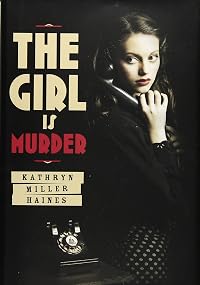
In 1942 New York City, fifteen-year-old Iris grieves for her mother who committed suicide and for the loss of her life of privilege, and secretly helps her father with his detective business since he, having lost a leg at Pearl Harbor, struggles to make ends meet.Tags
Recommendations



























Member Reviews
This historical mystery immersed me in New York's Lower East Side in 1942. Iris Anderson is adjusting to lots of changes. Her mother commits suicide, the father she barely knows comes home from Pearl Harbor missing a leg, and she is attending public school for the first time.
Her father has set up his own detective agency after and argument with his brother. His loss of a leg has made many parts of detective work difficult and money is tight. She wants to help her father but he sees her as a child and refuses her help. She decides to help him without his knowledge. When the case she wants to help with is centered around a boy she know at school, she finds it easy to go undercover.
Besides making new friends at her new school, she does show more meat again with her "best friend" from her old school. She finds her very changed but doesn't know which of them has done the changing.
The mystery has a pretty non-mysterious resolution but Iris's investigations, the atmosphere and attitudes of the time, and her growing acceptance of her new life carry the book.
Fans of historical fiction and mysteries will enjoy this story. show less
Her father has set up his own detective agency after and argument with his brother. His loss of a leg has made many parts of detective work difficult and money is tight. She wants to help her father but he sees her as a child and refuses her help. She decides to help him without his knowledge. When the case she wants to help with is centered around a boy she know at school, she finds it easy to go undercover.
Besides making new friends at her new school, she does show more meat again with her "best friend" from her old school. She finds her very changed but doesn't know which of them has done the changing.
The mystery has a pretty non-mysterious resolution but Iris's investigations, the atmosphere and attitudes of the time, and her growing acceptance of her new life carry the book.
Fans of historical fiction and mysteries will enjoy this story. show less
I wanted to give this 3 1/2 stars. I liked it -- I thought it functioned really well as a historical coming of age novel, and the historical elements worked really well. I also liked the story, but I thought that it pulled too many punches to serve as tight mystery. The "Noir" elements were very scarce as well, so to call it a "Noir" seemed innappropriate. (and upon reflection I think this may have been an invention of the marketing department, rather than Haines' original intention)
But the story was strong, and I really liked seeing Iris negotiating the territory of expressing her feelings, and figuring out who she is. I like that even "nice girls" can lie to get what they want, and will drink out of a flask while stomping at the show more Savoy.
But I will say this: there is a little bit of fat shaming in this book. Now I am particularly sensitive to this, so it may not bother other readers. I don't think Haines had some kind of fat-hating agenda, but the scenes of "Fat Pearl" eating cupcakes made me really really uncomfortable. Keep that in mind for next time, Miss Haines.
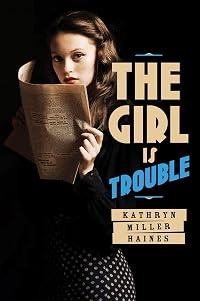
Looking forward to the next one, "The Girl is Trouble" show less
But the story was strong, and I really liked seeing Iris negotiating the territory of expressing her feelings, and figuring out who she is. I like that even "nice girls" can lie to get what they want, and will drink out of a flask while stomping at the show more Savoy.
But I will say this: there is a little bit of fat shaming in this book. Now I am particularly sensitive to this, so it may not bother other readers. I don't think Haines had some kind of fat-hating agenda, but the scenes of "Fat Pearl" eating cupcakes made me really really uncomfortable. Keep that in mind for next time, Miss Haines.
Looking forward to the next one, "The Girl is Trouble" show less
I wanted to like this book more than I did, I’m sorry to say. I feel like the last few historical YA books have been sadly lacking in the historical department, and The Girl is Murder is no exception. While the slang and the clothes and the setting are all very 1940s, the story itself could be told of any teenager anywhere – Iris’s attempts to help support her father, their small family’s slide from middle-class to poor, her rebellious determination to do what she wants and her resentment of a father who was never around. I understand that universality is probably what Haines was going for, but I found it a little disappointing. Society was different in the 1940s, a sixteen year old was older then than she would be now, and I show more don’t think the book reflected that very well.
There was plenty to enjoy, though. Iris is a great character; she’s too stubborn to take no for an answer and just enough of a teenager to have no idea why doing some of the things she’s doing might be a bad idea, so there’s nothing she won’t do. Her new public school friends are also great fun, a gang of boys who wear the zoot suit and girls who smoke and drink and go dancing in Harlem. I liked the way that they were never depicted as bad people, even though they were absolutely considered the worst kind of kids these days at the time (and heck, probably would be in most modern stories, too). I wished we got more of Iris’s dad, too. Injured at Pearl Harbor and ashamed enough of his Jewishness to hide it, he’s a fascinating mess we don’t get to see much of.
My favorite part of The Girl is Murder was definitely the ending. After the very generic rebellious-teenager story, I was a little afraid it would have a happy ending that tied up all the loose ends neatly, but no, it managed a very noirish ending. Noir is more than just a 1940s setting, it’s a whole aesthetic of despair and futility. That’s hard to pull off in a YA novel, and for the most part, The Girl is Murder didn’t manage it – but the ending was note-perfect.
In a Sentence: More a teenage melodrama than a noir mystery, The Girl is Murder is a fun 1940s story that hints at something better than it ever quite achieves. show less
There was plenty to enjoy, though. Iris is a great character; she’s too stubborn to take no for an answer and just enough of a teenager to have no idea why doing some of the things she’s doing might be a bad idea, so there’s nothing she won’t do. Her new public school friends are also great fun, a gang of boys who wear the zoot suit and girls who smoke and drink and go dancing in Harlem. I liked the way that they were never depicted as bad people, even though they were absolutely considered the worst kind of kids these days at the time (and heck, probably would be in most modern stories, too). I wished we got more of Iris’s dad, too. Injured at Pearl Harbor and ashamed enough of his Jewishness to hide it, he’s a fascinating mess we don’t get to see much of.
My favorite part of The Girl is Murder was definitely the ending. After the very generic rebellious-teenager story, I was a little afraid it would have a happy ending that tied up all the loose ends neatly, but no, it managed a very noirish ending. Noir is more than just a 1940s setting, it’s a whole aesthetic of despair and futility. That’s hard to pull off in a YA novel, and for the most part, The Girl is Murder didn’t manage it – but the ending was note-perfect.
In a Sentence: More a teenage melodrama than a noir mystery, The Girl is Murder is a fun 1940s story that hints at something better than it ever quite achieves. show less
This book was all right over all, but it fell into one of the traps that drives me nuts, which was the main character making bad decisions and choosing to stick with those, even though everyone knows it's going to end well -- and when it doesn't, you can't even say I told you so because it just sucks. Luckily by the end of the book, Haines had sorted things out for Iris, but at times it felt almost too perfect. That being said, I'd rather take the ending she wrote than the alternatives. Aside from those issues, the mystery was interesting and it was easy to care about the characters -- and Haines did a nice job with misdirection.
Iris's world has turned upside down. She now attends a public school on the lower east side, but before her father was injured at Pearl Harbor and her mother killed herself she went to a private girls school on the upper east side. Her relationship with her father was never close because of his military absences, so living with him now is awkward. Worse, he is trying to make it as a private investigator, but is limited by his injury. Iris wants to help, but must work without his knowledge because he doesn't want her involved. Before she knows it, she has befriended the friends of a missing boy, lied numerous times to her father and new friends, and gone dancing and drinking in Harlem at the Savoy.
This is a well written period piece show more that gives readers a glimpse at how deeply Americans, including high schoolers, were affected by World War II. show less
This is a well written period piece show more that gives readers a glimpse at how deeply Americans, including high schoolers, were affected by World War II. show less
15 year-old Iris Anderson has faced many difficult changes this past year. Her mother committed suicide and her absentee father has finally come home after losing his leg at Pearl Harbor to start up his own detective agency. On top of all that, financial difficulties have forced Iris to move from her Upper East Side house and private school to a more humble home and attend public school; however, at Iris’ new school one of the boys has suddenly disappeared and Iris is determined to find out what has happened. This book will remind readers of older Nancy Drew books with its innocent themes and storyline, yet, the author adds multiple layers and complications to the plot. Rich vocabulary and flair help create the diversity of the show more characters. A reader can tell the character’s background and role in the plot based on their accents, though not all of the characters display depth in their personality. While the case is closed at the end of the book, the reader may find that the author sets the book up to become a series or perhaps at least a sequel. Though a young adult book, the lack of mature matter allows for a wide range of readers from ages 12 and up. Recommended. show less
Very good YA novel. I liked the young girl. The writing kept me interested in what was going to happen. I really disliked all the lying the kids did. It seemed a bit too much. Now I need to order the sequel "The girl is trouble."
Members
- Recently Added By
Lists

Books Read in 2014
2,343 works; 89 members

Girl Detectives
52 works; 5 members
Author Information

7+ Works 732 Members
Awards and Honors
Awards
Distinctions
Series

Common Knowledge
- Canonical title
- The Girl Is Murder
- Original publication date
- 2011-07-19
- Canonical DDC/MDS
- 813.6
- Canonical LCC
- PZ7.H128123
Classifications
Statistics
- Members
- 213
- Popularity
- 153,441
- Reviews
- 14
- Rating
- (3.52)
- Languages
- English, Italian
- Media
- Paper, Audiobook, Ebook
- ISBNs
- 10
- ASINs
- 2