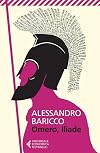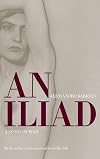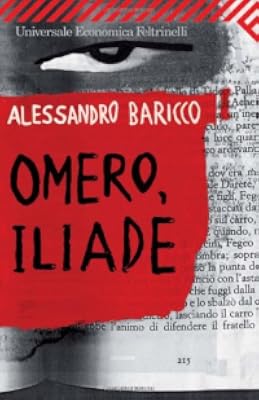
An Iliad
by Alessandro Baricco
On This Page
Description
Alessandro Baricco re-creates the siege of Troy through the voices of 21 Homeric characters. Sacrificing none of Homer's panoramic scope, Baricco forgoes Homer's detachment and admits us to realms of subjective experience his predecessor never explored. From the return of Chryseis to the burial of Hector, we see through human eyes and feel with human hearts the unforgettable events first recounted more than 3,000 years ago events arranged not by the whims of the gods in this instance but by show more the dictates of human nature.With Andromache, Patroclus, Priam, and the rest, we are privy to the ghastly confusion of battle, the clamour of the princely councils, the intimacies of the bedchamber until finally only a blind poet is left to recount secondhand the awful fall of Ilium.Imbuing the stuff of legend with a startlingly new relevancy and humanity, Baricco gives us The Iliad as we have never known it. His transformative achievement is certain to delight and fascinate all the readers of Homer's indispensable classic.. show lessTags
Recommendations
























Member Reviews
I read this in preparation of a thorough reading of the Iliad itself (in three different translations). That has now been done. And I must say, Baricco has made a very commendable attempt to retell the Iliad in a shorter form (about a fifth of its original length). Because let's be honest: reading the original Iliad, even in translation, is quite a chore. There are the many, constantly changing names and descriptions of characters and places, the stumbling references to mythical stories that Homer assumed the reader/listener knew, the alternation of intense battle scenes and drawn-out dialogues, the archaic verse form, and so on. For a contemporary reader, this is certainly not self-evident. So it's very good that Baricco has lightened show more this work: he opted for a prose narrative, significantly reduced the numerous name and mythological references, and also limited the numerous divine interventions, which makes it all a bit more concise. His most important intervention is that he presents the text from ever-changing perspectives, including the perspectives of "minor" characters. This doesn't work perfectly (the storyline requires him to occasionally switch between third- and first-person narration), but it certainly adds dynamism to the story.
Of course, his interventions aren't entirely innocent; they do have consequences. Baricco not only retold the text more wittily, he also clearly attempted to bring the Iliad up to date. I almost wrote that he created a "woke" version of the Iliad, but I prefer not to use that term, since it has since been co-opted by a camp I'd rather not be associated with. But there is something to it, and that becomes especially clear when you read his afterword.
For example, Baricco claims that the entire Iliad has a strikingly feminine side, which is particularly evident in the many dialogue scenes. And it's true: the Greek and Trojan heroes spend almost as much time talking as fighting, which is truly striking. According to Baricco, they do this to slow down the war, to postpone the fighting as much as possible, and this supposedly testifies to a genuine desire for peace, which he associates with a "feminine side." I disagree with him on that last point: after my thorough reading of the Iliad, I can only conclude that the heroes do indeed swear by the fight, do everything they can to make it as intense and horrible as possible and last as long as possible. Where Baricco is mistaken is that the many "rhetoric scenes" are primarily a literary device by the poet Homer (or whoever hides behind that name) to make his story as suspenseful as possible, to postpone the narration of the action so that the subsequent violent outburst is all the greater. I won't deny that there are feminine aspects present in the Iliad (despite the limited number of female voices and some clearly misogynistic passages), but Homer certainly was no pacifist.
Incidentally, Baricco himself provides proof of the invalidity of his assertion. For in his afterword, he also discusses the aestheticization of war in the Iliad. And indeed, the battle scenes and even the general image of the various combatants seem so heightened and intense that this suggests a case of sublimation. Baricco is right that, for Homer, war clearly is the arena in which man acquires almost divine allure, transcends himself, "excels," as we would say today. But I would be careful with this aestheticization. I don't get the impression that the poet glorifies, encourages, or presents war as a model to emulate. For, at every opportunity, he points out how his heroes, in the violence of war, indulge in hubris and arrogance, and in their deadly frenzy violate the (divine) order of the universe, for which they all, without exception, pay the price.
One last point, briefly, where I disagree with Baricco: his conclusion that Homer actually calls on his readers to achieve the same form of excellence as the heroes through peaceful means. That message is commendable in itself, but that's really not what I read in the Iliad. I have the impression that Baricco is taking his wish for granted here.
Well, well, this review has become so long! And I've barely delved into the epic itself. That's promising. show less
Of course, his interventions aren't entirely innocent; they do have consequences. Baricco not only retold the text more wittily, he also clearly attempted to bring the Iliad up to date. I almost wrote that he created a "woke" version of the Iliad, but I prefer not to use that term, since it has since been co-opted by a camp I'd rather not be associated with. But there is something to it, and that becomes especially clear when you read his afterword.
For example, Baricco claims that the entire Iliad has a strikingly feminine side, which is particularly evident in the many dialogue scenes. And it's true: the Greek and Trojan heroes spend almost as much time talking as fighting, which is truly striking. According to Baricco, they do this to slow down the war, to postpone the fighting as much as possible, and this supposedly testifies to a genuine desire for peace, which he associates with a "feminine side." I disagree with him on that last point: after my thorough reading of the Iliad, I can only conclude that the heroes do indeed swear by the fight, do everything they can to make it as intense and horrible as possible and last as long as possible. Where Baricco is mistaken is that the many "rhetoric scenes" are primarily a literary device by the poet Homer (or whoever hides behind that name) to make his story as suspenseful as possible, to postpone the narration of the action so that the subsequent violent outburst is all the greater. I won't deny that there are feminine aspects present in the Iliad (despite the limited number of female voices and some clearly misogynistic passages), but Homer certainly was no pacifist.
Incidentally, Baricco himself provides proof of the invalidity of his assertion. For in his afterword, he also discusses the aestheticization of war in the Iliad. And indeed, the battle scenes and even the general image of the various combatants seem so heightened and intense that this suggests a case of sublimation. Baricco is right that, for Homer, war clearly is the arena in which man acquires almost divine allure, transcends himself, "excels," as we would say today. But I would be careful with this aestheticization. I don't get the impression that the poet glorifies, encourages, or presents war as a model to emulate. For, at every opportunity, he points out how his heroes, in the violence of war, indulge in hubris and arrogance, and in their deadly frenzy violate the (divine) order of the universe, for which they all, without exception, pay the price.
One last point, briefly, where I disagree with Baricco: his conclusion that Homer actually calls on his readers to achieve the same form of excellence as the heroes through peaceful means. That message is commendable in itself, but that's really not what I read in the Iliad. I have the impression that Baricco is taking his wish for granted here.
Well, well, this review has become so long! And I've barely delved into the epic itself. That's promising. show less
I must start this book review with a confession; I’ve never read any classical works. It’s shameful, I know. I’ve devoured plenty of historical fiction about ancient Greece and Rome and some biographies of famous men, but never read any writers from those times. Terrible. I admit it. There’s no excuse, but there are reasons. First; I hate poetry. Second; I’m suffering from a delusion that the ancients won’t be readable. Third; translations make me wary.
So, why did I start with a translation of a translation with writing 180 degrees from the original that also left out huge chunks of the story? Because it was there. I bought it in 2006 and had never read it. It’s been languishing on my shelf that long and now I’m glad I show more read it. It’s made me want to find a more closely translated version to read, too.
The thing that attracted me to An Iliad (an important distinction to The Iliad) was that it wasn’t in poetic verse. It’s in prose. Woo hoo! No rhyming. No awkward (to my ear) cadences that obscure meaning. Straightforward prose. Real sentences. No rhymes.
I didn’t know when I bought it that it left out the gods though and I’m not sure how I feel about that. My first reaction is that if Homer put them in there, who has the right to take them out. That’s certainly a much bigger liberty than changing from verse to prose or from omniscient 3rd person to first person (which was also done). Seemingly unforgivable, but my modern sensibility appreciates it. I’m an atheist and would no more worship Zeus than I would Allah and so the mythical nature of the gods’ intervention would only serve to distance me from the actual story. With the gods stripped out it seems much more a factual tale than myth. With recent archaeological discoveries it seems the war between the Trojans and Greeks was probably true anyway and putting gods in to make things happen would detract from that realism. Whenever humans take full responsibility for their actions and decisions it has more bite, more heft. It matters. Gods running around moving us like pieces on a chessboard just makes me roll my eyes.
What’s left is a story of man’s most base nature. And I do mean man literally. The men in this novel are appallingly self-centered, narcissistic and weak. The whole species of them. To despise and fear women so completely as to render them property reduced to sexual organs only shows me how weak in mind and character they were. Probably still are if they had their way. As a modern female I can help but see this as an overarching theme even if an unintended one. I can’t believe the whole of Western literature is founded on who gets to put his dick into whom. And even more importantly; who doesn’t.
That aside this is a story of war, but one told from the inside. No battle tactics or troop formations. No general’s machinations and planning. No bird’s eye view. Here is close combat told with a personalization that was startling. Not just men were killed, but how they were killed; specifically. And who was killed; by name. And who did the killing; also by name. So many Greek names as to be dizzying. After a while it almost became like a dance, which I suppose was the point. To make us find beauty in war. It’s there, although you have to really force the metaphor to find it.
I’m no classical scholar, so a lot of high-falutin’ stuff probably eluded me, but I did enjoy reading this in a strange, voyeuristic way. I did it to get a better understanding of Achilles, Hector and Odysseus; names so often referred to in the rest of literature as to be almost without meaning. Over and over they’re used to prop up or illustrate one point after another; some clashing ideas together and creating that confusion. I will probably go on to read other classical works like The Odyssey and The Aeneid; both tales of heroes after the war, but I don’t think I’ll stop reading the companion modern fiction though. show less
So, why did I start with a translation of a translation with writing 180 degrees from the original that also left out huge chunks of the story? Because it was there. I bought it in 2006 and had never read it. It’s been languishing on my shelf that long and now I’m glad I show more read it. It’s made me want to find a more closely translated version to read, too.
The thing that attracted me to An Iliad (an important distinction to The Iliad) was that it wasn’t in poetic verse. It’s in prose. Woo hoo! No rhyming. No awkward (to my ear) cadences that obscure meaning. Straightforward prose. Real sentences. No rhymes.
I didn’t know when I bought it that it left out the gods though and I’m not sure how I feel about that. My first reaction is that if Homer put them in there, who has the right to take them out. That’s certainly a much bigger liberty than changing from verse to prose or from omniscient 3rd person to first person (which was also done). Seemingly unforgivable, but my modern sensibility appreciates it. I’m an atheist and would no more worship Zeus than I would Allah and so the mythical nature of the gods’ intervention would only serve to distance me from the actual story. With the gods stripped out it seems much more a factual tale than myth. With recent archaeological discoveries it seems the war between the Trojans and Greeks was probably true anyway and putting gods in to make things happen would detract from that realism. Whenever humans take full responsibility for their actions and decisions it has more bite, more heft. It matters. Gods running around moving us like pieces on a chessboard just makes me roll my eyes.
What’s left is a story of man’s most base nature. And I do mean man literally. The men in this novel are appallingly self-centered, narcissistic and weak. The whole species of them. To despise and fear women so completely as to render them property reduced to sexual organs only shows me how weak in mind and character they were. Probably still are if they had their way. As a modern female I can help but see this as an overarching theme even if an unintended one. I can’t believe the whole of Western literature is founded on who gets to put his dick into whom. And even more importantly; who doesn’t.
That aside this is a story of war, but one told from the inside. No battle tactics or troop formations. No general’s machinations and planning. No bird’s eye view. Here is close combat told with a personalization that was startling. Not just men were killed, but how they were killed; specifically. And who was killed; by name. And who did the killing; also by name. So many Greek names as to be dizzying. After a while it almost became like a dance, which I suppose was the point. To make us find beauty in war. It’s there, although you have to really force the metaphor to find it.
I’m no classical scholar, so a lot of high-falutin’ stuff probably eluded me, but I did enjoy reading this in a strange, voyeuristic way. I did it to get a better understanding of Achilles, Hector and Odysseus; names so often referred to in the rest of literature as to be almost without meaning. Over and over they’re used to prop up or illustrate one point after another; some clashing ideas together and creating that confusion. I will probably go on to read other classical works like The Odyssey and The Aeneid; both tales of heroes after the war, but I don’t think I’ll stop reading the companion modern fiction though. show less
In realtà il libro l'ho acquistato, ma prevalentemente ho ascoltato la sua rappresentazione teatrale.
Tranne l'ultima parte Un'altra bellezza. Postilla sulla guerra. Quella l'ho sentita e riletta e, secondo me, è la punta di diamante di tutto il libro. A me Baricco non piace come autore, ma quando racconta, rilegge e interpreta opere di altri per me è insuperabile. In quel frangente, quando non è troppo occupato a cercare la frase d'effetto, ha una capacità di affabulazione eccezionale. E anche negli approfondimenti e nelle riflessioni scaturite dal testo riesce ad essere sempre sorprendente.
Un'altra bellezza. Postilla sulla guerra andrebbe estratto e letto in tutte le case, nelle scuole e in tutti i luoghi in cui il termine pace show more abbia un valore che non sia solo propagandistico.
Il resto del libro non è male, è un tentativo riuscito di traghettare lo spirito del poema verso chi, altrimenti, non si sarebbe mai accostato all'opera integrale. show less
Tranne l'ultima parte Un'altra bellezza. Postilla sulla guerra. Quella l'ho sentita e riletta e, secondo me, è la punta di diamante di tutto il libro. A me Baricco non piace come autore, ma quando racconta, rilegge e interpreta opere di altri per me è insuperabile. In quel frangente, quando non è troppo occupato a cercare la frase d'effetto, ha una capacità di affabulazione eccezionale. E anche negli approfondimenti e nelle riflessioni scaturite dal testo riesce ad essere sempre sorprendente.
Un'altra bellezza. Postilla sulla guerra andrebbe estratto e letto in tutte le case, nelle scuole e in tutti i luoghi in cui il termine pace show more abbia un valore che non sia solo propagandistico.
Il resto del libro non è male, è un tentativo riuscito di traghettare lo spirito del poema verso chi, altrimenti, non si sarebbe mai accostato all'opera integrale. show less
Unlike Homer's Iliad the gods do not interfere in the affairs of the men who are battling each other in this version of the story. Modern motivations consume these humans as they make ancient history. The story is told by multiple narrators, including Odysseus, Achilles, and Nestor--familiar to those who have read the original. The New Yorker magazine wrote Baricco's retelling of the epic is "defiantly modern," but I would encourage you to see for yourself. It is certainly good read even if you have not read the original.
Not fully convincing (but it is a translation!); the language of the original is beautiful however anachronistic it might sound now. Nice reflection at the end on the necessity of finding a powerful aesthetic of peace, as much as the Iliad shows that there's definitely an aesthetical appeal in war.
So beautifully done-- welcomes a more contemporary audience, less stilted and stifling than the original. Provocative absence of the gods in his telling. Beautifully done, mesmerizing.
What is the purpose of this book? If you take away all Gods' actions, what is left in the Iliade?
Members
- Recently Added By
Lists

Italian Literature
558 works; 42 members

The Trojan War
109 works; 13 members
Talk Discussions
Past Discussions
Le Salon reads the Iliad in Le Salon Littéraire du Peuple pour le Peuple (April 2020)
Author Information

354 Works 14,628 Members
Some Editions
Series
Belongs to Publisher Series
Иллюминатор (78)
Gallimard, Folio (4595)
Work Relationships
Common Knowledge
- Canonical title
- An Iliad
- Original title
- Omero, Iliade
- Alternate titles*
- Гомер. Илиада
- Original publication date
- 2006
- People/Characters
- Achilles; Odysseus; Diomedes; Priam; Hector ; Helen (show all 9); Andromache; Patroclus; Chryseis
- Important places
- Troy; Ancient Greece
- Important events
- Trojan War
- Original language
- Italian
*Some information comes from Common Knowledge in other languages. Click "Edit" for more information.
Classifications
- Genres
- Fiction and Literature, General Fiction
- DDC/MDS
- 853.914 — Literature & rhetoric Italian, Romanian & related literatures Italian fiction 1900- 20th Century 1945-1999
- LCC
- PQ4862 .A6745 .O4413 — Language and Literature French, Italian, Spanish and Portuguese literatures Italian literature Individual authors, 1961-2000
- BISAC
Statistics
- Members
- 711
- Popularity
- 39,983
- Reviews
- 16
- Rating
- (3.52)
- Languages
- 11 — Catalan, Dutch, English, French, German, Galician, Italian, Lithuanian, Polish, Spanish, Turkish
- Media
- Paper, Audiobook, Ebook
- ISBNs
- 31
- ASINs
- 9