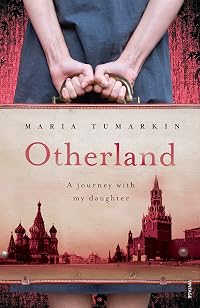
Otherland: A Journey with My Daughter
by Maria Tumarkin
On This Page
Description
Shortlisted for the Douglas Stewart prize for non fiction and the Community Relations Commission Award in NS W and the Age Non-Fiction Book of the Year. I left too early, before tanks rolled into Moscow in 1991, and before Gorbachev was put under home arrest in a failed coup. I left before Russia and Ukraine became separate countries, before the KGB archives were opened, before the Russian version of Wheel of Fortune, before the word 'Gulag' appeared in textbooks. I left before Chechnya, show more before the mass renaming of cities and streets, before you could go into a shop and actually purchase the books of Brodsky, Pasternak and Nabokov. I left too early, I missed the whole point. I was not there when my generation was cornered by history. Maria Tumarkin travels with her Australian-born teenage daughter, Billie, back to Russia and Ukraine to have her experience first-hand the seismic shifts of her family's native country. For Maria the trip back is no simple stroll down memory lane. Splintered and scattered across the world, her generation has ended up inhabiting vastly different realities. Along with exploring the political and cultural fallout of a century of turmoil, Maria wanted to bring together the worlds of her mother and daughter - the different continents, histories and experiences they encompassed. Before they set off, Maria wistfully imagined her and Billie's hearts beating in unison as they travelled back to a past they could both understand, forging a nearly superhuman bond along the way. But, in Maria and Billie's case, the past was not simply another country, but one that no longer existed. Otherlandis the story of a six-week trip traversing three generations, three lifetimes and three profoundly different but profoundly interconnected stories of mothers and daughters. show lessTags
Recommendations













Member Reviews
#ReadAroundTheWorld”. #Ukraine
”I left too early, I missed the whole point. I was not there when my generation was cornered by history.”
This is the memoir of a woman returning to her home country of Ukraine with her 12 year old Australian-born daughter Billie. Maria left Ukraine as a 15 year-old, with her Jewish family, in 1989, when it was still part of the Soviet Union. Returning twenty years later to show Billie her homeland creates the opportunity to reconnect with family and friends but also to examine the seismic sociopolitical changes the country had undergone.
Tumarkin makes comments on communism, politics, feminism and quotes many Russian and Ukrainian poets and writers. She observes and makes interesting comments on the show more way women around her dress and behave.
“Women dressed as if being guided by comfort and self-restraint in choosing their clothes was an insult to the very idea of femininity. You can always pick the non-Russians in this crowd; they are the ones who leave their killer heels, their yummy pants and their volumising mascara for special occasions, not realising that life is passing them by as they prance around in their fisherman pants and their Converse sneakers…for at least one hundred years women have been the stronger sex, when it counts, in Russia. To them the idea that lipsticks and heels are tools of oppression sounds desperately foreign. For decades it was the very absence of such items from Russian stores, and the resulting need to hunt far and wide for them or to go without, that women found oppressive.”
She also makes astute observations on the feminism of communism, the equality yet disproportionate burden. “For many decades, the official Soviet rhetoric of equality and emancipation was maintained against a backdrop of actual startling inequality coupled with an unquestioning expectation of women's readiness for self-sacrifice. Yes, there were countless women engineers and women doctors in the Soviet Union at a time when their Western stepsisters were left to contend with the 'teacher, nurse or secretary' trifecta. During World War II Soviet women did not just bandage the wounded or manufacture ammunitions, they led tank divisions and operated machine guns…The 'glass ceiling' may have been well and truly broken for Soviet women, but the shards of the shattered glass lodged themselves in every aspect of women's everyday existence…Soviet women were repeatedly told how far they had come compared to their bourgeois counterparts – after all, the existence of the vast majority of tragically domesticated Western women was summed up by the Three K's in the atavistic German slogan popular under Hitler: Kinder, Küche, Kirche (Children, Kitchen, Church). The irony, of course, was that neither Kinder nor Küche had disappeared from the equation for 'liberated' Soviet women, while the Party was to prove far more demanding and omnipresent than the Kirche. Women were essentially the slaves of the slaves, with little leisure to contemplate the difficulties of their two-tier subjugation. It was not a question of wanting it all, but rather of doing it all – work, children, housework, community work and sex.”
She also visits Babi Yar, the site of the largest single massacre during the Holocaust, where at least thirty-three thousand Jewish men, women and children were murdered in two days in 1941.
The book details honestly her struggles with, and expectations of her daughter Billie. I found it to be a well-written memoir that deals with the personal and provides insights into the atrocities and millions of deaths under Stalin and the turbulence of post-Soviet Russia and Ukraine. It did become overly introspective and analytical at times and drag a little at some points. 4 stars. show less
”I left too early, I missed the whole point. I was not there when my generation was cornered by history.”
This is the memoir of a woman returning to her home country of Ukraine with her 12 year old Australian-born daughter Billie. Maria left Ukraine as a 15 year-old, with her Jewish family, in 1989, when it was still part of the Soviet Union. Returning twenty years later to show Billie her homeland creates the opportunity to reconnect with family and friends but also to examine the seismic sociopolitical changes the country had undergone.
Tumarkin makes comments on communism, politics, feminism and quotes many Russian and Ukrainian poets and writers. She observes and makes interesting comments on the show more way women around her dress and behave.
“Women dressed as if being guided by comfort and self-restraint in choosing their clothes was an insult to the very idea of femininity. You can always pick the non-Russians in this crowd; they are the ones who leave their killer heels, their yummy pants and their volumising mascara for special occasions, not realising that life is passing them by as they prance around in their fisherman pants and their Converse sneakers…for at least one hundred years women have been the stronger sex, when it counts, in Russia. To them the idea that lipsticks and heels are tools of oppression sounds desperately foreign. For decades it was the very absence of such items from Russian stores, and the resulting need to hunt far and wide for them or to go without, that women found oppressive.”
She also makes astute observations on the feminism of communism, the equality yet disproportionate burden. “For many decades, the official Soviet rhetoric of equality and emancipation was maintained against a backdrop of actual startling inequality coupled with an unquestioning expectation of women's readiness for self-sacrifice. Yes, there were countless women engineers and women doctors in the Soviet Union at a time when their Western stepsisters were left to contend with the 'teacher, nurse or secretary' trifecta. During World War II Soviet women did not just bandage the wounded or manufacture ammunitions, they led tank divisions and operated machine guns…The 'glass ceiling' may have been well and truly broken for Soviet women, but the shards of the shattered glass lodged themselves in every aspect of women's everyday existence…Soviet women were repeatedly told how far they had come compared to their bourgeois counterparts – after all, the existence of the vast majority of tragically domesticated Western women was summed up by the Three K's in the atavistic German slogan popular under Hitler: Kinder, Küche, Kirche (Children, Kitchen, Church). The irony, of course, was that neither Kinder nor Küche had disappeared from the equation for 'liberated' Soviet women, while the Party was to prove far more demanding and omnipresent than the Kirche. Women were essentially the slaves of the slaves, with little leisure to contemplate the difficulties of their two-tier subjugation. It was not a question of wanting it all, but rather of doing it all – work, children, housework, community work and sex.”
She also visits Babi Yar, the site of the largest single massacre during the Holocaust, where at least thirty-three thousand Jewish men, women and children were murdered in two days in 1941.
The book details honestly her struggles with, and expectations of her daughter Billie. I found it to be a well-written memoir that deals with the personal and provides insights into the atrocities and millions of deaths under Stalin and the turbulence of post-Soviet Russia and Ukraine. It did become overly introspective and analytical at times and drag a little at some points. 4 stars. show less
Ratings
Members
- Recently Added By
Author Information
6+ Works 200 Members
Maria Tumarkin is a writer, historian, teacher, and translator. Currently she teaches creative writing at The University of Melbourne. She has written numerous essays which have appeared in the Griffith Review, the Sydney Review of Books, The Conversation, Right Now, Meanjin and other publications. Her books include Axiomatic, Otherland, Courage, show more and Traumascapes. In December 2018, she was awarded the Best Writing Award as part of the Melbourne Prize for Literature for her book, Axiomatic. (Bowker Author Biography) show less
Awards and Honors
Classifications
Statistics
- Members
- 30
- Popularity
- 929,561
- Reviews
- 1
- Rating
- (3.75)
- Languages
- English
- Media
- Paper, Ebook
- ISBNs
- 3
- ASINs
- 1