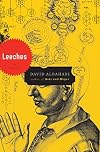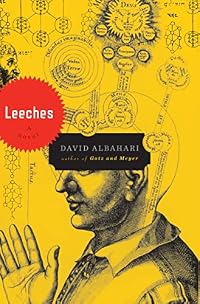
Leeches
by David Albahari
On This Page
Description
The place is Serbia, the time is the late 1990s. Our protagonist, a single man, writes a regular op-ed column for a Belgrade newspaper and spends the rest of his time with his best friend, smoking pot and talking about sex, politics, and life in general. One day on the shore of the Danube he spots a man slapping a beautiful woman. Intrigued, he follows the woman into the tangled streets of the city until he loses sight of her. A few days later he receives a mysterious manuscript whose show more contents seem to mutate each time he opens it. To decipher the manuscript-a collection of fragments on the Kabbalah and the history of the Jews of Zemun and Belgrade-he contacts an old schoolmate, now an eccentric mathematician, and a group of men from the Jewish community. As the narrator delves deeper into arcane topics, he begins to see signs of anti-Semitism, past and present, throughout the city and he feels impelled to denounce it. But his increasingly passionate columns erupt in a scandal culminating in murder. Following in the footsteps of Foucault's Pendulum, Leeches is a cerebral adventure into the underground worlds of secret societies and conspiracy theories. show lessTags
Recommendations










Member Reviews
Wow! This book simply blew me away. It's not for the faint of heart nor for someone seeking an easy read. The story takes pace in late 1990s Serbia and focuses on the Beograd Jewish population against which there seems to be growing anti-Semitism. The narrator, who is never named, is an editorial writer for a Minut, a weekly paper. The story itself has no chapters, has no paragraphs, and has no dialogue separated out in quotation marks. That, in itself, presents a problem for the casual reader.
What carries this book is the writing which is mysterious and frightening. It's an experience. It starts off being completely confusing, although one can easily follow what is happening to the narrator. I would also suggest being somewhat (at show more least a very little bit) familiar with what the Kabbalah is because that is a theme in this story.
As the story progresses, what seems completely murky in the beginning becomes clearer as it marches through to its end. I had to stop multiple times to write down quotes which, although applied to late twentieth century Serbia, also apply to how I feel about living in the United States in the first quarter of the twenty-first century.
I probably would not have tackled this book, which was very dark indeed, had I not already read another book, Gotz and Meyer, by the same author. Both books absolutely horrified me. The content is too familiar and close to home for me as my mom's parents were Yugoslav Jews who lived near Beograd and perished during World War II. They clearly were not immune to anti-Semitism. I probably should not read such horrific books as Albahari writes, but I perceive much fact and emotion from carefully written fiction. I certainly did so in reading this book.
I would highly recommend this book to anyone who is not afraid to tackle a difficult subject in a way that is not particularly easy to read. show less
What carries this book is the writing which is mysterious and frightening. It's an experience. It starts off being completely confusing, although one can easily follow what is happening to the narrator. I would also suggest being somewhat (at show more least a very little bit) familiar with what the Kabbalah is because that is a theme in this story.
As the story progresses, what seems completely murky in the beginning becomes clearer as it marches through to its end. I had to stop multiple times to write down quotes which, although applied to late twentieth century Serbia, also apply to how I feel about living in the United States in the first quarter of the twenty-first century.
I probably would not have tackled this book, which was very dark indeed, had I not already read another book, Gotz and Meyer, by the same author. Both books absolutely horrified me. The content is too familiar and close to home for me as my mom's parents were Yugoslav Jews who lived near Beograd and perished during World War II. They clearly were not immune to anti-Semitism. I probably should not read such horrific books as Albahari writes, but I perceive much fact and emotion from carefully written fiction. I certainly did so in reading this book.
I would highly recommend this book to anyone who is not afraid to tackle a difficult subject in a way that is not particularly easy to read. show less
I haven't so utterly misinterpreted a cover and blurb for quite some time. I picked 'Leeches' from the unread shelf as I was finding [b:The Ministry for the Future|50998056|The Ministry for the Future|Kim Stanley Robinson|https://i.gr-assets.com/images/S/compressed.photo.goodreads.com/books/1586372180l/50998056._SY75_.jpg|75844661] too powerful a reminder that climate change is marching on towards catastrophe while my worries are focused on the pandemic. It was described on the cover as having 'a genuine sense of danger and genuinely twisty plot' and 'a thrilling maelstrom of conspiracies'. From this I inferred it was a crime thriller, having apparently overlooked the much more accurate cover quote, 'has the paranoid, hallucinatory feel show more of a mind slowly breaking down'. This novel is told in the first person as a stream of consciousness, without one single paragraph break. Although the plot is twisty, it's also paced slowly and the narrative constantly digresses into the protagonist's existential crises. Plot also isn't really the point, as the book mostly read to me as a fable about political repression in 1990s Serbia. The violent anti-semisitism and political upheaval are literal, yet the narrative depicts people responding to it with magical thinking and fixation upon obscure signs. While all this is intriguing, perceptive, and strikingly relevant to 2021, it isn't exactly relaxing or easy to read. Here is a typical example of the style, which also forms a sort of thesis statement for the whole book:
If I may reiterate, there are no paragraph breaks whatsoever. I lamented this, and the general tone of existential crisis, to a friend. She astutely commented that if I wanted that I could just listen to my own brain freaking out instead. Also, when I tried to read 'Leeches' one evening while sleep-deprived, I dozed off and became entirely discombobulated. I dreamed of going to a friend's house, starting to read a similar novel from their shelves, then falling asleep on their sofa. Then I woke from the dream, or possibly within the dream, and dreamed of trying to explain the first dream. Baffled, I tweeted 'Am I awake right now?' All this explains why it took me a week to read. Albahari makes insightful points about the psychological toll of repressive political regimes, but his protagonist's mind is an exhausting place. Reading this novel at a different time, I would have considered the immersive atmosphere a strength. At the moment, however, I prefer fiction that analogises these topics from some distance, like Ismail Kadare's [b:The Pyramid|17899|The Pyramid|Ismail Kadare|https://i.gr-assets.com/images/S/compressed.photo.goodreads.com/books/1348763532l/17899._SY75_.jpg|19391] and [b:The Palace of Dreams|797635|The Palace of Dreams|Ismail Kadare|https://i.gr-assets.com/images/S/compressed.photo.goodreads.com/books/1178472255l/797635._SY75_.jpg|783601]. show less
Now I realise that I was actually evading talk of reality and that everything that happened to me during those spring months six years ago - plunging into the shadowy world of mystical phenomena - was a form of self-deception, a form of solace or, more precisely, escapism from our reality at the time. The encounters with the unbridled nationalists were so surreal that I didn't feel them to be a part of reality. I was wrong, of course, because they, the violent young men, were just as real as the blows they dealt me, and just as real today, perhaps not quite so numerous, but certainly louder and more bold. Furthermore they are still where they were then, in a place they feel to be theirs alone, while I am somewhere else, it doesn't matter where, and words are all I have left, and this attempt at fashioning from them something that will have at least a semblance of permanence.
If I may reiterate, there are no paragraph breaks whatsoever. I lamented this, and the general tone of existential crisis, to a friend. She astutely commented that if I wanted that I could just listen to my own brain freaking out instead. Also, when I tried to read 'Leeches' one evening while sleep-deprived, I dozed off and became entirely discombobulated. I dreamed of going to a friend's house, starting to read a similar novel from their shelves, then falling asleep on their sofa. Then I woke from the dream, or possibly within the dream, and dreamed of trying to explain the first dream. Baffled, I tweeted 'Am I awake right now?' All this explains why it took me a week to read. Albahari makes insightful points about the psychological toll of repressive political regimes, but his protagonist's mind is an exhausting place. Reading this novel at a different time, I would have considered the immersive atmosphere a strength. At the moment, however, I prefer fiction that analogises these topics from some distance, like Ismail Kadare's [b:The Pyramid|17899|The Pyramid|Ismail Kadare|https://i.gr-assets.com/images/S/compressed.photo.goodreads.com/books/1348763532l/17899._SY75_.jpg|19391] and [b:The Palace of Dreams|797635|The Palace of Dreams|Ismail Kadare|https://i.gr-assets.com/images/S/compressed.photo.goodreads.com/books/1178472255l/797635._SY75_.jpg|783601]. show less
As stated previously, I'm always fond of books that depict Belgrade. This one was a chore, but a pleasurable one. It as if an erudite Paul Autser wandered the streets of Serbia instead of NYC. There was a hermetic edge to it, a collision of the eschatological and the absurd, all steeped in found art and prime hashish.
My friend Roger was reading this concurrently. he quipped that Albahari captures how asshat crazy it was, doesn't he? I told I him I found it a Holocaust novel. He stared at me as if I was sullenly drooling. Trust me, I know that look.
My friend Roger was reading this concurrently. he quipped that Albahari captures how asshat crazy it was, doesn't he? I told I him I found it a Holocaust novel. He stared at me as if I was sullenly drooling. Trust me, I know that look.
Is anything truly meaningless?
In David Albahair's newest novel, Leeches, his protagonist battles with the concept of what is trivial and what is significant in his life. A common enough problem for anyone, but for someone having gone through the political and ethnic war in the Baltics, it's more complex. The novel begins with him witnessing a random act of violence: a woman is slapped by a man. The shock of it sears him, yet it seems tame compared to the violence perpetrated throughout the region during the conflict. Now obsessed, he tries to find out who the woman is and why the incident took place.
As he takes on his search, he finds himself looking for clues everywhere. Suddenly everything has a broader meaning, and he feels show more enlightened to recognize signs that others ignore. Graffiti, scraps of paper on the ground, the angle of a door opening; all appear to him as related to his search. His closest friend Marko tries to get him back to reality, cautiously but clearly pointing out the flaws in his thinking. Is he suffering from some sort of post-traumatic stress disorder or is he simply paranoid? Or could it be as they say, that even a paranoid person is right sometimes?
The novel proceeds rapidly with him consulting a mathematical expert, Dragan Misovic ("you must get over your fear of math"), and Kabbalah mystics in order to piece together what he can accept as a reality. The Belgrade setting is perfect for the labyrinth of the story, as he seeks answers through old and new portions of the city, amid ruins and new construction.
In one portion of the novel, I came across what is possibly the best explanation for why people become racist, and why ethnic hatred is so prevalent. It's a lengthy excerpt but worth the insight:
"Hatred of other ethnic groups is in effect hatred of oneself...It is not the other we fear, we fear ourselves, we fear the changes the presence of others may impose. When I say that I dislike Jews, or Roma, or Croats-the list is endless-I am expressing the fear that under their influence, or under the influence of what they genuinely or symbolically represent, I will be forced to give up some of the convictions that matter to me. Their uprooting of my convictions, no matter how irrational, represents uprooting of my personality. And so...if I am not to change, they must be branded, isolated, expelled, and, if necessary, utterly destroyed."
Given that the main character is Serbian in such a significant time frame (1998), it's surprising he doesn't discuss political issues more. Or does he? Maybe it's paranoia on my part, but one character's name 'Dragan Misovic' sounds an awful lot like Milosevic. Could he be saying that he is, in fact, Slobodan Milosevic, acting like a paranoid and irrational dragon? If that may be, it would given an imagined perspective on what the war criminal may have been thinking? Albahari creates two incredibly complicated characters no matter what, who can be wildly irrational and impeccably knowledgeable at the same time.
At times, the book seemed to sink into repetitiveness, especially in the early portions when he's seeking insight from the disingenuous Kabbalah teachers. At other points, the heavy-duty mathematical theories made my eyes cross. Yet about midway, the novel is propelled forward and feels much more lean. What I took from the book was that someone who is completely lost, whether idealogically or emotionally, will cling to whatever may comfort them or give them a sense of purpose, even if it may be destructive, shallow, or illogical.
Special thanks to Houghton Mifflin Harcourt for the Review Copy. show less
In David Albahair's newest novel, Leeches, his protagonist battles with the concept of what is trivial and what is significant in his life. A common enough problem for anyone, but for someone having gone through the political and ethnic war in the Baltics, it's more complex. The novel begins with him witnessing a random act of violence: a woman is slapped by a man. The shock of it sears him, yet it seems tame compared to the violence perpetrated throughout the region during the conflict. Now obsessed, he tries to find out who the woman is and why the incident took place.
As he takes on his search, he finds himself looking for clues everywhere. Suddenly everything has a broader meaning, and he feels show more enlightened to recognize signs that others ignore. Graffiti, scraps of paper on the ground, the angle of a door opening; all appear to him as related to his search. His closest friend Marko tries to get him back to reality, cautiously but clearly pointing out the flaws in his thinking. Is he suffering from some sort of post-traumatic stress disorder or is he simply paranoid? Or could it be as they say, that even a paranoid person is right sometimes?
The novel proceeds rapidly with him consulting a mathematical expert, Dragan Misovic ("you must get over your fear of math"), and Kabbalah mystics in order to piece together what he can accept as a reality. The Belgrade setting is perfect for the labyrinth of the story, as he seeks answers through old and new portions of the city, amid ruins and new construction.
In one portion of the novel, I came across what is possibly the best explanation for why people become racist, and why ethnic hatred is so prevalent. It's a lengthy excerpt but worth the insight:
"Hatred of other ethnic groups is in effect hatred of oneself...It is not the other we fear, we fear ourselves, we fear the changes the presence of others may impose. When I say that I dislike Jews, or Roma, or Croats-the list is endless-I am expressing the fear that under their influence, or under the influence of what they genuinely or symbolically represent, I will be forced to give up some of the convictions that matter to me. Their uprooting of my convictions, no matter how irrational, represents uprooting of my personality. And so...if I am not to change, they must be branded, isolated, expelled, and, if necessary, utterly destroyed."
Given that the main character is Serbian in such a significant time frame (1998), it's surprising he doesn't discuss political issues more. Or does he? Maybe it's paranoia on my part, but one character's name 'Dragan Misovic' sounds an awful lot like Milosevic. Could he be saying that he is, in fact, Slobodan Milosevic, acting like a paranoid and irrational dragon? If that may be, it would given an imagined perspective on what the war criminal may have been thinking? Albahari creates two incredibly complicated characters no matter what, who can be wildly irrational and impeccably knowledgeable at the same time.
At times, the book seemed to sink into repetitiveness, especially in the early portions when he's seeking insight from the disingenuous Kabbalah teachers. At other points, the heavy-duty mathematical theories made my eyes cross. Yet about midway, the novel is propelled forward and feels much more lean. What I took from the book was that someone who is completely lost, whether idealogically or emotionally, will cling to whatever may comfort them or give them a sense of purpose, even if it may be destructive, shallow, or illogical.
Special thanks to Houghton Mifflin Harcourt for the Review Copy. show less
Ratings
Members
- Recently Added By
Published Reviews
ThingScore 75
The capably translated text lacks paragraph and chapter breaks, which may strike some readers as an affectation rather than a stylistic choice necessary to the story. Nevertheless, an intriguing novel that will appeal to those looking for a literary challenge.
added by sduff222
Lists

Jewish Books
367 works; 24 members

Literature in Translation
113 works; 5 members
Author Information

44+ Works 586 Members
Awards and Honors
Awards
Common Knowledge
- Original publication date
- 2005
Classifications
- Genres
- Fiction and Literature, General Fiction, Suspense & Thriller
- DDC/MDS
- 891.8 — Literature & rhetoric Literatures of other languages East Indo-European and Celtic literatures West and South Slavic languages (Bulgarian, Slovene, Polish, Czech, Slovak, Serbo-Croatian, and Macedonian)
- LCC
- PG1419.1 .L335 .P5813 — Language and Literature Slavic languages and literatures. Baltic languages. Albanian language Slavic. Baltic. Albanian Serbo-Croatian
- BISAC
Statistics
- Members
- 94
- Popularity
- 334,012
- Reviews
- 5
- Rating
- (3.36)
- Languages
- English, French, German, Italian
- Media
- Paper, Ebook
- ISBNs
- 12
- ASINs
- 2