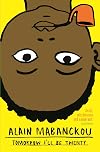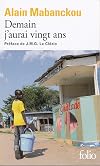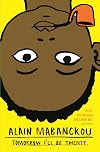
Tomorrow I'll Be Twenty
by Alain Mabanckou
On This Page
Description
Finalist for the Man Booker International Prize 2015Michel is ten years old, living in Pointe Noire, Congo, in the 1970s. His mother sells peanuts at the market, his father works at the Victory Palace Hotel, and brings home books left behind by the white guests. Planes cross the sky overhead, and Michel and his friend Lounes dream about the countries where they'll land.While news comes over the radio of the American hostage crisis in Tehran, the death of the Shah, the scandal of the Boukassa show more diamonds, Michel struggles with the demands of his twelve year old girlfriend Caroline, who threatens to leave him for a bully in the football team.But most worrying for Michel, the witch doctor has told his mother that he has hidden the key to her womb, and must return it before she can have another child. Somehow he must find it. Tomorrow I'll Be Twenty is a humorous and poignant account of an African childhood, drawn from Alain Mabanckou's life. show lessTags
Recommendations

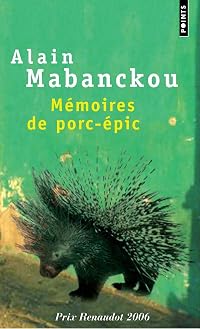
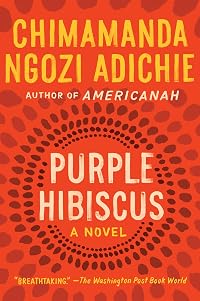
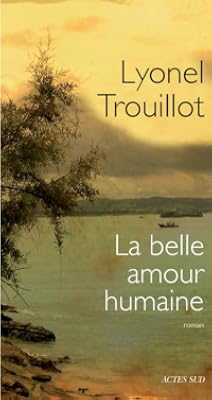
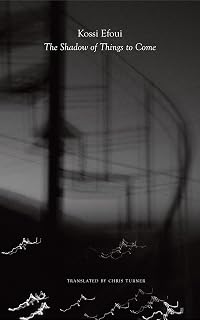
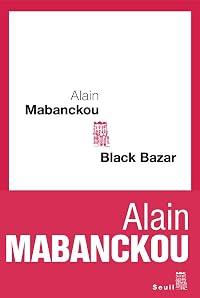
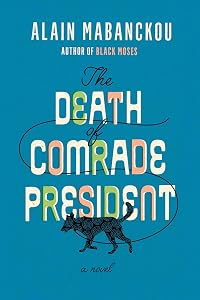











Member Recommendations
Dilara86 Humour et mémoires d'enfance
Member Reviews
It's 1979 in Pointe-Noire, second city of the young and flourishing People's Republic of Congo, and ten-year-old Michel is having a hard time dealing with the pressures of growing up. His friend Caroline has made him commit to two children, a white dog and a red car with five seats before deserting him for a more glamorous boy who plays number 11 for one of the local teams, his wealthy Uncle René keeps lecturing him about Marxism, his parents clearly have complicated problems of their own, there is confusing news on the radio about the Shah, Idi Amin, Bokassa, and Giscard d'Estaing, and it's tricky attempting to fly under the radar at school without prejudicing your chance of a good grade in your primary certificate. Fortunately Michel show more has his best friend Lounès and his brother's girlfriend Geneviève rooting for him, not to mention a bit of unofficial support from Georges Brassens, Papa Wemba and the lovely Arthur Rimbaud...
This is the corny old trick of looking at the adult world through the naïve and (accidentally-on-purpose) ironic gaze of a child narrator, something that can soon become irritating if handled clumsily, especially in a book of this length. Mabanckou is obviously aware of the pitfalls of the technique, and dances around them with supreme confidence. The book leaps from mood to mood and topic to topic unpredictably, with characters and storylines coming and going, bits of backstory or inserted narratives hopping in from nowhere when we're least expecting them. We scarcely get a chance to complain that we're fed up with Michel's voice, there's so much else going on around him, and - until it's too late to do anything about it - we don't even get the idea that we are in a carefully constructed narrative that's heading for a pre-planned conclusion. Very clever.
One of the important threads in the book is Michel's attempt to work out where he is in the world, culturally and politically. How does his modern urban experience tie into the stories of traditional village life he hears from his elders? how to resolve the communist rhetoric he hears from his teachers and Uncle René with the culture of buying and selling he lives in? how does all that fit into the francophone culture he's been told he has a stake in as well? and why is everyone being so nasty to the poor Shah when the nasty Idi Amin is living in comfort in Saudi Arabia? None of it makes very much obvious sense, and some of it is there mostly to give Mabanckou scope for faux-naïve jokes about world leaders (like Pompidou and Brezhnev, who have "beaucoup de sourcils" to deal with), but Michel is growing up, and he starts to find some tangible threads to follow in all the mess. Whether or not he makes it to the white dog and the red car with five seats, we have the feeling when we leave him that he is going to find some kind of a purposeful way through the world. show less
This is the corny old trick of looking at the adult world through the naïve and (accidentally-on-purpose) ironic gaze of a child narrator, something that can soon become irritating if handled clumsily, especially in a book of this length. Mabanckou is obviously aware of the pitfalls of the technique, and dances around them with supreme confidence. The book leaps from mood to mood and topic to topic unpredictably, with characters and storylines coming and going, bits of backstory or inserted narratives hopping in from nowhere when we're least expecting them. We scarcely get a chance to complain that we're fed up with Michel's voice, there's so much else going on around him, and - until it's too late to do anything about it - we don't even get the idea that we are in a carefully constructed narrative that's heading for a pre-planned conclusion. Very clever.
One of the important threads in the book is Michel's attempt to work out where he is in the world, culturally and politically. How does his modern urban experience tie into the stories of traditional village life he hears from his elders? how to resolve the communist rhetoric he hears from his teachers and Uncle René with the culture of buying and selling he lives in? how does all that fit into the francophone culture he's been told he has a stake in as well? and why is everyone being so nasty to the poor Shah when the nasty Idi Amin is living in comfort in Saudi Arabia? None of it makes very much obvious sense, and some of it is there mostly to give Mabanckou scope for faux-naïve jokes about world leaders (like Pompidou and Brezhnev, who have "beaucoup de sourcils" to deal with), but Michel is growing up, and he starts to find some tangible threads to follow in all the mess. Whether or not he makes it to the white dog and the red car with five seats, we have the feeling when we leave him that he is going to find some kind of a purposeful way through the world. show less
"When I'm on the road to happiness, then I'll know that I've finally grown up, that I'm twenty at last", October 31, 2014
This review is from: Tomorrow I'll Be Twenty (Kindle Edition)
Enjoyable first-person narrative, by a young Congolese lad on the verge of starting secondary school. It's the 1970s, and as Michel observes his uncle spouting Marxist ideology, he sees to the hypocrisy of a man determined to hang on to his wealth. The current affairs items that probably went largely unnoticed by European kids - Idi Amin, Bokassa etc - feature significantly in the mind of one living 'just over the border'.
But most of Michel's life is concerned with his own life - father with two wives (though when he goes to stay ewith the 'other family' he show more notes "This is my home too, my sisters and brothers never say that Papa Roger's my foster father, they consider me their real brother.")
First love (and his rival, the local football star); school; and family arguments as his mother yearns for another child and decides to visit a fetisher...I really liked it. show less
This review is from: Tomorrow I'll Be Twenty (Kindle Edition)
Enjoyable first-person narrative, by a young Congolese lad on the verge of starting secondary school. It's the 1970s, and as Michel observes his uncle spouting Marxist ideology, he sees to the hypocrisy of a man determined to hang on to his wealth. The current affairs items that probably went largely unnoticed by European kids - Idi Amin, Bokassa etc - feature significantly in the mind of one living 'just over the border'.
But most of Michel's life is concerned with his own life - father with two wives (though when he goes to stay ewith the 'other family' he show more notes "This is my home too, my sisters and brothers never say that Papa Roger's my foster father, they consider me their real brother.")
First love (and his rival, the local football star); school; and family arguments as his mother yearns for another child and decides to visit a fetisher...I really liked it. show less
Wry humour and some brilliant moments in what is a very grounded story set in a fascinatingly and intentionally run-of-the-mill world. Bright, satirical and well written.
Paperback, x
> Par Sonia Sarfati (LaPresse.ca) : Demain j'aurai vingt ans : doux bonheur de lecture ***1/2
> Par Marine de Tilly (Le Point.fr) : "Demain j'aurai vingt ans" d'Alain Mabanckou
> Par Marine de Tilly (Le Point.fr) : "Demain j'aurai vingt ans" d'Alain Mabanckou
Dec 13, 2018 (Edited)French
Ratings
Members
- Recently Added By
Published Reviews
ThingScore 100
Alain Mabanckou, a novelist of exuberant originality, started a literary festival in Congo-Brazzaville this year. It opened in a stately house overlooking the Congo river, built for Charles de Gaulle's exile from Nazi-occupied Paris, when equatorial Africa was the heart of free France. As Michel, the 10-year-old narrator of Tomorrow I'll Be Twenty, grasps this history: "General de Gaulle came show more to Brazzaville to announce that France was no longer in France, that the capital of France was no longer Paris, with the Eiffel Tower – Brazzaville was now the capital of free France. So the French all became Congolese like us."
Such refreshing logic pervades this delightful comic novel in which the boy narrator's ingenuousness is teamed with a sly authorial wit. Mabanckou writes what resembles memoir while taking the liberties of fiction: in many respects, this is his own 1970s childhood in what was then the People's Republic of Congo. Bigger, ex-Belgian Congo across the river was still Mobutu's Zaire (though as Michel thinks, "the smaller a country, the bigger its problems").
This sparkling portrayal of an urban, postcolonial childhood encompasses Chinese doctors, Indian movies, Senegalese shopkeepers and the French who "go on looking after our oil for us". Yet this open world jostles with one the novel gently mocks. When a fetishist decides that Michel holds the key to his mother's womb, and her failure to have a second child, the innocent boy joins forces with a vagabond-philosopher to search the bins for the lost key.
The Nobel laureate JMG Le Clézio, in an afterword to this translation, brackets Tomorrow I'll Be Twenty with The Catcher in the Rye. Its seductive charm and intelligence recentre the world, so that all readers can indeed become Congolese. show less
Such refreshing logic pervades this delightful comic novel in which the boy narrator's ingenuousness is teamed with a sly authorial wit. Mabanckou writes what resembles memoir while taking the liberties of fiction: in many respects, this is his own 1970s childhood in what was then the People's Republic of Congo. Bigger, ex-Belgian Congo across the river was still Mobutu's Zaire (though as Michel thinks, "the smaller a country, the bigger its problems").
This sparkling portrayal of an urban, postcolonial childhood encompasses Chinese doctors, Indian movies, Senegalese shopkeepers and the French who "go on looking after our oil for us". Yet this open world jostles with one the novel gently mocks. When a fetishist decides that Michel holds the key to his mother's womb, and her failure to have a second child, the innocent boy joins forces with a vagabond-philosopher to search the bins for the lost key.
The Nobel laureate JMG Le Clézio, in an afterword to this translation, brackets Tomorrow I'll Be Twenty with The Catcher in the Rye. Its seductive charm and intelligence recentre the world, so that all readers can indeed become Congolese. show less
added by kidzdoc
Readers of Alain Mabanckou’s previous novels, from Broken Glass to Memoirs of a Porcupine, know how his unmistakable style is made of drollery and sarcasm. In Tomorrow I’ll Be Twenty, his latest novel to be published in English, the Franco-Congolese adds tenderness to his signature ironic tone. Through Michel, his young alter ego, Mabanckou mischievously recalls his childhood in the show more port-city of Pointe-Noire, on the Atlantic coast of Congo-Brazzaville. Michel is caught in a whirl of minor events he describes with touching candor: the hiccups in his love relationship with Caroline, the witch tricks of Ousmane the Senegalese shopkeeper, the unfairness of the teacher’s ranking system… But Michel is also concerned with the stories he hears through his father’s radio, from the exile of Iran’s Shah to the craze of Uganda’s Idi Amin. Domestic and historic events intermingle hilariously in Tomorrow I’ll be Twenty, offering a moving depiction of how it was like to grow up in Africa in the late seventies.
Tomorrow I’ll Be Twenty is full of minor scenes that, put together, form a touching image of a young boy’s psyche. Watching the planes gliding in the sky guessing where they will land, secretly exploring his father’s library or gravely listening to important events of world news unfolding on the radio, Mabanckou follows Michel in his daily life and pulls his reader into the child’s disarming logic. By doing so, he paints a captivating portrait of Congolese society and shows Africa at its most genuine. show less
Tomorrow I’ll Be Twenty is full of minor scenes that, put together, form a touching image of a young boy’s psyche. Watching the planes gliding in the sky guessing where they will land, secretly exploring his father’s library or gravely listening to important events of world news unfolding on the radio, Mabanckou follows Michel in his daily life and pulls his reader into the child’s disarming logic. By doing so, he paints a captivating portrait of Congolese society and shows Africa at its most genuine. show less
added by kidzdoc
Lists

Best African Books
126 works; 46 members

Childhood: Books for or about children in different cultures around the wor
345 works; 17 members
Best African and African diaspora books
111 works; 4 members

Books Read in 2013
1,630 works; 51 members
Author Information

56+ Works 1,597 Members
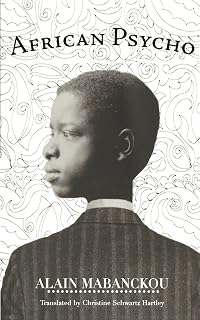
Alain Mabanckou was born in Congo-Brazzavile in 1966. He is the author of Broken Glass (Soft Skull 2010), Memoirs of a Porcupine (Soft Skull 2006) and African Psycho (Soft Skull 2007) among others. He currently divides his time between Paris and California, where he teaches French Literature at UCLA. Sara Meli Ansari is a translator and design show more historian. She holds an undergraduate degree in French studies from the University of Michigan and a Masters degree in the history of culture and design from the Bard Graduate Center. She live with her husband in New York City. show less
Some Editions
Awards and Honors
Awards
Series
Belongs to Publisher Series
Gallimard, Folio (5378)
Common Knowledge
- Canonical title
- Tomorrow I'll Be Twenty
- Original title
- Demain j'aurai vingt ans
- Original publication date
- 2010 (original French) (original French); 2013 (English: Stevenson) (English: Stevenson)
- People/Characters
- Michel; Papa Roger; Maman Pauline; Uncle Rene; Caroline; Lounes
- Important places
- Pointe Noire, Congo
- Epigraph
- The sweetest thought
In the child's warm heart:
Soiled sheets and white lilac
Tomorrow I'll be twenty
TCHICAYA U TAM' SI
Wrong Blood
Edited by P.J. Oswald, 1955 - Dedication
- For my mother Pauline Kengué - died 1995
For my father Roger Kimangou - died 2004
To Dany Laferrière - First words
- In this country, a boss should always be bald and have a big belly.
- Quotations
- Geneviève asks me what I've been learning at school, what I like doing best, and what I want to do when I'm older, when I'm twenty. And I rattle on and on, I'm chattier than a whole family of sparrows, that's all I do, just ... (show all)talk. I tell Geneviève I want to be a movie actor so I can kiss the actresses in Indian movies, I want to be President of the Republic sho I can make long speeches at the Revolution stadium, and write a book all about how bravely I faced the enemies of the Nation, I want to be a taxi driver so I don't have to walk on the hot tarmac at midday. I tell her this, and she smiles and says life is too short to do all those things. You have to choose just a few, and above all, do them well.
I'm looking for a different road, the road to happiness, to walk downin my bare feet in the heat of the sun, even if the tarmac burns my feet. I'll go far, far away, to where all roads meet, where you find all the people who'... (show all)ve gone on ahead, and look different now, to how they did on earth. I have to keep the road fixed carefully in my head, I don't want to find when I'm older that it's vanished and I'm stuck with lots of bad people who don't love me, and want to hurt me. - Last words
- (Click to show. Warning: May contain spoilers.)And just for a moment I'll glance over at Maman Pauline, while Papa Roger's listening to the Voice of America, or the singer with the moustache, weeping for his friend, the old oak, his alter ego, the one he should never have taken his eye off.
- Original language
- French
Classifications
- Genres
- General Fiction, Fiction and Literature
- DDC/MDS
- 843.914 — Literature & rhetoric French Literature French fiction 1900- 20th Century 1945-1999
- LCC
- PQ3989.2 .M217 .D46 — Language and Literature French, Italian, Spanish and Portuguese literatures French literature Provincial, local, colonial, etc.
- BISAC
Statistics
- Members
- 91
- Popularity
- 352,925
- Reviews
- 5
- Rating
- (3.97)
- Languages
- 8 — English, French, German, Norwegian (Bokmål), Polish, Spanish, Swedish, Turkish
- Media
- Paper, Audiobook, Ebook
- ISBNs
- 14
- ASINs
- 3