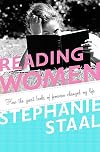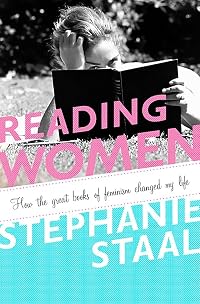
Reading Women
by Stephanie Staal
On This Page
Description
Biography & Autobiography. Literary Criticism. Nonfiction. HTML:When Stephanie Staal first read The Feminine Mystique in college, she found it "a mildly interesting relic from another era." But more than a decade later, as a married stay-at-home mom in the suburbs, Staal rediscovered Betty Friedan's classic work — and was surprised how much she identified with the laments and misgivings of 1950s housewives. She set out on a quest: to reenroll at Barnard and re-read the great books she had show more first encountered as an undergrad.From the banishment of Eve to Judith Butler's Gender Trouble, Staal explores the significance of each of these classic tales by and of women, highlighting the relevance these ideas still have today. This process leads Staal to find the self she thought she had lost — curious and ambitious, zany and critical — and inspires new understandings of her relationships with her husband, her mother, and her daughter. show less
Tags
Recommendations
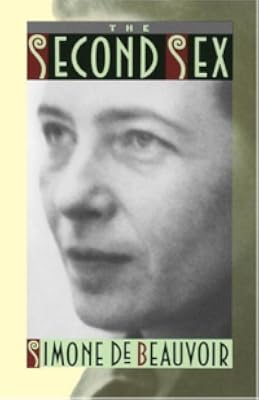
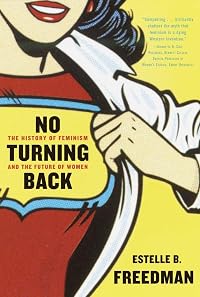

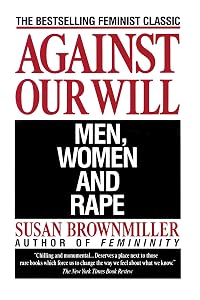




Member Recommendations
Great Books: My Adventures with Homer, Rousseau, Woolf, and Other Indestructible Writers of the Western World by David Denby
Nickelini If you liked the concept and structure of Staal's memoir, you may like Great Books by David Denby. Staal looks at the feminist canon while Denby looks at the Western canon.
20
Member Reviews
Stephanie Staal, graduate from Barnard, anticipated a progressive career driven life. And was on her way, until she meets a man, falls in love, gets married, has a baby and leaves The City. (And speaking of The City, didn't we see that episode on SatC?) It is about this time that we meet her, as our narrator and guide. Her marriage is a wee bit rockier than expected, and even though both her and hubs work from home, she ends up with the role of "mommy" and not the equal partnership that she anticipated.
"Our shared parenting time appeared astonishingly equal to outsiders - maybe too equal. It didn't take long to discover that they viewed my time as a duty, whereas John's was a gift - he was a saint to my sinner." (46)
Not knowing what show more else to do, she decides to audit a year long study of Feminine Texts at her alma matter. Reading Women is her journey.
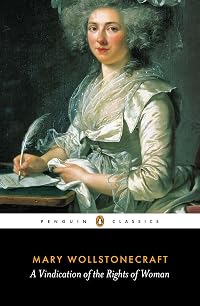
I received this book from LT in December and squealed knowing that it would align perfectly with The Year of Feminist Classics challenge that I signed up for. Not surprisingly, the first text that Staal is assigned in her Fem Text course is our January read - A Vindication of Rights of Women by Mary Wollstonecraft.
Staal excels in literary analysis. I truly felt as though she combed the texts and spent the time to truly understand them as period pieces and contemporary sources of wisdom. For example, while reading "The Yellow Wallpaper", she states: If men, too, are products of the culture, how culpable are they really? And how complicit might women be in their own imprisonment. (94)
She's obviously a very bright woman and I do understand her desire to go back to the text. I imagine that it is difficult for a woman to manage both motherhood and a career. She constantly goes back and forth trying to find the most accurate definition of "woman" for herself as a feminist and all of her other selves. Her thoughts are candid both after running into other SaHMs who ask when she plans on having another baby, and while being in a college class thinking about her daughter at home. I get that duality. I get the stress on finding a defining foundation of womanhood. Especially when I don't know if men think of themselves against women in the same way that women do.
Overall, a really impressive read. show less
"Our shared parenting time appeared astonishingly equal to outsiders - maybe too equal. It didn't take long to discover that they viewed my time as a duty, whereas John's was a gift - he was a saint to my sinner." (46)
Not knowing what show more else to do, she decides to audit a year long study of Feminine Texts at her alma matter. Reading Women is her journey.
I received this book from LT in December and squealed knowing that it would align perfectly with The Year of Feminist Classics challenge that I signed up for. Not surprisingly, the first text that Staal is assigned in her Fem Text course is our January read - A Vindication of Rights of Women by Mary Wollstonecraft.
Staal excels in literary analysis. I truly felt as though she combed the texts and spent the time to truly understand them as period pieces and contemporary sources of wisdom. For example, while reading "The Yellow Wallpaper", she states: If men, too, are products of the culture, how culpable are they really? And how complicit might women be in their own imprisonment. (94)
She's obviously a very bright woman and I do understand her desire to go back to the text. I imagine that it is difficult for a woman to manage both motherhood and a career. She constantly goes back and forth trying to find the most accurate definition of "woman" for herself as a feminist and all of her other selves. Her thoughts are candid both after running into other SaHMs who ask when she plans on having another baby, and while being in a college class thinking about her daughter at home. I get that duality. I get the stress on finding a defining foundation of womanhood. Especially when I don't know if men think of themselves against women in the same way that women do.
Overall, a really impressive read. show less
 This review was written for LibraryThing Early Reviewers.
Feeling adrift in middle age, Staal re-enrolls in her college feminist texts seminar and rereads the great works of feminism.
I thought this was a very interesting read, probably because I am in a similar situation as Staal was when she wrote it. I'm a mom of one, middle-aged, doing a little freelance writing but mostly a stay-at-home, wondering what my role is without a job or career, not wanting my only identity to be as mother. I am glad that Staal decided to read these feminist texts looking for answers, so I don't have to (although I have read all of the fiction that she discusses). I enjoyed most her take on the texts themselves and how she applied them to her life. I confess that although I did identify with Staal's particular show more time in life, I skimmed a lot of the personal in her book. She has a pretty nice life, and some readers may think she's whining, but she, like a lot of us, is just continually wrestling with the question, "Who am I? Is this who I am?"
Spoiler alert: This book has no answers. I think we readers are used to turning to books for answers. It was Staal's instinct, and it's certainly mine. But I had an a-ha moment as I was reading it: there really are no answers to life, not that anyone else can give us, anyway. I consider myself a feminist; I feel passionately that women deserve better than we get and that we should not be reduced to merely mothers, wives, or vaginas. Still, we are also individual human beings, each of us on our own life path. Even as we continue the struggle for equality, there is no one single prescription for all of us. We are all writing our own stories, and we are still writing. Reading is a terrific way to get the brain working, particularly if it's been feeling sluggish, but ultimately any answers we find, we find within ourselves. show less
I thought this was a very interesting read, probably because I am in a similar situation as Staal was when she wrote it. I'm a mom of one, middle-aged, doing a little freelance writing but mostly a stay-at-home, wondering what my role is without a job or career, not wanting my only identity to be as mother. I am glad that Staal decided to read these feminist texts looking for answers, so I don't have to (although I have read all of the fiction that she discusses). I enjoyed most her take on the texts themselves and how she applied them to her life. I confess that although I did identify with Staal's particular show more time in life, I skimmed a lot of the personal in her book. She has a pretty nice life, and some readers may think she's whining, but she, like a lot of us, is just continually wrestling with the question, "Who am I? Is this who I am?"
Spoiler alert: This book has no answers. I think we readers are used to turning to books for answers. It was Staal's instinct, and it's certainly mine. But I had an a-ha moment as I was reading it: there really are no answers to life, not that anyone else can give us, anyway. I consider myself a feminist; I feel passionately that women deserve better than we get and that we should not be reduced to merely mothers, wives, or vaginas. Still, we are also individual human beings, each of us on our own life path. Even as we continue the struggle for equality, there is no one single prescription for all of us. We are all writing our own stories, and we are still writing. Reading is a terrific way to get the brain working, particularly if it's been feeling sluggish, but ultimately any answers we find, we find within ourselves. show less
Reading Women is a ‘quest‘ book -- not the literal adventure hiking out in the Himalaya’s seeking enlightenment from a guru -- but the tale of an inward search for balance. Staal, a thirty-something new mother decides to go back to school, choosing a class at Barnard called ‘Feminist Texts.’ Her motivation for going on this quest is the unexpectedly strong mental and emotional imbalance that has accompanied her advent into motherhood.
There are four parts to Reading Women, each one approaching a different facet of feminism, determined by the four classes that Staal attended. The journey starts at the beginning, with the beliefs that, in Western civilization anyway, began the process of isolating and redefining women as weak show more and corrupt and in need of constant supervision. The primary text is Elaine Pagels Adam, and Eve, and the Serpent By the beginning of Part Two, the shape and rhythm of the book is evident as Staal moves between her own responses to the reading, the class discussions. and the events own life, past and present. The books read and discussed in this section are Mary Wollstonecraft's Vindication of the Rights of Women, Charlotte Perkins Gilman's The Yellow Wallpaper and Kate Chopin's The Awakening . The discussion in this section focuses closely around issues of marital obligations, myths, realities and a woman's responsibilities towards creating her own life, not passively accepting to be miserable or confined. A choice quote from Wollstonecraft, who kept a separate house after her second marriage: "I wish you, for my soul, to be riveted to my heart; but I do not desire to have you always at my elbow.”
‘Divisions‘ hones in on differences, between women and men, between women and women. Much of this ‘third wave’ has been condemned as overly radical. Here a pattern emerges that each generation of women evolves on its own terms, often rejecting (or subverting) as a matter of course the ideas of the previous generation. This class starts with Simone de Beauvoir, moves on to Betty Friedan, Staal noting how quickly ideas shift and change. Staal deftly weaves her own story, the class reaction to both thinkers, information and her own thoughts -- especially about Beavoir, the strongest section yet in an already strong book. The chapter ends with a discussion of Catherine Mackinnon, Shulamith Firestone, Susan Brownmiller, how their works were received what effect they have had. Staal insightfully tackles sexual politics and pornography and realizes during class discussions that she is no longer the forefront generation and the new wave of youth has yet another (disturbing) view of sexuality alien to her (and to me!)
Finally it’s spring on the Barnard campus and Staal picks up Erica Jong’s Fear of Flying in lieu of her assignment by a French feminist Helene Cixous whose message is for women to ‘put herself into the text’. This is third wave feminism: post-modern, post-structuralist -- a Lacan-inspired tangle of linguistic, symbolic, and mind-boggling theories. Essentially? There is a gap between reality what IS and language, no matter how hard we try, never the twain shall meet, what matters is recognizing the slipperiness of language, that there is nothing at all stable or solid about it and that the interplay between what is, what we say, and what we decide is true, is an ever-shifting landscape.
There’s no question in my mind that it is important stuff, but.... it’s the kind of reading that makes your head hurt and Staal arrives in class to find everyone in the same mood. The professor, her oldest teacher yet, a woman who ‘lived’ the sixties, laughs and guides, relaxed and confident. They move on to Sigmund Freud reading Dora , Carol Gilligan’s In a Different Voice (one of the pillars of my feminist canon). The final pages are devoted to the massive changes in sexual attitudes in the rising generation -- call them the fourth wave, perhaps. For me, as the mother of 14 year old just emerging sexually, this was eye-popping stuff.
In the end Staal finds her own state of mind enlarged, altered and renewed by her quest. The anger that carried her into the project has been transformed by the process. Her take-away is a mature one, the realization of the cyclical nature of the thinking life, that with each decade or phase, a different understanding of herself as a woman will probably occur, so that each time she revisits these thinkers and movers and shakers of feminist theory and practice she will have a different response - and that is OK, she’s looking forward to it.
Staal has woven a deft and satisfying story of her own journey with clear writing, humor, affection, clarity, deep thoughtfulness, and total lack of pretense. This is the sort of reading adventure that makes you want to put on your own hiking boots and get out there braving the elements. ****1/2. Highly recommended! show less
There are four parts to Reading Women, each one approaching a different facet of feminism, determined by the four classes that Staal attended. The journey starts at the beginning, with the beliefs that, in Western civilization anyway, began the process of isolating and redefining women as weak show more and corrupt and in need of constant supervision. The primary text is Elaine Pagels Adam, and Eve, and the Serpent By the beginning of Part Two, the shape and rhythm of the book is evident as Staal moves between her own responses to the reading, the class discussions. and the events own life, past and present. The books read and discussed in this section are Mary Wollstonecraft's Vindication of the Rights of Women, Charlotte Perkins Gilman's The Yellow Wallpaper and Kate Chopin's The Awakening . The discussion in this section focuses closely around issues of marital obligations, myths, realities and a woman's responsibilities towards creating her own life, not passively accepting to be miserable or confined. A choice quote from Wollstonecraft, who kept a separate house after her second marriage: "I wish you, for my soul, to be riveted to my heart; but I do not desire to have you always at my elbow.”
‘Divisions‘ hones in on differences, between women and men, between women and women. Much of this ‘third wave’ has been condemned as overly radical. Here a pattern emerges that each generation of women evolves on its own terms, often rejecting (or subverting) as a matter of course the ideas of the previous generation. This class starts with Simone de Beauvoir, moves on to Betty Friedan, Staal noting how quickly ideas shift and change. Staal deftly weaves her own story, the class reaction to both thinkers, information and her own thoughts -- especially about Beavoir, the strongest section yet in an already strong book. The chapter ends with a discussion of Catherine Mackinnon, Shulamith Firestone, Susan Brownmiller, how their works were received what effect they have had. Staal insightfully tackles sexual politics and pornography and realizes during class discussions that she is no longer the forefront generation and the new wave of youth has yet another (disturbing) view of sexuality alien to her (and to me!)
Finally it’s spring on the Barnard campus and Staal picks up Erica Jong’s Fear of Flying in lieu of her assignment by a French feminist Helene Cixous whose message is for women to ‘put herself into the text’. This is third wave feminism: post-modern, post-structuralist -- a Lacan-inspired tangle of linguistic, symbolic, and mind-boggling theories. Essentially? There is a gap between reality what IS and language, no matter how hard we try, never the twain shall meet, what matters is recognizing the slipperiness of language, that there is nothing at all stable or solid about it and that the interplay between what is, what we say, and what we decide is true, is an ever-shifting landscape.
There’s no question in my mind that it is important stuff, but.... it’s the kind of reading that makes your head hurt and Staal arrives in class to find everyone in the same mood. The professor, her oldest teacher yet, a woman who ‘lived’ the sixties, laughs and guides, relaxed and confident. They move on to Sigmund Freud reading Dora , Carol Gilligan’s In a Different Voice (one of the pillars of my feminist canon). The final pages are devoted to the massive changes in sexual attitudes in the rising generation -- call them the fourth wave, perhaps. For me, as the mother of 14 year old just emerging sexually, this was eye-popping stuff.
In the end Staal finds her own state of mind enlarged, altered and renewed by her quest. The anger that carried her into the project has been transformed by the process. Her take-away is a mature one, the realization of the cyclical nature of the thinking life, that with each decade or phase, a different understanding of herself as a woman will probably occur, so that each time she revisits these thinkers and movers and shakers of feminist theory and practice she will have a different response - and that is OK, she’s looking forward to it.
Staal has woven a deft and satisfying story of her own journey with clear writing, humor, affection, clarity, deep thoughtfulness, and total lack of pretense. This is the sort of reading adventure that makes you want to put on your own hiking boots and get out there braving the elements. ****1/2. Highly recommended! show less
This review was written for LibraryThing Early Reviewers.A very enjoyable look into the life of a woman battling with the seemingly dichotomous nature of being a feminist on the one hand and wife/mother on the other, and how becoming a mom has changed her identity and life. I like how it approaches sticky subjects without attempting to solve them. Also a great look into feminism has evolved over the past 20 years as women's roles are paradoxically more defined and yet more uncertain.
This review was written for LibraryThing Early Reviewers.I was really excited about this book, and I wasn't disappointed. Staal moves through the different periods of her life, with their requisite hopes and expectations, with frankness and aplomb. She doesn't hold back at all, even when certain aspects of her life might contradict what she says she believes, which is refreshing. Her discussion of the different eras/waves of feminism as she has experienced them is a welcome change from the generation gap/finger-pointing in which many feminists who discuss those issues tend to engage. Feminism aside, it's a great testimony to the power of time to change how you feel about different works of literature; if nothing else, the book is valuable for showing how the truly intellectually curious and show more intellectually inclined evolve and grow in their thinking over time. show less
This review was written for LibraryThing Early Reviewers.Because I respect Staal's ambitious goal of more empathetically than abstractly retackling classic feminist texts, I regret that her account hasn't absorbed me as I hoped. Her writing reveals a sharp, sincere, witty person who gradually resumes historical conversations turned personal and I find myself energized for pages, but then something--perhaps formality?--disengages me. When I retackle this feminist text, it'll be with the knowledge that Staal's account tends more toward accessible academia than engrossing lay reading.
This review was written for LibraryThing Early Reviewers.Such a palpable story of the struggle for balance between theory and reality, between what we say and what we do. In reading this book, it became very clear to me how much identity--especially a woman's identity--is a balancing act. No matter what stage of life we inhabit, it seems our identity is always in flux, on the verge of becoming something else.
This is also a story of perspective. Of how experience changes not only the way we see ourselves, but how we see everything else in relation to ourselves. Of taking a step back from our own lives and changing that perspective. But the ultimate moral to this story is one any reading woman can appreciate: when feeling lost, turn to the right books and you'll find your way back.
This is also a story of perspective. Of how experience changes not only the way we see ourselves, but how we see everything else in relation to ourselves. Of taking a step back from our own lives and changing that perspective. But the ultimate moral to this story is one any reading woman can appreciate: when feeling lost, turn to the right books and you'll find your way back.
This review was written for LibraryThing Early Reviewers.Members
- Recently Added By
Lists

Best Feminist Literature
188 works; 26 members

Books Read in 2015
3,299 works; 129 members

Hachette Book Group
152 works; 6 members

Writers and Readers
11 works; 1 member
Author Information

3 Works 220 Members
Stephanie Staal is a graduate of Barnard College and the Columbia School of Journalism, where The Love They Lost began as her masters thesis. She has been a staff reporter at the Newark Star-Ledger and a literary scout at Nina Collins Associates. She lives in New York City. (Bowker Author Biography)
Awards and Honors
Notable Lists
Common Knowledge
- Canonical title
- Reading Women
- Original title
- Reading Women
- Original publication date
- 2011-02-22
- Important places
- Columbia University, New York, New York, USA; Barnard College, New York, New York, USA
Classifications
- Genres
- Nonfiction, Sexuality and Gender Studies, General Nonfiction, Biography & Memoir, Literature Studies and Criticism
- DDC/MDS
- 306.87430973 — Society, government, & culture Social sciences, sociology & anthropology Social Behavior - Dating, Marriage, Divorce Marriage, partnerships, unions; family Intrafamily relationships Parent-child relationship Mother-child relationship Biography And History North America
- LCC
- HQ1155 .S83 — Social sciences The family. Marriage, Women and Sexuality The Family. Marriage. Women Women. Feminism
- BISAC
Statistics
- Members
- 201
- Popularity
- 163,151
- Reviews
- 36
- Rating
- (3.75)
- Languages
- English
- Media
- Paper, Ebook
- ISBNs
- 3
- ASINs
- 2