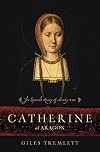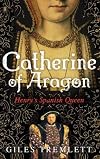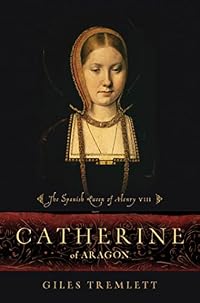
Catherine of Aragon: The Spanish Queen of Henry VIII
by Giles Tremlett
On This Page
Description
Tremlett delivers the first major biography in nearly half a century of the Spanish Queen of Henry VIII--the woman who changed the face of Tudor and European history.Tags
Recommendations








Member Reviews
This book may be unique in English-language historical literature; at least, I can't think of another like it. There are many, many books about Henry VIII, or the six wives of Henry VIII, or Anne Boleyn (Catherine of Aragon's successor/usurper), but I can't think of a single full-length biography of Catherine herself. Most of the books about Henry's wives act as if she only stepped onto the scene when Henry fell in love with Anne Boleyn. This covers her entire life, beginning with the background stories of her parents, in particular her mother, Isabella of Spain.
The author doesn't waste a lot of time in pointless speculation of "did she or didn't she?" regarding the consummation or otherwise of Catherine's marriage to Henry's brother show more Arthur; nor does he talk about Anne Boleyn any more than is necessary. Catherine steals the show here. You get to see her here as an intelligent, incredibly strong and tenacious woman in her own right, and you understand better why she acted as she did in opposing the divorce even to the bitter end. Contrary to some accounts, she was not poisoned to death; when they autopsied her body they found a tumor attached to her heart, which had turned black. She died of something very close to a broken heart.
This is a very valuable, downright necessary, addition to the canon of Tudor history. Well worth a read. show less
The author doesn't waste a lot of time in pointless speculation of "did she or didn't she?" regarding the consummation or otherwise of Catherine's marriage to Henry's brother show more Arthur; nor does he talk about Anne Boleyn any more than is necessary. Catherine steals the show here. You get to see her here as an intelligent, incredibly strong and tenacious woman in her own right, and you understand better why she acted as she did in opposing the divorce even to the bitter end. Contrary to some accounts, she was not poisoned to death; when they autopsied her body they found a tumor attached to her heart, which had turned black. She died of something very close to a broken heart.
This is a very valuable, downright necessary, addition to the canon of Tudor history. Well worth a read. show less
I really enjoyed this interpretation of the life of Catherine of Aragon. We get an insight into her childhood and how the influence of her parents was stamped upon her from an early age - and in the midst of Henry's "Great Matter" we see the re-emergence of this parental influence in her stubborness and her new found political acumen.
I found this to be not overly biased in Catherine's favour - we see her both at her best and her worst. We see how, like her own childhood, Catherine was an important influence on her daughter Mary.
I took my time reading this one - not because of the content but work constraints which made it a joy to return to.
Definitely a keeper in my opinion (though alas my copy must be returned to my local library).
I found this to be not overly biased in Catherine's favour - we see her both at her best and her worst. We see how, like her own childhood, Catherine was an important influence on her daughter Mary.
I took my time reading this one - not because of the content but work constraints which made it a joy to return to.
Definitely a keeper in my opinion (though alas my copy must be returned to my local library).
This is a very readable and absorbing book. I'm sure many of us believe we know the story so well but I found the background to Catherine's childhood especially interesting. I don't think I had previously realised that the Spanish court really knew how to have a good time! One's heart goes out to this young girl who leaves the glories and warmth of Moorish Granada for the grey castles and climate of England. As Tremlett states, it is very odd that she was not taught English, having been betrothed to Prince Arthur for so many years. Being quick-minded and intelligent, she eventually taught herself to speak and write the language. As it was, she was obliged to communicate in Latin or through an interpreter. There was clearly a true show more affection between her and Henry for some years and one cannot doubt her bravery in defying him, or her cleverness in manipulating him. She could not know that this courage she showed would result in nothing less than a social and religious revolution in England and Wales. She was fortunate in having similarly brave friends, one of whom, Maria de Salinas (Lady Willoughby), forced her way into Catherine's house to be at her deathbed. Having arrived in England at the age of 15, Catherine never saw her home country again. show less
It's hard to say much new about Henry VIII's first wife, but Giles Tremlett manages to do just that by bringing in the lesser know testimony of Catherine of Aragon's Spanish courtiers, particularly those who accompanied her on her journey from Spain to England and who later testified in a Spanish trial regarding the legitimacy of her marriage to Henry VIII. These sources adds new voices, if not much new information, to the discussion of Catherine and Henry's notorious divorce. Overall, this biography provided a solid life of Catherine and, being familiar with this time period, I appreciated that the author took the time to discuss Catherine's Spanish childhood and the middle years of Catherine's life, rather than skipping past those show more years to dwell on her divorce. Good reading for those interested in Catherine of Aragon. show less
I'm a Tudor history junkie. My mom started me on Jean Plaidy practically in the crib, and I've never looked back.
This is the first truly sympathetic, in depth portrait of Catherine that I've read. It was so interesting to read the other side of the glamorous, scandalous Great Matter of the King. Because Elisabeth I was so beloved and ruled so wisely and long, the world tends to focus on her doomed, tragic, pathetic mother, and Bloody Mary's mom gets relegated to the dowdy impediment to the birth of The Virgin Queen. This book sets about redressing that imbalance.
The Catherine who emerges from these pages is vital, committed, and entirely lovable. She's also smart and able, but outgunned in the end. There's a lot of familiar territory show more here just the same- hard to present it freshly. The writing is able but not stellar.
Highly recommended for Tudor history fans. show less
This is the first truly sympathetic, in depth portrait of Catherine that I've read. It was so interesting to read the other side of the glamorous, scandalous Great Matter of the King. Because Elisabeth I was so beloved and ruled so wisely and long, the world tends to focus on her doomed, tragic, pathetic mother, and Bloody Mary's mom gets relegated to the dowdy impediment to the birth of The Virgin Queen. This book sets about redressing that imbalance.
The Catherine who emerges from these pages is vital, committed, and entirely lovable. She's also smart and able, but outgunned in the end. There's a lot of familiar territory show more here just the same- hard to present it freshly. The writing is able but not stellar.
Highly recommended for Tudor history fans. show less
This is an excellent biography of Catherine of Aragon. Giles Tremlett has done a wonderful job in telling Catherine's story. Many biographers have written about Henry VIII's wives. They are among the most famous ex-wives in history.
Tremlett tells the story very fairly and objectively. Upon finishing the book, I found myself very pleased. This is a must read for anyone interested in Catherine of Aragon and Tudor history.
Tremlett tells the story very fairly and objectively. Upon finishing the book, I found myself very pleased. This is a must read for anyone interested in Catherine of Aragon and Tudor history.
Very readable non fiction about Henry VIII’s first queen. Lots of detail without boring you or bogging you down
Members
- Recently Added By
Lists

Top Five Books of 2013
1,564 works; 716 members

Books Read in 2015
3,298 works; 126 members

2026 Reading List
50 works; 1 member
Author Information

9 Works 1,521 Members
Common Knowledge
- Original publication date
- 2010
- People/Characters
- Catherine of Aragon; Henry VIII, King of England; Mary I, Queen of England; Eustace Chapuys; Anne Boleyn; Charles V, Holy Roman Emperor (show all 11); Ferdinand II of Aragon; Isabella I, Queen of Castile and León; Clement VII, Pope (Giulio de' Medici, 1478-1534); Thomas Wolsey; Arthur, Prince of Wales
- Epigraph
- The poetry of history lies in the quasi-miraculous fact that once, on this earth, once, on this familiar spot of ground, walked other men and women, as actual as we are today, thinking their own thoughts, swayed by their own ... (show all)passions, but now all gone, one generation vanishing into another, gone as utterly as we ourselves shall shortly be gone, like ghosts at cockcrow.
G. M. Trevalyan, An Autobiography and Other Essays, 1949 - Dedication
- For Edward and Berenice Tremlett, my parents
- First words
- Introduction
Zaragoza, the Cathedral
June 11, 1531
Salvador Felipe stood at the doors of the great cathedral in Zaragoza and began to read aloud. It was mid-June 1531, and the infernal summer heat that replaces the ... (show all)biting winter winds of Spain's central Ebro plain must have been settling in. The cathedral had been packed for Sunday morning Mass and Felipe should have had a good crowd when he raised his voice to name the king of England, Henry VIII. The English king, Felipe announced, was being summoned before a tribunal in the city. If he wanted to hear what others were saying about him, then Henry must appear at the cathedral cloisters on the following Wednesday. If the king did not wish to come himself, he could senda legal representative.¹ - Last words
- (Click to show. Warning: May contain spoilers.)Debate over Catherine's character and her place in history usually concentrates on the twin questions of whether she was really a virgin when she married Henry and whether England would have remained Roman Catholic had she chosen to go quietly into a convent. Chapuys reminds us, in his way, of another choice, the impact of which cannot be measured but that was possibly as important as any other she made. Given the chance of promoting war between England and the mighty empire of her nephew Charles in order to reestablish her marital rights, Catherine chose peace. Charles may have been unwilling, but Chapuys seemed convinced he could be pushed into it if Catherine encouraged her English supporters to rise against Henry. England's history might well have taken a radically different and far bloodier course had she opted for war.
Classifications
- Genres
- History, Nonfiction, Biography & Memoir, General Nonfiction
- DDC/MDS
- 942.052092 — History & geography History of Europe England and Wales England 1485-1603, Tudors Henry VIII 1509-47
- LCC
- DA333 .A6 .T74 — History of Europe, Asia, Africa and Oceania Great Britain History of Great Britain England History By period Modern, 1485- Tudors, 1485-1603
- BISAC
Statistics
- Members
- 415
- Popularity
- 74,205
- Reviews
- 12
- Rating
- (3.99)
- Languages
- English, French, Spanish
- Media
- Paper, Ebook
- ISBNs
- 8
- ASINs
- 5