
David Loades
Author of The Tudor Queens of England
About the Author
David Loades is Honorary Research Professor at the University of Leeds and Director of the British Academy John Foxe Project.
Works by David Loades
The Tudor Navy: An Administrative, Political and Military History (Studies in Naval History) (1992) 8 copies
End of Strife Papers Selected from the Proceedings of the Colloquium 1980: Papers Selected from the Proceedings of the C (1984) 5 copies
Associated Works
Tagged
Common Knowledge
- Birthdate
- 1934-01-19
- Gender
- male
- Occupations
- honorary research professor
- Organizations
- University of Sheffield
University of Wales (Chair of History) - Nationality
- UK
- Places of residence
- Cambridge, Cambridgeshire, England, UK
- Associated Place (for map)
- England, UK
Members
Reviews
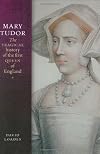
This is an excellent biography of Mary Tudor who reigned as Queen from July 1553 until her death in November 1558. During her reign she had over 280 religious dissenters burned at the stake as she attempted to reverse the protestant policies of her half brother Edward VI back to the old catholic religion. She earned the posthumous sobriquet as Bloody Mary, however David Loades gives us a rounded portrait of this troubled queen and woman. He makes no excuses for her religious zeal, but does a show more good job in explaining why she pursued the policies that looked like religious persecution from our standpoint today. He concentrates on the character and issues facing Mary herself who is the star of this book. There are some social commentaries and pen portraits of the people around the queen, certainly enough to make her story understandable and to demonstrate the pressures that she was under from a turbulent Tudor Court.
Loades reminds his readers that Mary was the first female English sovereign - a ruling queen who was not simply the consort of the king and so faced unique difficulties as a woman in a man’s world. She was 37 years old, unmarried and fiercely proud of her virginity when she became queen and had to face the immediate problem of the succession. She chose to marry the Spanish prince Philip: a staunchly catholic man who had no time or much inclination to get to know the issues facing an English monarch and who proved to be very unpopular with the English people. Mary kept it all together to a certain extant, but failure to produce an heir and the prospect of her protestant half sister Elizabeth next in line for the throne were difficulties that she could not overcome. David Loades ends his biography by saying that “It is time that England’s first queen was better appreciated” and if this means understanding the problems facing her and also appreciating a stubborn, dogmatic and at times indecisive character then Loades has done a very good job.
A very readable and easily digestible history book that uses both primary and secondary sources to provide an up to date (2006) summary of current knowledge on this catholic queen’s reign. A four star read. show less
Loades reminds his readers that Mary was the first female English sovereign - a ruling queen who was not simply the consort of the king and so faced unique difficulties as a woman in a man’s world. She was 37 years old, unmarried and fiercely proud of her virginity when she became queen and had to face the immediate problem of the succession. She chose to marry the Spanish prince Philip: a staunchly catholic man who had no time or much inclination to get to know the issues facing an English monarch and who proved to be very unpopular with the English people. Mary kept it all together to a certain extant, but failure to produce an heir and the prospect of her protestant half sister Elizabeth next in line for the throne were difficulties that she could not overcome. David Loades ends his biography by saying that “It is time that England’s first queen was better appreciated” and if this means understanding the problems facing her and also appreciating a stubborn, dogmatic and at times indecisive character then Loades has done a very good job.
A very readable and easily digestible history book that uses both primary and secondary sources to provide an up to date (2006) summary of current knowledge on this catholic queen’s reign. A four star read. show less
Exemplary royal biography, fair, well-written,and interestingly argued. Also pleasingly brief, at 220 pages - though no doubt it helps that Mary's reign was only five years long, and she died at the age of 42.
Loades' book is convincingly anchored in recent scholarship, and comes with interesting excerpts from primary source documents, as well as full "scholarly apparatus." Loades can also use Britishisms amusingly. My favorite example is when he is writing about the shrewd evasions of the show more then Princess Elizabeth as she "worked" Count Feria, King Philip's emissary at the Royal Court: "It must have been a difficult interview, because even by his own account she seems to have been playing him like a fish." show less
Loades' book is convincingly anchored in recent scholarship, and comes with interesting excerpts from primary source documents, as well as full "scholarly apparatus." Loades can also use Britishisms amusingly. My favorite example is when he is writing about the shrewd evasions of the show more then Princess Elizabeth as she "worked" Count Feria, King Philip's emissary at the Royal Court: "It must have been a difficult interview, because even by his own account she seems to have been playing him like a fish." show less
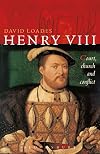
A brief but excellent study of Henry VIII's reign. Unlike many biographies of Henry VIII that I have encountered, Loades does not spend much time on the well-known story of Henry's six wives, but instead discusses the monarch's method of governance, laws, religious views, and politics. I feel that this work contributed more to my understanding of Henry VIII's actual rule and what it meant for the English people than the legions of material written about his wives. This is a great work for show more someone interested in learning more about Henry and his reign. show less
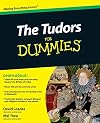
"The Tudors are in fashion". This is how the Introduction of the book starts and this is one of the keys of what to expect from the book. I had never read a book from the series before - and the reason to get this one is that I am interested in the Tudors - so when a new book is published, I usually will at least look into it.
The book surprised me in a good way - yes, it is an oversimplified history of the Tudors but it is not as watered down as I expected. It has its issues of course - some show more more serious than other but it is done by people that know the Tudors and care enough to try to actually tell the actual story - as strange and different from what almost anyone think it is it might be.
The good things
- The book is fairly objective and the history is simplified but true
- The reign of Jane Grey is not just skipped (as some history books tend to do
- All the major events from the Tudors reign are mentioned and/or explained
- 3 of the 4 Top Ten lists (the "What the Tudors did for us", "Tudor Buildings" and "Major Tudor Events") are quite interesting and informative (and even of someone else could have selected different ones, these tens are pretty well chosen and balanced).
- The style is highly readable
- Knowing their usual audience, the authors chose to draw their attention to the portrayals of the events in movies (but where is the Helen Mirren one - almost any other is mentioned but that one is just skipped (and it is my favorite one from all them -- the first part at least)?) and how they differ in places from the real story (or how they show it exactly)
- The book is thoroughly internally referenced - so if you read just the chapter you are interested in, you have the reference where to go for the term/person/event you just encountered and which is not explained in that chapter.
- The book uses the modern scholarship on the controversial events and people (which comes as no surprise considering that one of the authors is Loades).
The bad things:
- The history is so simplified in some places that without prior knowledge you can interpret some of the things wrongly - not any of the major events but a few times I actually needed to think a bit on what they said as it sounded a bit strange
- The ordering in some parts of the book is just awful. For example the chapter for the wives of Henry VIII is all ordered properly but the sidebars that carry the stories of each of them are all over the place
- The "kitchen sink" was funny the first few times. After that it became almost tedious (everything but the kitchen sink or everything and the kitchen sink). If it was not used that often, it would have been quite a nice expression...
- Gossips - the book is dealing pretty well with most of the events... and then out of the blue a rumor just get presented as a historical fact (Katherine of Aragon's life after being cast off from Henry for example).
- At least one of the sidebars did not make it into the book (about Ireland in the 16th century) ... but it got referred to at least once. Adding to this a few very notable misspellings and mistypings and this book really needed an additional reading before being sent for publishing.
- The 4th of the Top ten list (Tudor People) - Cecily Bodenham? Elizabeth Throckmorton? I really fail to see how most of the list is selected... They are interesting, I agree but they cannot be referred to Top Ten Tudor People..
One of the things that was just mentioned in passing were the two sisters of Henry VIII - they were part of the Tudors politics and considering the style of the book, both stories would have fitted right in.
If you cannot read a history book that uses modern language and expressions, just skip that one. It is written to be attractive to people that do not really know a lot about history and that will not sit down and read John Guy's Tudor England for example. And in this it succeeds.
4 stars for the book - and I hope that the book will make at least some of its reader want to read something more about the Tudors. show less
The book surprised me in a good way - yes, it is an oversimplified history of the Tudors but it is not as watered down as I expected. It has its issues of course - some show more more serious than other but it is done by people that know the Tudors and care enough to try to actually tell the actual story - as strange and different from what almost anyone think it is it might be.
The good things
- The book is fairly objective and the history is simplified but true
- The reign of Jane Grey is not just skipped (as some history books tend to do
- All the major events from the Tudors reign are mentioned and/or explained
- 3 of the 4 Top Ten lists (the "What the Tudors did for us", "Tudor Buildings" and "Major Tudor Events") are quite interesting and informative (and even of someone else could have selected different ones, these tens are pretty well chosen and balanced).
- The style is highly readable
- Knowing their usual audience, the authors chose to draw their attention to the portrayals of the events in movies (but where is the Helen Mirren one - almost any other is mentioned but that one is just skipped (and it is my favorite one from all them -- the first part at least)?) and how they differ in places from the real story (or how they show it exactly)
- The book is thoroughly internally referenced - so if you read just the chapter you are interested in, you have the reference where to go for the term/person/event you just encountered and which is not explained in that chapter.
- The book uses the modern scholarship on the controversial events and people (which comes as no surprise considering that one of the authors is Loades).
The bad things:
- The history is so simplified in some places that without prior knowledge you can interpret some of the things wrongly - not any of the major events but a few times I actually needed to think a bit on what they said as it sounded a bit strange
- The ordering in some parts of the book is just awful. For example the chapter for the wives of Henry VIII is all ordered properly but the sidebars that carry the stories of each of them are all over the place
- The "kitchen sink" was funny the first few times. After that it became almost tedious (everything but the kitchen sink or everything and the kitchen sink). If it was not used that often, it would have been quite a nice expression...
- Gossips - the book is dealing pretty well with most of the events... and then out of the blue a rumor just get presented as a historical fact (Katherine of Aragon's life after being cast off from Henry for example).
- At least one of the sidebars did not make it into the book (about Ireland in the 16th century) ... but it got referred to at least once. Adding to this a few very notable misspellings and mistypings and this book really needed an additional reading before being sent for publishing.
- The 4th of the Top ten list (Tudor People) - Cecily Bodenham? Elizabeth Throckmorton? I really fail to see how most of the list is selected... They are interesting, I agree but they cannot be referred to Top Ten Tudor People..
One of the things that was just mentioned in passing were the two sisters of Henry VIII - they were part of the Tudors politics and considering the style of the book, both stories would have fitted right in.
If you cannot read a history book that uses modern language and expressions, just skip that one. It is written to be attractive to people that do not really know a lot about history and that will not sit down and read John Guy's Tudor England for example. And in this it succeeds.
4 stars for the book - and I hope that the book will make at least some of its reader want to read something more about the Tudors. show less
Lists
Awards

You May Also Like


Associated Authors
Statistics
- Works
- 63
- Also by
- 1
- Members
- 1,354
- Popularity
- #18,990
- Rating
- 3.5
- Reviews
- 17
- ISBNs
- 162
- Languages
- 1
- Favorited
- 1