On This Page
Description
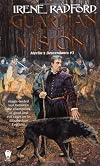
The glory of the Elizabethan Age is tarnished by the continuing religious conflict begun by Henry VIII. Griffin Kirkwood renounces his title, his lands, his love for the mysterious demon-ridden Roanna, and his magical heritage as a descendant of both King Arthur and the Merlin to become a Catholic priest in France. His twin, Donovan (his mirror image in face and form and rarely more than a thought away) shoulders the responsibilities willingly. He agrees to two arranged-marriages, one after show more the other, and takes on the outward appearance of whichever religion is dominant to protect all that he loves, but without magic, or the love of his life. Together and separately the twins must fight to guide Queen Elizabeth through the intricate maze of politics and religion. Their spiritual and magical journeys cross each other, oppose, and re-align as they battle internal demons and external threats. show lessTags
Recommendations

Member Reviews
This is the third book in a series of novels focusing on the mythical bloodline of Merlin. This story is set about 300 years after “Guardian of the Trust,†which places the story in the 16th century. The protagonist of this novel is mainly Griffin Kirkenwood, but he shares the limelight with his twin brother Donovan Kirkenwood. The historical facts of this installment focus on Queen Elizabeth's reign in England and the conflict with Mary Queen of Scots. By switching the protagonist to a male character, the story lost much of its appeal the prior two novels had held for me. Griffin and Donovan were not strong enough characters to make me want to read about them. In fact, this book has been dragging on for more than a month, I show more am unable to get into the storyline and I feel no affection for the brothers. I just keep praying the story will end soon, which is the main theme of the story. Griffin is on a spiritual journey to find his faith, he has become a catholic priest and has let his magic lay fallow, as a result chaos almost takes England. The premise of the story is interesting on its own but Radford just was unable to follow through. Overall this was a very tedious read, and I had to force myself to continue with the book to the end. show less
In this third installment of Irene Radford's series, the descendants of Merlin are a pair of male twins, possibly because the inheritance laws had changed to male-only lines of primogeniture in Elizabethan times. So there is a lot of movement from one part of England, Scotland, and France to another that would have been denied a female of the time (though Roanna does somehow manage to traverse these lands, but usually in disguise as a man). And the number of characters in this book is much reduced from those in her previous book, making the action much more clear.
In the time prior to Elizabeth's ascendance to the throne, her half-sister Mary is sickly, Mary's husband has brought the Inquisition to England, and the Catholic church holds show more sway. In northern England, near the Scottish border, twins Donovan and Griffin wrestle with their consciences (Griffin is a Catholic priest who has inherited the Kirkenwood magic) and frustrations (Donovan inherits the title and lands but no magic). All of this is against the backdrop of religious and royal conflicts, as well as Griffin's studies in France before becoming a spy of the Bishop.
Great historic research, good plotlines, characters who are believable and wrestle with their inner questioning. Oh, and the descendant of Nimue? Smart and resourceful and malevolent and cunning. And also all too human. show less
In the time prior to Elizabeth's ascendance to the throne, her half-sister Mary is sickly, Mary's husband has brought the Inquisition to England, and the Catholic church holds show more sway. In northern England, near the Scottish border, twins Donovan and Griffin wrestle with their consciences (Griffin is a Catholic priest who has inherited the Kirkenwood magic) and frustrations (Donovan inherits the title and lands but no magic). All of this is against the backdrop of religious and royal conflicts, as well as Griffin's studies in France before becoming a spy of the Bishop.
Great historic research, good plotlines, characters who are believable and wrestle with their inner questioning. Oh, and the descendant of Nimue? Smart and resourceful and malevolent and cunning. And also all too human. show less
[I] have fought with this book for over a month and am officially giving up on it, so this is the review of an unfinished book. It hurts my pride to have to do this: I can read anything....
I have tried to read Guardian; with all my heart i have tried. Each time, though, i have managed to struggle through a chapter or two then throw it aside...and turn to something else. Each time i have found myself thinking, or on one or two occasions saying out loud, “Blah blah blah!” which is as near as i come to the contempt the Greeks had for the meaningless language sounds of those they called “barbarians”. Nothing, in other words, seems to have any value or meaning here. Let me explain further.
First of all...there are the characters. I show more say “characters”, but i could just as easily have put “character”, because they are all slight variations on the same character, no difference in style, presentation, value, or charisma....
A second issue is the structure. Radford has chosen to tell her story from several different perspectives, from those of each of the three main characters; two of those use a third person narration, the third (first chronologically) uses first. Except when it doesn't. In one chapter i was reading the other day, the first person narration changes to third person from one paragraph to another; but the focus doesn't change, nor does anything else at all: It is as though Radford simply forgot which person she was using and got confused. Certainly not what i look for in a skilled author.
A third difficulty is that Radford has her history wrong....Perhaps the characters with the names of people from our history ~ Elizabeth Tudor, Marie Stuart, John Dee ~ aren't the same people, and the names are merely coincidence. Until i can be convinced of that, however, i struggle to understand why James Stewart, 1st Earl of Moray, is given that title and appears as Regent of Scotland within the action of the novel, years before either were true....
The next issue i have, and perhaps this one ought to have been first, as it is at least partially at the base of a couple of the others, is that Radford doesn't seem to have the knack of writing compelling prose. I may not have that knack myself, but i can recognise, by the effect it has on me...And this prose does not do that. It is, sadly not in the best sense of the word, prosaic: Dull, flat, uninteresting....
I notice...that i have actually written noting about the content at all, the subject or story of the novel. That was an accident, needing correction. It is an historical speculative fiction, wondering what would have happened had there been a family in England descended from Merlin, the Pendragons, whose primary family concern was to work with the powers of the land (monarchy and church, primarily) to prevent chaos from taking the country...[in] the time of Elizabeth I and Mary, Queen of Scots. There is trouble in the land, caused by the religious struggles, by the dynastic concerns of both Tudors and Stewarts, by a young Scottish witch who is in league with a demon...The Pendragon family has its own issues, of course, and how these are to be resolved must be the matter of the plot (i can only imagine, as i've been unable to finish it).
The whole review (i'm sorry, there's more) can be read at http://rhydypennau.blogspot.co.uk/2012/05/history-as-it-wasnt.html
UPDATED: Well, i have finally, months after i started it, managed to finish this book. A second review can also be found at my review blog: http://rhydypennau.blogspot.co.uk/2012/09/a-second-bite.html show less
I have tried to read Guardian; with all my heart i have tried. Each time, though, i have managed to struggle through a chapter or two then throw it aside...and turn to something else. Each time i have found myself thinking, or on one or two occasions saying out loud, “Blah blah blah!” which is as near as i come to the contempt the Greeks had for the meaningless language sounds of those they called “barbarians”. Nothing, in other words, seems to have any value or meaning here. Let me explain further.
First of all...there are the characters. I show more say “characters”, but i could just as easily have put “character”, because they are all slight variations on the same character, no difference in style, presentation, value, or charisma....
A second issue is the structure. Radford has chosen to tell her story from several different perspectives, from those of each of the three main characters; two of those use a third person narration, the third (first chronologically) uses first. Except when it doesn't. In one chapter i was reading the other day, the first person narration changes to third person from one paragraph to another; but the focus doesn't change, nor does anything else at all: It is as though Radford simply forgot which person she was using and got confused. Certainly not what i look for in a skilled author.
A third difficulty is that Radford has her history wrong....Perhaps the characters with the names of people from our history ~ Elizabeth Tudor, Marie Stuart, John Dee ~ aren't the same people, and the names are merely coincidence. Until i can be convinced of that, however, i struggle to understand why James Stewart, 1st Earl of Moray, is given that title and appears as Regent of Scotland within the action of the novel, years before either were true....
The next issue i have, and perhaps this one ought to have been first, as it is at least partially at the base of a couple of the others, is that Radford doesn't seem to have the knack of writing compelling prose. I may not have that knack myself, but i can recognise, by the effect it has on me...And this prose does not do that. It is, sadly not in the best sense of the word, prosaic: Dull, flat, uninteresting....
I notice...that i have actually written noting about the content at all, the subject or story of the novel. That was an accident, needing correction. It is an historical speculative fiction, wondering what would have happened had there been a family in England descended from Merlin, the Pendragons, whose primary family concern was to work with the powers of the land (monarchy and church, primarily) to prevent chaos from taking the country...[in] the time of Elizabeth I and Mary, Queen of Scots. There is trouble in the land, caused by the religious struggles, by the dynastic concerns of both Tudors and Stewarts, by a young Scottish witch who is in league with a demon...The Pendragon family has its own issues, of course, and how these are to be resolved must be the matter of the plot (i can only imagine, as i've been unable to finish it).
The whole review (i'm sorry, there's more) can be read at http://rhydypennau.blogspot.co.uk/2012/05/history-as-it-wasnt.html
UPDATED: Well, i have finally, months after i started it, managed to finish this book. A second review can also be found at my review blog: http://rhydypennau.blogspot.co.uk/2012/09/a-second-bite.html show less
 This review was written for LibraryThing Early Reviewers.
The story was strong with characters that you either loved or hated. I'll admit my favorite part of this book was the way Radford left you wondering about the Queens. They had their pros and cons and you weren't sure if you should like them or wish them usurped. I love Elizabeth I and Mary, Catherine de Medici is a new heroine that I'm learning about and it gives me a strange love for the 16th century. To see the author take the historical route on these amazing ladies versus a Hollywood-ized version makes me respect her work all the more. Even though it was a fantasy novel, the elements of history are there and the importance the author put on the events and people of that time shows her knowledge of the time period as well. This is show more why I love historical fiction. This story made me fall in love with the genre all over again. History is interpretive and the strength of the unknown gives authors such as Radford the creative license to put a new spin on an old tale.
A must read for the lovers of this genre, the lovers of Arthur and Merlin, the lovers of this time period, and most importantly a must read for anyone in between. show less
A must read for the lovers of this genre, the lovers of Arthur and Merlin, the lovers of this time period, and most importantly a must read for anyone in between. show less
This review was written for LibraryThing Early Reviewers.This review was written for LibraryThing Early Reviewers.
I had read this book (and the rest of the series) several years ago, but had never written reviews. Since the series is being re-released in e-book format, I thought it was time to give it another go and actually write reviews. So far, I have not been disappointed.
One of the things I remember liking best about this series the first time I read it is that you don't have to have read the earlier books to enjoy the later ones. While it certainly helps and adds dimension to the story, the books are set far enough apart from each other in time that the details of earlier stories are less important than the broad outlines. Those are included by the author as discoveries made by the show more characters (either as tales handed down the generations or as accounts written by those who experienced the events). This is a handy thing for the reader who is unable to read the entire series, but it doesn't overly detract for the reader who is able to read the series in order without breaks.
Ms. Radford's research into history is quite apparent. While some may be unhappy with the way certain characters have been changed, it is necessary when writing fiction based on historical events unless your writing is intended for amateur or professional historians. Otherwise it's too confusing for the many readers who don't know or care when/how someone's title changed from this to that to this other thing during the time-span of the story. Also, Ms. Radford's style echoes the way people actually wrote and spoke during the period and yet a modern audience will easily understand without every detail having to be "translated" or explained.
I personally felt that Ms. Radford found a very neat method of dealing with the competing queens: Mary of Scots and Elizabeth I of England (and to a lesser extent, Marie de Guise, in Scotland, and Catherine de Medici, in France). The queens are simply supporting characters, and we the readers get a much more nuanced view of these strong personalities through the people around them. The actions of the queens (and other well-known historical figures) often inform the actions of our main characters, driving the action just as it did during the actual period.
For this particular entry in the series, the main characters are the twins Griffin and Donovan, descendants of Merlin, and Roanna, a descendant of Nimue (a step-daughter of Merlin's daughter Wren from the first book, and more often known as Ninian or Viviane in the Arthurian tales). As the plot synopsis is easily available elsewhere, I won't go into it, but as fans of Ms. Radford's work will expect, we see the characters' mistakes and triumphs as they struggle with the realities of life during this period of time with all of its social, political, and religious upheavals. And, of course, the magic is interwoven in a way that fits quite nicely, neither overpowering the more mundane details nor getting lost in them. show less
I had read this book (and the rest of the series) several years ago, but had never written reviews. Since the series is being re-released in e-book format, I thought it was time to give it another go and actually write reviews. So far, I have not been disappointed.
One of the things I remember liking best about this series the first time I read it is that you don't have to have read the earlier books to enjoy the later ones. While it certainly helps and adds dimension to the story, the books are set far enough apart from each other in time that the details of earlier stories are less important than the broad outlines. Those are included by the author as discoveries made by the show more characters (either as tales handed down the generations or as accounts written by those who experienced the events). This is a handy thing for the reader who is unable to read the entire series, but it doesn't overly detract for the reader who is able to read the series in order without breaks.
Ms. Radford's research into history is quite apparent. While some may be unhappy with the way certain characters have been changed, it is necessary when writing fiction based on historical events unless your writing is intended for amateur or professional historians. Otherwise it's too confusing for the many readers who don't know or care when/how someone's title changed from this to that to this other thing during the time-span of the story. Also, Ms. Radford's style echoes the way people actually wrote and spoke during the period and yet a modern audience will easily understand without every detail having to be "translated" or explained.
I personally felt that Ms. Radford found a very neat method of dealing with the competing queens: Mary of Scots and Elizabeth I of England (and to a lesser extent, Marie de Guise, in Scotland, and Catherine de Medici, in France). The queens are simply supporting characters, and we the readers get a much more nuanced view of these strong personalities through the people around them. The actions of the queens (and other well-known historical figures) often inform the actions of our main characters, driving the action just as it did during the actual period.
For this particular entry in the series, the main characters are the twins Griffin and Donovan, descendants of Merlin, and Roanna, a descendant of Nimue (a step-daughter of Merlin's daughter Wren from the first book, and more often known as Ninian or Viviane in the Arthurian tales). As the plot synopsis is easily available elsewhere, I won't go into it, but as fans of Ms. Radford's work will expect, we see the characters' mistakes and triumphs as they struggle with the realities of life during this period of time with all of its social, political, and religious upheavals. And, of course, the magic is interwoven in a way that fits quite nicely, neither overpowering the more mundane details nor getting lost in them. show less
This review was written for LibraryThing Early Reviewers.This is a story mainly about Griffin, though it does switch viewpoints. He is a descendant of Merlin and is studying to be the next Pendragon, a person who looks over the well-being of Britain. However, he goes against his family's wishes and goes away from his home to become a Catholic priest. When Elizabeth I takes the throne and Mary Stuart makes plans to take the English throne for herself, Griffin sees that he must reconcile his beliefs of faith and his need to stop Tryblith, the Demon of Chaos, who wants to start war in Britain.
The main complaint I have with this book is that it relies heavily on stereotypes. There is nothing exciting or surprising about the characters. Griffin is a devoted priest who worries constantly about show more being damned, Roanna is the seductress harboring (and being tricked by) a demon, the old characters are generally wise, the high-ranking characters are generally manipulative and power-hungry. It is all black and white with these characters, which I didn't especially like. There were also times in the plot where things happen just a little too conveniently. It was ridiculously easy for Roanna to work her way up to become the adviser of high-ranking nobles, as it was for Griffin to find Queen Elizabeth I's illegitimate child. (She put a note in her own hand by her son's birthing record. I'm so sure a queen intent on hiding a child would slip up like that.) In short, there were some serious believability issues.
Despite that, I actually did enjoy reading this story. It was surprisingly easy to follow, even though it's the third in the series and I haven't read the other two. It easily could have been a stand-alone. And I like Radford's take on the Merlin story. The history is well-researched and so well integrated with the mythology, that I felt like I was reading a long-established myth instead of Radford's version of the Merlin/King Arthur story. There is a good deal of action and intrigue and I was kept interested in the story, even if I felt annoyed by the writing style. I think fans of fantasy and especially of Arthurian legends will enjoy Guardian of the Vision.
*I received a free copy of this book from LibraryThing's Early Reviewers program in exchange for an honest review.* show less
The main complaint I have with this book is that it relies heavily on stereotypes. There is nothing exciting or surprising about the characters. Griffin is a devoted priest who worries constantly about show more being damned, Roanna is the seductress harboring (and being tricked by) a demon, the old characters are generally wise, the high-ranking characters are generally manipulative and power-hungry. It is all black and white with these characters, which I didn't especially like. There were also times in the plot where things happen just a little too conveniently. It was ridiculously easy for Roanna to work her way up to become the adviser of high-ranking nobles, as it was for Griffin to find Queen Elizabeth I's illegitimate child. (She put a note in her own hand by her son's birthing record. I'm so sure a queen intent on hiding a child would slip up like that.) In short, there were some serious believability issues.
Despite that, I actually did enjoy reading this story. It was surprisingly easy to follow, even though it's the third in the series and I haven't read the other two. It easily could have been a stand-alone. And I like Radford's take on the Merlin story. The history is well-researched and so well integrated with the mythology, that I felt like I was reading a long-established myth instead of Radford's version of the Merlin/King Arthur story. There is a good deal of action and intrigue and I was kept interested in the story, even if I felt annoyed by the writing style. I think fans of fantasy and especially of Arthurian legends will enjoy Guardian of the Vision.
*I received a free copy of this book from LibraryThing's Early Reviewers program in exchange for an honest review.* show less
This review was written for LibraryThing Early Reviewers.When I started "Guardian of Vision", I was expecting a fantasy novel. Much to my surprised pleasure, I got was an historical fiction with fantasy tendacies. As much as I love historical movies, I don't find myself reading much historical fiction. If most historical novelists write like Irene Radford, I am going to have to remedy that situation.
I thoroughly enjoyed Irene's style of writing and the characters she developed. Despite a few instances where the characters seemed to be something innapropriate to their development, their actions, thoughts and decisions expressed in the story created interesting, multidimensional characters that were relatively easy to identify with.
Being a fantasy fan, I also really enjoyed the connection to show more Arthur and Merlin and how the story was integrated into the factual based story of that historical period.
One last thing, although this is volume 3 in a series, it was complete story in and of itself not requiring the reader to know the previous volumes. I can imagine that remains true for each book.
I look forward to reading the rest of the series. show less
I thoroughly enjoyed Irene's style of writing and the characters she developed. Despite a few instances where the characters seemed to be something innapropriate to their development, their actions, thoughts and decisions expressed in the story created interesting, multidimensional characters that were relatively easy to identify with.
Being a fantasy fan, I also really enjoyed the connection to show more Arthur and Merlin and how the story was integrated into the factual based story of that historical period.
One last thing, although this is volume 3 in a series, it was complete story in and of itself not requiring the reader to know the previous volumes. I can imagine that remains true for each book.
I look forward to reading the rest of the series. show less
This review was written for LibraryThing Early Reviewers.Members
- Recently Added By
Talk Discussions
Past Discussions
(M35) Guardian of the Vision, Irene Radford in World Reading Circle (August 2013)
Author Information

68+ Works 4,429 Members
Series

Belongs to Publisher Series
DAW Book Collectors (1183)
Common Knowledge
- Canonical title
- Guardian of the Vision
- Original publication date
- 2002
- Important places
- England, UK
- Dedication
- In Memory of Michael Gilbert July 20, 1947-August 14, 2000
- First words
- I turned my face into the rising wind. My hair whipped away from my eyes.
- Last words
- (Click to show. Warning: May contain spoilers.)A band of Gypsies joined us, singing their mournful songs, guiding Griffin into the arms of whichever God awaited him.
Classifications
Statistics
- Members
- 160
- Popularity
- 204,001
- Reviews
- 28
- Rating
- (3.45)
- Languages
- English, French
- Media
- Paper, Ebook
- ISBNs
- 4
- ASINs
- 3