On This Page
Description
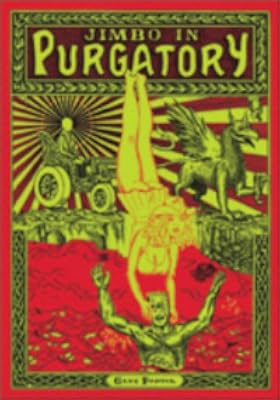
"Don't try to pass a pop quiz on Dante's Hell based on a reading of this comic," warns Gary Panter. "It won't work. Even though the comic is engorged with Dante's Hell and though Jimbo mouths a super-condensed versioTags
Recommendations












Member Reviews
Gary Panter came to prominence in the heyday of the punk movement. His style is dense, jagged, and darkly humorous. In the Eighties Panter created the sets for Pee Wee’s Playhouse (1986 – 1990, CBS), providing a surreal and anarchic take on tacky postwar pop culture. Panter also worked with Art Spiegelman in the seminal comix magazine RAW (1980 – 1991). Under the creative direction of Spiegelman, RAW offered a venue for avant-garde, international, and underground cartoonists and visual artists. The decade saw the emergence of comix as legitimate visual art. (The more mainstream comics owned and published in DC, Marvel, Dark Horse, etc. being considered “art” is a separate but interrelated debate.) Gary Panter’s cover for Raw show more Volume 2, No. 1 (the issue subtitled “Open Wounds from the Cutting Edge of Comix. ”) reduces the Ernie Bushmiller character to a Picasso-esque smudge.
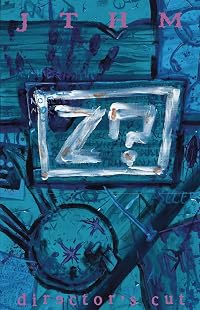
Panter has taken a different track than his fellow artists with Jimbo’s Inferno and Jimbo in Purgatory. While Spiegelman tackled his inner demons and the legacy of the Shoah in the award-winning autobiographical Maus I & II, Chris Ware dealt with the interior life in the austerely drawn Jimmy Corrigan: the Smartest Kid on Earth. Panter goes in the opposite, using the ubiquitous Jimbo to travel to the depths of hell and the terraces of Purgatory. Jimbo resembles Bart Simpson with his spiky hair and snarky naïveté.
True to his punk heritage, Panter chooses a mall as the location of the Inferno. “Don’t try to pass a pop quiz on Dante’s hell based on a reading of this comic: it won’t work,” says Panter in the opening passage. “[C]anto by canto, characters are fused, action inverted, parodied, subject to mutation by my odd memories and obsessions and my odd whims, sentences are clipped.” Instead of Vergil, Jimbo travels with Valise, his parole robot.
During his journey, Jimbo encounters drug addicts, monsters, robots, traffic jams, and space aliens. Instead of the Western Canon that Dante “sampled,” Panter uses the grammar of pop culture. And at the end of the volume, Panter lists “thirty-three best loved vinyl recordings” (the Inferno had thirty-three cantos).
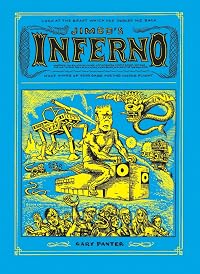
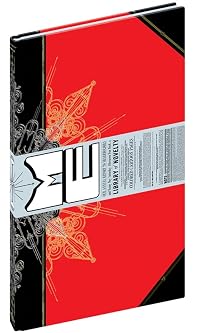
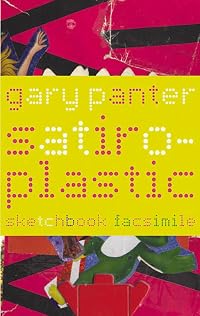
Fantagraphics has produced a lavish volume with huge pages and a gilt cover that oddly reminiscent of Gustav Klimt (if Klimt was in a Los Angeles punk band).
This review is part of a blog post examining how different artists depict Hell:
http://driftlessareareview.wordpress.com/2010/11/14/critical-appraisal-the-lands... show less
Panter has taken a different track than his fellow artists with Jimbo’s Inferno and Jimbo in Purgatory. While Spiegelman tackled his inner demons and the legacy of the Shoah in the award-winning autobiographical Maus I & II, Chris Ware dealt with the interior life in the austerely drawn Jimmy Corrigan: the Smartest Kid on Earth. Panter goes in the opposite, using the ubiquitous Jimbo to travel to the depths of hell and the terraces of Purgatory. Jimbo resembles Bart Simpson with his spiky hair and snarky naïveté.
True to his punk heritage, Panter chooses a mall as the location of the Inferno. “Don’t try to pass a pop quiz on Dante’s hell based on a reading of this comic: it won’t work,” says Panter in the opening passage. “[C]anto by canto, characters are fused, action inverted, parodied, subject to mutation by my odd memories and obsessions and my odd whims, sentences are clipped.” Instead of Vergil, Jimbo travels with Valise, his parole robot.
During his journey, Jimbo encounters drug addicts, monsters, robots, traffic jams, and space aliens. Instead of the Western Canon that Dante “sampled,” Panter uses the grammar of pop culture. And at the end of the volume, Panter lists “thirty-three best loved vinyl recordings” (the Inferno had thirty-three cantos).
Fantagraphics has produced a lavish volume with huge pages and a gilt cover that oddly reminiscent of Gustav Klimt (if Klimt was in a Los Angeles punk band).
This review is part of a blog post examining how different artists depict Hell:
http://driftlessareareview.wordpress.com/2010/11/14/critical-appraisal-the-lands... show less
Ratings
Members
- Recently Added By
Lists

The Hermenautic Bookshelf
111 works; 7 members

Bull Tongue
319 works; 2 members
Author Information

37+ Works 412 Members
Awards and Honors
Awards
Series

Classifications
- Genres
- Graphic Novels & Comics, Nonfiction
- DDC/MDS
- 741.5 — Arts & recreation Drawing & decorative arts Drawing Comic books, graphic novels, fotonovelas, cartoons, caricatures, comic strips
- LCC
- PN6727 .P36 — Language and Literature Literature (General) Literature (General) Collections of general literature Comic books, strips, etc.
- BISAC
Statistics
- Members
- 51
- Popularity
- 593,961
- Reviews
- 1
- Rating
- (4.07)
- Languages
- English
- Media
- Paper, Ebook
- ISBNs
- 1
- ASINs
- 1