
Craig Thompson (1) (1975–)
Author of Blankets
For other authors named Craig Thompson, see the disambiguation page.
About the Author
Image credit: Craig Thompson at Portland's Mount Tabor park, 2007 By Joshin Yamada - Flickr, CC BY 2.0, https://commons.wikimedia.org/w/index.php?curid=3604663
Series
Works by Craig Thompson
Ginseng Roots #02 2 copies
Ginseng Root. Vol. 1 1 copy
Ginseng Root. Vol. 2 1 copy
Ginseng Roots #08 1 copy
Ginseng Roots #11 1 copy
Ginseng Roots #10 1 copy
Ginseng Roots #09 1 copy
Ginseng Roots #07 1 copy
Ginseng Roots #06 1 copy
Ginseng Roots #05 1 copy
Ginseng Roots #04 1 copy
Ginseng Roots #03 1 copy
Bible Doodles 1 copy
Ginseng Root. Vol. 3 1 copy
Associated Works
Fairy Tale Comics: Classic Tales Told by Extraordinary Cartoonists (2013) — Contributor — 345 copies, 31 reviews
Nursery Rhyme Comics: 50 Timeless Rhymes from 50 Celebrated Cartoonists (2011) — Illustrator — 227 copies, 27 reviews
Every Man for Himself: Ten Original Stories About Being a Guy (2005) — Contributor — 102 copies, 7 reviews
Help the CBLDF Defend Comics (Free Comic Book Day 2016) — Cover artist — 1 copy
Corriere della Sera - Sette: Sei fumetti per l'estate - 5 Agosto 2010 — Author — 1 copy
Nick Mag Presents: The Best of Nickelodeon Magazine - Special All-Comics Issue! (2005) — Contributor — 1 copy
Tagged
Common Knowledge
- Legal name
- Thompson, Craig Matthew
- Birthdate
- 1975-09-21
- Gender
- male
- Education
- University of Wisconsin-Marathon County
Milwaukee Institute of Art & Design - Occupations
- graphic novelist
- Awards and honors
- Harvey Award (Best New Talent, 2000)
Eisner Award (Best Graphic Album-New, 2004)
Eisner Award (Best Writer/Artist, 2004)
Harvey Award (Best Artist, 2004)
Harvey Award (Best Cartoonist, 2004)
Harvey Award (Best Graphic Album of Original Work, 2004) (show all 8)
Ignatz Award (Outstanding Graphic Novel or Collection, 2004)
Ignatz Award (Outstanding Artist, 2004) - Nationality
- USA
- Birthplace
- Traverse City, Michigan, USA
- Places of residence
- Traverse City, Michigan, USA
Portland, Oregon, USA - Associated Place (for map)
- USA
Members
Reviews
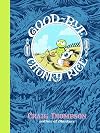
This short graphic novel is surprisingly sweet, poignant, and sad... all at the same time. There are themes of child abuse, love, loneliness, friendship, all tied together by a restless turtle who needs to leave his small town and the love of his life.
Where this book shines is its sparse story - while it is emotionally complete, the reader fills in the back story, interpreting it through their own experiences. It takes a very skilled author/illustrator to do this.
There are difficult scenes - show more for example, getting rid of unwanted puppies, or being left behind by older siblings. It is very heartbreaking at some points - but it is also joyful. Just as the story is at its lowest, hope is added, emphasizing that life is life, and there is always a bright spot.
If you read "Blankets" by the same author, this story has a number of themes that reappear in the later graphic novel. It feels like Craig Thompson was using this book as a template for the later volume, but in a fantasy world setting, rather than the semi-autobiographical story that was written later.
Highly recommended. show less
Where this book shines is its sparse story - while it is emotionally complete, the reader fills in the back story, interpreting it through their own experiences. It takes a very skilled author/illustrator to do this.
There are difficult scenes - show more for example, getting rid of unwanted puppies, or being left behind by older siblings. It is very heartbreaking at some points - but it is also joyful. Just as the story is at its lowest, hope is added, emphasizing that life is life, and there is always a bright spot.
If you read "Blankets" by the same author, this story has a number of themes that reappear in the later graphic novel. It feels like Craig Thompson was using this book as a template for the later volume, but in a fantasy world setting, rather than the semi-autobiographical story that was written later.
Highly recommended. show less
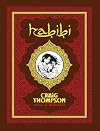
Book Review - Habibi (Graphic Novel) by Craig Thompson
Habibi (Graphic Novel)
Black and white
Craig Thompson
Hardcover
Publisher: Pantheon
Publication Date: First Edition - September 20, 2011
ISBN-13: 978-0375424144
672 pages
Habibi (“my beloved” in Arabic) by Craig Thompson is an incredibly moving story of love, loss and redemption that blankets almost every emotion in the human grab bag. It’s also a beautifully detailed piece of graphic art with what I can only assume began with a show more great deal of research and countless hours of design. It is erotic, brutal, sad, joyous, dark, evil, sinister, mature, compassionate, and alive with real, sympathetic human beings. The layout, calligraphy, and complex artwork are, in my opinion, absolutely gorgeous; the work of genius. Every page reveals just how brilliant a graphic artist Craig Thompson is. Each panel is aesthetically pleasing to the eye (usually in more than one aspect – i.e. numerology, characters, religion, borders, language, etc.) and is filled with intricate, arabesque-like decorations that demand your full attention. Because of this, Habibi is not a page turning graphic novel that causes you to flip through quickly to see how it all ends (though you definitely want to.) Instead, the artwork is so engaging, detailed, and stunning that it forces you to take your time studying each page for the aesthetics and to capture all the vital pieces of the visual story. There is magic and craft between the covers of Habibi – both written and drawn. There is spirituality and faith and philosophy. There is cruelty, eroticism, butchery, and death but there’s also love, hope, and beauty and that’s where Mr. Thompson excels. While unconventional by anyone’s standards the love story in Habibi is, nevertheless, touching yet always comes with a price. And while comfort and warmth lie just out of reach emotional distress and heart-ache fill the lives of every character in the story (as it does in life.) Erotic, paternal, and platonic the love story grabs you from the shocking opening lines and than holds you at arms length throughout. It is elusive but not frustratingly so to the reader. Thompson certainly understands how to draw his readers in (and keep their attention) both visually and emotionally.
Habibi is a pre-apocalyptic story depicting the slow demise of the planet earth and tells the tragic story of Dodola and Zam, child slaves bound to each other by chance, as they are caught up in the cruelties of a world on the brink of destruction. Pollution is at its all-time worst, water is a rare and expensive commodity, and the world seems to understand that its days are numbered. The characters too seem to act and react as if they are fully aware that the end is near. As the world decays we witness two souls searching to fit in and find love as they move slowly towards each other through the worst of circumstances, only to become separated, and then to find each other once again. Dodola and Zam’s transformation between separations, brought on by the circumstances of an increasingly cruel world, serves to enlighten the reader about the distress of emotional suffering, the chasm between the first and third worlds and their religions, and the redemption found in hope and love.
File with: Love story, Eastern philosophy, religion, graphic design, art, Scheherazade, and the human condition.
5 out of 5 stars
The Alternative
Southeast Wisconsin show less
Habibi (Graphic Novel)
Black and white
Craig Thompson
Hardcover
Publisher: Pantheon
Publication Date: First Edition - September 20, 2011
ISBN-13: 978-0375424144
672 pages
Habibi (“my beloved” in Arabic) by Craig Thompson is an incredibly moving story of love, loss and redemption that blankets almost every emotion in the human grab bag. It’s also a beautifully detailed piece of graphic art with what I can only assume began with a show more great deal of research and countless hours of design. It is erotic, brutal, sad, joyous, dark, evil, sinister, mature, compassionate, and alive with real, sympathetic human beings. The layout, calligraphy, and complex artwork are, in my opinion, absolutely gorgeous; the work of genius. Every page reveals just how brilliant a graphic artist Craig Thompson is. Each panel is aesthetically pleasing to the eye (usually in more than one aspect – i.e. numerology, characters, religion, borders, language, etc.) and is filled with intricate, arabesque-like decorations that demand your full attention. Because of this, Habibi is not a page turning graphic novel that causes you to flip through quickly to see how it all ends (though you definitely want to.) Instead, the artwork is so engaging, detailed, and stunning that it forces you to take your time studying each page for the aesthetics and to capture all the vital pieces of the visual story. There is magic and craft between the covers of Habibi – both written and drawn. There is spirituality and faith and philosophy. There is cruelty, eroticism, butchery, and death but there’s also love, hope, and beauty and that’s where Mr. Thompson excels. While unconventional by anyone’s standards the love story in Habibi is, nevertheless, touching yet always comes with a price. And while comfort and warmth lie just out of reach emotional distress and heart-ache fill the lives of every character in the story (as it does in life.) Erotic, paternal, and platonic the love story grabs you from the shocking opening lines and than holds you at arms length throughout. It is elusive but not frustratingly so to the reader. Thompson certainly understands how to draw his readers in (and keep their attention) both visually and emotionally.
Habibi is a pre-apocalyptic story depicting the slow demise of the planet earth and tells the tragic story of Dodola and Zam, child slaves bound to each other by chance, as they are caught up in the cruelties of a world on the brink of destruction. Pollution is at its all-time worst, water is a rare and expensive commodity, and the world seems to understand that its days are numbered. The characters too seem to act and react as if they are fully aware that the end is near. As the world decays we witness two souls searching to fit in and find love as they move slowly towards each other through the worst of circumstances, only to become separated, and then to find each other once again. Dodola and Zam’s transformation between separations, brought on by the circumstances of an increasingly cruel world, serves to enlighten the reader about the distress of emotional suffering, the chasm between the first and third worlds and their religions, and the redemption found in hope and love.
File with: Love story, Eastern philosophy, religion, graphic design, art, Scheherazade, and the human condition.
5 out of 5 stars
The Alternative
Southeast Wisconsin show less
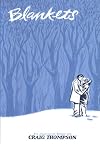
Blankets was banned in all Utah public K-12 schools in August, 2024. I feel so strongly about intellectual freedom that I'm going to share some very personal insights. Warning: tough topics ahead.
'Not everything that is faced can be changed, but nothing can be changed until it is faced.'
- James Baldwin, As Much Truth As One Can Bear
Growing up male, straight, white, middle-class, and as a member of Utah's predominant faith, I had many privileges. But during my late teen years in the late show more 1990s, conflict erupted in my home, where I was the oldest of five kids. Amidst a miasma of mental illness, grief, abuse, and distrust, I often clashed with my parents about religion and values. Not everything about my life was awful, and I found solace in music, girlfriends, and libraries, but the toxic environment was bad enough that it eventually led to me being a homeless, nearly friendless, suicidal school dropout within six months of turning eighteen.
Unbeknownst to me, around that same time, a young artist named Craig Thompson was processing his painful rural midwest adolescence into a new graphic novel. As he was finishing the book, I was beginning to heal after marrying my smart, patient, and strong partner, Amy. I got my first library job, we started having kids, and I went back to school. Blankets was published in 2003, earning acclaim and a bunch of awards and I read it in 2012, after it was recommended by my good friend, Shawn.
Seeing something like my own experience portrayed in such a beautiful and moving way between the covers of a book was at first overwhelming and then profoundly comforting. I was reminded of the positive potency of creative expression, and visual storytelling in particular. I learned that Thompson went through a lot and yet survived to make a constructive contribution to society. Most importantly, I understood that I was not alone in my experiences, and that fact gave me power and empathy. I wish Blankets had been available for me to read as a teenager.
Of course, the story of my teen years is not unique. Perhaps you experienced something similar. From everything I know, teens in my community are experiencing it right now. But without Blankets and other such stories on their high school library's shelves, that same source of power and empathy isn't available to those teens unless they somehow know to seek it elsewhere (I hope they find this review and then find Blankets another way).
Life-long learning and exploring the reality of our world are core values for me. Truthfully, that's what led me to non-fiction librarianship and Humanism. I'm upset that some people are seeking to infantilise anyone who's not an adult by banning books that include human experiences that make them personally uncomfortable. In my opinion, restricting professional educators and librarians to presenting an overly sanitised/idealised/ultimately untruthful view of life and then hoping minors will be prepared on their high school graduation day or their eighteenth birthday to handle the real adult world is a foolhardy plan. All kids should have the opportunity to access developmentally-appropriate literature/news/art/research/instruction/conversations that can, step by step, help them place their experiences into context and prepare them for the future. No system will ever be perfect, but I believe this is a noble goal to try for. That's one of the main reasons we have public schools and public libraries.
It's been twelve years and Blankets is still yielding power and empathy to me and many others. Let's #UniteAgainstBookBans and #LetUtahRead.
- September, 2024 show less
'Not everything that is faced can be changed, but nothing can be changed until it is faced.'
- James Baldwin, As Much Truth As One Can Bear
Growing up male, straight, white, middle-class, and as a member of Utah's predominant faith, I had many privileges. But during my late teen years in the late show more 1990s, conflict erupted in my home, where I was the oldest of five kids. Amidst a miasma of mental illness, grief, abuse, and distrust, I often clashed with my parents about religion and values. Not everything about my life was awful, and I found solace in music, girlfriends, and libraries, but the toxic environment was bad enough that it eventually led to me being a homeless, nearly friendless, suicidal school dropout within six months of turning eighteen.
Unbeknownst to me, around that same time, a young artist named Craig Thompson was processing his painful rural midwest adolescence into a new graphic novel. As he was finishing the book, I was beginning to heal after marrying my smart, patient, and strong partner, Amy. I got my first library job, we started having kids, and I went back to school. Blankets was published in 2003, earning acclaim and a bunch of awards and I read it in 2012, after it was recommended by my good friend, Shawn.
Seeing something like my own experience portrayed in such a beautiful and moving way between the covers of a book was at first overwhelming and then profoundly comforting. I was reminded of the positive potency of creative expression, and visual storytelling in particular. I learned that Thompson went through a lot and yet survived to make a constructive contribution to society. Most importantly, I understood that I was not alone in my experiences, and that fact gave me power and empathy. I wish Blankets had been available for me to read as a teenager.
Of course, the story of my teen years is not unique. Perhaps you experienced something similar. From everything I know, teens in my community are experiencing it right now. But without Blankets and other such stories on their high school library's shelves, that same source of power and empathy isn't available to those teens unless they somehow know to seek it elsewhere (I hope they find this review and then find Blankets another way).
Life-long learning and exploring the reality of our world are core values for me. Truthfully, that's what led me to non-fiction librarianship and Humanism. I'm upset that some people are seeking to infantilise anyone who's not an adult by banning books that include human experiences that make them personally uncomfortable. In my opinion, restricting professional educators and librarians to presenting an overly sanitised/idealised/ultimately untruthful view of life and then hoping minors will be prepared on their high school graduation day or their eighteenth birthday to handle the real adult world is a foolhardy plan. All kids should have the opportunity to access developmentally-appropriate literature/news/art/research/instruction/conversations that can, step by step, help them place their experiences into context and prepare them for the future. No system will ever be perfect, but I believe this is a noble goal to try for. That's one of the main reasons we have public schools and public libraries.
It's been twelve years and Blankets is still yielding power and empathy to me and many others. Let's #UniteAgainstBookBans and #LetUtahRead.
- September, 2024 show less

First, a somewhat shaming confession: when I was a kid, I would deliberately make friends with kids whose parents would spring for comic books. I was a big reader anyway, anything from "Little Women" to the back of the Cap'n Crunch box, but I was a truly impassioned comic books fan. So the graphic novel format is already close to my heart,.
"Blankets" is Craig Thompson's memoir of his childhood in an intensely religious, rigidly fundamentalist home. Wedged between his family and community's show more punitive, authoritarian God and his own compelling need to draw and write, young Craig is a loner and a misfit who wants desperately to find a way to please God while maintaining some vestige of inner integrity. Some of this is painful to read - Thompson is very, very good at drawing emotional turmoil, and the first episode of this novel was so heart-wrenching that I wasn't sure I could continue reading.
But then, oh then, in his senior year of high school, he meets Raina at "church camp."
And that is where "Blankets" moves from being an interesting memoir to being the most moving story of first love that I have ever read. Thompson has a true artist's gift for total recall, and he has not forgotten one beat of his heart from that year: his drawings of his two weeks at Raina's house seem to actually shimmer with passion. Wielding the graphic novel format with the skill of a master, Thompson never has to use more that the simplest prose to convey sweeping, transcendent emotion. Craig's love for Raina is his first genuine experience of the divine - the experience he so longed for, and never found, in church - and he is able to convey this with absolute simplicity and overwhelming tenderness.
I love memoirs, but my one objection to them has always been that I sometimes cringe when I imagine what the publication of the memoir did to the relationships of the author with his significant others. ( I once heard an author say that when you lived with a writer, you always knew there was an assassin in the family.) So kudos to Thompson for respecting the privacy of both family and friends, while penning a memoir so nakedly open that one is shaken at the end by how much he revealed of his inner life. And more than kudos to Thompson for using his beautiful drawings so brilliantly, often conveying in a single panel what could not have been expressed in a thousand words. The two panels in which his parents express their deep pride in their grown son, while remaining utterly oblivious to the man he really is, are truly impressive. show less
"Blankets" is Craig Thompson's memoir of his childhood in an intensely religious, rigidly fundamentalist home. Wedged between his family and community's show more punitive, authoritarian God and his own compelling need to draw and write, young Craig is a loner and a misfit who wants desperately to find a way to please God while maintaining some vestige of inner integrity. Some of this is painful to read - Thompson is very, very good at drawing emotional turmoil, and the first episode of this novel was so heart-wrenching that I wasn't sure I could continue reading.
But then, oh then, in his senior year of high school, he meets Raina at "church camp."
And that is where "Blankets" moves from being an interesting memoir to being the most moving story of first love that I have ever read. Thompson has a true artist's gift for total recall, and he has not forgotten one beat of his heart from that year: his drawings of his two weeks at Raina's house seem to actually shimmer with passion. Wielding the graphic novel format with the skill of a master, Thompson never has to use more that the simplest prose to convey sweeping, transcendent emotion. Craig's love for Raina is his first genuine experience of the divine - the experience he so longed for, and never found, in church - and he is able to convey this with absolute simplicity and overwhelming tenderness.
I love memoirs, but my one objection to them has always been that I sometimes cringe when I imagine what the publication of the memoir did to the relationships of the author with his significant others. ( I once heard an author say that when you lived with a writer, you always knew there was an assassin in the family.) So kudos to Thompson for respecting the privacy of both family and friends, while penning a memoir so nakedly open that one is shaken at the end by how much he revealed of his inner life. And more than kudos to Thompson for using his beautiful drawings so brilliantly, often conveying in a single panel what could not have been expressed in a thousand words. The two panels in which his parents express their deep pride in their grown son, while remaining utterly oblivious to the man he really is, are truly impressive. show less
Lists
On the pile (1)
Read These Too (1)
Bullies (1)
READ IN 2022 (1)
B-B to Get (1)
FAB 2022 (1)
Five star books (1)
Awards


You May Also Like


Associated Authors
Statistics
- Works
- 32
- Also by
- 16
- Members
- 10,686
- Popularity
- #2,222
- Rating
- 4.0
- Reviews
- 470
- ISBNs
- 150
- Languages
- 16
- Favorited
- 30

