On This Page
Description
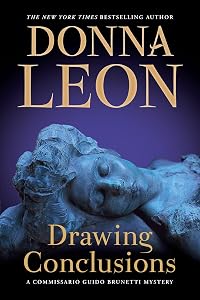
Commissario Guido Brunetti, with the help of Inspector Lorenzo Vianello and the ever-resourceful Signorina Elettra Zorzi, investigates the death of a Venetian widow in a Spartan apartment on Campo San Giacomo dell'Orio.Tags
Recommendations






























Member Reviews
I love Donna Leon's Guido Brunetti crime novels set in Venice. The crimes are often subtle, with no winners or losers. She has a mordant wit with sharp observations about Italian political and social life. I particularly like the way the character of Paola, Brunetti's wife, is often the moral compass of the story. Their discussions over the family meal (fabulous cooking) often tease out the dilemmas Brunetti may face throughout the story, but in an oblique way. Well worth reading.
I'm a bit stunned to realize that Drawing Conclusions is the 20th book in Donna Leon's series featuring Commissario Guido Brunetti of Venice, Italy; I've been reading this series since its first "chapter," Death at La Fenice, but I hadn't noticed how many years had passed since that first tantalizing breath of the air and world of Venice that she so wonderfully evokes. Anticipating the delights of a new Brunetti story has been a fixture in my life for decades now, and I've yet to be disappointed. Briefly, Drawing Conclusions concerns the death of a still-active retiree, only brought to the attention of the police because the neighbour who finds her body calls them rather than the nearest hospital. As it happens, the death was caused by show more a heart attack, and the woman had a known heart condition for which she was taking medication, so it would seem to be a natural death; only both Brunetti, the senior officer on call at the time of the report of death, and Rizzardi, the medical examiner summoned to the site, notice the slight bruising on the woman's shoulders, not enough to cause harm but perhaps an indication that a woman with a heart condition might have been frightened to death, and of course that detail bothers Brunetti enough that he cannot just walk away....This entry in the long-running series is about getting old, being old and struggling with what that means. And neither Donna Leon, nor her lead character Guido Brunetti, is prepared to ignore the realities of age, or the consequences of actions in the past. Highly, highly recommended. (You can read this book without having read the 19 that came before it, but for the richest experience of the book, you need to know all of the relationships, long-term, of the series characters with each other; most of all, beginning at the beginning and going forward gives you the exquisite joy of meeting, and coming to know and understand, that complex man, Guido Brunetti.) show less
Another mystery, but definitely not a cozy. Commissario Brunetti's world is riddled with corruption of one kind or another, and Brunetti himself is beginning to see where he fits. The death of a woman in her apartment looks natural, but something does not seem right. And the more he wonders about it, the more he finds, of course. The solution is riddled with fraud and love.
The books are getting darker, or I am getting less able to ward off the depressing aspects, which Leon herself tries to ward off by lyrical descriptions of Venice. There are many more books in the series, although how Brunetti hasn't left the force by now is astonishing.
The books are getting darker, or I am getting less able to ward off the depressing aspects, which Leon herself tries to ward off by lyrical descriptions of Venice. There are many more books in the series, although how Brunetti hasn't left the force by now is astonishing.
When an elderly woman is found dead in her apartment, with no sign of an intruder, and the coroner reports her death as the result of a heart attack, there should not have been any inquiry into her death. However, since Commissario Brunetti was called out to the scene of the crime, he experienced a sense of disquiet over her death. More so when he speaks with the coroner and is informed that there were some faint bruises on the woman's shoulder, which could have been caused by a person's gripping hand.
With the invaluable and discreet assistance provided by the charming Signorina Elettra, a network of safe houses for abused women, run by the Alba Libera, comes to his attention, as does a nursing home where the woman volunteered.
As with show more the other books in the series, the world of crime is offset by the intrinsically safe haven that is provided by his loving wife and children.
In the end, nothing is as they seem, people aren't who they first appear to be, and life is complicated. Does justice prevail in the end? That could be a matter for discussion. show less
With the invaluable and discreet assistance provided by the charming Signorina Elettra, a network of safe houses for abused women, run by the Alba Libera, comes to his attention, as does a nursing home where the woman volunteered.
As with show more the other books in the series, the world of crime is offset by the intrinsically safe haven that is provided by his loving wife and children.
In the end, nothing is as they seem, people aren't who they first appear to be, and life is complicated. Does justice prevail in the end? That could be a matter for discussion. show less
Guido Brunetti is having dinner with Vice-Questore Patta and Lieutenant Scarpa, forced into this social occasion ostensibly to discuss promotions. Guido is praying for the end of the world or, at least, some violent distraction by armed intruders so that he could grab a gun and rid himself of the two men. Brunetti is not a a violent man but dealing with these men at the Questura is one thing, dealing with them on his own time is something else again.
When his cell phone rings, Brunetti thinks it might be his wife, calling him in order to offer him a pretext for leaving. Instead, it is a real call is from the Questura. A woman has been found dead in her apartment, within walking distance of the restaurant. Neither Patta nor Scarpa would show more ever answer such a call, so Guido is free to leave and do his job as required. He arrives to learn that Anna Maria Giusti, returning from a few days in Sicily, had gone to her neighbor’s apartment to collect her mail. Signora Altavilla, a retired teacher in her sixties, is dead. There is some blood near her head but there are no signs of overt violence.
Brunetti has been doing his job for a long time but he has not become jaded. “A short time later, the men emerged with a stretcher, the form on it covered by a dark blue blanket. Brunetti was glad to see that the blanket was clean and freshly ironed, though he knew it made no difference.” Doctor Rizzardi, the pathologist, refuses to give Brunetti any opinion on the cause and manner of death but Guido “has a feeling” that something other than natural causes is at play. Inspecting her apartment, the police discover packages of unopened women’s underwear in a variety of sizes and individually wrapped toiletries The quiet schoolteacher opened her home as a safe haven for battered women. Men who attack the women they know would not be likely to have qualms about attacking a woman they didn’t know.
As the police continue learning about the dead woman, they discover another aspect of her life, another example of her altruism. She was a frequent visitor to a home for the aged, a willing listener to the stories told by people in their latest years. The director describes Signora Altavilla as a “confessor”, hearing things that people would never tell members of their families. “Madre Rosa referred to her terrible honesty….”. The confessor believed that absolution required restitution of goods and of reputations. Perhaps someone was afraid of the knowledge she had for even old stories can be dangerous.
In this book, there is one crime but two strands that lead to it. Leon again wraps the story around societal problems. Signora Altavilla was poking at the people who live in the shadows, those who abuse women and those who take advantage of the elderly. Brunetti is the heart of the story as he is in all the books in the series. He has not lost his humanity and he does not close his eyes to the difficulties imposed by following the letter of the law. His partnership with Signorina Elettra, the force behind the Venice police, has always led to criminal behavior. She steals information and he aids and abets her by using what she finds. Together, they work for the people of their city in ways best not investigated. Their’s is a business relationship, evolving over the years as they deal with the bureaucrats responsible for serving the best justice money can buy.
Leon seasons the story with moments that reflect Brunetti’s compassion, principles, and love of the ordinary things in life. As the family gathers for dinner, “It simply filled Brunetti’s heart to have them there and to be able to see and hear them, knowing they were safe and warm and well-fed.” He wants nothing less for the people who come into his professional life, whether old or young, wealthy or not. He is from the working class and married into the ruling class. He knows that despite their differences, he and his father-in-law are kindred spirits when it comes to family. The battered women have no family to whom they can turn. The elderly have their welfare in the hands of strangers. Guido wants to protect them as he protects his own children.
When one of the strands leads back to events fifty years before, Brunetti has to look at a basic truth from which choices are made. “…even the worst of men wanted to be perceived as better than they were.” History is always being re-written by those who abandoned conscience for cash and convenience. As Brunetti discusses bad choices made in order to bring about a positive result, he thinks of Henry of Navarre. In 1589, when the French Protestant was the last man standing in the line for the throne of France, he had to return to the Catholic Church in order to be crowned king. Henry, eager to be Henry IV, said “Paris is worth a Mass.” For Guido life in twenty-first century Italy is about the end justifying the means.
Donna Leon fills every page with details that can be spoilers. As with all the Brunetti books, DRAWING CONCLUSIONS moves very quickly. Leon is another author whose books beg to be read at one sitting. She does not provide pat endings but she provides endings that are true to her character. Brunetti is a rock. He may be worn by storms but they never change the essence of the decent man that he is. show less
When his cell phone rings, Brunetti thinks it might be his wife, calling him in order to offer him a pretext for leaving. Instead, it is a real call is from the Questura. A woman has been found dead in her apartment, within walking distance of the restaurant. Neither Patta nor Scarpa would show more ever answer such a call, so Guido is free to leave and do his job as required. He arrives to learn that Anna Maria Giusti, returning from a few days in Sicily, had gone to her neighbor’s apartment to collect her mail. Signora Altavilla, a retired teacher in her sixties, is dead. There is some blood near her head but there are no signs of overt violence.
Brunetti has been doing his job for a long time but he has not become jaded. “A short time later, the men emerged with a stretcher, the form on it covered by a dark blue blanket. Brunetti was glad to see that the blanket was clean and freshly ironed, though he knew it made no difference.” Doctor Rizzardi, the pathologist, refuses to give Brunetti any opinion on the cause and manner of death but Guido “has a feeling” that something other than natural causes is at play. Inspecting her apartment, the police discover packages of unopened women’s underwear in a variety of sizes and individually wrapped toiletries The quiet schoolteacher opened her home as a safe haven for battered women. Men who attack the women they know would not be likely to have qualms about attacking a woman they didn’t know.
As the police continue learning about the dead woman, they discover another aspect of her life, another example of her altruism. She was a frequent visitor to a home for the aged, a willing listener to the stories told by people in their latest years. The director describes Signora Altavilla as a “confessor”, hearing things that people would never tell members of their families. “Madre Rosa referred to her terrible honesty….”. The confessor believed that absolution required restitution of goods and of reputations. Perhaps someone was afraid of the knowledge she had for even old stories can be dangerous.
In this book, there is one crime but two strands that lead to it. Leon again wraps the story around societal problems. Signora Altavilla was poking at the people who live in the shadows, those who abuse women and those who take advantage of the elderly. Brunetti is the heart of the story as he is in all the books in the series. He has not lost his humanity and he does not close his eyes to the difficulties imposed by following the letter of the law. His partnership with Signorina Elettra, the force behind the Venice police, has always led to criminal behavior. She steals information and he aids and abets her by using what she finds. Together, they work for the people of their city in ways best not investigated. Their’s is a business relationship, evolving over the years as they deal with the bureaucrats responsible for serving the best justice money can buy.
Leon seasons the story with moments that reflect Brunetti’s compassion, principles, and love of the ordinary things in life. As the family gathers for dinner, “It simply filled Brunetti’s heart to have them there and to be able to see and hear them, knowing they were safe and warm and well-fed.” He wants nothing less for the people who come into his professional life, whether old or young, wealthy or not. He is from the working class and married into the ruling class. He knows that despite their differences, he and his father-in-law are kindred spirits when it comes to family. The battered women have no family to whom they can turn. The elderly have their welfare in the hands of strangers. Guido wants to protect them as he protects his own children.
When one of the strands leads back to events fifty years before, Brunetti has to look at a basic truth from which choices are made. “…even the worst of men wanted to be perceived as better than they were.” History is always being re-written by those who abandoned conscience for cash and convenience. As Brunetti discusses bad choices made in order to bring about a positive result, he thinks of Henry of Navarre. In 1589, when the French Protestant was the last man standing in the line for the throne of France, he had to return to the Catholic Church in order to be crowned king. Henry, eager to be Henry IV, said “Paris is worth a Mass.” For Guido life in twenty-first century Italy is about the end justifying the means.
Donna Leon fills every page with details that can be spoilers. As with all the Brunetti books, DRAWING CONCLUSIONS moves very quickly. Leon is another author whose books beg to be read at one sitting. She does not provide pat endings but she provides endings that are true to her character. Brunetti is a rock. He may be worn by storms but they never change the essence of the decent man that he is. show less
When an old woman dies of a heart attack in her home, something feels off to Commissario Guido Brunetti when he visits the scene. The coroner finds evidence the woman had been grasped from the front and that she was possibly shaken. The autopsy is conclusive she died of heart attack and that she hit her head on a nearby radiator when she fell. Still Brunetti feels compelled to unofficially investigate. He finds the woman, a retired teacher, volunteered at a Catholic home for seniors. In his search of the apartment following her death, he found unopened packages of cheap women's lingerie in multiple sizes. He finds a cause for this in the investigation, and this leads to a further thread of investigation. This is not the strongest show more installment in the series, and Brunetti seems to feel guilt for some of the things Signorina Elettra does and that he asks her to do which skirt the law. I enjoyed listening to the installment read by David Colacci even if it wasn't a favorite in terms of plot. show less
http://tinyurl.com/ybo4mo4z
I'm finally getting back around to reading Donna Leon mysteries again (I'm about 7 volumes behind; she's a speedy writer!). As usual, I enjoy them but I can't read them back to back. Like most mystery series, the style and characterizations get repetitive and encourage at least a wait of several months between reading them.
This one's Social Agenda is around harassment and assault on women, which is detailed on a macro level and mirrored on a micro level as well. (As Leon does so well, being skilled in this realm, due to her past position as a professor of English literature.) The best Leon novels are the ones that give some new focus to an age-old problem, or that highlight a particularly Venetian problem. show more Otherwise, you read them for Guido and Signorina Elletra and Paola and all the other characters you've grown to enjoy, interacting with each other.
I'd say this one was not one of Leon's set of best novels, so I had fun watching Guido navigate the streets and canals, eat the good food, muse about Venice in general, and converse with his family. But there wasn't anything new here. show less
I'm finally getting back around to reading Donna Leon mysteries again (I'm about 7 volumes behind; she's a speedy writer!). As usual, I enjoy them but I can't read them back to back. Like most mystery series, the style and characterizations get repetitive and encourage at least a wait of several months between reading them.
This one's Social Agenda is around harassment and assault on women, which is detailed on a macro level and mirrored on a micro level as well. (As Leon does so well, being skilled in this realm, due to her past position as a professor of English literature.) The best Leon novels are the ones that give some new focus to an age-old problem, or that highlight a particularly Venetian problem. show more Otherwise, you read them for Guido and Signorina Elletra and Paola and all the other characters you've grown to enjoy, interacting with each other.
I'd say this one was not one of Leon's set of best novels, so I had fun watching Guido navigate the streets and canals, eat the good food, muse about Venice in general, and converse with his family. But there wasn't anything new here. show less
Members
- Recently Added By
Published Reviews
ThingScore 83
As languid in its movement as a gondola ride. Yet none of Brunetti’s earlier cases is as remorselessly clear in connecting the delicately comic anti-authoritarian gestures Brunetti winks at to the miasma of corruption that hangs over his beloved Venice.
added by Shortride
Commissario Brunetti beweist untrüglichen Instinkt und Feinfühligkeit. Donna Leon in Bestform - bravissimo!
added by rat_in_a_cage
Ein morbides Vergnügen.
added by rat_in_a_cage
Lists

Donna Leon
23 works; 5 members

Italian Murder Mysteries
21 works; 2 members

Chronological 2017
30 works; 1 member

Books Read in 2020
4,379 works; 124 members
Author Information

61+ Works 46,203 Members
Donna Leon was born on September 29, 1942 in Montclair, New Jersey. She taught English literature in England, Switzerland, Iran, China, Italy and Saudi Arabia. She is the author of a Commissario Guido Brunetti Mystery series. Friends in High Places, a novel from the series, won the Crime Writers Association Macallan Silver Dagger for Fiction in show more 2000. German Television has produced 16 Commissario Brunetti mysteries for broadcast. She was a crime reviewer for the Sunday Times. She has written the libretto for a comic opera and has set up her own opera company, Il Complesso Barocco. Her titles Jewels of Pardise, The Golden Egg, By Its Cover, Falling in Love and The Waters of Eternal Youth made The New York Times Bestseller List. (Bowker Author Biography) show less
Some Editions
Awards and Honors
Distinctions
Series

Belongs to Publisher Series
detebe (24267)
Work Relationships
Common Knowledge
- Canonical title
- Drawing Conclusions
- Original title
- Drawing Conclusions
- Original publication date
- 2011
- People/Characters
- Guido Brunetti
- Important places
- Venice, Veneto, Italy
- Related movies*
- Reiches Erbe (2014 | IMDb)
- Epigraph
- In the name of God Amen. I George Frederick
Handel considering the uncertainties of human life
doe make this my will in manner following...
Last testament of George Frederick Handel - Dedication
- For Jenny Liosatou and Giulio d'Alessio
- First words
- Because she had worked for decade as a translator of fiction and non-fiction from English and German to Italian, Anna Maria Giusti was familiar with a wide range of subjects.
- Quotations*
- Wenn Morandi immer log, wäre seine Behauptung, nie mehr lügen zu wollen, demnach eine Lüge?
- Last words
- (Click to show. Warning: May contain spoilers.)This time it was Morandi who waved in the direction of the Basilica, his hand taking in the church and the past and the glory that was no more.
- Publisher's editor*
- William Heinemann, Londen
- Original language
- English
- Disambiguation notice
- Please distinguish Donna Leon's "Commissario Guido Brunetti" series novel, Drawing Conclusions, from Richard Boning's "Specific Skill" series volume, Drawing Conclusions Booklet F.
*Some information comes from Common Knowledge in other languages. Click "Edit" for more information.
Classifications
Statistics
- Members
- 1,153
- Popularity
- 21,822
- Reviews
- 48
- Rating
- (3.69)
- Languages
- 9 — Catalan, Dutch, English, Finnish, French, German, Polish, Spanish, Swedish
- Media
- Paper, Audiobook, Ebook
- ISBNs
- 50
- ASINs
- 19