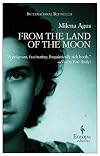
From the Land of the Moon
by Milena Agus
On This Page
Description
A novel of family life in post-war Sardinia.Tags
Recommendations




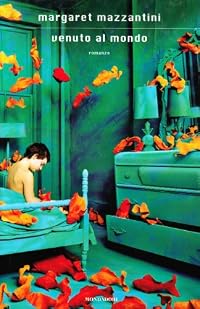


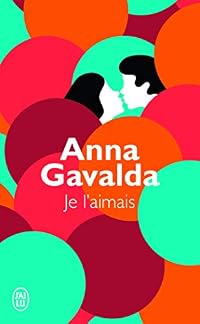
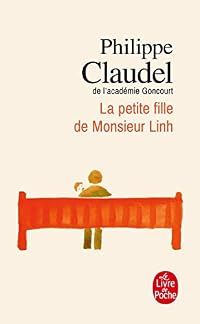
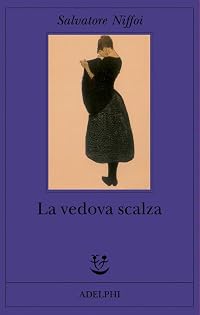


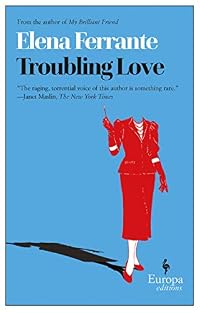

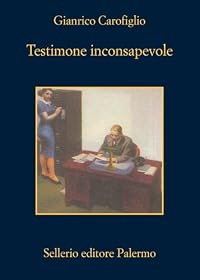


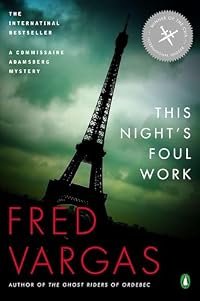
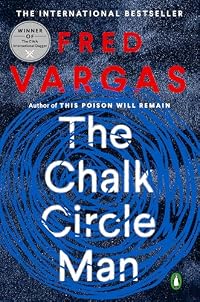


Member Recommendations
by TadAD
Member Reviews
This review was first published in Belletrista.
Every once in a while you come across a small gem of a novel, a novella really, that just captivates you: Rebecca West's The Return of the Soldier comes to mind or Chingiz Aïtmatov's Jamilia. They draw you in, mesmerize you a little and, before you realize it, you're on the last page. Milena Agus' From the Land of the Moon is just such a book. This short novel won the 2008 Zerilli-Marimò Prize, and was translated into English in 2010.
The narrator of the story, a young Sardinian woman, reflects upon the people who raised her. She tells us of her father, her mother, her mother's mother but, most of all, she talks about her paternal grandmother, someone described by a lover as "a creature show more made at a moment when God simply had no wish for the usual mass-produced women and, being in a poetic vein, had created her." There is a sense of intimacy in the story. We never learn the narrator's name and she, in turn, names very few individuals. Everything is "Mamma told me…" or "Papa never had…" It's as if she's talking directly to you, a friend or acquaintance, expecting you to know who the people in her family are, and drawing you into the stories and their lives.
The grandmother's life emerges in pieces, some of it from stories told by the narrator's parents and some from diaries she found, with frequent stops to go back and fill in a section of history here or there. We see her as a young woman tearing though life in a destructive storm, trying to create passion where little exists. Her striking looks bring many first date suitors but few second dates because she sends the men ardent poems that shock them. Harming herself causes her family to contemplate confining her for protection. Even when marriage finally does come, it is arranged and forced upon her by her parents as an alternative to an asylum.
After her marriage, she takes a short trip to a health spa. There she has a wonderful affair, and the tempestuous, troubled woman is changed. As the narrator says, "I knew a different grandmother, who could laugh at a trifle, and my father said the same...maybe those other things were only stories." But she, the narrator, doesn't really believe that. Rather, she is certain that the passion engendered by that short affair transformed her grandmother's life, making her happy and whole. Much later, when the book ends, we understand how that instance of redemption has become mythic to the narrator, and why she is telling the story.
If this had been the sum total of the book, it would have been a pleasant love story that could have turned sentimental, or even maudlin, at any moment, but didn't. I would have enjoyed Agus' comfortable and inviting style of writing, but I'm not sure that my experience of reading the novel would have gone much beyond casual enjoyment.
However, the story didn't simply end there. As the narrator continued, her tale took little twists and turns. The story I thought had been so clearly set forth would be rewritten slightly along the way. Rather than being unpleasant, this "imperfect" narration gave the story a small sense of folklore, that ambiguous feeling that what we thought we knew may not, in fact, be exactly true. It was an extra dimension that made this book work so well for me. For a short while, I was pulled inside someone else's life, not quite aware of what was going on around me and, when I came to, found myself thinking, "I wonder if…." show less
Every once in a while you come across a small gem of a novel, a novella really, that just captivates you: Rebecca West's The Return of the Soldier comes to mind or Chingiz Aïtmatov's Jamilia. They draw you in, mesmerize you a little and, before you realize it, you're on the last page. Milena Agus' From the Land of the Moon is just such a book. This short novel won the 2008 Zerilli-Marimò Prize, and was translated into English in 2010.
The narrator of the story, a young Sardinian woman, reflects upon the people who raised her. She tells us of her father, her mother, her mother's mother but, most of all, she talks about her paternal grandmother, someone described by a lover as "a creature show more made at a moment when God simply had no wish for the usual mass-produced women and, being in a poetic vein, had created her." There is a sense of intimacy in the story. We never learn the narrator's name and she, in turn, names very few individuals. Everything is "Mamma told me…" or "Papa never had…" It's as if she's talking directly to you, a friend or acquaintance, expecting you to know who the people in her family are, and drawing you into the stories and their lives.
The grandmother's life emerges in pieces, some of it from stories told by the narrator's parents and some from diaries she found, with frequent stops to go back and fill in a section of history here or there. We see her as a young woman tearing though life in a destructive storm, trying to create passion where little exists. Her striking looks bring many first date suitors but few second dates because she sends the men ardent poems that shock them. Harming herself causes her family to contemplate confining her for protection. Even when marriage finally does come, it is arranged and forced upon her by her parents as an alternative to an asylum.
After her marriage, she takes a short trip to a health spa. There she has a wonderful affair, and the tempestuous, troubled woman is changed. As the narrator says, "I knew a different grandmother, who could laugh at a trifle, and my father said the same...maybe those other things were only stories." But she, the narrator, doesn't really believe that. Rather, she is certain that the passion engendered by that short affair transformed her grandmother's life, making her happy and whole. Much later, when the book ends, we understand how that instance of redemption has become mythic to the narrator, and why she is telling the story.
If this had been the sum total of the book, it would have been a pleasant love story that could have turned sentimental, or even maudlin, at any moment, but didn't. I would have enjoyed Agus' comfortable and inviting style of writing, but I'm not sure that my experience of reading the novel would have gone much beyond casual enjoyment.
However, the story didn't simply end there. As the narrator continued, her tale took little twists and turns. The story I thought had been so clearly set forth would be rewritten slightly along the way. Rather than being unpleasant, this "imperfect" narration gave the story a small sense of folklore, that ambiguous feeling that what we thought we knew may not, in fact, be exactly true. It was an extra dimension that made this book work so well for me. For a short while, I was pulled inside someone else's life, not quite aware of what was going on around me and, when I came to, found myself thinking, "I wonder if…." show less
From the Land of the Moon is a beautifully written ode to love. Love in all its manifestations: infatuation, lust, married conviviality, familial caring, patriotism, even an all-consuming passion for music. And it’s a story about the consequences of love’s absence, the desperate desire to fill the void with something: sex, kindness, even a lonely sort of madness.
And she stayed at his pace, her beautiful fur-lined shoes in step with those ugly ones of grandfather’s, because she wasn’t angry with him—on the contrary, she was so sorry she didn’t love him. She was so sorry, and it pained her, and she wondered why God, when it comes to love, which is the principal thing, organizes things in such a ridiculous way: where you can show more do every possible and imaginable kindness, and there’s no way to make it happen, and you might even be mean, as she was now, not even lending him her scarf, and yet he followed her through the snow, half frozen, missing the chance, lover of food that he was, to eat the local potato ravioli and porchetto on the spit. During the trip home she was so sorry that in the darkness of the bus she leaned her head on his shoulder and sighed, as if to say “Ah well.”
Grandmother, the only name by which we know the main character, has suffered greatly for love and lack of love. Her parents beat her for failing to catch a husband, her eventual husband loves only the perverse sexual pleasure she can give him, and the one true love of her life is an elusive, ephemeral encounter that lingers unseen in her mind. She worries that there is something about her that causes love to flee, even as she stretches her hands for it. Her granddaughter thinks that perhaps there is a reason:
If at night we sleep without nightmares, if papa and mamma’s marriage has always been free of bumps, if I’m getting married to my first boyfriend, if we don’t have panic attacks and don’t try to kill ourselves, or throw ourselves into garbage bins, or slash ourselves, it’s thanks to grandmother, who paid for everyone. In every family there’s someone who pays the tribute, so that the balance between order and disorder is maintained and the world doesn’t come to a halt.
Milena Agus is a wonderful writer capable of capturing the longing for love that is fundamental to human relationships and turning it into a delicately woven story reminiscent of a folk tale. I would never have guessed that this was a first novel, and I fervently hope it is not her last. show less
And she stayed at his pace, her beautiful fur-lined shoes in step with those ugly ones of grandfather’s, because she wasn’t angry with him—on the contrary, she was so sorry she didn’t love him. She was so sorry, and it pained her, and she wondered why God, when it comes to love, which is the principal thing, organizes things in such a ridiculous way: where you can show more do every possible and imaginable kindness, and there’s no way to make it happen, and you might even be mean, as she was now, not even lending him her scarf, and yet he followed her through the snow, half frozen, missing the chance, lover of food that he was, to eat the local potato ravioli and porchetto on the spit. During the trip home she was so sorry that in the darkness of the bus she leaned her head on his shoulder and sighed, as if to say “Ah well.”
Grandmother, the only name by which we know the main character, has suffered greatly for love and lack of love. Her parents beat her for failing to catch a husband, her eventual husband loves only the perverse sexual pleasure she can give him, and the one true love of her life is an elusive, ephemeral encounter that lingers unseen in her mind. She worries that there is something about her that causes love to flee, even as she stretches her hands for it. Her granddaughter thinks that perhaps there is a reason:
If at night we sleep without nightmares, if papa and mamma’s marriage has always been free of bumps, if I’m getting married to my first boyfriend, if we don’t have panic attacks and don’t try to kill ourselves, or throw ourselves into garbage bins, or slash ourselves, it’s thanks to grandmother, who paid for everyone. In every family there’s someone who pays the tribute, so that the balance between order and disorder is maintained and the world doesn’t come to a halt.
Milena Agus is a wonderful writer capable of capturing the longing for love that is fundamental to human relationships and turning it into a delicately woven story reminiscent of a folk tale. I would never have guessed that this was a first novel, and I fervently hope it is not her last. show less
“She had married late, in June of 1943, after the American bombing of Cagliari, and in those days to be thirty and not yet settled was already to be something of an old maid. Not that she was ugly, or lacked suitors—on the contrary. But at a certain point the wooers called less frequently and then stopped, each time before they had officially asked my great-grandfather for her hand. Dear signorina, circumstances beyond my control prevent me from calling on you this Wednesday, and also next, which would be very enjoyable for me but, unfortunately, impossible. So grandmother waited for the third Wednesday, but a little girl, a pipiedda, always arrived with the letter that put off the visit again, and then there was nothing.”
This show more tiny little book of just 108 pages packs the rich history of the narrator's grandmother, who, growing up in a small Sardinian village and considered to be crazy, was the shame of her parents and sisters. When a man, very recently widowed by the aforementioned bombing offers to marry the inconvenient girl, her father accepts the proposal although she begs him to refuse; she does not love the man and neither does he love her, but marry they do, to everyone's relief. But nearly ten years later, the woman has had one miscarriage after another, even though she has made sure to meet her husband's every sexual demand, no matter how peculiar, to keep him away from the brothels, so she is sent off to be cured of kidney stones at a thermal bath station. There, she meets another patient, a war veteran, and for the very first time, experiences with him the love, passion and consideration she has always yearned for.
It's difficult for me to put into words why it is I fell in love with this little book. It's a story about ordinary people trying their best to get on with life and make do with what they have, while going to great lengths to fulfill their yearning and passion, in ways that some would call madness and others would consider to be artistic genius. Gorgeous. A must read. show less
Beautifully written story focusing on the years after WWII, of an Italian woman on the island of Sardinia. The story is pieced together by the woman's granddaughter (both are nameless) from things she has been told by her grandmother and by her found journal and a letter after her death. Grandmother was "rescued" from old maidom by a refugee during the war, though she did not love him. Beautiful and voluptuous and ahead of her time in terms of independent thought and a romantic disposition for poetry and love, "the principle thing" Grandmother is a local misfit, though she makes due in her marriage. She is also unable to have a child due to kidney stones, so she goes to the mainland in 195o to a hot springs spa for treatment. There she show more meets the Veteran, a war hero, who has lost a leg and who shares her love of all things romantic. They become involved and Grandmother finally feels the completion of all her longings and desires. 9 months after she returns home, she gives birth to a son (father to the narrator). A simple tale in terms of action, but complex in terms of emotional involvement, family dynamics and mores of the time. Translates well from the original Italian and the wistfulness can be summed up by the epigraph: "If I never meet you in this life, let me feel the lack." show less
Family history has always fascinated me. I remember pestering my grandparents for theirs when I was little; everything would seem like one of the most amazing fairy tales, and I didn't mind hearing the same thing over and over again.
As such, From the Land of the Moon should have had every chance of getting on my favorites lists. We start out with a mysterious grandmother plagued by an unnamed mental disease. Several years later, a single, carefully measured, dose of an illicit love affair gets added. It's not much, just a few months long, yet still enough to color said grandmother's remaining life. For your heightened pleasure, don't forget to place everything in the absolutely perfect setting of the nostalgically rural Sardinia.
Though show more I have to admit that the descriptions of post-WWII Cagliari, all devastated and destitute would end up morphing into the Roman Forum in my mind, courtesy of my subconscious... and the fact that I've seen the latter, but not the former.
I'm just naturally gifted in the bizarre imagination department.
And yet, despite all the right ingredients I just didn't get to like the book. I was expecting to be able to finish it in a couple of hours, but instead wound up dawdling over it for almost a week. Things just kept pissing me off: the non-linear story, the constant insertion of Sardinian dialect everywhere. The latter was probably more frustrating to me really, as I can converse decently (well... kind of...) in literary Italian. Sardinian however, might as well have been some form of Martian.
Admittedly, the description of the grandparents' bedroom activities made for a significant uptick in my mood. I was impressed by the amount of detail that the author provided, given the genre of the book: on par with some of the more... ah... risque fanfiction that have crossed my path.
But ultimately, it just wasn't enough to change my overall feelings for the story.
Score: 3.2/5 frustrated stars
I really really wanted to like this book. It's what kept me reading - well that, and its short length. And now, 2 weeks after having finished it, I feel this absolutely shameful urge to apologize: this novel had just the most perfect ending... EVER.
OK, so I have not read as much as any regular book snob would consider half-way decent. I also tend to avoid the classics like the plague, but the ending of this little story, was just the most amazing way to conclude the grandmother's story. show less
As such, From the Land of the Moon should have had every chance of getting on my favorites lists. We start out with a mysterious grandmother plagued by an unnamed mental disease. Several years later, a single, carefully measured, dose of an illicit love affair gets added. It's not much, just a few months long, yet still enough to color said grandmother's remaining life. For your heightened pleasure, don't forget to place everything in the absolutely perfect setting of the nostalgically rural Sardinia.
Though show more I have to admit that the descriptions of post-WWII Cagliari, all devastated and destitute would end up morphing into the Roman Forum in my mind, courtesy of my subconscious... and the fact that I've seen the latter, but not the former.
I'm just naturally gifted in the bizarre imagination department.
And yet, despite all the right ingredients I just didn't get to like the book. I was expecting to be able to finish it in a couple of hours, but instead wound up dawdling over it for almost a week. Things just kept pissing me off: the non-linear story, the constant insertion of Sardinian dialect everywhere. The latter was probably more frustrating to me really, as I can converse decently (well... kind of...) in literary Italian. Sardinian however, might as well have been some form of Martian.
Admittedly, the description of the grandparents' bedroom activities made for a significant uptick in my mood. I was impressed by the amount of detail that the author provided, given the genre of the book: on par with some of the more... ah... risque fanfiction that have crossed my path.
But ultimately, it just wasn't enough to change my overall feelings for the story.
Score: 3.2/5 frustrated stars
I really really wanted to like this book. It's what kept me reading - well that, and its short length. And now, 2 weeks after having finished it, I feel this absolutely shameful urge to apologize: this novel had just the most perfect ending... EVER.
OK, so I have not read as much as any regular book snob would consider half-way decent. I also tend to avoid the classics like the plague, but the ending of this little story, was just the most amazing way to conclude the grandmother's story. show less
From the Land of the Moon is a novella about a Sardinian woman searching for love in the post-war years amongst the metaphorical and literal ruins of her life. The woman recognizes that her nature is perhaps flawed as true love seems to remain elusive. Her quest assumes at times, sad, pitiable, desperate and creative forms that echo the pathos of Anna Karenina and Madam Bovary. The woman moves about the Italian landscapes of Cagliari and Milan as the country rebuilds from the effects of Allied Bombing and Nazi retreat. The settings of the story provide the physical architecture of the woman's efforts and parallels can be drawn between the reconstruction and her state of mind. The story is told from the point of view of the woman's show more granddaughter after the woman, referred to as Grandmother, has passed away, providing a doubly unreliable narrative: The woman herself may have been insane and her story suffers from being two generations away from being immediately verified. From the Land of the Moon is poignant without being maudlin and, the letter which serves as the final chapter is a powerful denouement.
Redacted from the original blog review at dog eared copy, From the Land of the Moon; 11/12/2012 show less
Redacted from the original blog review at dog eared copy, From the Land of the Moon; 11/12/2012 show less
“But she would discuss it with God, before she went to Hell. She would point out to him that if he creates a person in a certain way then he can’t expect her to act as if she were not her.”
In this tiny slender skerrick of a novella (108 pages), the narrator’s eccentric grandmother is lovingly remembered. The title comes from the phrase used in Sardinia to describe someone who seems not to be entirely in their right mind. In an unusual take on the unreliable narrator construct, we have only the granddaughter’s recollection of her grandmother’s stories – and if the grandmother was not entirely truthful (even unintentionally), that skews the narrative.
It’s hard to classify this novella – it’s not heavily plot driven show more (very little actually happens) and the characters (apart from the grandmother) are never described much because we just have a narrative of their actions, not very much actual character description. I suppose it is a still life, in novella form. A bittersweet tale of wartime romance and old Sardinian life.
That is not to say that the novella is totally without events or key themes: the temporary romance is a sweet one and gently told; the longer arc of the grandmother’s marriage a more bitter-sweet one. I never quite got to grips with the grandfather’s character – he always seemed quite harsh and unloving – both towards his wife and his child. The grandmother is very interesting – I felt she wasn’t so much mad as just delighted in shocking people and wanted to be taken seriously, not imprisoned in backward customs.
Caution: contains very graphic adult content – which seems to spring out of nowhere! The book seems so slender and innocent and is lyrically written, and then suddenly there’s a page of… well, such content as is distinctly unsuitable for those with relatively conservative sensibilities! I was quite embarrassed to be reading this on the Tube a number of times for fear my neighbour was reading too and judged me! show less
In this tiny slender skerrick of a novella (108 pages), the narrator’s eccentric grandmother is lovingly remembered. The title comes from the phrase used in Sardinia to describe someone who seems not to be entirely in their right mind. In an unusual take on the unreliable narrator construct, we have only the granddaughter’s recollection of her grandmother’s stories – and if the grandmother was not entirely truthful (even unintentionally), that skews the narrative.
It’s hard to classify this novella – it’s not heavily plot driven show more (very little actually happens) and the characters (apart from the grandmother) are never described much because we just have a narrative of their actions, not very much actual character description. I suppose it is a still life, in novella form. A bittersweet tale of wartime romance and old Sardinian life.
That is not to say that the novella is totally without events or key themes: the temporary romance is a sweet one and gently told; the longer arc of the grandmother’s marriage a more bitter-sweet one. I never quite got to grips with the grandfather’s character – he always seemed quite harsh and unloving – both towards his wife and his child. The grandmother is very interesting – I felt she wasn’t so much mad as just delighted in shocking people and wanted to be taken seriously, not imprisoned in backward customs.
Caution: contains very graphic adult content – which seems to spring out of nowhere! The book seems so slender and innocent and is lyrically written, and then suddenly there’s a page of… well, such content as is distinctly unsuitable for those with relatively conservative sensibilities! I was quite embarrassed to be reading this on the Tube a number of times for fear my neighbour was reading too and judged me! show less
Members
- Recently Added By
Lists

Italian Literature
556 works; 38 members

Europa, Europa!
13 works; 3 members

Books Read in 2014
2,341 works; 89 members
Books translated from Romance Languages into English
102 works; 7 members

Books Read in 2019
4,052 works; 110 members
Author Information

17 Works 1,025 Members
Some Editions
Awards and Honors
Series
Belongs to Publisher Series
dtv (13736)
Common Knowledge
- Canonical title
- From the Land of the Moon
- Original title
- Mal di pietre
- Original publication date
- 2006
- People/Characters
- Grandmother; The Veteran; Narrator
- Important places
- Sardinia, Italy
- Important events
- World War II (1939 | 1945)
- Related movies
- From the Land of the Moon (2016)
- Epigraph
- "If I never meet you in this life, let me feel the lack."
-Soldier in The Thin Red Line - First words
- Grandmother met the Veteran in the fall of 1950.
- Quotations
- In every family there's someone who pays the tribute, so that the balance between order and disorder is maintained and the world doesn't come to a halt.
- Last words
- (Click to show. Warning: May contain spoilers.)Write.
- Original language*
- Italiaans
*Some information comes from Common Knowledge in other languages. Click "Edit" for more information.
Classifications
Statistics
- Members
- 602
- Popularity
- 48,291
- Reviews
- 46
- Rating
- (3.46)
- Languages
- 10 — Catalan, Dutch, English, French, German, Italian, Norwegian (Bokmål), Romanian, Spanish, Swedish
- Media
- Paper, Audiobook, Ebook
- ISBNs
- 35
- ASINs
- 9