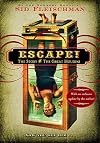
Escape!: The Story of The Great Houdini
by Sid Fleischman
On This Page
Description
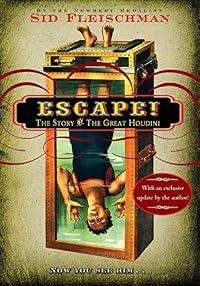
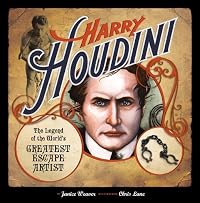
A biography of the magician, ghost chaser, aviator, and king of escape artists whose amazing feats are remembered long after his death in 1926. Profiling his early years, personal life, and great accomplishments in show business, the story of the famous magician, Harry Houdini, comes to life through a review of his greatest tricks and most amazing feats, complete with index, photos, and author's notes.Tags
Recommendations















Member Reviews
Although I’ve been fascinated by magic tricks for years, somehow I never managed to read a biography about Houdini until one of my brothers borrowed the audiobook for this book. I was between books at the time, and on a whim, decided to listen to it—and immediately got engrossed in the story. This is a well-written biography!
As I listened, I realized I hardly knew anything about Houdini. Even though he is a renowned magician, aside from a few of the more famous stunts he pulled off, I really had no idea who he was as a man or what came before his famous status. This book filled that in for me—pulling from what his family has said, the available documents, and other historical sources that all give clues into who this show more larger-than-life master of magic really was underneath.
Although this book tells about the stunts he pulls, that wasn’t the most interesting part of the story for me. I was intrigued by the story of how he became a magician—especially the years of failure he faced before finally making a breakthrough and becoming famous. I also found this peek into the socio-political climate during his lifetime fascinating; things like how people were especially drawn to his brand of magic before movies became a thing, or the way World War I pushed people toward diving into spiritualism as they tried to find closure after the loss of loved ones (and Houdini’s concerted effort to expose the charlatans he found who were faking hearing from the dead).
This is a short, fast read, but I came away from it appreciative of the effort and dedication Fleischman showed in bringing the story of one of the world’s greatest magicians to life. He claimed in the introduction that he’s best as a fiction author; be as that may, I think he did an excellent job in nonfiction as well. If you’re interested in learning more about Houdini, or enjoy magic tricks, or just like a good biography, I’d recommend you check this book out. It’s well worth your time to read it (and the middle graders in your life will likely enjoy it, as well). show less
As I listened, I realized I hardly knew anything about Houdini. Even though he is a renowned magician, aside from a few of the more famous stunts he pulled off, I really had no idea who he was as a man or what came before his famous status. This book filled that in for me—pulling from what his family has said, the available documents, and other historical sources that all give clues into who this show more larger-than-life master of magic really was underneath.
Although this book tells about the stunts he pulls, that wasn’t the most interesting part of the story for me. I was intrigued by the story of how he became a magician—especially the years of failure he faced before finally making a breakthrough and becoming famous. I also found this peek into the socio-political climate during his lifetime fascinating; things like how people were especially drawn to his brand of magic before movies became a thing, or the way World War I pushed people toward diving into spiritualism as they tried to find closure after the loss of loved ones (and Houdini’s concerted effort to expose the charlatans he found who were faking hearing from the dead).
This is a short, fast read, but I came away from it appreciative of the effort and dedication Fleischman showed in bringing the story of one of the world’s greatest magicians to life. He claimed in the introduction that he’s best as a fiction author; be as that may, I think he did an excellent job in nonfiction as well. If you’re interested in learning more about Houdini, or enjoy magic tricks, or just like a good biography, I’d recommend you check this book out. It’s well worth your time to read it (and the middle graders in your life will likely enjoy it, as well). show less
Ages 9 and up. You can be sure to expect an entertaining read from Sid Fleischman (1920-2010). A few of his other children's books were favorites of mine when I was young (The Whipping Boy, Jim Ugly). This book, however, is the first I have read of his that is wholly non-fiction. He draws from his experience as an amateur magician, and his real life friendship with Bess Houdini (Houdini's widow), to bring the odds-and-ends of Houdini's mysterious life into focus. Houdini is presented, throughout the book, as a struggling artist bent on proving to the world that it is possible to break free from everyday constraints (like poverty, and obscurantism). Fleischman claims to have personally discovered the secrets to all of his tricks, and to show more have far-reaching insights into his life. While all of these secrets are not divulged to the reader, and are rather reserved for the brotherhood of magicians, Fleischman gives some pretty clear hints in the direction of explaining them (i.e. Houdini's lock picking skills, his knack for creating tall tales, etc.)
What lies beneath this biographical narrative is a psychological portrait of the magician and his audience. Fleischman questions why audiences would crave to see these magical spectacles, and why Houdini would want to carve a legend out of his public image. He compares Houdini to Pygmalion trapped in an obsessive-narcissistic quest to mythologize himself, driven on by his own magnanimous egotism. In this conviction, he has been informed by Bernard C. Meyer's study of Houdini: Houdini, a Mind in Chains.
Fleischman goes on to portray the hypocritical stance of Houdini towards his namesake Robert-Houdin. Later, this hypocritical attitude is recast in a virtuous light, when Houdini takes a stance against Spiritualist hoaxes. Houdini is actually portrayed as a rational egotist. There is nothing mysterious about him or his magic tricks. If there was ever an escape that Houdini performed that was perceived as magic, it is because Houdini lied in his biography or others fabricated myths about him. Fleischman would probably agree with the commonplace view that Houdini was a great showman, but not a very great magician (at least not as great as he wanted to be). This book is a little more than a biography, though, because Fleischman admits in the introduction to embellishing it with a little of his own dialogue and imaginings, interspersed with the story of his own admiration of Houdini and search for his true life's story.
Other interesting facts I discovered in this book that I did not know before: Apparently Houdini named Buster Keaton "Buster", Houdini had lied in his biography about the ice-cover and near escape from death when he jumped off the Belle Isle Bridge, he also frequently lied in his biography about how much money he gambled with, he had most of his exposes ghostwritten, and he was the first to fly solo in Australia. Fleischman is correct that most of us read about the Belle Isle Bridge catastrophe in children's books and imagined what we would do if we were ever trapped under a sheet of ice. We never stopped to consider for a moment that Houdini was pulling the wool over our eyes to draw larger audiences to his shows. show less
What lies beneath this biographical narrative is a psychological portrait of the magician and his audience. Fleischman questions why audiences would crave to see these magical spectacles, and why Houdini would want to carve a legend out of his public image. He compares Houdini to Pygmalion trapped in an obsessive-narcissistic quest to mythologize himself, driven on by his own magnanimous egotism. In this conviction, he has been informed by Bernard C. Meyer's study of Houdini: Houdini, a Mind in Chains.
Fleischman goes on to portray the hypocritical stance of Houdini towards his namesake Robert-Houdin. Later, this hypocritical attitude is recast in a virtuous light, when Houdini takes a stance against Spiritualist hoaxes. Houdini is actually portrayed as a rational egotist. There is nothing mysterious about him or his magic tricks. If there was ever an escape that Houdini performed that was perceived as magic, it is because Houdini lied in his biography or others fabricated myths about him. Fleischman would probably agree with the commonplace view that Houdini was a great showman, but not a very great magician (at least not as great as he wanted to be). This book is a little more than a biography, though, because Fleischman admits in the introduction to embellishing it with a little of his own dialogue and imaginings, interspersed with the story of his own admiration of Houdini and search for his true life's story.
Other interesting facts I discovered in this book that I did not know before: Apparently Houdini named Buster Keaton "Buster", Houdini had lied in his biography about the ice-cover and near escape from death when he jumped off the Belle Isle Bridge, he also frequently lied in his biography about how much money he gambled with, he had most of his exposes ghostwritten, and he was the first to fly solo in Australia. Fleischman is correct that most of us read about the Belle Isle Bridge catastrophe in children's books and imagined what we would do if we were ever trapped under a sheet of ice. We never stopped to consider for a moment that Houdini was pulling the wool over our eyes to draw larger audiences to his shows. show less
While this easy to follow biography did not esteem Houdini in my eyes in the least, the author, Sid Fleischman, is superb, bumping up the rating from three stars to four. I easily moved through this book in just a few hours today, despite many distractions and interruptions. The only thing that bugged me about the author was his repeated use of the word, fakir. Is he misspelling "faker"? Is he repeatedly comparing the Jewish American Houdini or his rivals to Muslim or Hindu beggars? It's a weird choice of a word---especially when used over and over.
I think it's good to read biographies of legendary people because it helps us see them in an ordinary light. Houdini sure had his share of undesirable character traits. If Fleischman's show more research is to be believed, he was a very dishonest person---to the point of embellishing even his own journal to boost his ego! Makes me curious about his relationship with his wife---was she on to him and just loyal or was she ignorant and often mercilessly duped by him?
I resisted the urge to look up most of his tricks as I may someday find myself at a similar show and don't want to be let down knowing all the secrets. However, I just had to look up the disappearing elephant trick and found it to be simple but genius! Other than Houdini's general lack of integrity, I was also seriously disgusted by the story of the sea monster trick. It was hideous physically as well as ethically. Houdini really sounds like a creep. show less
I think it's good to read biographies of legendary people because it helps us see them in an ordinary light. Houdini sure had his share of undesirable character traits. If Fleischman's show more research is to be believed, he was a very dishonest person---to the point of embellishing even his own journal to boost his ego! Makes me curious about his relationship with his wife---was she on to him and just loyal or was she ignorant and often mercilessly duped by him?
I resisted the urge to look up most of his tricks as I may someday find myself at a similar show and don't want to be let down knowing all the secrets. However, I just had to look up the disappearing elephant trick and found it to be simple but genius! Other than Houdini's general lack of integrity, I was also seriously disgusted by the story of the sea monster trick. It was hideous physically as well as ethically. Houdini really sounds like a creep. show less
This book is written by a former magician, which both hurts and helps it. The magician's perspective adds layers of meaning, but the unspoken magician code means that Houdini's tricks are not revealed. No matter. Meticulous research coupled with linguistic flair and fascinating artifacts provide an entertaining read, even for a biography. This book is intended for a middle school audience, however, so though the subject matter may entice younger audiences, librarians and educators should save it for grades 6 and above.
This is a gorgeous edition: oversized, full of pictures, and illustrated with a flourish. Escape! is a realistic and at the same time very personal look into the life of Harry Houdini by Sid Fleischman, who spent his youth persuing stage magic and emulating the King of Handcuffs. Fleischman even knew Bess Houdini, the magician's widow, when they both lived in California. Fleischman writes like he talks; if you've met the man and heard his speech patterns, the book is easier to follow, but at times I thought his idiosyncratic style could have used a bit of editing. He certainly enjoys his subject though, and his enthusiasm is infectious. A great introduction to a charismatic and enigmatic man.
Harry Houdini died on Halloween night. Did you know that?
This was a great way to get introduced to some of the more colorful aspects of Houdini's life. There are quite a few other biographies and things out there, but many of them are extremely long and detailed. Much of the Houdini literature is written for magicians, with all of the excruciating detail that a real worshiper would want. That's not me, but I do find him fascinating, so this book was an excellent overview of his life and magic. I now feel like I know much more about who he was and what he did, fleshing out the myth that surrounds him, but I wasn't drug through a thousand pages of boring details. The book is well written, with some quirky aspects that show through because show more of the author's perspective on some of the controversies and questions.
The narrator of the audiobook also did a great job, passing on the sometimes sarcastic and questioning tones of the text.
In short, It was definitely worth the time. Abracadabra! show less
This was a great way to get introduced to some of the more colorful aspects of Houdini's life. There are quite a few other biographies and things out there, but many of them are extremely long and detailed. Much of the Houdini literature is written for magicians, with all of the excruciating detail that a real worshiper would want. That's not me, but I do find him fascinating, so this book was an excellent overview of his life and magic. I now feel like I know much more about who he was and what he did, fleshing out the myth that surrounds him, but I wasn't drug through a thousand pages of boring details. The book is well written, with some quirky aspects that show through because show more of the author's perspective on some of the controversies and questions.
The narrator of the audiobook also did a great job, passing on the sometimes sarcastic and questioning tones of the text.
In short, It was definitely worth the time. Abracadabra! show less
Fleischman has written a thorough story of Houdini. I like that he showed the human side of Houdini (flaws and all) as well as his greatness.
Members
- Recently Added By
Author Information

111+ Works 21,025 Members
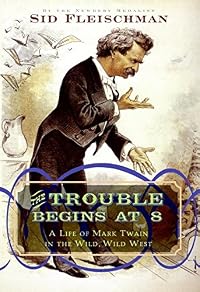
Sid Fleischman was born in Brooklyn, New York on March 16, 1920 but grew up in San Diego, California. He loved all things magical and toured professionally as a magician until the beginning of World War II. During the war, he served in the U.S. Naval Reserve, and afterwards, he graduated from San Diego State University in 1949. After graduation, show more he worked as a reporter with the San Diego Daily Journal. After the paper folded in 1950, he started writing fiction. He tried his hand at children's books because his own children often wondered what their father did. To show them how he created stories, he wrote them a book. He wrote more than 50 fiction and nonfiction works during his lifetime including The Abracadabra Kid: A Writer's Life; Escape! The Story of the Great Houdini; The Trouble Begins at 8: A Life of Mark Twain in the Wild, Wild West; The Thirteenth Floor; and The Ghost in the Noonday Sun. His book, The Whipping Boy, won the Newberry Award in 1987. He is the father of Newbery Medal winning writer and poet Paul Fleischman; they are the only father and son to receive Newbery awards. He also wrote screenplays including Lafayette Escadrille, Blood Alley, and The Whipping Boy. He died from cancer on March 17, 2010 at the age of 90. (Bowker Author Biography) show less
Awards and Honors
Awards
Distinctions
Notable Lists
Common Knowledge
- People/Characters
- Harry Houdini
Classifications
- Genres
- Nonfiction, Kids, Tween
- DDC/MDS
- 793.8 — Arts & recreation Recreation, sports, and performing arts Games, Puzzles Magic tricks, juggling, ventriloquism
- LCC
- GV1545 .H8 .F55 — Geography, Anthropology and Recreation Recreation. Leisure Recreation. Leisure Games and amusements Parlor magic and tricks
- BISAC
Statistics
- Members
- 555
- Popularity
- 53,178
- Reviews
- 20
- Rating
- (3.66)
- Languages
- English
- Media
- Paper, Audiobook
- ISBNs
- 13
- UPCs
- 1
- ASINs
- 6