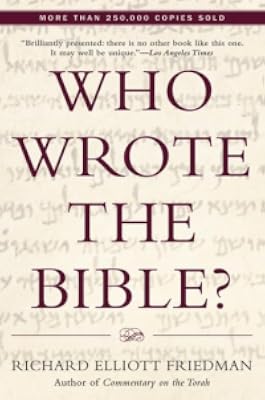
Who Wrote the Bible?
by Richard Elliott Friedman
On This Page
Description
A much anticipated reissue of Who Wrote the Bible? —the contemporary classic the New York Times Book Review called "a thought-provoking [and] perceptive guide" that identifies the individual writers of the Pentateuch and explains what they can teach us about the origins of the Bible. For thousands of years, the prophet Moses was regarded as the sole author of the first five books of the Bible, known as the Pentateuch. According to tradition, Moses was divinely directed to write down show more foundational events in the history of the world: the creation of humans, the worldwide flood, the laws as they were handed down at Mt. Sinai, and the cycle of Israel's enslavement and liberation from Egypt. However, these stories—and their frequent discrepancies—provoke questions: why does the first chapter in Genesis say that man and woman were made in God's image, while the second says that woman was made from man's rib? Why does one account of the flood say it lasted forty days, while another records no less than one hundred? And why do some stories reflect the history of southern Judah, while others seem sourced from northern Israel? Originally published in 1987, Richard Friedman's Who Wrote the Bible? joins a host of modern scholars who show that the Pentateuch was written by at least four distinct voices—separated by borders, political alliances, and particular moments in history—then connected by brilliant editors. Rather than cast doubt onto the legitimacy of the Bible, Friedman uses these divergent accounts to illuminate a text that was written by real people. Friedman's seminal and bestselling text is a comprehensive and authoritative answer to the question: just who exactly wrote the Bible? show lessTags
Recommendations






Member Recommendations

lhungsbe My go-to version of the Bible. No additions or deletions. Easy to read.
20
Member Reviews
This book was absolutely fascinating, and also very well-written!! It deserves a place on the bookshelf of any serious student of Biblical or even just ancient near-eastern history, imho.
Five authors: the J, E, P, D and R are found in a great summary of modern Higher Literary criticism of the Biblical texts known to Christians as the Old Testament, and just the Bible or TNaCH to Jewish readers. The J and E are roughly contemporary, from the time of the Northern kingdom and the Kingdom of Yehuda (Solomon's kids southern kingdom): J=Jehovah vs E for Elohim via the Hebrew names for God: two ancient texts combined into one. The P was a priestly document which accounts for the various 'where he shall place his name' lines coming up seemingly show more randomly in sacrifce laws, D=Deuteronomist, and the Redactor edited it all together into one document, apparently without dropping a line, and coherent enough to inspire a national narrative going forward after the Babylonian exile! Now that is beautiful genius!
Overall, I found it reassuring that various groups of writers show different but clear motivations for writing the books that began as separate works. It was quite interesting to see why and when those books could have been combined due to changing historical circumstances.
It was also surprising for me to learn of the Judean refugees in Egypt. But this does explain the presence of the Jewish mercenaries on the Nile island of Elephantine. I loved his phrase on page 144: "from Egypt to Egypt" and also possibly related to that is a reference on page 146 that I must look up: Baba Batra 15a from the Talmud Bavli (I just found this note with no other context... but here is a source ref: https://www.sefaria.org/Bava_Batra.15a ).
I found it thrilling to see the idea of Jeremiah as writing Deuteronomy, and of Ezra or his scribe Baruch as the redactor. These findings closed for me what had previously been gaping wounds based on my own problems with the inconsistencies within the Biblical texts. Now I can read and study these texts in the knowledge that it is no secret that these writings were put together for a purpose by multiple people, yet serve a purpose greater perhaps than even the redactor himself could have forseen at the time. Hope, inspiration and magnificence all come from the pages written and redated into one whole, and this is an amazing example of the Divinity that human cooperation can produce.
27 June, 12017 HE
(Holocene or Human Era)
Shira show less
Five authors: the J, E, P, D and R are found in a great summary of modern Higher Literary criticism of the Biblical texts known to Christians as the Old Testament, and just the Bible or TNaCH to Jewish readers. The J and E are roughly contemporary, from the time of the Northern kingdom and the Kingdom of Yehuda (Solomon's kids southern kingdom): J=Jehovah vs E for Elohim via the Hebrew names for God: two ancient texts combined into one. The P was a priestly document which accounts for the various 'where he shall place his name' lines coming up seemingly show more randomly in sacrifce laws, D=Deuteronomist, and the Redactor edited it all together into one document, apparently without dropping a line, and coherent enough to inspire a national narrative going forward after the Babylonian exile! Now that is beautiful genius!
Overall, I found it reassuring that various groups of writers show different but clear motivations for writing the books that began as separate works. It was quite interesting to see why and when those books could have been combined due to changing historical circumstances.
It was also surprising for me to learn of the Judean refugees in Egypt. But this does explain the presence of the Jewish mercenaries on the Nile island of Elephantine. I loved his phrase on page 144: "from Egypt to Egypt" and also possibly related to that is a reference on page 146 that I must look up: Baba Batra 15a from the Talmud Bavli (I just found this note with no other context... but here is a source ref: https://www.sefaria.org/Bava_Batra.15a ).
I found it thrilling to see the idea of Jeremiah as writing Deuteronomy, and of Ezra or his scribe Baruch as the redactor. These findings closed for me what had previously been gaping wounds based on my own problems with the inconsistencies within the Biblical texts. Now I can read and study these texts in the knowledge that it is no secret that these writings were put together for a purpose by multiple people, yet serve a purpose greater perhaps than even the redactor himself could have forseen at the time. Hope, inspiration and magnificence all come from the pages written and redated into one whole, and this is an amazing example of the Divinity that human cooperation can produce.
27 June, 12017 HE
(Holocene or Human Era)
Shira show less
This book was absolutely fascinating, and also very well-written!! It deserves a place on the bookshelf of any serious student of Biblical or even just ancient near-eastern history, imho.
Five authors: the J, E, P, D and R are found in a great summary of modern Higher Literary criticism of the Biblical texts known to Christians as the Old Testament, and just the Bible or TNaCH to Jewish readers. The J and E are roughly contemporary, from the time of the Northern kingdom and the Kingdom of Yehuda (Solomon's kids southern kingdom): J=Jehovah vs E for Elohim via the Hebrew names for God: two ancient texts combined into one. The P was a priestly document which accounts for the various 'where he shall place his name' lines coming up seemingly show more randomly in sacrifce laws, D=Deuteronomist, and the Redactor edited it all together into one document, apparently without dropping a line, and coherent enough to inspire a national narrative going forward after the Babylonian exile! Now that is beautiful genius!
Overall, I found it reassuring that various groups of writers show different but clear motivations for writing the books that began as separate works. It was quite interesting to see why and when those books could have been combined due to changing historical circumstances.
It was also surprising for me to learn of the Judean refugees in Egypt. But this does explain the presence of the Jewish mercenaries on the Nile island of Elephantine. I loved his phrase on page 144: "from Egypt to Egypt" and also possibly related to that is a reference on page 146 that I must look up: Baba Batra 15a from the Talmud Bavli (I just found this note with no other context... but here is a source ref: https://www.sefaria.org/Bava_Batra.15a ).
I found it thrilling to see the idea of Jeremiah as writing Deuteronomy, and of Ezra or his scribe Baruch as the redactor. These findings closed for me what had previously been gaping wounds based on my own problems with the inconsistencies within the Biblical texts. Now I can read and study these texts in the knowledge that it is no secret that these writings were put together for a purpose by multiple people, yet serve a purpose greater perhaps than even the redactor himself could have forseen at the time. Hope, inspiration and magnificence all come from the pages written and redated into one whole, and this is an amazing example of the Divinity that human cooperation can produce.
27 June, 12017 HE
(Holocene or Human Era)
Shira show less
Five authors: the J, E, P, D and R are found in a great summary of modern Higher Literary criticism of the Biblical texts known to Christians as the Old Testament, and just the Bible or TNaCH to Jewish readers. The J and E are roughly contemporary, from the time of the Northern kingdom and the Kingdom of Yehuda (Solomon's kids southern kingdom): J=Jehovah vs E for Elohim via the Hebrew names for God: two ancient texts combined into one. The P was a priestly document which accounts for the various 'where he shall place his name' lines coming up seemingly show more randomly in sacrifce laws, D=Deuteronomist, and the Redactor edited it all together into one document, apparently without dropping a line, and coherent enough to inspire a national narrative going forward after the Babylonian exile! Now that is beautiful genius!
Overall, I found it reassuring that various groups of writers show different but clear motivations for writing the books that began as separate works. It was quite interesting to see why and when those books could have been combined due to changing historical circumstances.
It was also surprising for me to learn of the Judean refugees in Egypt. But this does explain the presence of the Jewish mercenaries on the Nile island of Elephantine. I loved his phrase on page 144: "from Egypt to Egypt" and also possibly related to that is a reference on page 146 that I must look up: Baba Batra 15a from the Talmud Bavli (I just found this note with no other context... but here is a source ref: https://www.sefaria.org/Bava_Batra.15a ).
I found it thrilling to see the idea of Jeremiah as writing Deuteronomy, and of Ezra or his scribe Baruch as the redactor. These findings closed for me what had previously been gaping wounds based on my own problems with the inconsistencies within the Biblical texts. Now I can read and study these texts in the knowledge that it is no secret that these writings were put together for a purpose by multiple people, yet serve a purpose greater perhaps than even the redactor himself could have forseen at the time. Hope, inspiration and magnificence all come from the pages written and redated into one whole, and this is an amazing example of the Divinity that human cooperation can produce.
27 June, 12017 HE
(Holocene or Human Era)
Shira show less
The contemporary classic the New York Times Book Review called “a thought-provoking [and] perceptive guide,” Who Wrote the Bible? by Richard E. Friedman is a fascinating, intellectual, yet highly readable analysis and investigation into the authorship of the Old Testament. The author of Commentary on the Torah, Friedman delves deeply into the history of the Bible in a scholarly work that is as exciting and surprising as a good detective novel. Who Wrote the Bible? is enlightening, riveting, an important contribution to religious literature, and as the Los Angeles Times aptly observed in its rave review, “There is no other book like this one.”
I love this book. I have read it three times now and I know I will turn to it again and again. Friedman writes in a clear, concise manner that is highly readable. He provides a clear presentation of the Documentary Hypothesis and traces the various strands providing theological, historical, and political motivations for each strand and for the different steps in the redaction of the text. This would be a wonderful first book for a person new to source criticism.
A short book presenting evidence that the Bible was written by many different authors, each adding passages that corresponded to their social and political environments at their time of living. Friedman does an excellent job presenting the evidence for this by showing differences in language and syntax found in the most famous stories, like Noah's Ark or Moses receiving the 10 commandments. These stories show up multiple times in the Bible but with different lines or certain words added, signifying that someone (or a group) changed the story around slightly. These have become known as the J, E, and P texts (Jahweh, Elohim, and Priestly).
I find it fascinating that so many people swear by it, follow it, praise it but know absolutely show more nothing about its history. It contains so many contradictions. I don't understand why people still continue to use the Bible as an authoritative text rather than use it as a means for spiritual guidance (although many parts of it that I've seen quoted are rather violent and primitive). I plan to read parts of it strictly as literature and for historical context, only because I find the Near East so interesting. show less
I find it fascinating that so many people swear by it, follow it, praise it but know absolutely show more nothing about its history. It contains so many contradictions. I don't understand why people still continue to use the Bible as an authoritative text rather than use it as a means for spiritual guidance (although many parts of it that I've seen quoted are rather violent and primitive). I plan to read parts of it strictly as literature and for historical context, only because I find the Near East so interesting. show less
The title is a bit miss leading. Friedman really only addressed the first five books of the Bible traditionally attributed to Moses. However as complicated as those origins become once Moses' authorship is shown to be purely pseudo epigraphical it makes sense to devote a whole book to them. The author (a Biblical scholar studying the origins of the books for ten years prior to this book) presents his version of the Documentary Theory. Simply put the Documentary Theory states that the Bible (at least the parts in question) was compiled from various preexisting sources in such a way that they were literally intertwined. The theory was originally introduced as an explanation for the often contradictory story doublets and inconsistent show more language and purpose of the text. Essentially, rather than all the Pentateuch being written by a single man it is composed from four separate works known as J, E, P and D.
That makes sense to me, Friedman does a fine job of explaining the evidence for this theory and the four sources. After that you dive into his personal attempts to place the sources in time and authorship. He explains that J & E were oppositional texts the appeared when Israel and Judea split. They maintain the important Jewish traditions that had already been established, but have differing emphasis relating to their own political and religious status. Later, once outside invaders crush Israel, the two Jewish sects are reunited and their separate texts are combined in what is likely and political and religious compromise. Then the P source arises which serves to solidify the role of the current priesthood. D is a response to P reflecting shifts in practice and perspective in the time of the second temple. Friedman makes a strong case for these positions, I'm a bit more leary of his attribution of D to Jeremiah and his naming Ezra the redactor of the all five books. There simply doesn't seem to be much available to support such specific claims of authorship.
All told I found it terribly informative and easy to read. However the complexity of the research and Friedland's failure to more specifically explain the sources of his theory leave me reluctant to simply swallow all of his assertions. It would have been nice if he had explained what came from literary analysis, what was supported by archeology or outside sources and when he simply relied on the content of the Bible. That's really the shortcoming of the book. It produces a lot of plausible theories that depend on complicated research that is unavailable in the book. It's also really frustrating to read about the intertwining of the various sources without being able to to crack open the Pentateuch and see for yourself where one source stops and another begins. I'd like to be able to do that and maybe get a feel for how the sources were recognized to begin with, at least as well as a non Hebrew speaker can. All and all it's a good read, but I don't think it shuts the book on the subject. There are simply too many unknowns, as far as I can tell, to prove all of Friedman's positions.
There is an odd bit at the end. I read the first 13 chapters unable to tell if Friedman was a believer or not. Simply put he was only addressing scholarly issues in scholarly terms. And then at the end the last chapter becomes a plea that his previous arguments do not in any way threaten Christian belief. That really doesn't make sense to me. how could a case that the Pentateuch not only had multiple authors, but that they had significant differences in politics and religion and that they were later combined in a way contrary to their original intent not threaten the veracity of the Bible? I guess ultimately as compelling as his research is, it doesn't really have any bearing on Mr. Friedman's faith. This is a man that can put on his scholar hat and do some good work, and then put on his religious hat and be completely immune to any problems raised by his own research. show less
That makes sense to me, Friedman does a fine job of explaining the evidence for this theory and the four sources. After that you dive into his personal attempts to place the sources in time and authorship. He explains that J & E were oppositional texts the appeared when Israel and Judea split. They maintain the important Jewish traditions that had already been established, but have differing emphasis relating to their own political and religious status. Later, once outside invaders crush Israel, the two Jewish sects are reunited and their separate texts are combined in what is likely and political and religious compromise. Then the P source arises which serves to solidify the role of the current priesthood. D is a response to P reflecting shifts in practice and perspective in the time of the second temple. Friedman makes a strong case for these positions, I'm a bit more leary of his attribution of D to Jeremiah and his naming Ezra the redactor of the all five books. There simply doesn't seem to be much available to support such specific claims of authorship.
All told I found it terribly informative and easy to read. However the complexity of the research and Friedland's failure to more specifically explain the sources of his theory leave me reluctant to simply swallow all of his assertions. It would have been nice if he had explained what came from literary analysis, what was supported by archeology or outside sources and when he simply relied on the content of the Bible. That's really the shortcoming of the book. It produces a lot of plausible theories that depend on complicated research that is unavailable in the book. It's also really frustrating to read about the intertwining of the various sources without being able to to crack open the Pentateuch and see for yourself where one source stops and another begins. I'd like to be able to do that and maybe get a feel for how the sources were recognized to begin with, at least as well as a non Hebrew speaker can. All and all it's a good read, but I don't think it shuts the book on the subject. There are simply too many unknowns, as far as I can tell, to prove all of Friedman's positions.
There is an odd bit at the end. I read the first 13 chapters unable to tell if Friedman was a believer or not. Simply put he was only addressing scholarly issues in scholarly terms. And then at the end the last chapter becomes a plea that his previous arguments do not in any way threaten Christian belief. That really doesn't make sense to me. how could a case that the Pentateuch not only had multiple authors, but that they had significant differences in politics and religion and that they were later combined in a way contrary to their original intent not threaten the veracity of the Bible? I guess ultimately as compelling as his research is, it doesn't really have any bearing on Mr. Friedman's faith. This is a man that can put on his scholar hat and do some good work, and then put on his religious hat and be completely immune to any problems raised by his own research. show less
My mother introduced me to this book years ago and I loved it. Was reminded of it recently and decided to re-read it. Yep, still good.
Friedman first talks about the history of Biblical textual analysis. Doubts that Moses wrote the Torah arose in the Middle Ages but were viciously suppressed. But the question had been raised and became more common, increasing steadily from the 17th century on.
The result is that we now know much more about who wrote the Bible, when, what their viewpoint was, and when they wrote. Friedman concentrates on the Torah, or Pentateuch, and the Deuteronic books (beginning with Deuteronomy and going through Judges, Kings, and the Chronicles). There were four authors and an editor who combined the source documents show more into what we have today.
The earliest were the J and E documents, which were then edited together. Following them were the D and P documents. All of these were written before the Babylonian exile, but the editor combined all the documents in the period of the Second Temple.
Since I'm a historian, I love the history he talks about, from the time Israel was ruled by judges, then kings, broke into the separate kingdoms of Judah and Israel, the fall of Israel, and so on. Then there's the viewpoints of the different authors. The P, or Priestly, document, for example, was written by an Aaronid priest - a descendent of Aaron, who made his living through sacrifices brought to the temple. So in his telling of Biblical stories, Aaron is emphasized more, Moses is slightly denigrated, all sacrifices must come to the temple, God is just and worship must be mediated by the priests, and so on.
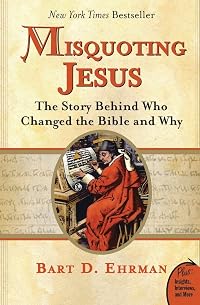
Excellent book, and a good starting point on the topic. As follow ups I recommend books by John Shelby Spong, especially Rescuing the Bible From Fundamentalism, which covers the New Testament as well as the Old, and almost any of Bart Ehrman's books that concentrate on the new Testament. A friend of mine also recommends Isaac Asimov's book on the Bible. show less
Friedman first talks about the history of Biblical textual analysis. Doubts that Moses wrote the Torah arose in the Middle Ages but were viciously suppressed. But the question had been raised and became more common, increasing steadily from the 17th century on.
The result is that we now know much more about who wrote the Bible, when, what their viewpoint was, and when they wrote. Friedman concentrates on the Torah, or Pentateuch, and the Deuteronic books (beginning with Deuteronomy and going through Judges, Kings, and the Chronicles). There were four authors and an editor who combined the source documents show more into what we have today.
The earliest were the J and E documents, which were then edited together. Following them were the D and P documents. All of these were written before the Babylonian exile, but the editor combined all the documents in the period of the Second Temple.
Since I'm a historian, I love the history he talks about, from the time Israel was ruled by judges, then kings, broke into the separate kingdoms of Judah and Israel, the fall of Israel, and so on. Then there's the viewpoints of the different authors. The P, or Priestly, document, for example, was written by an Aaronid priest - a descendent of Aaron, who made his living through sacrifices brought to the temple. So in his telling of Biblical stories, Aaron is emphasized more, Moses is slightly denigrated, all sacrifices must come to the temple, God is just and worship must be mediated by the priests, and so on.
Excellent book, and a good starting point on the topic. As follow ups I recommend books by John Shelby Spong, especially Rescuing the Bible From Fundamentalism, which covers the New Testament as well as the Old, and almost any of Bart Ehrman's books that concentrate on the new Testament. A friend of mine also recommends Isaac Asimov's book on the Bible. show less
Members
- Recently Added By
Lists

KayStJ's to-read list
1,616 works; 11 members

The Great Courses: The Old Testament
78 works; 1 member

Books That Changed Our Perspective
423 works; 168 members
Author Information

17 Works 3,578 Members
Richard Elliott Friedman, a world-renowned biblical scholar, is Professor of Hebrew and Comparative Literature at the University of California, San Diego. He is the author of The Hidden Face of God and the bestselling Who Wrote the Bible?
Awards and Honors
Work Relationships
Is contained in
Has as a student's study guide
Common Knowledge
- Original title
- Who wrote the Bible?
- Original publication date
- 1987
- Important places
- Israel; Judah; Beth-el
- Dedication
- This book is dedicated to
Reva A. Friedman and Laraine Friedman Linn,
with love. - First words
- People have been reading the Bible for nearly two thousand years.
- Quotations
- La questione della paternità della Bibbia è menzionata in quasi tutte le introduzioni all'Antico e al Nuovo Testamento, in centinaia di commentari al testo e nella maggior parte dei corsi sulla Bibbia tenuti presso le unive... (show all)rsità e i seminari. Tuttavia, se sono in molti ad avere quanto meno sentito nominare le teorie evoluzionistiche e le scienze geologiche in relazione al problema dell'età della terra, non si può dire lo stesso a proposito del dibattito sugli autori biblici. Il fenomeno si spiega, almeno in parte, con la mancanza in questo campo di scoperte sensazionali paragonabili a quelle di Darwin alle Galapagos o al ritrovamento nelle grotte di Qumran dei cosiddetti "rotoli del Mr Morto". Il progresso degli studi si deve piuttosto a lunghe e pazienti ricerche che nel corso di molti secoli hanno man mano giustapposto i tasselli di un grande mosaico, pochi dei quali hanno fatto notizia. Ma la parte di mosaico oggi ricostruita rivela finalmente la fisionomia degli artefici della Bibbia, e credo che sia importante mette a parte di questa scoperta un pubblico più vasto.
In qualunque modo si voglia interpretare la Bibbia - come opera letteraria, testo religioso, fonte storica, raccolta di massime morali (una scelta che già comporta una selezione di pubblico) - l'assenza dell'autore ci sottra... (show all)e il nostro principale interlocutore.
L'insegnamento della letteratura prevede di norma alcune notizie biografiche e, se si escludono le analisi teoriche più avanzate, il rapporto tra la vita di un autore e la realtà descritta nelle sue opere è ritenuto un elemento di rilievo. [...]
È sorprendente che nel caso della Bibbia queste informazioni siano sempre state largamente deficitarie, anche a prezzo dell'intelligibilità del testo. Se, ad esempio, non siamo in grado di attribuire un certo racconto biblico a un secolo preciso, come dovremo interpretare quelle espressioni che assumono significati diversi a seconda del periodo. L'autore è stato testimone oculare dei fatti che racconta? Se non è così, come si è formato un'idea di ciò che è accaduto: attraverso fonti scritte, per rivelazione divina, creando egli stesso la storia o in quale altro modo? In che misura gli avvenimenti della vita contemporanea hanno influenzato la narrazione? La storia doveva avere fin dall'inizio il valore di Libro, sacro e autoritativo?
Rispondere a queste domande è importante per comprendere il significato del testo all'interno del suo stesso mondo, ma risalire all'identità degli autori e alle forze che l'hanno prodotto apre la via a una nuova e più ricca interpretazione moderna, di grande interesse per i credenti come per i non-credenti.
... il conflitto tra re e sacerdoti e tra pretendenti al trono che si prospetta già durante il primo stadio della storia israelitica, avrebbe assunto un ruolo decisivo nel processo di scrittura del testo biblico. - Last words
- (Click to show. Warning: May contain spoilers.)Dopo tutto, quando il libro con cui ci si confronta è la Bibbia, l'orizzonte di attesa del pubblico è non meno importante del nome dell'autore.
Classifications
Statistics
- Members
- 1,896
- Popularity
- 11,290
- Reviews
- 26
- Rating
- (4.03)
- Languages
- 6 — English, French, German, Italian, Spanish, Turkish
- Media
- Paper, Audiobook, Ebook
- ISBNs
- 16
- ASINs
- 9