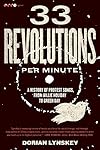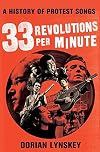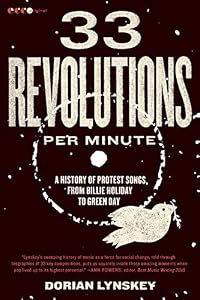
33 Revolutions per Minute: A History of Protest Songs, from Billie Holiday to Green Day
by Dorian Lynskey
On This Page
Description
A history of protest music embodied in 33 songs since the 1930s.Tags
Recommendations



Member Reviews
This may be the first time I've ever had a love/hate relationship with a non-fiction book.
It's safe to say that for nearly the first half of this 600+ page exploration of protest through song, I was enraptured. As a historian and a music-lover, I was in awe of the way Lynskey folded global historical events in with the chapter title songs. The first chapter, on Billie Holiday's "Strange Fruit" as well as the chapter on James Brown's "Say It Loud-I'm Black and Proud" are excellent examples of where the combination is done so almost flawlessly. By the time I had reached Part III of the book - a trio of chapters written about lesser-known songs and history (from an American point-of-view) from Chile, Nigeria, and Jamaica I had already show more begun thinking about a way to create a history class based around this idea. It seemed that introducing history via music and the protest song was a perfect way of illustrating historical ideas and ideals.
Something happened to the narrative of the book once it hit the mid 1970s, and it wasn't an improvement. Suddenly the chapters seemed disjointed and started feeling more like short essays on ideas and songs stitched together to create the larger chapters. The historical narrative, in itself simply a 100-level glossing of political events, was overtaking the musical narrative. The chapter on U2's "Pride (In the Name of Love)" has little to do with the title song, and instead describes U2's entire catalog and how it relates to the history of the years in which they were written. Chapter 20 on Grandmaster Flash's "The Message" is a neutered history of political hip-hop in the early 1980s and spends most of it's time forgetting to talk about "The Message".
By the time the book reaches the end of the 80s, into the 1990s and beyond, Lynskey becomes more interested in showing parallels and differences of then-vs-now protest songs than talking about the songs in question. (Excepting Chapter 27 on Public Enemy's "Fight the Power" which is a late book stand out.) Chapter 28 on Huggy Bear's "Her Jazz" says only about the song that it began as a 'zine article before becoming overshadowed by the history of Bikini Kill (much like in real life). In perhaps the most bizarre chapter, the story of Rage Against the Machine's "Sleep Now in the Fire" says absolutely nothing about the title song other than the fact it existed. It then interweaves the history or Radiohead as if there was some sort of connection between the two. Unsurprisingly, Lynskey dramatically fails at the attempt.
Chapter 32 (Steve Earle's "John Walker's Blues") spends more time talking about the Dixie Chicks than its supposed subject, and perhaps most disappointingly, the final chapter on Green Day's "American Idiot" spends three and a half pages discussing Green Day before peetering out in a weak history of the Iraq War and Hurricane Katrina.
In the epilogue, Lynskey talks about the feeling he has had writing the book, that the era of the protest song may be over, buried under armchair internet activism and the flux music industry. This, perhaps, is his excuse the for floundering second half of his book, but it's not one I am ready to accept. For an author to so expertly move between and along with the racial history of the 60s and the war protests of Billy Bragg and Woody Guthrie, Lynskey has no excuse for being unable to transition into the new history or music and protest in the 2000s. Excepting, of course, for either laziness or his not-so-hidden anachronistic views of how protest songs should be. show less
It's safe to say that for nearly the first half of this 600+ page exploration of protest through song, I was enraptured. As a historian and a music-lover, I was in awe of the way Lynskey folded global historical events in with the chapter title songs. The first chapter, on Billie Holiday's "Strange Fruit" as well as the chapter on James Brown's "Say It Loud-I'm Black and Proud" are excellent examples of where the combination is done so almost flawlessly. By the time I had reached Part III of the book - a trio of chapters written about lesser-known songs and history (from an American point-of-view) from Chile, Nigeria, and Jamaica I had already show more begun thinking about a way to create a history class based around this idea. It seemed that introducing history via music and the protest song was a perfect way of illustrating historical ideas and ideals.
Something happened to the narrative of the book once it hit the mid 1970s, and it wasn't an improvement. Suddenly the chapters seemed disjointed and started feeling more like short essays on ideas and songs stitched together to create the larger chapters. The historical narrative, in itself simply a 100-level glossing of political events, was overtaking the musical narrative. The chapter on U2's "Pride (In the Name of Love)" has little to do with the title song, and instead describes U2's entire catalog and how it relates to the history of the years in which they were written. Chapter 20 on Grandmaster Flash's "The Message" is a neutered history of political hip-hop in the early 1980s and spends most of it's time forgetting to talk about "The Message".
By the time the book reaches the end of the 80s, into the 1990s and beyond, Lynskey becomes more interested in showing parallels and differences of then-vs-now protest songs than talking about the songs in question. (Excepting Chapter 27 on Public Enemy's "Fight the Power" which is a late book stand out.) Chapter 28 on Huggy Bear's "Her Jazz" says only about the song that it began as a 'zine article before becoming overshadowed by the history of Bikini Kill (much like in real life). In perhaps the most bizarre chapter, the story of Rage Against the Machine's "Sleep Now in the Fire" says absolutely nothing about the title song other than the fact it existed. It then interweaves the history or Radiohead as if there was some sort of connection between the two. Unsurprisingly, Lynskey dramatically fails at the attempt.
Chapter 32 (Steve Earle's "John Walker's Blues") spends more time talking about the Dixie Chicks than its supposed subject, and perhaps most disappointingly, the final chapter on Green Day's "American Idiot" spends three and a half pages discussing Green Day before peetering out in a weak history of the Iraq War and Hurricane Katrina.
In the epilogue, Lynskey talks about the feeling he has had writing the book, that the era of the protest song may be over, buried under armchair internet activism and the flux music industry. This, perhaps, is his excuse the for floundering second half of his book, but it's not one I am ready to accept. For an author to so expertly move between and along with the racial history of the 60s and the war protests of Billy Bragg and Woody Guthrie, Lynskey has no excuse for being unable to transition into the new history or music and protest in the 2000s. Excepting, of course, for either laziness or his not-so-hidden anachronistic views of how protest songs should be. show less
An ambitious, sweeping, endlessly fascinating chronicle of protest songs from Billie Holiday's "Strange Fruit" to Green Day's "American Idiot." Lynskey covers afrobeat, blues, country, folk, hip hop, jazz, rap, and reggae in this superb work of music history. Lynskey is frequently prone to digressions but even they are always interesting.
This book is subtitled "A History of Protest Songs from Billie Holiday to Green Day" and Lynskey pretty much achieves that goal in a bit more than 500 pages. Perhaps not totally comprehensive--there's nothing in here about protest songs in, for example, Europe--but amazingly comprehensive when it comes to songwriters, singers and bands who've had some wider or lasting impact on music, society and the English speaking world. He covers Jamaican music, and while I wish he had said more about some Jamaican artists, that is a very informative and comprehensive chapter--it sent me to my collection of reggae recordings to listen again to Peter Tosh, Jimmy Cliff and, of course, Bob Marley. Lynskey is an astute judge of the songs, or at least of show more the songs I know well, and enthusiastic enough that he not only led me to listen to music I already knew again, but to seek out songs and artists I had not given much of a listen in the past. In the end, what better evaluation of a book about popular music is there? show less
For anyone interested in music and its function in the political and social realm, here's a useful compendium on western protest songs in the 20th century. For the most part, the information is very readable, despite each chapter being packed to the gills with references to specific people, places, events, and music.
Lynskey has taken an almost unmanageable amount of music history and pared it down to the most important protest music from each definable chunk of the last hundred years. Although the book is divided into chapters by song title, it could just as well have been organized by historical event; each chapter's title song is discussed within the context of the movement or event that was its impetus, the surrounding political and show more social climate, and other songs that spring from the same source. I appreciate that the author also offers a couple appendices at the end with additional lists and information, recognizing that his previous 500 pages are in no way exhaustive.
Towards the end, the book feels like it loses the wide-angle perspective it has taken for most chapters and begins to descend into a few rounds of opportunistic Bush-bashing (as opposed to simply writing about anti-Bush and anti-war music); then again, any kind of recent history - music or otherwise - is difficult to write objectively.
This is a great book for musicians to have around the house for reference or to pick up and read a chapter at a time between other reads. show less
Lynskey has taken an almost unmanageable amount of music history and pared it down to the most important protest music from each definable chunk of the last hundred years. Although the book is divided into chapters by song title, it could just as well have been organized by historical event; each chapter's title song is discussed within the context of the movement or event that was its impetus, the surrounding political and show more social climate, and other songs that spring from the same source. I appreciate that the author also offers a couple appendices at the end with additional lists and information, recognizing that his previous 500 pages are in no way exhaustive.
Towards the end, the book feels like it loses the wide-angle perspective it has taken for most chapters and begins to descend into a few rounds of opportunistic Bush-bashing (as opposed to simply writing about anti-Bush and anti-war music); then again, any kind of recent history - music or otherwise - is difficult to write objectively.
This is a great book for musicians to have around the house for reference or to pick up and read a chapter at a time between other reads. show less
A Pet Named Peeves
One of my wife’s biggest pet peeves occurs when I mumble meaningless words to the melody of a song. For her, if you don’t know the lyrics, don’t sing the song. I, sadly, find lyrics difficult to remember.
Since I play guitar, my ears focus on the music first. I can hum textured instrumental melodies much quicker than I can sing a chorus. In fact, sometimes lyrics aren’t necessary. Sigur Rós, one of my favorite bands, sings partly in Icelandic and partly in a made-up language with indiscernible results. I like them, first and foremost, for their beautiful musical melodies.
In short, my mind wanders more toward the composition and less toward the message.
The Lyric
This disposition, however, orients me away from a show more close understanding of an artist’s true message. Of course, many musicians let the music portray the message, but on the whole, the lyric provides a framework for a musician’s message. Some sing strictly about relationships, other lyricists yearn to escape these mortal coils, and a select few utilize the lyric for revolution.
Protest Songs
The protest song becomes the body of a countercultural dogma. With 33 Revolutions per Minute, Dorian Lynskey chronicles the history of the protest song, from Billie Holiday to Green Day. During these 70 years, the protest song exists as a counterweight to a rather tumultuous period in global politics.
With a storytelling style, Lynskey cites 33 songs – one per chapter – as the threads of the protest movement throughout the years.
Lynskey often interjects fun stories amongst the typically depressing battle protest singers engage with the status quo. Speaking of Country Joe McDonald, he writes,
“They returned to their hotel after the second concert on Saturday night, with Joe carrying a human skull, a gift from a fan. ‘I got into the elevator and this guy looked at me and said, “I fought in Vietnam for guys like you.” And he hit me once in the face and broke my nose. I remember thinking, “Throw the skull at him!” And then I thought, “No, it will break and I really like it”’” (101).
Additionally, Lynskey spends necessary time exegeting the famous moments in the history of music. Referencing Woodstock, he proclaims,
“Another key performance was Jimi Hendrix’s rendition of ‘The Star-Spangled Banner,’ without a doubt the most eloquent instrumental protest song rock has ever produced. Hendrix didn’t so much cover the national anthem as napalm it, but the wrenching eloquence of his playing made it into a sonic Rorschach blot, allowing each listener to decide what it represented. He was either putting to the torch the failed experiment of America or evoking the birth pangs of a new, less pernicious brand of patriotism: either the Death Society of the beautiful shipwreck” (106).
The Better I Know the Artist, the Better the Chapter
While the book, on the whole, remains interesting throughout, the artists of which I am a fan contained the most interesting sections. In particular, I found U2 especially fascinating. Lynskey describes them:
“The members of U2 were never much good at being punks. Not enough vinegar. Coming together at school in Dublin in September 1976, they were, and remain, an alliance of divergent, though mutually sympathetic, personalities. Bono has the silver tongue of a raconteur, the taut, jabbing body language of a retired boxer, and the focused charisma of a politician, fervently convinced of the power of words to change minds. Guitarist the Edge is as still and softly spoken as a monk, except when his eyes crinkle slightly in concentration or mirth. Bassist Adam Clayton has the louche bearing of a disgraced aristocrat, and a perpetual air of mild and mysterious amusement. Drummer Larry Mullen Jr. tends to lean forward with earnest intensity, punctuating his speech with apologetic grimaces: he is U2’s restraining anchor, the equal and opposite force to Bono’s grand gestures” (370).
Compared to many artists referenced in 33 Revolutions per Minute, U2 take a unique path. Where most are self-proclaimed Marxists or vigilant protestors, U2 find protest through faith:
“In 1978 they began holding Bible meetings, which the Edge compares to Rasta reasoning sessions ‘but without the weed.’ This gradually brought them into contact with a radical Christian group called Shalom, who believed in miracles and speaking in tongues. After Boy (1980), with its themes of faith and loss, the meetings became more intense and some Shalom members pressured Bono, the Edge, and Mullen to abandon U2 and devote themselves to the faith. Mullen left the meetings, while Bono and the Edge announced they were leaving the band. Their formidable manager Paul McGuinness put the counterargument: ‘Do you really think you’re going to be more effective by going back to your kind of normal lives? Or do you think taking this opportunity to be a great rock ‘n’ roll band is, in the long term, going to have more value?’ Bono and the Edge decided to distance themselves from Shalom, and reconcile their faith with their music” (371).
The Death of a Protest Artist
Of course, many musicians live and die by the political process. It all begins with the unquenching belief that a song will change the world; it ends with despair, pessimism, and, occasionally, death. Billy Bragg, a left wing activist and rock musician finds a balance when Lynskey interviews him,
“As he talks over a bowl of chips in a bookshop café, what seems unusual is not so much his unfussy eloquence as his unquashable optimism. Unlike many political songwriters, he does not sigh or wince at the memory of compromises and setbacks. He long ago accepted that political progress is won by inches, not leaps and bounds” (400).
Unapologetically Partisan
Although 33 Revolutions per Minute is an enjoyable read, it is not for everyone. First, it is unapologetically partisan. Those who acknowledge a right wing background will find frustration with Lynskey’s us-versus-them writing style especially evident when he states,
“Bush was, by some reckonings, the worst president the country had ever had: the architect of two interminable, unpopular wars, the man who allowed 2005’s Hurricane Katrina to become not just a tragedy but a national disgrace, and a divisive ideological bully” (522).
Those left-leaning individuals, though, will enjoy the book. With unabashed politics and excellent songwriting, most protest singers have furthered the industry in undisputable ways.
Will the Revolution Be Written?
For me, 33 Revolutions per Minute kept me entertained but seemed monotonous at times. While the cover suggests that each chapter is devoted to one song and one artist, Lynskey uses each chapter to discuss genres as a whole and their relationship to the political realm. Moreover, in an attempt to touch every genre interacting with politics, Lynskey elaborates on genres for which he writes with less enthusiasm.
Nevertheless, 33 Revolutions per Minute reminds me of lyrical value. Since I too often focus on the music instead of the lyric, Lynskey’s tome reminds me of the life-changing influence lyrics possess. While the politics don’t bother me, I am positive they will bother some. If you are a fan of music, lyrics, and the far left, I recommend this book.
Originally published at http://wherepenmeetspaper.blogspot.com show less
One of my wife’s biggest pet peeves occurs when I mumble meaningless words to the melody of a song. For her, if you don’t know the lyrics, don’t sing the song. I, sadly, find lyrics difficult to remember.
Since I play guitar, my ears focus on the music first. I can hum textured instrumental melodies much quicker than I can sing a chorus. In fact, sometimes lyrics aren’t necessary. Sigur Rós, one of my favorite bands, sings partly in Icelandic and partly in a made-up language with indiscernible results. I like them, first and foremost, for their beautiful musical melodies.
In short, my mind wanders more toward the composition and less toward the message.
The Lyric
This disposition, however, orients me away from a show more close understanding of an artist’s true message. Of course, many musicians let the music portray the message, but on the whole, the lyric provides a framework for a musician’s message. Some sing strictly about relationships, other lyricists yearn to escape these mortal coils, and a select few utilize the lyric for revolution.
Protest Songs
The protest song becomes the body of a countercultural dogma. With 33 Revolutions per Minute, Dorian Lynskey chronicles the history of the protest song, from Billie Holiday to Green Day. During these 70 years, the protest song exists as a counterweight to a rather tumultuous period in global politics.
With a storytelling style, Lynskey cites 33 songs – one per chapter – as the threads of the protest movement throughout the years.
Lynskey often interjects fun stories amongst the typically depressing battle protest singers engage with the status quo. Speaking of Country Joe McDonald, he writes,
“They returned to their hotel after the second concert on Saturday night, with Joe carrying a human skull, a gift from a fan. ‘I got into the elevator and this guy looked at me and said, “I fought in Vietnam for guys like you.” And he hit me once in the face and broke my nose. I remember thinking, “Throw the skull at him!” And then I thought, “No, it will break and I really like it”’” (101).
Additionally, Lynskey spends necessary time exegeting the famous moments in the history of music. Referencing Woodstock, he proclaims,
“Another key performance was Jimi Hendrix’s rendition of ‘The Star-Spangled Banner,’ without a doubt the most eloquent instrumental protest song rock has ever produced. Hendrix didn’t so much cover the national anthem as napalm it, but the wrenching eloquence of his playing made it into a sonic Rorschach blot, allowing each listener to decide what it represented. He was either putting to the torch the failed experiment of America or evoking the birth pangs of a new, less pernicious brand of patriotism: either the Death Society of the beautiful shipwreck” (106).
The Better I Know the Artist, the Better the Chapter
While the book, on the whole, remains interesting throughout, the artists of which I am a fan contained the most interesting sections. In particular, I found U2 especially fascinating. Lynskey describes them:
“The members of U2 were never much good at being punks. Not enough vinegar. Coming together at school in Dublin in September 1976, they were, and remain, an alliance of divergent, though mutually sympathetic, personalities. Bono has the silver tongue of a raconteur, the taut, jabbing body language of a retired boxer, and the focused charisma of a politician, fervently convinced of the power of words to change minds. Guitarist the Edge is as still and softly spoken as a monk, except when his eyes crinkle slightly in concentration or mirth. Bassist Adam Clayton has the louche bearing of a disgraced aristocrat, and a perpetual air of mild and mysterious amusement. Drummer Larry Mullen Jr. tends to lean forward with earnest intensity, punctuating his speech with apologetic grimaces: he is U2’s restraining anchor, the equal and opposite force to Bono’s grand gestures” (370).
Compared to many artists referenced in 33 Revolutions per Minute, U2 take a unique path. Where most are self-proclaimed Marxists or vigilant protestors, U2 find protest through faith:
“In 1978 they began holding Bible meetings, which the Edge compares to Rasta reasoning sessions ‘but without the weed.’ This gradually brought them into contact with a radical Christian group called Shalom, who believed in miracles and speaking in tongues. After Boy (1980), with its themes of faith and loss, the meetings became more intense and some Shalom members pressured Bono, the Edge, and Mullen to abandon U2 and devote themselves to the faith. Mullen left the meetings, while Bono and the Edge announced they were leaving the band. Their formidable manager Paul McGuinness put the counterargument: ‘Do you really think you’re going to be more effective by going back to your kind of normal lives? Or do you think taking this opportunity to be a great rock ‘n’ roll band is, in the long term, going to have more value?’ Bono and the Edge decided to distance themselves from Shalom, and reconcile their faith with their music” (371).
The Death of a Protest Artist
Of course, many musicians live and die by the political process. It all begins with the unquenching belief that a song will change the world; it ends with despair, pessimism, and, occasionally, death. Billy Bragg, a left wing activist and rock musician finds a balance when Lynskey interviews him,
“As he talks over a bowl of chips in a bookshop café, what seems unusual is not so much his unfussy eloquence as his unquashable optimism. Unlike many political songwriters, he does not sigh or wince at the memory of compromises and setbacks. He long ago accepted that political progress is won by inches, not leaps and bounds” (400).
Unapologetically Partisan
Although 33 Revolutions per Minute is an enjoyable read, it is not for everyone. First, it is unapologetically partisan. Those who acknowledge a right wing background will find frustration with Lynskey’s us-versus-them writing style especially evident when he states,
“Bush was, by some reckonings, the worst president the country had ever had: the architect of two interminable, unpopular wars, the man who allowed 2005’s Hurricane Katrina to become not just a tragedy but a national disgrace, and a divisive ideological bully” (522).
Those left-leaning individuals, though, will enjoy the book. With unabashed politics and excellent songwriting, most protest singers have furthered the industry in undisputable ways.
Will the Revolution Be Written?
For me, 33 Revolutions per Minute kept me entertained but seemed monotonous at times. While the cover suggests that each chapter is devoted to one song and one artist, Lynskey uses each chapter to discuss genres as a whole and their relationship to the political realm. Moreover, in an attempt to touch every genre interacting with politics, Lynskey elaborates on genres for which he writes with less enthusiasm.
Nevertheless, 33 Revolutions per Minute reminds me of lyrical value. Since I too often focus on the music instead of the lyric, Lynskey’s tome reminds me of the life-changing influence lyrics possess. While the politics don’t bother me, I am positive they will bother some. If you are a fan of music, lyrics, and the far left, I recommend this book.
Originally published at http://wherepenmeetspaper.blogspot.com show less
Dorian Lynskey, jornalista do Guardian, tenta traçar a história das canções de protesto no século XX, - ou pelo menos do cruzamento entre a música pop e a política. Focado na música do Ocidente (com algumas excepções que, contudo, tiveram repercussão no Ocidente), é muito mais do que um livro de música - sob o pretexto de apresentar 33 canções representativas (de Billie Holiday aos Green Day), Lynskey acaba por traçar um retrato das grandes alterações políticas e sociais do século passado e de como as mesmas afectaram a música popular.
33 Revolutions per Minute is a play on the 33, a small record that spun 33 times per minute, and uses minutes as a metaphor for years. The book is divided into segments, which represent different decades and within each segment/decade, there are a few four-page analyses on each signer and song that defined the anti-war, anti-goverment mentality of that decade.
Mr. Lynsky does a good job at telling the history of the artist and song, as well as an analysis of the song.The analysis answers the questions "What was the political climate like" and "What did the song do to change that climate?"
I was impressed at the depth of the book, and learned a lot about each song, artist and decade.
Mr. Lynsky does a good job at telling the history of the artist and song, as well as an analysis of the song.The analysis answers the questions "What was the political climate like" and "What did the song do to change that climate?"
I was impressed at the depth of the book, and learned a lot about each song, artist and decade.
Members
- Recently Added By
Published Reviews
ThingScore 58
“I began this book intending to write a history of a still vital form of music,” Lynskey writes. “I finished it wondering if I had instead composed a eulogy.” As eulogies go, however, this is a lively and sprawling one, beginning with a chapter on “Strange Fruit,” written in 1939, and ending with largely ignored attacks on George W. Bush’s military policy.
added by waitingtoderail
The cruel truth about “33 Revolutions Per Minute” — despite Mr. Lynskey’s lovely writing — is that it is not quite art. It is mostly torpid and colorless, a copiously annotated list rather than a cohesive narrative or an extended argument. He tends to dump his glittery insights at the beginnings and endings of chapters, and stuff the blah centers with potted historical background. show more This is a common enough problem in nonfiction books that seek to blend criticism with history, but that doesn’t mean it’s forgivable. Plenty of writers get it right. show less
added by Shortride
". . . the best thing about Lynskey's book is that it will send you back – or for the first time – to an array of extraordinary songs, from Nina Simone's nerve-tingling "Mississippi Goddam" to the full-on assault of Crass's Falklands-inspired and Thatcher-directed "How Does It Feel to Be the Mother of a Thousand Dead"."
added by waitingtoderail
Lists

Unread books
1,063 works; 82 members

Music Journalism and Biography
56 works; 1 member
Author Information

9+ Works 739 Members
Dorian Lynskey is a music writer for the Guardian. He also writes for Q, The Word, and Spin, among other publications. 33 Revolutions Per Minute is his first book.
Awards and Honors
Series
Belongs to Publisher Series
Common Knowledge
- Original title
- 33 Revolutions Per Minute: A History of Protest Songs
- Original publication date
- 2010
Classifications
- Genres
- Music, Nonfiction, General Nonfiction, History
- DDC/MDS
- 782.42 — Arts & recreation Music Vocal music [formerly: Dramatic music and production of musical drama] Secular forms of vocal music Songs
- LCC
- ML3780 .L97 — Music Literature on music Literature on music History and criticism Music on particular topics
- BISAC
Statistics
- Members
- 251
- Popularity
- 128,585
- Reviews
- 9
- Rating
- (3.83)
- Languages
- English, French, Spanish
- Media
- Paper, Ebook
- ISBNs
- 9
- ASINs
- 4