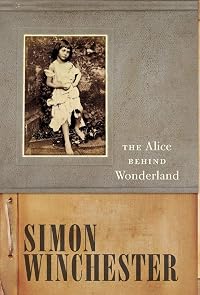
The Alice Behind Wonderland
by Simon Winchester
On This Page
Description
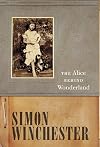
"In the summer of 1858, in a garden behind Christ Church in Oxford, Charles Dodgson--better known by his pseudonym Lewis Carroll--dressed the six-year-old Alice Liddell in ragamuffin's clothes, and then snapped the camera's shutter. In The Alice Behind Wonderland, Simon Winchester uses the famous photograph of Alice as the launching pad for an appreciative energetic and penetrating look at the inspiration behind, and the making of, one of the greatest classics of children's literature. show more Indeed, Winchester shows that Dodgson's love of photography deeply influenced his view of the world, helping to transform this shy and half-deaf mathematician into one of the world's best-loved observers of childhood. Much like the fictional Alice's world, as the photograph is subject to closer examination, 'Alice Liddell as The Beggar Maid' becomes curiouser and curiouser, capturing a moment during a golden afternoon that would endure forever. 'Alice Liddell as The Beggar Maid' was, in short, the muse that would inspire the creation of Alice's Adventures in Wonderland. Deftly engaging with Dogson's published writings, private diaries, and photography, Winchester weaves together the poignant, turbulent, and entirely fascinating story behind Lewis Carroll and the making of his Alice. Acclaim for Simon Winchester "An exceptionally engaging guideat home everywhere, ready for anything, full of gusto and seemingly omnivorous curiosity." --Pico Iyer, The New York Times Book Review "A master at telling a complex story compellingly and lucidly." --USA Today "Extraordinarily graceful." --Time "Winchester is an exquisite writer and a deft anecdoteur." --Christopher Buckley "A lyrical writer and an indefatigable researcher." --Newsweek"-- "In the summer of 1858, in a garden behind Christ Church in Oxford, Charles Dodgson--better known by his pseudonym Lewis Carroll--dressed the six-year-old Alice Liddell in ragamuffin's clothes, and then snapped the camera's shutter. In The Alice Behind Wonderland, Simon Winchester uses the famous photograph of Alice as the launching pad for an appreciative energetic and penetrating look at the inspiration behind, and the making of, one of the greatest classics of children's literature. Indeed, Winchester shows that Dodgson's love of photography deeply influenced his view of the world, helping to transform this shy and half-deaf mathematician into one of the world's best-loved observers of childhood. Much like the fictional Alice's world, as the photograph is subject to closer examination, 'Alice Liddell as The Beggar Maid' becomes curiouser and curiouser, capturing a moment during a golden afternoon that would endure forever. 'Alice Liddell as The Beggar Maid' was, in short, the muse that would inspire the creation of Alice's Adventures in Wonderland. Deftly engaging with Dodgson's published writings, private diaries, and photography, Winchester weaves together the poignant, turbulent, and entirely fascinating story behind Lewis Carroll and the making of his Alice. "-- show lessTags
Recommendations













Member Recommendations

waltzmn Charles Dodgson (Lewis Carroll) is best known for the Alice books, but he was also an early photographer -- and is considered the first great photographer of children. Simon Winchester's book is largely about one image taken by Dodgson, "The Beggar Maid." Helmut Gernsheim's volume gives a greater context, discussing all of Dodgson's photographic career.
Member Reviews
I found this a fascinating entry point into learning something about the early days of photography, as well as a look at Lewis Carroll and his relationship to Alice Liddell (and the Liddell family), which was instrumental in his creation of Alice's famous adventures. As I had only heard vague murmurings about Carroll (Dodgson) and his photographs of (and apparent infatuation with) young children, it was helpful to find out what is known about his character and intentions (not a lot) and what is speculative. I began to think more about photography itself--how accessible and popular it has become--and what we attempt to record, inspire, capture, communicate through this medium. And I was touched in a bittersweet way by the way Winchester show more tells the story of the real-life Alice after wonderland. Looking forward to After Alice by Gregory Maguire next...have no idea where that will take me. show less
I'm not entirely sure what I was expecting from The Alice Behind Wonderland but I came out of this book feeling less than impressed. The main focus was on Dodgson's photography and in particular the photos that he took of Alice Liddell (with main focus on this image). I suppose I thought that this would further my knowledge of the man behind the famous stories of Wonderland and the girl called Alice. However, its narrowed focus on only one aspect of the man (and his relationship with the Liddells) left me feeling disappointed. The book covers Dodgson's fascination with photography and the history of photography itself. Briefly, Winchester touched on the controversy surrounding his "child friends" of which he took many photographs (some show more of them in the nude). I do appreciate that he made it clear that during this time period (the late 19th century) this was not seen as anything more than an attempt at capturing innocence and purity onto film. Nowadays, the first thought through anyone's mind is PEDOPHILE which we can neither confirm or deny because any evidence was erased long ago (Dodgson removed several pages from his diary or at least someone removed them for him). If you want a tiny glimpse into the man behind one of the world's most famous fairytales then you should take a look at this book. However, I recommend that you delve further and pick up some supplemental reading such as Morton Cohen's Lewis Carroll: A Biography. show less
The Alice behind Wonderland by Simon Winchester is a wonderful book that tells us a lot about Lewis Carroll and Alice Liddell, and the Victorian era, but in the end I found the book was too much about the technical details of the emerging technique of photography.
The last books of Simon Winchester have suffered from a quality problem and him coasting on his reputation of earlier work. I was thus pleasantly surprised by this small work which is nominally about the author of Alice in Wonderland, Charles Dodgson AKA Lewis Carroll, and the relationship with the Liddell family that led to the creation of the masterwork. While Winchester presents this story in broad strokes, he remains oddly non-committed and agnostic. As the source material is silent, there isn't much beyond speculation.
Winchester's focus of the book is thus on Dodgson the pioneering photographer, which is an interesting small chapter in the history of technology. Would we today find Dodgson as a wedding photographer or working for show more the BBC? show less
Winchester's focus of the book is thus on Dodgson the pioneering photographer, which is an interesting small chapter in the history of technology. Would we today find Dodgson as a wedding photographer or working for show more the BBC? show less
A century and a half ago, in July 1865, Alice's Adventures in Wonderland was published in a limited edition by Oxford University Press -- and then immediately withdrawn because Tenniel was dissatisfied with the reproduction of his illustrations. Although it wasn't until November 1865 that the second edition appeared (approved by both author and illustrator, this time under the Macmillan imprint which had published Charles Kingsley's The Water-Babies two years before) be prepared for a slew of media trumpeting and Wonderland brouhaha this summer. Nevertheless, it's an opportune moment to review this short study of Alice Liddell, the inspiration behind Lewis Carroll's two most famous fantasies.
Simon Winchester structures his discussion show more around a photograph that Dodgson took in 1858 of the five-year-old Alice Liddell, taking as subject Tennyson's 1842 poem The Beggar Maid. In this the legendary North African king Cophetua has no interest in women until he spots the young Penelophon begging in the street outside his palace. "Her arms across her breast she laid," recounts the poet; she is "more fair than words can say ... She is more beautiful than day." Cophetua swears that this dark-haired beggar maid, bare-footed, in poor attire, with "so sweet a face, such angel grace" shall be his queen. Dodgson's portrait of Alice captures all this, but with what to us now seems a degree of impropriety, both as regards her age and her unexpected décolletage. Of his attitude to his favourite "child-friend" there has been no end of gossip but precious few facts, especially as key pages in his diary were removed after his death, and I don't want to add to the wealth of uninformed speculation. Not least of these is the implicit parallel between a king's infatuation for a beggar-maid and a college lecturer's obsession with a prepubescent girl.
The author explores a bit of this, but not before he outlines Dodgson's upbringing and education, his penchant for nonsense writing, his enthusiastic involvement with the new 'black art' and his first meeting with Alice, daughter of the Dean of Christ Church College, on the occasion of Dodgson's first foray with his newly acquired camera into the deanery garden. Winchester, a former geologist before he migrated to investigative journalism and then writing, expertly discusses the science of early photography and Dodgson's rapidly specialising in portraiture. By chapter six (of just seven chapters in this book) he finally gets to the heart of the matter in "A Portrait most Perfect and Chaste" when he discusses Dodgson's relationships with the Liddell family.
The Dean, of course, was supportive of Dodgson's use of the deanery garden for portraits. Mrs Lorina Liddell was nearer in age to the photographer and by most accounts got on well with him. Dodgson was later said to be "paying court" to the children's governess, Miss Prickett, but his diary entries apparently suggest that this is not a credible theory. Harry, the only boy in the family, hero-worshipped Dodgson. Edith, the youngest girl, was a redhead "with a Pre-Raphaelite look that Dodgson might have found less attractive" than the darker look of the others in the family, Winchester suggests. Lorina -- Ina, as the eldest of the three sisters was known -- is also linked with the young man as a potential spouse, though marriage would have meant him relinquishing his studentship (as Christ Church fellowships were known).
When it comes to the middle girl, Winchester notes that "Alice Pleasance Liddell was peculiarly and particularly special to Charles Dodgson;" his "interest in small girls -- he photographed scores of them, and a significant number of them nude -- fascinates many in today's more exposed world." But he notes that Victorian attitudes held that young children "were the literal embodiment of innocent beauty, an innocence to be preserved and revered. All surviving evidence suggests that Dodgson's attitude was no different and that his interest in the Liddell girls during their prepubescent years was unremarkable, in every sense of the word." I tend to agree -- after all, in The Water-Babies (1863) Tom the former climbing boy spends most of the book as a totally naked child, echoing William Blake's earlier Songs of Innocence -- and perhaps it was only with the advent of photography, where real individuals might be identifiable and gazed upon, that candid portraits and adult interest in them became suspect. Winchester doesn't however pursue this line of thinking.
If, as Winchester suggests, The Beggar Maid study was taken in June 1857, then it wasn't till Alice was ten, in July 1862, that the famous "golden afternoon" boating trip resulted in an extempore tale becoming one of the best-known children's classics. But by 1865 Alice was on the way to that difficult age that Dodgson found difficult to deal with, and -- for reasons unclear to us -- the Liddell family's relationship with the newly famous author became more distant. So it came as a surprise to Dodgson when Mrs Liddell turned up with Alice and older sister Lorina for new portraits in June 1870, just as Alice was about to enter society. Can we read too much into the enigmatic gaze that the eighteen-year-old turns upon the camera lens? What do we make of Alice as Pomona, goddess of fruitfulness, as taken by Julia Margaret Cameron, where she deliberately mirrors the stance she took fifteen years before of beggar-maid Penelophon? And what do we think of the look given by the widowed eighty-year-old Alice Hargreaves when she visited America for the centenary celebrations of Dodgson's birth? Can posed photographs really tell us anything about the state of mind of the person portrayed, or do we expect to see their backstory echoed in their body language and in their eyes?
In a text of around a hundred pages (to which is added Acknowledgements, Further Reading and an index) Winchester covers a lot of ground, though I fear we are little wiser as to who the real Alice was. Apart from the beggar-maid portrait, reproduced on the dust jacket and as a frontispiece, no other images are forthcoming. Instead we do get a lot about early photography and a little about Dodgson's early nonsense writing and not very much about the Alice books. Odd facts stick in the mind, such as one uncle being a Commissioner in Lunacy and another being a Master of the Common Pleas; and I was struck by the curiosity that Winchester admires the conceit of Alice being like the Cheshire Cat's smile so much that he uses it twice, at the end of the last chapter and immediately again at the end of the acknowledgements. Still, as a metaphor for the character of Alice it is probably most apt; and it certainly is no more than Dodgson's own letters tell us about this special child-friend if his. show less
Simon Winchester structures his discussion show more around a photograph that Dodgson took in 1858 of the five-year-old Alice Liddell, taking as subject Tennyson's 1842 poem The Beggar Maid. In this the legendary North African king Cophetua has no interest in women until he spots the young Penelophon begging in the street outside his palace. "Her arms across her breast she laid," recounts the poet; she is "more fair than words can say ... She is more beautiful than day." Cophetua swears that this dark-haired beggar maid, bare-footed, in poor attire, with "so sweet a face, such angel grace" shall be his queen. Dodgson's portrait of Alice captures all this, but with what to us now seems a degree of impropriety, both as regards her age and her unexpected décolletage. Of his attitude to his favourite "child-friend" there has been no end of gossip but precious few facts, especially as key pages in his diary were removed after his death, and I don't want to add to the wealth of uninformed speculation. Not least of these is the implicit parallel between a king's infatuation for a beggar-maid and a college lecturer's obsession with a prepubescent girl.
The author explores a bit of this, but not before he outlines Dodgson's upbringing and education, his penchant for nonsense writing, his enthusiastic involvement with the new 'black art' and his first meeting with Alice, daughter of the Dean of Christ Church College, on the occasion of Dodgson's first foray with his newly acquired camera into the deanery garden. Winchester, a former geologist before he migrated to investigative journalism and then writing, expertly discusses the science of early photography and Dodgson's rapidly specialising in portraiture. By chapter six (of just seven chapters in this book) he finally gets to the heart of the matter in "A Portrait most Perfect and Chaste" when he discusses Dodgson's relationships with the Liddell family.
The Dean, of course, was supportive of Dodgson's use of the deanery garden for portraits. Mrs Lorina Liddell was nearer in age to the photographer and by most accounts got on well with him. Dodgson was later said to be "paying court" to the children's governess, Miss Prickett, but his diary entries apparently suggest that this is not a credible theory. Harry, the only boy in the family, hero-worshipped Dodgson. Edith, the youngest girl, was a redhead "with a Pre-Raphaelite look that Dodgson might have found less attractive" than the darker look of the others in the family, Winchester suggests. Lorina -- Ina, as the eldest of the three sisters was known -- is also linked with the young man as a potential spouse, though marriage would have meant him relinquishing his studentship (as Christ Church fellowships were known).
When it comes to the middle girl, Winchester notes that "Alice Pleasance Liddell was peculiarly and particularly special to Charles Dodgson;" his "interest in small girls -- he photographed scores of them, and a significant number of them nude -- fascinates many in today's more exposed world." But he notes that Victorian attitudes held that young children "were the literal embodiment of innocent beauty, an innocence to be preserved and revered. All surviving evidence suggests that Dodgson's attitude was no different and that his interest in the Liddell girls during their prepubescent years was unremarkable, in every sense of the word." I tend to agree -- after all, in The Water-Babies (1863) Tom the former climbing boy spends most of the book as a totally naked child, echoing William Blake's earlier Songs of Innocence -- and perhaps it was only with the advent of photography, where real individuals might be identifiable and gazed upon, that candid portraits and adult interest in them became suspect. Winchester doesn't however pursue this line of thinking.
If, as Winchester suggests, The Beggar Maid study was taken in June 1857, then it wasn't till Alice was ten, in July 1862, that the famous "golden afternoon" boating trip resulted in an extempore tale becoming one of the best-known children's classics. But by 1865 Alice was on the way to that difficult age that Dodgson found difficult to deal with, and -- for reasons unclear to us -- the Liddell family's relationship with the newly famous author became more distant. So it came as a surprise to Dodgson when Mrs Liddell turned up with Alice and older sister Lorina for new portraits in June 1870, just as Alice was about to enter society. Can we read too much into the enigmatic gaze that the eighteen-year-old turns upon the camera lens? What do we make of Alice as Pomona, goddess of fruitfulness, as taken by Julia Margaret Cameron, where she deliberately mirrors the stance she took fifteen years before of beggar-maid Penelophon? And what do we think of the look given by the widowed eighty-year-old Alice Hargreaves when she visited America for the centenary celebrations of Dodgson's birth? Can posed photographs really tell us anything about the state of mind of the person portrayed, or do we expect to see their backstory echoed in their body language and in their eyes?
In a text of around a hundred pages (to which is added Acknowledgements, Further Reading and an index) Winchester covers a lot of ground, though I fear we are little wiser as to who the real Alice was. Apart from the beggar-maid portrait, reproduced on the dust jacket and as a frontispiece, no other images are forthcoming. Instead we do get a lot about early photography and a little about Dodgson's early nonsense writing and not very much about the Alice books. Odd facts stick in the mind, such as one uncle being a Commissioner in Lunacy and another being a Master of the Common Pleas; and I was struck by the curiosity that Winchester admires the conceit of Alice being like the Cheshire Cat's smile so much that he uses it twice, at the end of the last chapter and immediately again at the end of the acknowledgements. Still, as a metaphor for the character of Alice it is probably most apt; and it certainly is no more than Dodgson's own letters tell us about this special child-friend if his. show less
The creation of the Alice in Wonderland story is a tale in its own right and that is what I expected to read in this book. That is not what I got. The focus was on Dodgson and his photography and more specifically his photography of the Liddell children, particularly Alice. The book is interesting for the history of early photography and Dodgson’s part in it but it is not very instructive about the development of the Alice in Wonderland story.
when one spends a great deal of time with creative sorts, one finds oneself collecting certain phrases; phrases that sound like compliments but are not exactly lies if a compliment is not deserved. There's is the quintessential "What an interesting painting!" but that's old hat and too easily seen through. One moves on to such words as "spectacular" (after all, a train wreck IS a spectacle) and "I am so impressed that you got that published!"
On the back of this book, as one of the blurbs, there is a masterpiece of the genre I speak of. "An extraordinary tale, and Simon Winchester could not have told it better"
This is accurate. Sadly, there are many other folks who COULD have told it better.
On the back of this book, as one of the blurbs, there is a masterpiece of the genre I speak of. "An extraordinary tale, and Simon Winchester could not have told it better"
This is accurate. Sadly, there are many other folks who COULD have told it better.
Members
- Recently Added By
Lists

Author Information

53+ Works 38,664 Members
Simon Winchester was born in London, England on September 28, 1944. He read geology at St. Catherine's College, Oxford. After graduation in 1966, he joined a Canadian mining company and worked as field geologist in Uganda. The following year he decided to become a journalist. His first reporting job was for The Journal, Newcastle upon Tyne. In show more 1969, he joined The Guardian and was named Britain's Journalist of the Year in 1971. He also worked for the Daily Mail and the Sunday Times before becoming a freelancer. He is the author of numerous books including In Holy Terror, The River at the Center of the World, The Alice Behind Wonderland, The Professor and the Madman: A Tale of Murder, Insanity, the Making of the Oxford English Dictionary, and.Exactly: How Precision Engineers Created the Modern World. In 2006, he was made an Officer of the Order of the British Empire for services to journalism and literature. (Bowker Author Biography) show less
Common Knowledge
- Canonical title
- The Alice Behind Wonderland
- Original publication date
- 2011
- People/Characters
- Charles Dodgson / Lewis Carroll; Frederick Scott Archer; Alice Liddell; Henry George Liddell; Harry Liddell; Lorina Liddell, mother of Alice Liddell (show all 8); Lorina Liddell, sister of Alice Liddell; Reginald Southey
- Important places
- Christ Church, University of Oxford, Oxford, Oxfordshire, England, UK; University of Oxford, Oxford, Oxfordshire, England, UK
- Dedication
- For Cybele
- First words
- Chapter One
THE PHOTOGRAPH IN QUESTION
On the main floor of the Firestone Library, the cozily magnificent and prematurely ancient (it was built in 1948) Gothic centerpiece of the Princeton University campus, ther... (show all)e i what appears to be the private library of an English gentleman's country house, carefully set back and hidden away to keep it from the general bustle of readers. - Last words
- (Click to show. Warning: May contain spoilers.)The image of Alice Liddell, unforgettably young, unfogettably beautiful, once captured on the glass plate, then printed on the page, then pasted into an album bought, sold, collected, and finally consigned to the secure and deep darkness of Firestone Library, forever conjuring a wonderland of its very own.
Classifications
Statistics
- Members
- 250
- Popularity
- 129,928
- Reviews
- 13
- Rating
- (3.14)
- Languages
- English, French
- Media
- Paper, Audiobook, Ebook
- ISBNs
- 7
- ASINs
- 2