The Mangan Inheritance
by Brian Moore
On This Page
Description
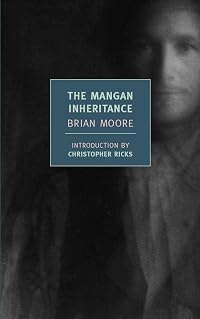
"Not so long ago James Mangan was a brilliant young poet. These days, however, he toils as a journalist and shivers in the shadow of his glamorous movie-star wife. And now she has left him for her lover. Adrift and depressed, Jamie takes refuge with his father, in whose house he turns up a 19th-century daguerreotype bearing the initials 'J.M.' and depicting a man who, as it happens, is Jamie's splitting image. Could this be the only existing photograph of his purported ancestor, the show more legendarily dissolute Irish poet James Clarence Mangan?"--P. [4] of cover. show lessTags
Recommendations











Member Reviews
For a three times Booker short listed author, Brian Moore is not well known – or remembered – in his homeland of Northern Ireland. His permanent migration to North America may partly explain (generally only indulged for sportspeople and musicians); as may his somewhat conflicted relationship with the old sod. This relationship is largely the subject matter of The Mangan Inheritance in which a writer and aspiring poet from Montreal and latterly New York (sound familiar?), Jamie Mangan, explores himself through investigating his ancestry in the very south west of Ireland.
Part one, set in New York and Quebec, seems artfully designed to set a comparator with the rural Ireland of the balance of the novel. From there, at times, the show more writer's characterisation of the 1970’s Irish villagers borders on the racist, although it does uncover beautiful little nuggets of truth, even if generalised, and is not without comedy. He is magnificent on that distinctly Irish trait (north or south, Catholic or Protestant) of masking suspicion, cynicism and unpleasant history with jollity and friendliness.
Some of the subtle observations on Ireland – both in character and landscape – are fabulous, and in places the novel has the feel of a thriller or a ghost story as the abhorrent secrets of the Irish Mangans are revealed. Surely a work that could only have been written by an Irishman - Moore deserves to be more widely read in that place. show less
Part one, set in New York and Quebec, seems artfully designed to set a comparator with the rural Ireland of the balance of the novel. From there, at times, the show more writer's characterisation of the 1970’s Irish villagers borders on the racist, although it does uncover beautiful little nuggets of truth, even if generalised, and is not without comedy. He is magnificent on that distinctly Irish trait (north or south, Catholic or Protestant) of masking suspicion, cynicism and unpleasant history with jollity and friendliness.
Some of the subtle observations on Ireland – both in character and landscape – are fabulous, and in places the novel has the feel of a thriller or a ghost story as the abhorrent secrets of the Irish Mangans are revealed. Surely a work that could only have been written by an Irishman - Moore deserves to be more widely read in that place. show less
I wish I liked this book better than I did. Brian Moore is an excellent writer and knows how to pace his story and keep the reader intrigued, and for much of the novel I was right there with him as he takes the protagonist, insecure lapsed poet James Mangan, from New York City and the end of his marriage to movie star Beatrice Abbot (which led the doorman to call him "Mr. Abbot") to Montreal, where he grew up, where his father still lives, and where he finds a trove of information about his family history including his possible relationship to noted 19th century Irish poet James Clarence Mangan, and from there to Ireland where he encounters the contemporary Mangans, two families who have little but contempt for each other. As Mangan show more gets involved in the life of remote Drishane, where everybody knows everybody's business, it becomes clear that there's a lot he doesn't know and that some people don't want him to know it, especially when they meet him and see his face which, as he discovered in Montreal, is practically a double of that shown in an old photo that may be of the poet. The plot, with sidetracks into Mangan's erotic obsession with his 18-year-old distant cousin, then becomes distinctly melodramatic as the main secret is dramatically revealed (and somewhat credulity-stretching it is) and Mangan returns to Montreal where his search for identity comes to a close. I didn't dislike this book; in fact, it was a fun read in some ways, and maybe I just wasn't in the right mood for it. show less
I was stunned and trapped by reading this book. What really got me is that the main character, James Mangan, has endless issues about himself, and that not in a selfish way, more in a doubting point of view. His identity is blurred and defined by "others" who seems to be certain, until they change their mind in a casual way. Chains of events track then James to follow more muddy and less reliable explanations. The confusing state of mind is well depicted, in a very effective way.
To me this is very effective.
To me this is very effective.
Jamie Mangan, failed poet and sometime journalist has suddenly and tragically been set free from his marriage to a beautiful American actress. He returns to Montreal where he sifts through old family papers to discover a photograph of a drug-taking bohemian Irish poet of a century and a half ago. The likeness of the accursed poet could well be a photograph of Jamie himself, so close is the resemblance. Intrigued, Jamie sets out for southern Ireland to discover his ancestry, and himself...
Brian Moore was born in Belfast in 1921, emigrated to Canada in 1948, and now lives in the United States. His books have won prizes in Canadian literature and American as well.
Brian Moore was born in Belfast in 1921, emigrated to Canada in 1948, and now lives in the United States. His books have won prizes in Canadian literature and American as well.
Good read, although a little steamy and perhaps a little salacious, but the ending was quite satisfying.
By strange coincidence this is the second book I've read in the past week that features Fastnet lighthouse off the coast of Ireland. They were equally disappointing.
Ratings
Members
- Recently Added By
Lists

New Canadian Library
191 works; 7 members
Author Information

31+ Works 5,937 Members
Brian Moore, 1921 - 1999 Brian Moore was born in Belfast on August 25, 1921 to Doctor James Bernard Moore and Eileen McFadden. He attended St. Malachy's College, a Catholic school, where the students where beaten on the hands daily. He left the college without a School Leaving Certificate because he failed Math. In 1941, a bomb damaged the family show more home, so they moved to a house on Camden Street. A year later, his father died. In 1942, he joined the National Fire Service, but knew that he wanted to be a writer. Moore knew some French, so he was hired by the British Ministry of War Transport to go as a port official to Algiers, North Africa. Afterwards, he traveled to Italy, France, and after the war, Warsaw (1945), Spain, Canada (1948), the United States and England, finally settling in California. Moore immigrated to Canada in 1948, where he worked as a proofreader and reporter for the Montreal Gazette. In 1951, he published his first story in the Northern Review and married Jacqueline Sirois, a fellow journalist. His only child, Michael, was born on November 24, 1953. He split with his wife in 1964 and then married Jean Denney, who he stayed married to until his death. Moore published "The Lonely Passion of Judith Hearne" (1955), "The Feast of Lupercal" (1957) and "The Emperor of Ice Cream" (1966), which is his most autobiographical novel. He recounts his school experiences, as well as what is was like during the bombing. In the 1990's, he wrote political fables and four novels. "Lies of Silence" is a thriller set in Belfast and was a more political statement than the previous novels. It was nominated for the Booker Prize and was his bestselling book. Several of his books were made into films such as "The Luck of Ginger Coffey," "Catholics," "The Lonely Passion of Judith Hearne" and "The Temptation of Eileen Hughes" was adapted for television. Moore received many awards, which included the Governor General's Award in 1961 for "The Luck of Ginger Coffey" and again in 1975 for "The Great Victorian Collection," which also won the James Tait Black Award in England. He was short listed for the Booker Prize in 1987 for "The Colour of Blood" and again in 1990 for "Lies of Silence." In July 1987, he conferred an honorary doctorate by Queen's University, Belfast. His film "Catholics" received the W.H. Smith Award in 1973 and the Peabody Award in 1974. In 1999, Brian Moore died at his home in Malibu, California. (Bowker Author Biography) show less
Some Editions
Series
Belongs to Publisher Series
Common Knowledge
- Canonical title
- The Mangan Inheritance
- Original publication date
- 1979
- People/Characters
- James Mangan
- Dedication
- For Jean, yet again
- First words
- The doorbell. Mangan went to the front door, looked through the peephole, then unlocked.
- Blurbers
- Bragg, Melvyn; Lee, Hermione; Ableman, Paul; Wilson, A.N.; Dunne, John Gregory; Greenfield, Josh (show all 7); Oates, Joyce Carol
Classifications
Statistics
- Members
- 258
- Popularity
- 125,943
- Reviews
- 6
- Rating
- (3.68)
- Languages
- English, German
- Media
- Paper, Ebook
- ISBNs
- 13
- ASINs
- 7