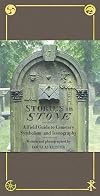
Stories in Stone: A Field Guide to Cemetery Symbolism and Iconography
by Douglas Keister
On This Page
Description
Certain symbols abound in modern Western culture that are instantly recognizable: the cross signifies Christianity, the six-pointed Star of David is revered by Jews, the golden arches frequently means it's time for lunch. Other symbols, however, require a bit of decoding-particularly those found in cemeteries. Cemeteries are virtual encyclopedias of symbolism. Engravings on tombstones, mausoleums and memorials tell us just about everything there is to know about a person- date of birth and show more death as well as religion, ethnicity, occupation, community interests, and much more. In the fascinating new book Stories in Stone: The Complete Guide to Cemetery Symbolism by noted author Douglas Keister, the secrets of cemetery symbolism are finally revealed. For instance, did you know that it is quite rare to see a sunflower on a tombstone? Did you know that the human foot symbolizes humility and service since it consistently touches the earth? Or the humble sheaf of wheat-while it is often used to denote someone who has lived a long and fruitful life, do you know other meanings it might carry? Stories in Stone provides history along with images of a wide variety of common and not-so-common cemetery symbols, and offers an in-depth examination of stone relics and the personal and intimate details they display-flora and fauna, religious icons, society symbols, and final impressions of how the deceased wished to be remembered. Douglas Keister has created a practical field guide that is compact and portable, perfect for those interested in family histories and genealogical research, and is the only book of its kind that unlocks the language of symbols in a comprehensive and easy-to-understand manner. -- Amazon.com. show lessTags
Recommendations

























Member Reviews
I am the lonely one-star reviewer on this book. It's a nicely produced little hardback that could fit into your pocket on the way to a cemetery trip; unfortunately, it has very limited usefulness for actually understanding the significance of the symbols you're seeing on cemetery markers.
The material culture of cemetery markers - at least during the period before markers became almost entirely mass-produced, generic catalog items - is a hugely complex topic. Books upon books have been published just to deal with local symbolism used in one area during one particular time period, not to mention ethnic and racial differences, but Keister claims to be taking on the whole subject of symbolism in all cemetery markers, ever, worldwide.
Some of show more his facts he gets more or less correct; but there are no endnotes or sources given for the information in this book, and the 'explanations" for some of the symbolism described just seems to have been pulled out of thin air, or possibly based on a quick Google search or some other source not specific to cemeteries. (For instance, many of his explanations of the symbolism of certain flowers seem to have been lifted from some kind of "Language of Flowers" book, bearing no necessary relation to the ways in which flower images might have been used on grave markers specifically.)
There are a lot of pictures and excessive discussion of the more astounding sculptural cemeteries of Europe, like the Cimiterio Monumentale in Milan and Pére-Lachaise in Paris, which certainly make for good photo ops, but aren't really suited to a "field guide" that an American cemetery enthusiast might want to have with them when visiting a typical American cemetery.
I wish I had a better book to recommend for general readers on this topic, but if I find one, I'll update this review. show less
The material culture of cemetery markers - at least during the period before markers became almost entirely mass-produced, generic catalog items - is a hugely complex topic. Books upon books have been published just to deal with local symbolism used in one area during one particular time period, not to mention ethnic and racial differences, but Keister claims to be taking on the whole subject of symbolism in all cemetery markers, ever, worldwide.
Some of show more his facts he gets more or less correct; but there are no endnotes or sources given for the information in this book, and the 'explanations" for some of the symbolism described just seems to have been pulled out of thin air, or possibly based on a quick Google search or some other source not specific to cemeteries. (For instance, many of his explanations of the symbolism of certain flowers seem to have been lifted from some kind of "Language of Flowers" book, bearing no necessary relation to the ways in which flower images might have been used on grave markers specifically.)
There are a lot of pictures and excessive discussion of the more astounding sculptural cemeteries of Europe, like the Cimiterio Monumentale in Milan and Pére-Lachaise in Paris, which certainly make for good photo ops, but aren't really suited to a "field guide" that an American cemetery enthusiast might want to have with them when visiting a typical American cemetery.
I wish I had a better book to recommend for general readers on this topic, but if I find one, I'll update this review. show less
This is an excellent handbook which explains the basic conception of signs and symbols found on most tombs. The book is divided into (1) funerary architecture and (2) flora, fauna, the human condition, mortality symbols, and images of religious devotion. Most illustrations are from tombstones in Italy, America, Canada, Spain. This book does not examine monuments per se which would make military memorial structures the most prevalent. 288 pages, color photos, Suggested Reading List and Index.
This is one of those beautiful books -- from it's half-sized book jacket to the excellent photographs this is a great reference tool for cemetery motifs and symbolism. In the back is a good list of Acronyms for Societies, Clubs, and Organizations often found on stones. Can't imagine being without this one!
First, this is a great size to take traveling. And the color photos are also lovely, especially when so many other books are stuck in black and white. This book is especially good if you're looking up symbols on tombs and finding out what they mean - from animals to Greek letters to societies (there's a multiple page listing of acronyms and what they mean).
This isn't the first book I'd recommend for scholarship - but I have spent many hours on airplanes reading or just looking at the photos.
This isn't the first book I'd recommend for scholarship - but I have spent many hours on airplanes reading or just looking at the photos.
A neat little book, but not quite as comprehensive as I might have hoped.
Has some amazing photographs and interesting historical tidbits, but isn’t quite as useful as it could be. The descriptions of various motifs are often accompanied by photographs that don’t show all of the elements described; having multiple examples would have been nice.
Heavily concentrated on U.S. funerary art, with occasional examples drawn from major European cemeteries.
Much more about gravestones and smaller monuments than mausolea and other larger cemetery structures. (For which James Stevens Curl’s A Celebration of Death: Introduction to Some of the Buildings, Monuments and Settings of Funerary Architecture in the Western European Tradition (B.T. show more Batsford, 1993) is a better resource.) show less
Has some amazing photographs and interesting historical tidbits, but isn’t quite as useful as it could be. The descriptions of various motifs are often accompanied by photographs that don’t show all of the elements described; having multiple examples would have been nice.
Heavily concentrated on U.S. funerary art, with occasional examples drawn from major European cemeteries.
Much more about gravestones and smaller monuments than mausolea and other larger cemetery structures. (For which James Stevens Curl’s A Celebration of Death: Introduction to Some of the Buildings, Monuments and Settings of Funerary Architecture in the Western European Tradition (B.T. show more Batsford, 1993) is a better resource.) show less
As a person who spends vacation time learning about history of places, I often find myself in cemeteries. This is a wonderful guide about the markings found there. It touches first on the architectural style of the grave and later on the symbols found on the stone itself.
I was disappointed that there wasn't anything specific about cadaver stones. I realize there are very few of them left in the world, but at least a mention would have been neat. They are so very fascinating.
And as someone else mentioned, having an edition that has more gravestones from around the world would be nice, since most of those pictured were from the US.
I was disappointed that there wasn't anything specific about cadaver stones. I realize there are very few of them left in the world, but at least a mention would have been neat. They are so very fascinating.
And as someone else mentioned, having an edition that has more gravestones from around the world would be nice, since most of those pictured were from the US.
Summary
A guide to identifying the various forms and styles of cemetery structures - tombs, crypts, headstones, vaults, mausoleums, etc... Also includes chapters devoted to the different types of decorations and symbols found on monuments: flora, fauna, religious, and an extensive section on benevolent societies (Masons, Elks, etc...). Entries have detailed descriptions with quoted references to literature and holy texts, and many color photos.
Opinion
This was a fascinating guide which would be helpful on a cemetery visit. The earliest chapters were the most interesting to me - I skimmed most of the religious quotes and the long section at the end regarding benevolent associations. I won't buy this, but will certainly take it out next show more time I visit a cemetery, and it has piqued my interest in the subject enough to possibly search out a more extensive history. (Thanks to Pretear for the recommendation!) show less
A guide to identifying the various forms and styles of cemetery structures - tombs, crypts, headstones, vaults, mausoleums, etc... Also includes chapters devoted to the different types of decorations and symbols found on monuments: flora, fauna, religious, and an extensive section on benevolent societies (Masons, Elks, etc...). Entries have detailed descriptions with quoted references to literature and holy texts, and many color photos.
Opinion
This was a fascinating guide which would be helpful on a cemetery visit. The earliest chapters were the most interesting to me - I skimmed most of the religious quotes and the long section at the end regarding benevolent associations. I won't buy this, but will certainly take it out next show more time I visit a cemetery, and it has piqued my interest in the subject enough to possibly search out a more extensive history. (Thanks to Pretear for the recommendation!) show less
Members
- Recently Added By
Author Information

24+ Works 1,329 Members
Common Knowledge
- Original title
- Stories in stone
- Original publication date
- 2004-04-05
- Dedication
- For Sandy
Wife, Friend, and Boneyard Buddy - First words
- Preface
Pip, the narrator and central character of Charles Dickens' classic Victorian novel Great Expectations, informs us early in the story that, as he never knew his parents or saw any pictures of them, he drew... (show all) his first impressions of what they must have looked like from the shapes of the lettering on their gravestones. Certainly, as the author intended, this tells us a great deal about Pip's fanciful imagination, but quite incidentallhy it also reveals a fundamental truth about the nature of grave markers. In a very real sense, memorials erected to the dead are the material representatives of those now departed, and we, like Pip, often draw our impressions of what these persons must have been like from the things we find upon them.
Introduction
In 1887, one Dr. L. L. Zamenhof created a language called Esperanto. His goal was to develop an international language that would enable better communication and understanding between cultures and nations, hop... (show all)efully resulting in a more peaceful world. Although Esperanto still has a number followers, it never really caught on in a big way.
Mausoleums
Chapels
Offices
Cemetery enthusiasts know that cemeteries are a vast treasure trove of art and architecture. The fact is, cemeteries are America's most unspoiled resource of historic architecture. It would... (show all) take many hours of strolling in a city's downtown historic district to find the number of styles of architecture that one can find in a few minutes' walk in most large historic cemeteries. - Last words
- (Click to show. Warning: May contain spoilers.)All of the Looney Tunes cartoons end with the apt utterance on his tombstone, "That's All, Folks!"
- Original language*
- Amerikanisch
*Some information comes from Common Knowledge in other languages. Click "Edit" for more information.
Classifications
Statistics
- Members
- 827
- Popularity
- 33,129
- Reviews
- 15
- Rating
- (4.01)
- Languages
- English
- Media
- Paper, Ebook
- ISBNs
- 3
- UPCs
- 1
- ASINs
- 5