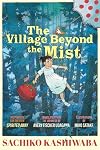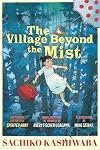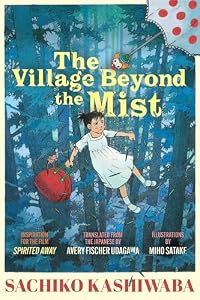
The Village Beyond the Mist
by Sachiko Kashiwaba
On This Page
Description
A mountain town that's not on any map, a messy bookstore with infinite doors, and a spoiled prince under a forgetful wizard's curse . . . this school break might hold more than Lina bargained for!Lina's father had suggested she go "someplace different" for the summer, and she's beginning to wish she hadn't listened. She could be at her grandma's house in Nagano now, instead of trudging through a forest in search of a town that might not even exist. But when a gust of wind carries off her show more umbrella, it leads Lina down a secret path between the trees to a strange and incredible world. In the hidden village of Misty Valley, centaurs roam the cobblestone streets and gnomes visit shops stuffed with spellbooks and enchanted desserts. All magic has a dark side, though, and sometimes even sorcerers need a human's helping hand.
Now, fifty years after its debut and decades of blockbuster success in Japan, Sachiko Kashiwaba's acclaimed novel is available in English and certain to delight listeners of all ages.
. show less
Tags
Recommendations







Member Reviews
Lina, a sixth-grade girl, is travelling to a remote village where she is to spend her summer vacation. Her father has recommended this trip to broaden her horizons, a trip he made at her age. Lina is excited and a little nervous, especially when she discovers that the village of Misty Valley is more than first meets the eye. New friends, magical encounters, and challenges that foster her independence await.
I enjoyed this tale of childhood adventure and fantasy, first published fifty years ago in Japan. Cover text cites the book as the inspiration for Spirited Away, a film by Studio Ghibli that I found rather creepy and unsettling. I'm surprised by this, for the book is not only completely different in action, but in tone.
The author show more emphasizes children as capable of more than we might suppose when given the opportunity for independence. It reminds me of [[Arthur Ransome]]'s books, or the Japanese reality show "Old Enough". I also like the easy acceptance of difference. Finally, the artwork by Miho Satake is delightful and complements the story well.
Recommended for late elementary, early middle school readers, and for adults wishing to escape to a positive childhood adventure. show less
I enjoyed this tale of childhood adventure and fantasy, first published fifty years ago in Japan. Cover text cites the book as the inspiration for Spirited Away, a film by Studio Ghibli that I found rather creepy and unsettling. I'm surprised by this, for the book is not only completely different in action, but in tone.
The author show more emphasizes children as capable of more than we might suppose when given the opportunity for independence. It reminds me of [[Arthur Ransome]]'s books, or the Japanese reality show "Old Enough". I also like the easy acceptance of difference. Finally, the artwork by Miho Satake is delightful and complements the story well.
Recommended for late elementary, early middle school readers, and for adults wishing to escape to a positive childhood adventure. show less
 This review was written for LibraryThing Early Reviewers.
The Village Beyond the Mist was translated from Japanese to English, and was originally published in 1975. It feels like a children’s bedtime story, the way adult storytellers make things up as they go along, and as a result the plot meanders as the story unfolds. The illustrations are adorable and numerous and would definitely appeal to kids.
It does indeed remind me of Miyazaki’s films, but instead of having a similar plot to Spirited Away, I would say it has a similar TONE to Spirited Away. Like Miyazaki’s films, it features morally ambiguous characters whose intentions are unknown, and it has a whimsical, imaginative feeling to it. It’s got a cozy vibe, the kind of book to have a cup of tea and curl up with!
The book has a show more large cast of quirky characters, but two in particular stood out to me. I loved the enormous, intelligent cat, Gentleman, and I identified a little too strongly with Nata, the eccentric, frazzled bookstore owner! Magical moments include humans being transformed into pottery, and pottery being transformed into humans. So unique! Made me wonder which specific piece of pottery I would end up turning into if I ever ran afoul of a wizard.
In addition to appealing to Miyazaki fans, I also think this would appeal to kids who are drawn to whimsical, nonsensical books that aren’t saccharine sweet (such as The Phantom Tollbooth, Roald Dahl’s books, and the Mary Poppins series).
Thanks to LibraryThing and the publisher, Restless Books, for sending me a physical ARC to read and review! This was my first time coming across Restless Books. They’re a nonprofit publisher based out of Massachusetts, and their main mission is to bring more international books to American readers. Seems like a publisher that’s very worthy of support! show less
It does indeed remind me of Miyazaki’s films, but instead of having a similar plot to Spirited Away, I would say it has a similar TONE to Spirited Away. Like Miyazaki’s films, it features morally ambiguous characters whose intentions are unknown, and it has a whimsical, imaginative feeling to it. It’s got a cozy vibe, the kind of book to have a cup of tea and curl up with!
The book has a show more large cast of quirky characters, but two in particular stood out to me. I loved the enormous, intelligent cat, Gentleman, and I identified a little too strongly with Nata, the eccentric, frazzled bookstore owner! Magical moments include humans being transformed into pottery, and pottery being transformed into humans. So unique! Made me wonder which specific piece of pottery I would end up turning into if I ever ran afoul of a wizard.
In addition to appealing to Miyazaki fans, I also think this would appeal to kids who are drawn to whimsical, nonsensical books that aren’t saccharine sweet (such as The Phantom Tollbooth, Roald Dahl’s books, and the Mary Poppins series).
Thanks to LibraryThing and the publisher, Restless Books, for sending me a physical ARC to read and review! This was my first time coming across Restless Books. They’re a nonprofit publisher based out of Massachusetts, and their main mission is to bring more international books to American readers. Seems like a publisher that’s very worthy of support! show less
This review was written for LibraryThing Early Reviewers."The Village Beyond the Mist" is a captivating novel that creates an atmosphere of mystery and wonder from the very beginning. The story follows the main character through a journey of discovery in a remote village perpetually shrouded in mist, where nothing is quite as it seems. The author does an excellent job of building a rich, atmospheric setting that feels both otherworldly and strangely familiar. The village itself is described in vivid detail, from the weathered buildings to the winding, fog-covered paths that connect them. As readers, we discover the village's secrets alongside the protagonist, making for an engaging reading experience.
Of course, I'd been enchanted by Miyazaki's "Spirited Away" long before discovering this book show more (who among us hasn't?). Experiencing The Village Beyond the Mist added remarkable dimensions to my appreciation of Miyazaki's masterpiece. The book's exploration of liminality and the permeable boundaries between worlds resonates beautifully with the film's themes, though I'd argue the novel delves into these concepts with a subtlety that even Miyazaki's brilliant animation couldn't quite capture.
The novel weaves an enchanting tale that balances whimsy and depth, creating a reading experience that resonates with both younger readers and adults alike. What truly elevates this work is its refusal to pander to its audience. The author trusts the reader's intelligence—a refreshing approach in an age where so much fiction is written to the lowest common denominator. The story follows a young woman named Lina, who travels to a remote mountain village to find solitude and escape the pressures of modern life. What she encounters is far more enigmatic: a place untouched by time, populated by residents who hold strange customs and secrets that seem connected to another world. The mist that constantly envelops the village acts as a symbol of both mystery and memory, blurring the lines between reality and myth. Kashiwaba’s prose is quiet yet powerful, evoking a strong sense of atmosphere. Her writing is deeply rooted in traditional Japanese storytelling, filled with subtle supernatural elements that never veer into the overtly fantastical but linger just at the edge of the believable. The pacing is gentle and meditative, making the novella feel like a folk tale passed down through generations.The village itself becomes a character of sorts, with its mist-shrouded streets and peculiar residents serving as perfect metaphors for the human condition. The characters are well-developed and complex, each hiding their own secrets and motivations. I particularly enjoyed the relationship between the Lina and Ms. Picotto, whose wisdom and cryptic statements guide much of the story's progression. The dialogue feels natural and serves the dual purpose of revealing character while pushing the plot forward. One of the book’s greatest strengths is its ability to explore themes of identity, isolation, and belonging without ever becoming heavy-handed. Readers are invited to interpret the story’s many symbols and ambiguities for themselves. The translation also deserves praise it retains the elegance and cultural nuance of the original while remaining accessible to a Western audience. If I had one criticism, it would be that some of the supporting characters could have been more fully developed. A few intriguing figures appear briefly but don't get the attention they deserve.
If you're the type who enjoys literature that rewards patience and contemplation—the kind of book that pairs perfectly with a carefully brewed cup of tea on a quiet Sunday morning—then The Village Beyond the Mist deserves a place on your carefully curated bookshelf. It's not for everyone, admittedly, but then again, the most worthwhile experiences rarely are. show less
Of course, I'd been enchanted by Miyazaki's "Spirited Away" long before discovering this book show more (who among us hasn't?). Experiencing The Village Beyond the Mist added remarkable dimensions to my appreciation of Miyazaki's masterpiece. The book's exploration of liminality and the permeable boundaries between worlds resonates beautifully with the film's themes, though I'd argue the novel delves into these concepts with a subtlety that even Miyazaki's brilliant animation couldn't quite capture.
The novel weaves an enchanting tale that balances whimsy and depth, creating a reading experience that resonates with both younger readers and adults alike. What truly elevates this work is its refusal to pander to its audience. The author trusts the reader's intelligence—a refreshing approach in an age where so much fiction is written to the lowest common denominator. The story follows a young woman named Lina, who travels to a remote mountain village to find solitude and escape the pressures of modern life. What she encounters is far more enigmatic: a place untouched by time, populated by residents who hold strange customs and secrets that seem connected to another world. The mist that constantly envelops the village acts as a symbol of both mystery and memory, blurring the lines between reality and myth. Kashiwaba’s prose is quiet yet powerful, evoking a strong sense of atmosphere. Her writing is deeply rooted in traditional Japanese storytelling, filled with subtle supernatural elements that never veer into the overtly fantastical but linger just at the edge of the believable. The pacing is gentle and meditative, making the novella feel like a folk tale passed down through generations.The village itself becomes a character of sorts, with its mist-shrouded streets and peculiar residents serving as perfect metaphors for the human condition. The characters are well-developed and complex, each hiding their own secrets and motivations. I particularly enjoyed the relationship between the Lina and Ms. Picotto, whose wisdom and cryptic statements guide much of the story's progression. The dialogue feels natural and serves the dual purpose of revealing character while pushing the plot forward. One of the book’s greatest strengths is its ability to explore themes of identity, isolation, and belonging without ever becoming heavy-handed. Readers are invited to interpret the story’s many symbols and ambiguities for themselves. The translation also deserves praise it retains the elegance and cultural nuance of the original while remaining accessible to a Western audience. If I had one criticism, it would be that some of the supporting characters could have been more fully developed. A few intriguing figures appear briefly but don't get the attention they deserve.
If you're the type who enjoys literature that rewards patience and contemplation—the kind of book that pairs perfectly with a carefully brewed cup of tea on a quiet Sunday morning—then The Village Beyond the Mist deserves a place on your carefully curated bookshelf. It's not for everyone, admittedly, but then again, the most worthwhile experiences rarely are. show less
This review was written for LibraryThing Early Reviewers.I've watched and enjoyed Miyazaki's 'Spirited Away,' so I gladly requested a copy of the book that inspired that movie when it became available from LibraryThing Early Reviewers. I'd already read Howl's Moving Castle before I watched Miyazaki's film adaptation of that book, so I knew The Village Beyond the Mist might differ from the movie.
The sixth grade heroine's name is Lina, not Chihiro. She's not traveling with her parents to their new home. Her father is sending her to Misty Valley for the summer. The first mystery is that, not only is no one waiting for her at the train station, neither the woman she asks or the policeman the woman takes her to know about the Misty Valley. The policeman wonders if it's Silver Mountain Village, a show more place that has been almost deserted since the mine closed 30 years ago. In any case, the policeman asks an old farmer to give Lina a lift as far as the Shinto shrine because Lina will have to walk to the village.
Lina does reach the village after she goes through some mist in the mountain's woods. At Picotto Hall she meets an old woman named Pippity Picotto. Except for her glasses and the lack of a red circle between her eyes or earrings, Ms. Picotto looks like Yubaba the witch from the film. Also like Yubaba, Ms. Picotto expects the girl in front of her to work.
The longer Lina stays in the Town of Misty Valley, the more we learn about what a strange and wonderful place it is. I would love to explore the book shop! Lina thought she had no skills, but she's wrong. She solves a problem between two of the characters, for example, even though it costs her something she wants. Ms. Picotto continues to drive Lina (and the others) crazy by making a statement. When Lina doesn't infer what Ms. Picotto meant correctly, the old woman asks her, What exactly did I say?
I loved the way Lina treated a spoiled brat of a prince when he is in Shikka's ceramics shop. Good for her!
Lina becomes friends with Shikka's gentle tiger, Tama. She introduces Tama to Sunday, the little son of Monday, the toy maker and seller. Lina helps to make toys as well as make things right for Monday's family. I found the reason Monday won't sell some dolls interesting.
When it's time for Lina to return home, she doesn't want to leave. She wants to come back next summer, but Ms. Picotto won't say yes or no. I liked Lina's parting gifts.
Although this book is very different from the film it inspired, it is just as charming and delightful. Like Chihiro, the Lina who leaves the magical village is not the same girl who came. Lina has learned she's more capable than she thought. I definitely recommend this book for children and adults who still love children's books.
Cat lovers should enjoy both Ms. Picotto's cat, Gentleman, and Tama. show less
The sixth grade heroine's name is Lina, not Chihiro. She's not traveling with her parents to their new home. Her father is sending her to Misty Valley for the summer. The first mystery is that, not only is no one waiting for her at the train station, neither the woman she asks or the policeman the woman takes her to know about the Misty Valley. The policeman wonders if it's Silver Mountain Village, a show more place that has been almost deserted since the mine closed 30 years ago. In any case, the policeman asks an old farmer to give Lina a lift as far as the Shinto shrine because Lina will have to walk to the village.
Lina does reach the village after she goes through some mist in the mountain's woods. At Picotto Hall she meets an old woman named Pippity Picotto. Except for her glasses and the lack of a red circle between her eyes or earrings, Ms. Picotto looks like Yubaba the witch from the film. Also like Yubaba, Ms. Picotto expects the girl in front of her to work.
The longer Lina stays in the Town of Misty Valley, the more we learn about what a strange and wonderful place it is. I would love to explore the book shop! Lina thought she had no skills, but she's wrong. She solves a problem between two of the characters, for example, even though it costs her something she wants. Ms. Picotto continues to drive Lina (and the others) crazy by making a statement. When Lina doesn't infer what Ms. Picotto meant correctly, the old woman asks her, What exactly did I say?
I loved the way Lina treated a spoiled brat of a prince when he is in Shikka's ceramics shop. Good for her!
Lina becomes friends with Shikka's gentle tiger, Tama. She introduces Tama to Sunday, the little son of Monday, the toy maker and seller. Lina helps to make toys as well as make things right for Monday's family. I found the reason Monday won't sell some dolls interesting.
When it's time for Lina to return home, she doesn't want to leave. She wants to come back next summer, but Ms. Picotto won't say yes or no. I liked Lina's parting gifts.
Although this book is very different from the film it inspired, it is just as charming and delightful. Like Chihiro, the Lina who leaves the magical village is not the same girl who came. Lina has learned she's more capable than she thought. I definitely recommend this book for children and adults who still love children's books.
Cat lovers should enjoy both Ms. Picotto's cat, Gentleman, and Tama. show less
This review was written for LibraryThing Early Reviewers.It's funny to have read this over the same two days I read Ivan Ilyich—both of them are so different from the classic movies based on them! This one "inspired" Spirited Away but it's hard to argue Spirited Away was any more inspired by this story than by Alice in Wonderland—they are, all three, about young girls who end up in strange places and cope marvelously.
(Also, I'm not at all sure Miyazaki would agree that his movie was, ultimately, based on the novel: "There is a book for children, Kirino Mukouno Fushigina Machi [A Mysterious Town Over the Mist]. It was published in 1980 [actually 1975], and I wondered if I could make a movie based on it. This was before we started work on Mononoke Hime. There is a staff member who loved show more this book when s/he was in fifth grade, and s/he read it many times. But I couldn't understand why it was so interesting; I was mortified, and I really wanted to know why. So, I wrote a project proposal [based on the book], but it was rejected in the end.")
Regardless, it should be judged on its own merits.
And it's okay. Not surprised to learn it's her first novel. It has a great ending but it's just sort of a minipicaresque for kids as the hero helps out in one store after another in a little town peopled by the descendants of sorcerers.
It's actually a great deal like the of novel for English-speaking kids published in the decades before and after. It's very much of its time.
I can see loving this book as a child. I got my 8yrold started on it. Maybe she'll be one who does. show less
(Also, I'm not at all sure Miyazaki would agree that his movie was, ultimately, based on the novel: "There is a book for children, Kirino Mukouno Fushigina Machi [A Mysterious Town Over the Mist]. It was published in 1980 [actually 1975], and I wondered if I could make a movie based on it. This was before we started work on Mononoke Hime. There is a staff member who loved show more this book when s/he was in fifth grade, and s/he read it many times. But I couldn't understand why it was so interesting; I was mortified, and I really wanted to know why. So, I wrote a project proposal [based on the book], but it was rejected in the end.")
Regardless, it should be judged on its own merits.
And it's okay. Not surprised to learn it's her first novel. It has a great ending but it's just sort of a minipicaresque for kids as the hero helps out in one store after another in a little town peopled by the descendants of sorcerers.
It's actually a great deal like the of novel for English-speaking kids published in the decades before and after. It's very much of its time.
I can see loving this book as a child. I got my 8yrold started on it. Maybe she'll be one who does. show less
This review was written for LibraryThing Early Reviewers.A quirky and charming story about Lina, whose father sends her to Misty Valley for her summer vacation instead of to her grandmother's like usual. Once Lina finds Misty Valley, she discovers an odd little town where she is treated with kindness but put to work: first in a bookshop, then in every other business in town. She meets a talking parrot, a tiger, an imp and gnomes; she helps organize a bookshop and restores a prince from where he is trapped in pottery form. When she is abruptly sent home earlier than expected, she is packed off with gifts - including an invitation to return.
The inspiration for the movie Spirited Away.
Quotes
"All my books are [used books]....As they age, their charm gets stronger....You know how books have the show more power to attract people and even influence them? That's the charm I mean." (Nata to Lina, 47)
"But nothing would be more boring that someone who is perfect all the time." (John to Lina, 51)
"Misty Valley connects with many other places. Distance means nothing....People who really need to can come here." (Nata to Lina, 56)
"It's all right....You worked hard and did what you thought was best. Lots of people have ideas but don't take action." (John to Lina, 70)
"I wouldn't expect you to believe something just because someone told you it was true." (Icchan to Lina, 81) show less
The inspiration for the movie Spirited Away.
Quotes
"All my books are [used books]....As they age, their charm gets stronger....You know how books have the show more power to attract people and even influence them? That's the charm I mean." (Nata to Lina, 47)
"But nothing would be more boring that someone who is perfect all the time." (John to Lina, 51)
"Misty Valley connects with many other places. Distance means nothing....People who really need to can come here." (Nata to Lina, 56)
"It's all right....You worked hard and did what you thought was best. Lots of people have ideas but don't take action." (John to Lina, 70)
"I wouldn't expect you to believe something just because someone told you it was true." (Icchan to Lina, 81) show less
Disclaimer: ARC via Librarything.
This short children’s novel inspired Spirited Away. It’s always dangerous to read such works because there is the worry that they cannot live up to the love one has for a film, or that one reads the book and realizes the film was a complete bastardization or worse.
That is not the case here. Spirited Away is clearly inspired by this book but there are differences, so it is like two very good stories. If you go into this book with the knowledge that it is the inspiration for a movie as opposed to the book that is adapted into the movie, you should enjoy it.
Lina is sent by her father to visit a place that he had gone to as a child. This turns out to be a strange village where she has to work to earn show more her room and board. Fans of Spirited Away will recognize Mrs. Picotto. What this means it that Lina has to help three people run their shops. This includes a bookstore, a ceramic/pottery shop, and a toy store. At each shop, there is an issue that Lina ends up sorting out.
If you love reading, the book store section will hit in the feels. It also cements Lina as someone to root for because she likes books to. It also is the one that is less defined by magic. The other two shops are connected by magic and what Lina has to do involves magic. But Nata who runs the bookstore says “Long used books take on the smells of their readers. Those are the only kinds of books that interest me.” (47). The whole section is basically a love letter to reading.
The other two shops are different, and in one class a bit more humorous, but they also set up to show how Lina has grown and changed a bit. Her interactions with the various people of the village, including the shop owners, house mates, and Gentleman. You will love what happens when a tiger meets Gentlemen.
A reader can see where the book inspired Spirited Away, and both the film and book address the idea of community and how one contributes to it.
A lovely read. show less
This short children’s novel inspired Spirited Away. It’s always dangerous to read such works because there is the worry that they cannot live up to the love one has for a film, or that one reads the book and realizes the film was a complete bastardization or worse.
That is not the case here. Spirited Away is clearly inspired by this book but there are differences, so it is like two very good stories. If you go into this book with the knowledge that it is the inspiration for a movie as opposed to the book that is adapted into the movie, you should enjoy it.
Lina is sent by her father to visit a place that he had gone to as a child. This turns out to be a strange village where she has to work to earn show more her room and board. Fans of Spirited Away will recognize Mrs. Picotto. What this means it that Lina has to help three people run their shops. This includes a bookstore, a ceramic/pottery shop, and a toy store. At each shop, there is an issue that Lina ends up sorting out.
If you love reading, the book store section will hit in the feels. It also cements Lina as someone to root for because she likes books to. It also is the one that is less defined by magic. The other two shops are connected by magic and what Lina has to do involves magic. But Nata who runs the bookstore says “Long used books take on the smells of their readers. Those are the only kinds of books that interest me.” (47). The whole section is basically a love letter to reading.
The other two shops are different, and in one class a bit more humorous, but they also set up to show how Lina has grown and changed a bit. Her interactions with the various people of the village, including the shop owners, house mates, and Gentleman. You will love what happens when a tiger meets Gentlemen.
A reader can see where the book inspired Spirited Away, and both the film and book address the idea of community and how one contributes to it.
A lovely read. show less
This review was written for LibraryThing Early Reviewers.Members
- Recently Added By
Lists

Books related to Films By Studio Ghibli
12 works; 3 members

Books Read in 2025
4,090 works; 97 members

Children's Adventure
53 works; 4 members
Author Information

19+ Works 376 Members
Some Editions
Awards and Honors
Awards
Distinctions
Series
Belongs to Publisher Series
Common Knowledge
- Canonical title
- The Village Beyond the Mist
- Original title
- Kirino Mukouno Fushigina Machi; 霧のむこうのふしぎな町
- Alternate titles
- The Strange Town Across the Fog; The Marvelous Village Veiled in Mist
- Original publication date
- 1975; 2025 Udagawa translation
- People/Characters
- Lina Uesugi (sixth grade girl sent to Misty Valley for the summer); Pippity Picotto (old woman who owns Picotto Hall boarding house); Icchan (an inventor at Picotto Hall); Kinnu-san (washer woman and cleaner at Picotto Hall); Nata (she owns the book shop); Shikka (he owns the ceramics shop) (show all 18); John (cook at Picotto Hall); Mr. Gen (old farmer who takes Lina as far as the Shinto shrine); Toké (she owns the sweets shop); Gentleman (enormous golden cat with green eyes at Picotto Hall); Thomas (owns the marine shop); Dummy (Thomas' white parrot); Queen of a country here in the Realm of Sorcery (needs Shikka to save her son); the wizard who turned a brat of a prince into pottery that's now in Shikka's shop; the prince (still rude and imperious); Tama (former circus tiger fired for being gentle, now living with Shikka); Monday (he owns the toy shop); Sunday (Monday's little son. He refuses to remove his mask)
- Important places
- Japan, Fantasy alternate; Misty Valley, Japan; Town of Misty Valley, Japan (also known as 'Absurd Avenue'); Silver Mountain Village (what outsiders think of when they hear 'Misty Valley'); Picotto Hall, Absurd Avenue. Town of Misty Valley; the clown room, second floor, Picotto Hall (Lina's) (show all 14); the hammer room, second floor, Picotto Hall (the largest, Icchan's); the lion room, first floor, Picotto Hall (Ms. Piccoto's); Icchan's workshop, Picotto Hall, Town of Misty Valley; Toké's Sweet Shop, Absurd Avenue, Town of Misty Valley; Nata's bookshop, Absurd Avenue, Town of Misty Valley; Thomas' marine shop, Absurd Avenue, Town of Misty Valley; Shikka's ceramics shop, next to the bookshop, Absurd Avenue, Town of Misty Valley; Monday's toy shop, Absurd Avenue, Town of Misty Valley
- Related movies
- Spirited Away (2001 | IMDb)
- First words
- "Excuse me, how can I get to Misty Valley?" Lina called to a woman passing by.
- Quotations
- Humans should know better than to force their agenda on animals. (chapter 6)
- Last words
- (Click to show. Warning: May contain spoilers.)When she got home, she knew her father would see the clown umbrella and know exactly what it meant.
- Original language
- Japanese
- Canonical DDC/MDS
- 895.635
Classifications
- Genres
- Kids, Tween, Fiction and Literature
- DDC/MDS
- 895.635 — Literature & rhetoric Literatures of other languages Literatures of East and Southeast Asia Japanese Japanese fiction 1945–2000
- LCC
- PL855 .A7585 .K5713 — Language and Literature Languages and literatures of Eastern Asia, Africa, Oceania Languages of Eastern Asia, Africa, Oceania Japanese language and literature Japanese literature Individual authors and works
- BISAC
Statistics
- Members
- 187
- Popularity
- 174,253
- Reviews
- 38
- Rating
- (3.97)
- Languages
- English, French, Italian, Japanese
- Media
- Paper, Ebook
- ISBNs
- 13
- ASINs
- 2