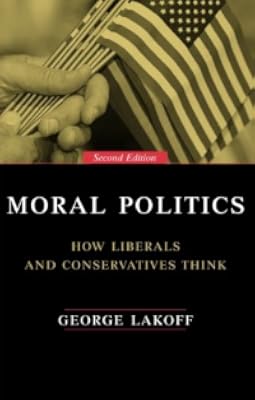
Moral Politics : How Liberals and Conservatives Think
by George Lakoff
On This Page
Description
When Moral Politics was first published two decades ago, it redefined how Americans think and talk about politics through the lens of cognitive political psychology. Today, George Lakoff's classic text has become all the more relevant, as liberals and conservatives have come to hold even more vigorously opposed views of the world, with the underlying assumptions of their respective worldviews at the level of basic morality. Even more so than when Lakoff wrote, liberals and conservatives show more simply have very different, deeply held beliefs about what is right and wrong. Lakoff reveals radically different but remarkably consistent conceptions of morality on both the left and right. Moral worldviews, like most deep ways of understanding the world, are unconscious--part of our "hard-wired" brain circuitry. When confronted with facts that don't fit our moral worldview, our brains work automatically and unconsciously to ignore or reject these facts, and it takes extraordinary openness and awareness of this phenomenon to pay critical attention to the vast number of facts we are presented with each day. For this new edition, Lakoff has added a new preface and afterword, extending his observations to major ideological conflicts since the book's original publication, from the Affordable Care Act to the wars in Iraq and Afghanistan, the recent financial crisis, and the effects of global warming. One might have hoped such massive changes would bring people together, but the reverse has actually happened; the divide between liberals and conservatives has become stronger and more virulent. To have any hope of bringing mutual respect to the current social and political divide, we need to clearly understand the problem and make it part of our contemporary public discourse. Moral Politics offers a much-needed wake-up call to both the left and the right. show lessTags
Recommendations












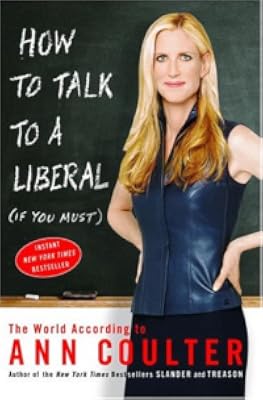
Member Recommendations
by anonymous user
Member Reviews
The title says it all. Lakoff uses cognitive linguistics to examine how liberals and conservatives use morality to think about politics. (His focus is on American politics, but most of what he writes about can be applied to other countries as well). He explains that liberals and conservatives don’t understand how each other think because their definitions of morality are drastically different. Conservatives have a “strict father” type of morality that defines things like self-reliance, independence, and respect for authority as moral. Liberals have a “nurturant parent” type of morality that defines things like helping people in need, fairness, and compassion as moral. He applies these two types of morality to politics using a show more family metaphor for government: the government as the parents and the citizens as the children.
These two different ways of looking as what is moral and what is immoral explain how conservatives can all basically agree on so many drastically different issues (abortion, homosexuality as a sin, capital punishment, etc.) and how liberals can do the same for other issues (environmentalism, social programs, gun control, etc.). For example, liberals often don’t understand how conservatives can be against both abortion and social programs that provide prenatal care for lower class women. How can they want to protect unwanted children but ignore the needs of children that are wanted? Strict father morality explains how these are two unrelated issues in conservatives’ minds. Abortion is an issue of justice, which, strict father morality defines as retributive. If you commit an immoral act (i.e. sex outside of marriage), then you deserve to be punished, and you should accept the consequences of your actions. If abortion were legal, then people would be able to commit immoral acts with no consequences, and that would threaten the existing moral order. Strict father morality sees lower class women who need help getting adequate prenatal care as a totally separate issue: one of self-reliance. Living a moral life requires that you be able to take care of yourself without help from others; therefore, social programs that help the poor are immoral because then people would have no incentive to work to become self-reliant.
The basic gist of Lakoff’s argument can be summed up in one question: If your baby cries in the middle of the night, do you pick it up or let it cry? Based on a strict father morality, conservatives would say no: picking the child up every time it cries would spoil it and make it harder to learn independence. Based on a nurturant parent morality, liberals would say yes: children need to know that they are loved and cared for.
Lakoff spends the first two parts of the book framing his argument by explaining the two forms of morality. The next three parts apply family morality to American politics. In the last part, he cites scientific research that gives evidence for which of the two moral systems is best, both for children in a family and for the citizens of a government. I read the second edition, which included an added appendix with explanations of the Clinton-Lewinsky scandal, the 2000 election, and the first few months of the Bush presidency and how the two forms of morality played a role in each of these events. It looks like there’s also another edition with a different subtitle, although I’m not sure how different that one is from my version.
I bought this book because one of the most brilliant professors I’ve ever had recommended it. It’s been sitting on my TBR ever since, and I wish I had read it sooner. It has given me a much greater understanding of American politics and politicians. It’s also helped me understand how people can have perfectly logical reasons for having beliefs that are different than mine. The explanations of cognitive linguistics at the beginning were a little intimidating, but don’t let this scare you off because the book is definitely written for the masses, not just academics. Lakoff repeated himself a lot from chapter to chapter, but I didn’t mind that at all because it helped me retain the information that I needed to understand later chapters. I’ve also been able to apply a lot of what he talked about in the book to everyday situations. For example, I noticed that my boss takes a strict parent approach to dealing with a difficult vendor while I take a nurturant parent approach to the same vendor. So far, I’m getting better, faster results with my approach, but I’m going to keep an eye on this.
To sum it up: this book explains how the American political system works and is worth reading for that reason alone. It’s not the kind of book you just race through; it’s a bit of work to read, but the reward is worth the effort. show less
These two different ways of looking as what is moral and what is immoral explain how conservatives can all basically agree on so many drastically different issues (abortion, homosexuality as a sin, capital punishment, etc.) and how liberals can do the same for other issues (environmentalism, social programs, gun control, etc.). For example, liberals often don’t understand how conservatives can be against both abortion and social programs that provide prenatal care for lower class women. How can they want to protect unwanted children but ignore the needs of children that are wanted? Strict father morality explains how these are two unrelated issues in conservatives’ minds. Abortion is an issue of justice, which, strict father morality defines as retributive. If you commit an immoral act (i.e. sex outside of marriage), then you deserve to be punished, and you should accept the consequences of your actions. If abortion were legal, then people would be able to commit immoral acts with no consequences, and that would threaten the existing moral order. Strict father morality sees lower class women who need help getting adequate prenatal care as a totally separate issue: one of self-reliance. Living a moral life requires that you be able to take care of yourself without help from others; therefore, social programs that help the poor are immoral because then people would have no incentive to work to become self-reliant.
The basic gist of Lakoff’s argument can be summed up in one question: If your baby cries in the middle of the night, do you pick it up or let it cry? Based on a strict father morality, conservatives would say no: picking the child up every time it cries would spoil it and make it harder to learn independence. Based on a nurturant parent morality, liberals would say yes: children need to know that they are loved and cared for.
Lakoff spends the first two parts of the book framing his argument by explaining the two forms of morality. The next three parts apply family morality to American politics. In the last part, he cites scientific research that gives evidence for which of the two moral systems is best, both for children in a family and for the citizens of a government. I read the second edition, which included an added appendix with explanations of the Clinton-Lewinsky scandal, the 2000 election, and the first few months of the Bush presidency and how the two forms of morality played a role in each of these events. It looks like there’s also another edition with a different subtitle, although I’m not sure how different that one is from my version.
I bought this book because one of the most brilliant professors I’ve ever had recommended it. It’s been sitting on my TBR ever since, and I wish I had read it sooner. It has given me a much greater understanding of American politics and politicians. It’s also helped me understand how people can have perfectly logical reasons for having beliefs that are different than mine. The explanations of cognitive linguistics at the beginning were a little intimidating, but don’t let this scare you off because the book is definitely written for the masses, not just academics. Lakoff repeated himself a lot from chapter to chapter, but I didn’t mind that at all because it helped me retain the information that I needed to understand later chapters. I’ve also been able to apply a lot of what he talked about in the book to everyday situations. For example, I noticed that my boss takes a strict parent approach to dealing with a difficult vendor while I take a nurturant parent approach to the same vendor. So far, I’m getting better, faster results with my approach, but I’m going to keep an eye on this.
To sum it up: this book explains how the American political system works and is worth reading for that reason alone. It’s not the kind of book you just race through; it’s a bit of work to read, but the reward is worth the effort. show less
A fascinating thesis: our political views can be traced to a metaphor of the state as parent. Liberals identify with the state as nurturant parent, conservatives with the state as strict parent (father). Thus, Lakoff asserts, the political language used to describe various policy proposals matters a great deal to their chances of success. He provides examples of how different issues/proposals can be framed to appeal to liberals or conservatives. The book's ideas resonated with me, but it remains to be seen whether they actually work in practice.
Okay, if you read the second edition (2002), you've essentially read this "enlarged" edition, since Lakoff left the main part of the book alone, only adding a new preface and afterword to update it. This doesn't affect his explanations of Strict Father and Nurturant Parent morality, and that's mostly what the book is about. However, all of his political examples come from the 1990s, and twenty years later, I found myself struggling to remember the details. (What else was Dan Quayle up to back then beside the Murphy Brown kerfluffle? Wait, who was James Dobson again? Okay, what was the issue with the National Endowment for the Arts?) Updated examples in the main part of the book, and not just the preface and afterword, would've been show more good.
Lakoff is open about the fact that he's a liberal, and I think the book is aimed more at explaining Strict Father morality to liberals rather than the other way around. He stays in a more neutral academic mode for the first four parts of the book, describing the two models of morality, how they play out in politics, and describing common variations on the core models. After these explanations, he turns to why he thinks Nurturant Parent morality is the better alternative and how it could be promoted. Readers who aren't interested in this part could skip it and still understand the gist of the book (although they should probably check at the end for those updated examples in the 2002 and 2016 afterwords). show less
Lakoff is open about the fact that he's a liberal, and I think the book is aimed more at explaining Strict Father morality to liberals rather than the other way around. He stays in a more neutral academic mode for the first four parts of the book, describing the two models of morality, how they play out in politics, and describing common variations on the core models. After these explanations, he turns to why he thinks Nurturant Parent morality is the better alternative and how it could be promoted. Readers who aren't interested in this part could skip it and still understand the gist of the book (although they should probably check at the end for those updated examples in the 2002 and 2016 afterwords). show less
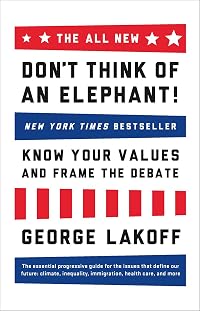
I thought this was a fascinating, though not easy, book to read. Lakoff's book "Don't Think of an Elephant" is easier to get through, but this book really gives the underpinning, for anyone not versed in cognitive linguistics (like me), necessary to really get a sense of what his theory.
I like this book because 1) he admits his bias up front and then does his best (not perfect) to write the first part of the book objectively, 2) he explains how the 'right' brilliantly figured out what united them, and decided to come together in the 1980's working toward one goal etc., 3) he explains many things about how our minds work, at levels that we're not even aware of in terms of metaphors and framing, deep and surface (and this part I find show more really fascinating) 4) he shows how the 'left' doesn't really understand what its own values are, remains fighting among itself, and continues to use 'right-wing' frames and metaphors that just support a world-view that 'left' values really don't support.
It can be tough slogging, but I think it's one of the most exciting books to come out on this "why do we think so differently" subject. Since reading it, although I don't agree in anyway with the policies of the 'right', I think I understand them much better, and I see that, in their way, conservatives are trying to make a safer and better world from their perspective. show less
I like this book because 1) he admits his bias up front and then does his best (not perfect) to write the first part of the book objectively, 2) he explains how the 'right' brilliantly figured out what united them, and decided to come together in the 1980's working toward one goal etc., 3) he explains many things about how our minds work, at levels that we're not even aware of in terms of metaphors and framing, deep and surface (and this part I find show more really fascinating) 4) he shows how the 'left' doesn't really understand what its own values are, remains fighting among itself, and continues to use 'right-wing' frames and metaphors that just support a world-view that 'left' values really don't support.
It can be tough slogging, but I think it's one of the most exciting books to come out on this "why do we think so differently" subject. Since reading it, although I don't agree in anyway with the policies of the 'right', I think I understand them much better, and I see that, in their way, conservatives are trying to make a safer and better world from their perspective. show less
A great book proposing a radical new way to view the political landscape. Rather than the typical left-right grid, Lakoff proposes that our politics represent the fundamental paradigm by which we view the world. This makes it difficult to effectively communicate between the different ideologies, because the same words mean different things--ie, we speak different languages. In order to be more persuasive in promoting our ideology, we must understand the language of the other sides, so that we can frame our positions more effectively. Lakoff is very comprehensive is sketching out the primary paradigms of both liberals and conservatives ("nurturant parent" and "strict father"). The case is very compelling.
What follows is a modified version of a review I posted on Amazon (which has since disappeared), and was published in the now-defunct Green Egg magazine.
George Lakoff is an anti-Chomskyite linguist, one of whose contributions lately has been to analyse how the human mind uses metaphors to process abstractions. After the 1994 elections, Lakoff, who is politically very liberal, decided to analyse why the Right had won such a large victory. His analysis centered on the way people think about politics; he found that most people's political ideas, both left and right, derive from the metaphor "The Nation is a Family". He then traces how conservative and liberal political ideas are informed by two very different conceptual models of the ideal show more family, what he calls the "Strict Father" family and the "Nurturant Parent" family.
Lakoff shows that the emphasis in the "Strict Father" morality is on reward for doing good and punishment for transgressing moral boundaries, moral authority, integrity and self-reliance, and shows how these values translate into conservative political positions. Similarly, he shows that the emphasis in the "Nurturant Parent" model is on empathy, nurturance, fair distribution, and restitution, and traces these values into liberal political views. He then shows how variations in focus can lead to the great diversity we see in real-life politics. Both Jesse Jackson and Ralph Nader are liberals, though their rhetoric will fail to inspire the fans of the other; the difference is in the moral focus of the two. Lakoff shows that sort of variation is natural, and does not mark an abandonment of the basic liberal value-system, just as the differences between a libertarian and a Christian conservative are not so great that either falls outside the conservative family.
Early in the book, Lakoff asks "Why should readers be willing to reason about a government in this way? Why don't they just reject the metaphor as ridiculous?" In chapter 19, he partially addresses this question by asking "Can there be a politics without family values?" He demonstrates that government and politics cannot be separated from moral questions, by showing that principles of the government have a moral foundation, and than many of the operations of the government are to further moral rather than practical ends. Lakoff says that family-based morality is all-encompassing for many people, therefore they will always frame political questions in light of their family values. However, this does not demonstrate that alternative views of the relationship between a government and its citizens cannot be formulated, or even become predominant, just that some people will not accept those views.
In Part Six, starting with chapter 20, Lakoff begins overtly propagandizing for the liberal worldview and liberal politics. He starts by citing abundant research into child-rearing that the "Nurturant Parent" family model produces better real-world results than the "Strict Father" model, and that the "Strict Father" model tends to fail by its own internal criteria. However, Lakoff is confusing the map for the territory. Lakoff is aware that metaphorical mappings do not always correspond to reality, and that people do not always act for the reasons they say they act. It is possible for one model of a family to be more successful when raising children, while less successful when the family metaphor is applied to a non-family situation. Recent reports have found that the so-called "female management style", which corresponds to the Nurturant Parent family model, is not well liked by employees, and is not as successful at creating effective teams or generating business success as the traditional "Strict Father" business model. Lakoff does not demonstrate that success in child-rearing is equivalent to success in governing adults, thus missing his point. Also, Lakoff assumes that liberals in power actually govern along the lines of the Nurturant Parent model, when the evidence to date shows that quite often the rhetoric is Nurturant Parent while the practice is that of the Indulgent-Permissive model.
If you're interested in American politics, buy this book. Just keep in mind its limitations. show less
George Lakoff is an anti-Chomskyite linguist, one of whose contributions lately has been to analyse how the human mind uses metaphors to process abstractions. After the 1994 elections, Lakoff, who is politically very liberal, decided to analyse why the Right had won such a large victory. His analysis centered on the way people think about politics; he found that most people's political ideas, both left and right, derive from the metaphor "The Nation is a Family". He then traces how conservative and liberal political ideas are informed by two very different conceptual models of the ideal show more family, what he calls the "Strict Father" family and the "Nurturant Parent" family.
Lakoff shows that the emphasis in the "Strict Father" morality is on reward for doing good and punishment for transgressing moral boundaries, moral authority, integrity and self-reliance, and shows how these values translate into conservative political positions. Similarly, he shows that the emphasis in the "Nurturant Parent" model is on empathy, nurturance, fair distribution, and restitution, and traces these values into liberal political views. He then shows how variations in focus can lead to the great diversity we see in real-life politics. Both Jesse Jackson and Ralph Nader are liberals, though their rhetoric will fail to inspire the fans of the other; the difference is in the moral focus of the two. Lakoff shows that sort of variation is natural, and does not mark an abandonment of the basic liberal value-system, just as the differences between a libertarian and a Christian conservative are not so great that either falls outside the conservative family.
Early in the book, Lakoff asks "Why should readers be willing to reason about a government in this way? Why don't they just reject the metaphor as ridiculous?" In chapter 19, he partially addresses this question by asking "Can there be a politics without family values?" He demonstrates that government and politics cannot be separated from moral questions, by showing that principles of the government have a moral foundation, and than many of the operations of the government are to further moral rather than practical ends. Lakoff says that family-based morality is all-encompassing for many people, therefore they will always frame political questions in light of their family values. However, this does not demonstrate that alternative views of the relationship between a government and its citizens cannot be formulated, or even become predominant, just that some people will not accept those views.
In Part Six, starting with chapter 20, Lakoff begins overtly propagandizing for the liberal worldview and liberal politics. He starts by citing abundant research into child-rearing that the "Nurturant Parent" family model produces better real-world results than the "Strict Father" model, and that the "Strict Father" model tends to fail by its own internal criteria. However, Lakoff is confusing the map for the territory. Lakoff is aware that metaphorical mappings do not always correspond to reality, and that people do not always act for the reasons they say they act. It is possible for one model of a family to be more successful when raising children, while less successful when the family metaphor is applied to a non-family situation. Recent reports have found that the so-called "female management style", which corresponds to the Nurturant Parent family model, is not well liked by employees, and is not as successful at creating effective teams or generating business success as the traditional "Strict Father" business model. Lakoff does not demonstrate that success in child-rearing is equivalent to success in governing adults, thus missing his point. Also, Lakoff assumes that liberals in power actually govern along the lines of the Nurturant Parent model, when the evidence to date shows that quite often the rhetoric is Nurturant Parent while the practice is that of the Indulgent-Permissive model.
If you're interested in American politics, buy this book. Just keep in mind its limitations. show less
Articulated something I’d always known to be intuitively—that politics are morality—but hadn’t quite been able to explain. If you want to understand why conservatives and liberals seem to always be taking past each other and “can’t just get along,” you need to read this book.
Members
- Recently Added By
Lists

Política - Clásicos
164 works; 2 members

Mo's Reading List
218 works; 1 member

Mo's Reading List (Abridged)
75 works; 1 member
Author Information

37+ Works 9,741 Members
George Lakoff is distinguished professor of cognitive science and linguistics at the University of California, Berkeley. He is the author or coauthor of numerous books, including Metaphors We Live By and Women, Fire, and Dangerous Things, both also published by the University of Chicago Press.
Work Relationships
Common Knowledge
- Original publication date
- 1996
- Dedication
- To My Wife
Kathleen Frumkin
and to the Memory of
Paul Baum - First words
- Contemporary American politics is about worldview.
- Last words
- (Click to show. Warning: May contain spoilers.)I think the issue to bring progressives together should be this most central of all issues—raising children to become responsible, empathetic adults.
- Blurbers
- Rosenberg, Paul; Bellah, Robert; Roberts, Steven V.
Classifications
- Genres
- Politics and Government, Nonfiction, General Nonfiction, Philosophy, Science & Nature
- DDC/MDS
- 172 — Philosophy & psychology Ethics Political ethics
- LCC
- HN90 .M6 .L34 — Social sciences Social history and conditions. Social problems. Social reform Social history and conditions. Social problems. By region or country
- BISAC
Statistics
- Members
- 933
- Popularity
- 28,450
- Reviews
- 11
- Rating
- (3.94)
- Languages
- English, Polish, Spanish
- Media
- Paper, Audiobook, Ebook
- ISBNs
- 11
- UPCs
- 1
- ASINs
- 6