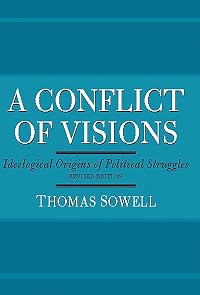
A Conflict of Visions: Ideological Origins of Political Struggles
by Thomas Sowell
On This Page
Description
In this book, which the author calls a "culmination of thirty years of work in the history of ideas," Sowell attempts to explain the ideological difference between liberals and conservatives as a disagreement over the moral potential inherent in nature. Those who see that potential as limited prefer to constrain governmental authority, he argues. They feel that reform is difficult and often dangerous, and put their faith in family, custom, law, and traditional institutions. Conversely, those show more who have faith in human nature prefer to remove institutional and traditional constraints. Controversies over such diverse issues as criminal justice, income distribution, or war and peace repeatedly show an ideological divide along the lines of these two conflicting visions. show lessTags
Recommendations






Member Recommendations

by anonymous user
by anonymous user
Member Reviews
Let me preface that I had no idea who Thomas Sowell was before reading this book. In fact, I knew nothing about what it was going to be about, aside from a Conflict of Visions. This is mainly because I was given the book and told I should read more nonfiction.
I did remember why I disliked nonfiction while reading it. It’s not because Sowell was a bad writer. In fact, it’s nearly the opposite. He’s too much of a good writer, using eloquent language and fancy ideas, albeit a little too fancy for me. It took me about 3 months to finish this book. In that time, I told myself I couldn’t start books anymore because if I did, I would get distracted and start reading that book instead of this one.
My main issue was that it was a bit dry show more at times and repetitive, but it might also be because I’m not the target audience of this book, I haven’t been educated to the level of other readers, and that’s why I had to reread a lot of parts to understand them.
At the beginning of the book, he clearly states that these two visions don’t entirely encompass all the beliefs out there. In fact, most are a combination of the two. Essentially, the constrained vision is that humans are inherently selfish and only do things because it benefits them. The unconstrained vision is that humans can one day care for others more than themselves, and that we are smart and capable of doing good without incentives. I’m not a very good explainer, so if you’re interested, you should totally try out the book!
Sowell brings up a very interesting perspective, and I thoroughly enjoyed my time. It was also a great introduction to many modern thinkers of the last few centuries, like Adam Smith, Friedrich Hayek, William Godwin, Edmund Burke, etc. It’s a great start to philosophical discussions, and I learned a lot.
Although I could slightly tell that Sowell leaned more conservative, I couldn’t tell that he was black. The reason is that he talks about how the unconstrained vision, or essentially the core beliefs of a democrat, believes in equality of results instead of equality of processes. In some cases, that means giving more spots to minorities in colleges instead of asians or whites because historically they’ve been underrepresented, along with a very long history of slavery and colonization. It also means giving to the poor, not out of your own goodwill, but because they deserve it, not having the same opportunities as others to be where some might be now. On the other hand, the constrained vision, which leans more conservative in ideals, believes that giving these benefits to certain people and not others is too challenging. Sometimes, adversity isn’t always visible. Some of the most successful people could’ve also faced many obstacles. You also can’t quantify the struggles that a person has gone through in the past. Not everyone’s life is the same. Just because you are a minority doesn’t mean that you had it harder than someone who isn’t. Stigma, stereotypes, and trauma are real, but if a white kid was beaten up and an orphan while a person of a minority grew up in a very wealthy household with lots of love and care, how do you decide which one to let into a school, or how much the government should pay in funds? Is someone growing up in a very dangerous and low-income area of the world more important than someone whose skin color is a bit darker? Or is it the other way around? These experiences cannot be quantified or compared to be worse than the other. Attempting equal results is heroic, but in the process, equality in processes will have disappeared. Even though minorities would be better off supporting the unconstrained vision because it offers more support to them, Thomas Sowell disagrees. I found that especially interesting. Food for thought.
I could talk a lot about this book and all of the thought-provoking ideas, but I’ll stop there for now. I think in this day and age, being a conservative has been heavily associated with supporting Trump, and it’s easy to forget what a conservative has been in the past hundred years. In order to truly understand the two political parties, we must not look at the people who claim to support one side or the other. Instead, we must truly understand both sides at their core beliefs, and make conclusions based on that. Just because you’re a conservative doesn’t mean you can’t support the LGBTQ+ community and abortion. That’s not what being a conservative is, at least in its basic beginnings. It’s what the media has shaped it into. Just because you’re a democrat doesn’t mean you do support illegal immigration. Some people who think they’re Democrats might hold a constrained vision of the world. Some who are Republicans might have an unconstrained vision. Both sides have a warped idea of what the other is, and it’s truly unfortunate. show less
I did remember why I disliked nonfiction while reading it. It’s not because Sowell was a bad writer. In fact, it’s nearly the opposite. He’s too much of a good writer, using eloquent language and fancy ideas, albeit a little too fancy for me. It took me about 3 months to finish this book. In that time, I told myself I couldn’t start books anymore because if I did, I would get distracted and start reading that book instead of this one.
My main issue was that it was a bit dry show more at times and repetitive, but it might also be because I’m not the target audience of this book, I haven’t been educated to the level of other readers, and that’s why I had to reread a lot of parts to understand them.
At the beginning of the book, he clearly states that these two visions don’t entirely encompass all the beliefs out there. In fact, most are a combination of the two. Essentially, the constrained vision is that humans are inherently selfish and only do things because it benefits them. The unconstrained vision is that humans can one day care for others more than themselves, and that we are smart and capable of doing good without incentives. I’m not a very good explainer, so if you’re interested, you should totally try out the book!
Sowell brings up a very interesting perspective, and I thoroughly enjoyed my time. It was also a great introduction to many modern thinkers of the last few centuries, like Adam Smith, Friedrich Hayek, William Godwin, Edmund Burke, etc. It’s a great start to philosophical discussions, and I learned a lot.
Although I could slightly tell that Sowell leaned more conservative, I couldn’t tell that he was black. The reason is that he talks about how the unconstrained vision, or essentially the core beliefs of a democrat, believes in equality of results instead of equality of processes. In some cases, that means giving more spots to minorities in colleges instead of asians or whites because historically they’ve been underrepresented, along with a very long history of slavery and colonization. It also means giving to the poor, not out of your own goodwill, but because they deserve it, not having the same opportunities as others to be where some might be now. On the other hand, the constrained vision, which leans more conservative in ideals, believes that giving these benefits to certain people and not others is too challenging. Sometimes, adversity isn’t always visible. Some of the most successful people could’ve also faced many obstacles. You also can’t quantify the struggles that a person has gone through in the past. Not everyone’s life is the same. Just because you are a minority doesn’t mean that you had it harder than someone who isn’t. Stigma, stereotypes, and trauma are real, but if a white kid was beaten up and an orphan while a person of a minority grew up in a very wealthy household with lots of love and care, how do you decide which one to let into a school, or how much the government should pay in funds? Is someone growing up in a very dangerous and low-income area of the world more important than someone whose skin color is a bit darker? Or is it the other way around? These experiences cannot be quantified or compared to be worse than the other. Attempting equal results is heroic, but in the process, equality in processes will have disappeared. Even though minorities would be better off supporting the unconstrained vision because it offers more support to them, Thomas Sowell disagrees. I found that especially interesting. Food for thought.
I could talk a lot about this book and all of the thought-provoking ideas, but I’ll stop there for now. I think in this day and age, being a conservative has been heavily associated with supporting Trump, and it’s easy to forget what a conservative has been in the past hundred years. In order to truly understand the two political parties, we must not look at the people who claim to support one side or the other. Instead, we must truly understand both sides at their core beliefs, and make conclusions based on that. Just because you’re a conservative doesn’t mean you can’t support the LGBTQ+ community and abortion. That’s not what being a conservative is, at least in its basic beginnings. It’s what the media has shaped it into. Just because you’re a democrat doesn’t mean you do support illegal immigration. Some people who think they’re Democrats might hold a constrained vision of the world. Some who are Republicans might have an unconstrained vision. Both sides have a warped idea of what the other is, and it’s truly unfortunate. show less
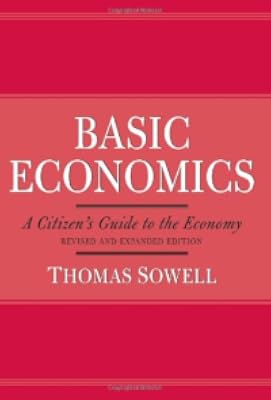
Sowell is brilliant. This I knew, because I read his [b:Basic Economics: A Citizen's Guide to the Economy|3023|Basic Economics A Citizen's Guide to the Economy|Thomas Sowell|https://i.gr-assets.com/images/S/compressed.photo.goodreads.com/books/1388328985l/3023._SX50_.jpg|812361]. But this was a completely different field and contained so much philosophical research that I was almost convinced he was a different Thomas Sowell.
His main, and, again, maddeningly neutral,* thesis centers on the two different over-arching visions traceable throughout history. His exploration of Marxism was perhaps the clearest and most succinct that I have ever read (seriously). Similarly, his view of the Nazi party was fascinating. I especially loved the show more last section which, possibly, illustrates the sources of some of the generational disconnect we're experiencing at the moment. I highly recommend this book---If only to help you understand where the other side might be coming from and why it is so difficult, for some, to see your point of view.
*Tell me which vision he prefers? I'm pretty sure you can't get it from this book. show less
His main, and, again, maddeningly neutral,* thesis centers on the two different over-arching visions traceable throughout history. His exploration of Marxism was perhaps the clearest and most succinct that I have ever read (seriously). Similarly, his view of the Nazi party was fascinating. I especially loved the show more last section which, possibly, illustrates the sources of some of the generational disconnect we're experiencing at the moment. I highly recommend this book---If only to help you understand where the other side might be coming from and why it is so difficult, for some, to see your point of view.
*Tell me which vision he prefers? I'm pretty sure you can't get it from this book. show less
Illuminating.
Sowell brilliantly distills the history of human conflict into a battle of irreconcilable worldviews: the constrained view of humanity and the unconstrained view of humanity. The former assumes man is morally crippled and selfish at its foundation. The latter assumes that man is merely broken by circumstances. Sowell expounds on these worldviews and discusses their implications in a variety of different areas including justice, war, and power. However, he does not do that dogmatically, but rather lets the thought leaders' original writings, and those of their contemporaries do the talking. This book is well-researched and convincing.
Go read it.
Sowell brilliantly distills the history of human conflict into a battle of irreconcilable worldviews: the constrained view of humanity and the unconstrained view of humanity. The former assumes man is morally crippled and selfish at its foundation. The latter assumes that man is merely broken by circumstances. Sowell expounds on these worldviews and discusses their implications in a variety of different areas including justice, war, and power. However, he does not do that dogmatically, but rather lets the thought leaders' original writings, and those of their contemporaries do the talking. This book is well-researched and convincing.
Go read it.
This book was a seminal event for me. It put into words many things that I sensed I believed, but had no words to describe. It taught me things about thinking, about going back to the root and following thoughts to their logical conclusions.
The book digs at the roots of the differences between conservative and liberal thinking. It is not a political hack piece that is intended to get a certain party elected, but a political philosophy that has been digested over many years of thought and put down as a wake-up call for us.
It exposes the dangers of policy by emotion, making policy choices based on what seems good, but gets us back to judge policy not by intent but by result. It goes back to the very definition of conservative and liberal, show more not as a party affilition, connotation, or label given by the opposition, but root beliefs that drive decisions.
It challenged me to look at why I did things, why I made the choices I made. It challenged me to look at what I really believed and make choices from that foundation.
If you are a talk-show conservative, you need to read this book. The level of thinking of most hosts is extremely shallow. If not, they give it to us in bite-sized pieces for easy digestion. Don't go through life not knowing why you believe what you proclaim to believe.
If you are a liberal, you need to read this book. It will help you understand the underpinnings of the decisions that conservatives make or should be making. It will challenge you to look hard at the foundations of your thought processes. Perhaps it will open some dialogue and cure our current polarization. show less
The book digs at the roots of the differences between conservative and liberal thinking. It is not a political hack piece that is intended to get a certain party elected, but a political philosophy that has been digested over many years of thought and put down as a wake-up call for us.
It exposes the dangers of policy by emotion, making policy choices based on what seems good, but gets us back to judge policy not by intent but by result. It goes back to the very definition of conservative and liberal, show more not as a party affilition, connotation, or label given by the opposition, but root beliefs that drive decisions.
It challenged me to look at why I did things, why I made the choices I made. It challenged me to look at what I really believed and make choices from that foundation.
If you are a talk-show conservative, you need to read this book. The level of thinking of most hosts is extremely shallow. If not, they give it to us in bite-sized pieces for easy digestion. Don't go through life not knowing why you believe what you proclaim to believe.
If you are a liberal, you need to read this book. It will help you understand the underpinnings of the decisions that conservatives make or should be making. It will challenge you to look hard at the foundations of your thought processes. Perhaps it will open some dialogue and cure our current polarization. show less
I can see why Sowell considers this among his best three works. In A conflict of Visions, he presents a generalized philosophical model that frames every major economic and political viewpoint. He references many prominent thinker on both sides of his model, which is based not on left vs. right, nor authoritarian vs. libertarian, but instead on constrained vs. the unconstrained visions. So many ideological discussions about politics, religion, trade, and social justice would be far more enlightening if participants had considered them within the context of Sowell's brilliant and well-written analysis.
Forget about all the clowns and comedians today posing as valid pundits, the man to clarify the American political debate is Thomas Sowell. For me this was the sort of tremendously-challenging book I came across only a couple of times in a decade that really makes me shift my assumptions and rethink my worldview. - Adam
Extremely helpful in understanding the differences between groups of people that Sowell argues can be grouped as having a constrained vision (emphasizes process conducive to desired results) or an unconstrained vision (emphasizes desired results over process) and how such visions effect polity, science, and pretty much all issues of culture. I think if Sowell were a Christian he’d appreciate that the constrained vision is simply a recognition that mankind is fallen and our worldview must account for this.
Members
- Recently Added By
Author Information

Thomas Sowell is the Rose and Milton Friedman Senior Fellow on Public Policy at the Hoover Institution, Stanford University.
Awards and Honors
Notable Lists
Work Relationships
Common Knowledge
- Canonical title
- A Conflict of Visions: Ideological Origins of Political Struggles
- Original publication date
- 1987
- Epigraph
- Every man, where he goes, is encompassed by a cloud of comforting convictions, which move with him like flies on a summer day.
--Bertrand Russell - Dedication
- To my wife, Mary, with love
- First words
- (Preface): This book has been more years in the writing than I realized, until I looked back over my own work of the past decade or more and noted how often the concept of "visions" has appeared.
One of the curious things about political opinions is how often the same people line up on the opposite sides of different issues. - Last words
- (Click to show. Warning: May contain spoilers.)Dedication to a cause may legitimately entail sacrifices of personal interests but not sacrifices of mind or conscience.
Classifications
- Genres
- Politics and Government, Nonfiction, Philosophy, Sociology, General Nonfiction, History
- DDC/MDS
- 303.372 — Society, government, & culture Social sciences, sociology & anthropology Social processes Coordination and control Social norms Belief systems and customs
- LCC
- HM681 .S69 — Social sciences Sociology (General) Sociology Social control
- BISAC
Statistics
- Members
- 1,086
- Popularity
- 23,634
- Reviews
- 18
- Rating
- (4.26)
- Languages
- English, Hebrew, Portuguese, Spanish
- Media
- Paper, Audiobook, Ebook
- ISBNs
- 16
- ASINs
- 12