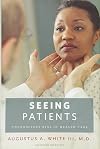
Seeing Patients: Unconscious Bias in Health Care
by Augustus A. White III
On This Page
Description
If you're going to have a heart attack, an organ transplant, or a joint replacement, here's the key to getting the very best medical care: be a white, straight, middle-class male. This book by a pioneering black surgeon takes on one of the few critically important topics that haven't figured in the heated debate over health care reform-the largely hidden yet massive injustice of bias in medical treatment.Growing up in Jim Crow-era Tennessee and training and teaching in overwhelmingly white show more medical institutions, Gus White witnessed firsthand how prejudice works in the world of medicine. And while race relations have changed dramatically, old ways of thinking die hard. In Seeing Patients White draws upon his experience in startlingly different worlds to make sense of the unconscious bias that riddles medical treatment, and to explore what it means for health care in a diverse twenty-first-century America.White and coauthor David Chanoff use extensive research and interviews with leading physicians to show how subconscious stereotyping influences doctor-patient interactions, diagnosis, and treatment. Their book brings together insights from the worlds of social psychology, neuroscience, and clinical practice to define the issues clearly and, most importantly, to outline a concrete approach to fixing this fundamental inequity in the delivery of health care. show lessTags
Recommendations


























Member Reviews
Dr. Augustus A. White III, the son of a physician in segregated Memphis, graduate of Brown (undergraduate degree in psychology), Stanford (medical school) and Yale (residency), Vietnam War combat surgeon, renowned orthopaedic surgeon and researcher, first African American to chair a department at Harvard Medical School, and former master of the Oliver Wendell Holmes Society at Harvard, has a most impressive résumé and interesting life story. Fortunately he shares his life with the reader in the first half of this outstanding book, and he is a surprisingly gifted story teller, with a style that I found completely captivating. He encounters racial prejudice along the way to the top, but handles these obstacles with grace and aplomb, in show more keeping with his upbringing in the African American middle class community of Memphis who nurtured and praised him while stressing him to be humble and grateful for the gifts and opportunities he had been given. He was also taught to be a role model for others, and as he became a respected professor at Yale and Harvard and a fellow of the American Academy of Orthopaedic Surgeons he used his position to advocate for greater representation of racial minorities in medical schools and orthopaedic residency programs, and to address the inequalities in health care and medical outcomes that minorities, the women, elderly and other populations continue to experience in the United States.
In the second half of the book, Dr. White describes some of the findings outlined in the landmark book Unequal Treatment: Confronting Racial and Ethnic Disparities in Health Care, published in 2001 by the Institute of Medicine, which was influenced by several studies that demonstrated that stark disparities in health care outcomes based on race, ethnicity, gender and age exist for different health conditions, even when factors such as health insurance and socioeconomic status were controlled for. Hispanics and African Americans received adequate pain control far less often than their white counterparts; women with heart attacks characterized by severe blockage of blood flow were nearly twice as likely as men to die afterward, and women with heart disease are far less likely to be accurately diagnosed by their doctors (as their symptoms are more likely to be attributed to stress) and receive standard of care treatment such as angioplasty, bypass surgery, and cholesterol lowering drugs; and elderly people, particularly women, are far less likely to be offered kidney transplants for renal failure, even those who are in good health.
In his work with the Oliver Wendell Holmes Society and his colleagues at Harvard, Dr. White and others advocated for the teaching of culturally competent care to medical students, in an effort to encourage physicians to evaluate and understand their own biases, so that they could provide each patient with the highest standard of care possible. He recognizes that most physicians genuinely care for their patients and want to give their best effort toward them, but cultural biases and personal factors that affect the patient-doctor relationship can impede the task. He injects personal vignettes and stories of others, which made me think about the families that I've taken care of who I haven't liked or communicated well with in the past, and understand that often I did not give them the same level of care that I did to families and children that I closely bonded with, regardless of their race or ethnic background.
The book closes with a section of practical suggestions for patients and physicians to use to better communicate with each other, and a list of national standards to ensure that every patient receives culturally competent health care.
Seeing Patients is a superb biography about an amazing man, a call to arms to ensure that all patients are treated fairly and equally, and a guide to aid health care providers and patients communicative effectively and respectfully to each other. I intend to encourage all of my colleagues, and the residents, medical students and physician assistant students who rotate on our service to buy and read this book, which jumps to the top of my short list of books that every health care provider should read. In addition, I think the lay reader would also enjoy and benefit from this book, as all of us have to encounter a health care provider who may or may not be respectful toward us at some point. show less
In the second half of the book, Dr. White describes some of the findings outlined in the landmark book Unequal Treatment: Confronting Racial and Ethnic Disparities in Health Care, published in 2001 by the Institute of Medicine, which was influenced by several studies that demonstrated that stark disparities in health care outcomes based on race, ethnicity, gender and age exist for different health conditions, even when factors such as health insurance and socioeconomic status were controlled for. Hispanics and African Americans received adequate pain control far less often than their white counterparts; women with heart attacks characterized by severe blockage of blood flow were nearly twice as likely as men to die afterward, and women with heart disease are far less likely to be accurately diagnosed by their doctors (as their symptoms are more likely to be attributed to stress) and receive standard of care treatment such as angioplasty, bypass surgery, and cholesterol lowering drugs; and elderly people, particularly women, are far less likely to be offered kidney transplants for renal failure, even those who are in good health.
In his work with the Oliver Wendell Holmes Society and his colleagues at Harvard, Dr. White and others advocated for the teaching of culturally competent care to medical students, in an effort to encourage physicians to evaluate and understand their own biases, so that they could provide each patient with the highest standard of care possible. He recognizes that most physicians genuinely care for their patients and want to give their best effort toward them, but cultural biases and personal factors that affect the patient-doctor relationship can impede the task. He injects personal vignettes and stories of others, which made me think about the families that I've taken care of who I haven't liked or communicated well with in the past, and understand that often I did not give them the same level of care that I did to families and children that I closely bonded with, regardless of their race or ethnic background.
The book closes with a section of practical suggestions for patients and physicians to use to better communicate with each other, and a list of national standards to ensure that every patient receives culturally competent health care.
Seeing Patients is a superb biography about an amazing man, a call to arms to ensure that all patients are treated fairly and equally, and a guide to aid health care providers and patients communicative effectively and respectfully to each other. I intend to encourage all of my colleagues, and the residents, medical students and physician assistant students who rotate on our service to buy and read this book, which jumps to the top of my short list of books that every health care provider should read. In addition, I think the lay reader would also enjoy and benefit from this book, as all of us have to encounter a health care provider who may or may not be respectful toward us at some point. show less
Ratings
Members
- Recently Added By
Lists

Best Medical Nonfiction
79 works; 29 members
Author Information
5 Works 105 Members
Awards and Honors
Classifications
Statistics
- Members
- 42
- Popularity
- 703,281
- Reviews
- 1
- Rating
- (4.00)
- Languages
- English
- Media
- Paper, Ebook
- ISBNs
- 2