
Lisa Sanders (1) (1956–)
Author of Every Patient Tells a Story: Medical Mysteries and the Art of Diagnosis
For other authors named Lisa Sanders, see the disambiguation page.
About the Author
Lisa Sanders, M.D., an internist on the faculty of the Yale University School of Medicine, writes the monthly column Diagnosis for the New York Times Magazine and serves as technical advisor on Fox TV's House, M.D. She lives in New Haven, Connecticut.
Works by Lisa Sanders
Every Patient Tells a Story: Medical Mysteries and the Art of Diagnosis (2009) 650 copies, 15 reviews
Tagged
Common Knowledge
- Birthdate
- 1956
- Gender
- female
- Relationships
- Hitt, Jack (husband)
- Nationality
- USA
- Places of residence
- New Haven, Connecticut, USA
- Associated Place (for map)
- Connecticut, USA
Members
Reviews
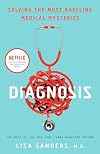
In 2019, shortly after getting an internet connection that could handle Netflix, I discovered a great new show. That show was Diagnosis, which was a reality TV show but not in the way you are likely thinking. Each episode told the story of a person who was unable to get a diagnosis of what was wrong with them. The story and video were then published on The New York Times’ website with the world offering their thoughts on possible diagnoses. Sometimes, the patient was able to find a show more diagnosis in the crowd of suggestions. Sometimes not. But it shows that when you put a group of minds together, they can achieve great things.
Diagnosis is a collation on Lisa Sanders’ columns in The New York Times discussing rare, strange and missed diagnoses. It’s a fascinating look into how a diagnosis and differential diagnoses are made based on symptoms, test results and what the patient says. The overarching message is to listen to the patient and what they tell you. Like any good mystery, the evidence is often there and can sometimes be solved. (I did find this interesting given that Lisa was an adviser and inspiration for House M.D. – and we all know and parrot his line, ‘all patients lie’). The book is divided into sections, depending on the patient’s predominant symptom (e.g. fever, stomach pain). Reading each section demonstrates the variety of diseases and diagnoses that can come from a similar symptom. Each case is laid out as if the patient is in the hospital, presenting their symptoms. Their past medical history and previous tests are laid out. Imaging and examination results are mentioned. It’s very well done in that the reader can try to work out the neatly summarised problem. Alternative diagnoses are explored and finally, the patient is diagnosed and treated.
As well as listening to the patient, teamwork and collaboration between doctors and specialties is also a strong theme. No one person knows everything, so discussion with colleagues and contacts is highly important. There’s also the good luck element – if you’ve seen one of these rare cases before, you are much more likely to spot it based on experience. (For example, there is one case of Takotsubo cardiomyopathy. Being fascinated by this syndrome and Japanese, I’ve read a lot about it and seen some cases. This one jumped out at me. But I’ve never been to the Caribbean nor worked in a tropical area, so diseases specific to the tropics don’t stick in my head so well. But I do know some people who are especially knowledgeable).
My only complaint with the book is that everything is wrapped up neatly in a particular word count which is indicative of the newspaper columns they came from! I’d love to see an extended case in print. Overall, the book is explained brilliantly to both the lay person and medical staff and written in a way that respects all involved, from the patient to those who didn’t make the diagnosis. Just try and stop yourself after you promise ‘just one more chapter’.
http://samstillreading.wordpress.com show less
Diagnosis is a collation on Lisa Sanders’ columns in The New York Times discussing rare, strange and missed diagnoses. It’s a fascinating look into how a diagnosis and differential diagnoses are made based on symptoms, test results and what the patient says. The overarching message is to listen to the patient and what they tell you. Like any good mystery, the evidence is often there and can sometimes be solved. (I did find this interesting given that Lisa was an adviser and inspiration for House M.D. – and we all know and parrot his line, ‘all patients lie’). The book is divided into sections, depending on the patient’s predominant symptom (e.g. fever, stomach pain). Reading each section demonstrates the variety of diseases and diagnoses that can come from a similar symptom. Each case is laid out as if the patient is in the hospital, presenting their symptoms. Their past medical history and previous tests are laid out. Imaging and examination results are mentioned. It’s very well done in that the reader can try to work out the neatly summarised problem. Alternative diagnoses are explored and finally, the patient is diagnosed and treated.
As well as listening to the patient, teamwork and collaboration between doctors and specialties is also a strong theme. No one person knows everything, so discussion with colleagues and contacts is highly important. There’s also the good luck element – if you’ve seen one of these rare cases before, you are much more likely to spot it based on experience. (For example, there is one case of Takotsubo cardiomyopathy. Being fascinated by this syndrome and Japanese, I’ve read a lot about it and seen some cases. This one jumped out at me. But I’ve never been to the Caribbean nor worked in a tropical area, so diseases specific to the tropics don’t stick in my head so well. But I do know some people who are especially knowledgeable).
My only complaint with the book is that everything is wrapped up neatly in a particular word count which is indicative of the newspaper columns they came from! I’d love to see an extended case in print. Overall, the book is explained brilliantly to both the lay person and medical staff and written in a way that respects all involved, from the patient to those who didn’t make the diagnosis. Just try and stop yourself after you promise ‘just one more chapter’.
http://samstillreading.wordpress.com show less
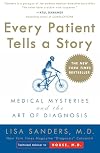
FOR REFERENCE:
Contents:
Author's Note
Introduction: Every Patient's Nightmare
PART ONE: Every Patient Tells a Story
1. The Facts, and What Lies Beyond
2. The Stories They Tell
PART TWO: High Touch
3. A Vanishing Art
4. What Only the Exam Can Show
5. Seeing Is Believing
6. The Healing Touch
7. The Heart of the Matter
PART THREE: High Tech
8. Testing Troubles
PART FOUR: Limits of the Medical Mind
9. Sick Thinking
10. Digital Diagnosis
Afterword: The Final Diagnosis
Acknowledgments
Notes
Index
Contents:
Author's Note
Introduction: Every Patient's Nightmare
PART ONE: Every Patient Tells a Story
1. The Facts, and What Lies Beyond
2. The Stories They Tell
PART TWO: High Touch
3. A Vanishing Art
4. What Only the Exam Can Show
5. Seeing Is Believing
6. The Healing Touch
7. The Heart of the Matter
PART THREE: High Tech
8. Testing Troubles
PART FOUR: Limits of the Medical Mind
9. Sick Thinking
10. Digital Diagnosis
Afterword: The Final Diagnosis
Acknowledgments
Notes
Index
Dr. Lisa Sanders discusses the art and science of medical diagnosis, with lots of examples of puzzling medical problems and lots of analysis of how doctors figure out what's happening in a human body and why they sometimes get it wrong. Sanders is a technical advisor for the TV series House, and many of the medical stories she tells here would be right at home on an episode of the show, but in many ways Dr. Sanders is the exact opposite of Dr. House. She puts a lot of stress on the show more importance of clear communication between doctors and patients and on not losing sight of the patient's humanity. Most particularly, she emphasizes the importance of hands-on physical examinations, which she claims is something of a dying art thanks to the modern tendency to rely -- or over-rely -- on high-tech medical tests and to the fact that it's not taught effectively in medical schools.
The case studies she presents here are often fascinating in themselves, as medical detective stories, but what makes this book really worth reading is its eye-opening look at the difficulties of diagnosis, the all too many ways in which doctors can fail, and the potential ways in which doctors, patients and teachers can work to improve things.
It is, however, also mildly terrifying, especially for someone with occasional hypochondriac tendencies, to be so vividly reminded of all the strange, hard-to-figure-out things that can go badly wrong in the human body. And it may be very useful and important to be reminded that doctors are fallible human beings like the rest of us, but damn it, I still desperately want them to magically know what's wrong with me when I ask. show less
The case studies she presents here are often fascinating in themselves, as medical detective stories, but what makes this book really worth reading is its eye-opening look at the difficulties of diagnosis, the all too many ways in which doctors can fail, and the potential ways in which doctors, patients and teachers can work to improve things.
It is, however, also mildly terrifying, especially for someone with occasional hypochondriac tendencies, to be so vividly reminded of all the strange, hard-to-figure-out things that can go badly wrong in the human body. And it may be very useful and important to be reminded that doctors are fallible human beings like the rest of us, but damn it, I still desperately want them to magically know what's wrong with me when I ask. show less

I'm a huge fan of the TV-series House for which Dr. Sanders is technical advisor, so I was very excited to read her take on the "art of diagnosis." The cases described in this book are like reading an episode of Medical Mysteries and are scary, but also (obviously) absolutely fascinating. Sanders' main thesis in the book is that doctors need to listen to their patients more and learn how to conduct proper physical examinations rather than simply rely on tests. Basically, she seems to say show more that doctors need to be better doctors, which is a weird statement unless you are a person who believes that doctors are infallible, which is a highly inadvisable belief to hold. Actually, she is making a statement about how doctors are educated in the US, but I'm not sure this book is an efficient way of affecting that process.
Then, the book takes a strange turn when it starts to talk about Lyme disease - what begins as a standard description of a patient case unravels into what can only be described as a rant against doctors who champion the idea (seemingly mistakenly) about a condition called "chronic Lyme disease." I understand that Dr. Sanders feels strongly about the issue and I appreciate her passion, but it's rather misplaced in this particular book.
The last section of the book talks about something I find very interesting - the internet's role in future diagnosis! This part discusses the beginnings of medical databases and how the internet has made most of them obsolete - enlightening and really rather funny for anyone who has ever Googled a symptom! show less
Then, the book takes a strange turn when it starts to talk about Lyme disease - what begins as a standard description of a patient case unravels into what can only be described as a rant against doctors who champion the idea (seemingly mistakenly) about a condition called "chronic Lyme disease." I understand that Dr. Sanders feels strongly about the issue and I appreciate her passion, but it's rather misplaced in this particular book.
The last section of the book talks about something I find very interesting - the internet's role in future diagnosis! This part discusses the beginnings of medical databases and how the internet has made most of them obsolete - enlightening and really rather funny for anyone who has ever Googled a symptom! show less
This review was written for LibraryThing Member Giveaways.
Lists
You May Also Like


Statistics
- Works
- 3
- Members
- 867
- Popularity
- #29,520
- Rating
- 3.8
- Reviews
- 21
- ISBNs
- 25
- Languages
- 6