
Helen Thomson (5)
Author of Unthinkable: An Extraordinary Journey Through the World's Strangest Brains
For other authors named Helen Thomson, see the disambiguation page.
About the Author
Helen Thomson is a writer and consultant with New Scientist magazine and was shortlisted for Best Science Journalist in the British Journalism Awards. She has won several other awards, including media fellowships at both Harvard and MIT and the Best Newcomer in the ABSW Science Writers Awards for show more Britain and Ireland in 2010. She has also written for the Wall Street Journal, The Guardian (UK), the Washington Post, the Daily Mail, and Nature. She lives in London. show less
Works by Helen Thomson
Unthinkable: An Extraordinary Journey Through the World's Strangest Brains (2018) 357 copies, 24 reviews
Associated Works
Tagged
Common Knowledge
- Birthdate
- 20th century
- Gender
- female
- Occupations
- science journalist
- Nationality
- UK
- Associated Place (for map)
- UK
Members
Reviews
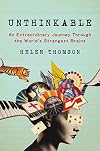
In this book, Helen Thomson takes us on a fascinating journey through the lives of people whose brains work in unusual ways. One man has spells of thinking he’s a tiger. One woman is always lost, even in her own home. One man used to think he was dead. Thomson shows us their stories and how they live, giving us a more complete picture of the people behind the medical curiosities.
I devoured this book in a couple of hours. Thomson acknowledges a debt to Oliver Sacks, and in my mind she show more surpasses him. Her storytelling is smooth, her explanations of medical conditions fluent, and her involvement in the story is enough to anchor it without tipping into personal memoir. I’d definitely recommend this if you’re interested in how the brain works. show less
I devoured this book in a couple of hours. Thomson acknowledges a debt to Oliver Sacks, and in my mind she show more surpasses him. Her storytelling is smooth, her explanations of medical conditions fluent, and her involvement in the story is enough to anchor it without tipping into personal memoir. I’d definitely recommend this if you’re interested in how the brain works. show less
If you wish that Oliver Sacks had written even more books, pick this up.
Two big takeaways for me. My red probably is not, in the sense of qualia, your red.
And most weird things that our brains do can be explained by looking them from a certain perspective; there's a sort of master theory.
Consider Sylvia who has constant audio hallucinations. "Yet, because Sylvia is profoundly deaf, they were not constrained by the real sounds entering her ears. Her hallucinations are her brain's best guess show more at what is out there."
Or Ruben (spelled with a diacritical over the e), who is a color-blind synesthete. Or the fact that if we fake a smile, it's very easy to make ourselves feel more happy.
"The brain hates to be confused. ... when the brain is faced with conflicting information, it tries very hard to make sense of the new scenario, and generally lands upon the simplest narrative to explain an abnormal experience."
Now of course there's more to it. Brain scans and experiments reveal so much further that can help us understand more important details. But you'll have to read the book yourself to learn about those discoveries!
Btw, I normally prefer science books written by scientists, and Thomson is a journalist... But! she was first a neurologist, and it shows. And I would love to read more by her. show less
Two big takeaways for me. My red probably is not, in the sense of qualia, your red.
And most weird things that our brains do can be explained by looking them from a certain perspective; there's a sort of master theory.
Consider Sylvia who has constant audio hallucinations. "Yet, because Sylvia is profoundly deaf, they were not constrained by the real sounds entering her ears. Her hallucinations are her brain's best guess show more at what is out there."
Or Ruben (spelled with a diacritical over the e), who is a color-blind synesthete. Or the fact that if we fake a smile, it's very easy to make ourselves feel more happy.
"The brain hates to be confused. ... when the brain is faced with conflicting information, it tries very hard to make sense of the new scenario, and generally lands upon the simplest narrative to explain an abnormal experience."
Now of course there's more to it. Brain scans and experiments reveal so much further that can help us understand more important details. But you'll have to read the book yourself to learn about those discoveries!
Btw, I normally prefer science books written by scientists, and Thomson is a journalist... But! she was first a neurologist, and it shows. And I would love to read more by her. show less

Helen Thomson is a science writer with New Scientist, who became fascinated by the human brain, its complexity, and what can happen when that complexity goes wrong. In this book, she recounts her meetings and experiences with people with nine different, unusual brain conditions. This isn't a clinical textbook; it's about Thomson exploring how these conditions affect the lives of the individuals living with them. She also talks about what we've learned about these conditions and their show more origins, but that's not the main focus, here. The people are. And no matter how strange the conditions are, she always treats these people with respect, not as mere examples of how bizarre humans can be.
Bob is a man with Highly Superior Autobiographical Memory, or HSAM. He can remember every day of his life, back to surprisingly early childhood, in great detail, at least as far as his personal experiences. In other respects, he and other people with HSAM don't have particularly exceptional memory. It's a very rare condition, with perhaps 100 known examples worldwide. It might seem like a kind of superpower, but in practice it isn't. You remember the good things in detail, but also the bad or sad experiences. Bob says even the negative memories can help somewhat, though. When he has negative experiences similar to things that have happened before, he knows it's something he has coped with before. It's not as intimidating.
Tommy is a man who experienced a major personality change after suffering a stroke. He'd had a rough childhood, resulting in a career more on the criminal and sometimes violent side, while sometimes being a rather sweet guy despite all. After his stroke, he changed dramatically--creative, imaginative, overflowing with ideas and poetry, and taking up painting.
Sharon is a woman whose mental map of her world breaks down frequently; she can get lost in her own house. She's had to learn how to cope with this, find her way around, and for many years, hide her problem, because her mother told her it was witchcraft.
Sylvia is profoundly deaf due to an illness, who suffers auditory hallucinations of music constantly playing. Sometimes it's pleasant, sometimes it isn't. Sometimes it's disruptive and intrusive, and the only thing she can do is find a way to create a distraction.
Joel Salinas is a doctor in Boston who has touch synesthesia. He can literally feel his patients' pain. He also feels the emotions of the people near him, and even feels on his own body the touches he sees them experiencing. It's a syndrome that can cause burnout for doctors and nurses who experience it, but so far, he's managed to make it an asset.
I'm barely touching on what Thomson covers, and she makes the people I've mentioned as well as those I haven't real people whose lives and experiences matter. It's highly readable, or listenable, and well worth your time.
I bought this audiobook. show less
Bob is a man with Highly Superior Autobiographical Memory, or HSAM. He can remember every day of his life, back to surprisingly early childhood, in great detail, at least as far as his personal experiences. In other respects, he and other people with HSAM don't have particularly exceptional memory. It's a very rare condition, with perhaps 100 known examples worldwide. It might seem like a kind of superpower, but in practice it isn't. You remember the good things in detail, but also the bad or sad experiences. Bob says even the negative memories can help somewhat, though. When he has negative experiences similar to things that have happened before, he knows it's something he has coped with before. It's not as intimidating.
Tommy is a man who experienced a major personality change after suffering a stroke. He'd had a rough childhood, resulting in a career more on the criminal and sometimes violent side, while sometimes being a rather sweet guy despite all. After his stroke, he changed dramatically--creative, imaginative, overflowing with ideas and poetry, and taking up painting.
Sharon is a woman whose mental map of her world breaks down frequently; she can get lost in her own house. She's had to learn how to cope with this, find her way around, and for many years, hide her problem, because her mother told her it was witchcraft.
Sylvia is profoundly deaf due to an illness, who suffers auditory hallucinations of music constantly playing. Sometimes it's pleasant, sometimes it isn't. Sometimes it's disruptive and intrusive, and the only thing she can do is find a way to create a distraction.
Joel Salinas is a doctor in Boston who has touch synesthesia. He can literally feel his patients' pain. He also feels the emotions of the people near him, and even feels on his own body the touches he sees them experiencing. It's a syndrome that can cause burnout for doctors and nurses who experience it, but so far, he's managed to make it an asset.
I'm barely touching on what Thomson covers, and she makes the people I've mentioned as well as those I haven't real people whose lives and experiences matter. It's highly readable, or listenable, and well worth your time.
I bought this audiobook. show less
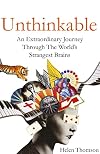
A good if somewhat bizarre collection of biographies of different people with strange and interesting brains that make you reevaluate the nature of humanity. I think there’s insight here and some of it is genuinely fascinating. Some of it however drags a little. A good book.
Lists
Awards

You May Also Like


Associated Authors
Statistics
- Works
- 2
- Also by
- 1
- Members
- 358
- Popularity
- #66,977
- Rating
- 3.6
- Reviews
- 24
- ISBNs
- 25
- Languages
- 4