
Lydia Kang
Author of Quackery: A Brief History of the Worst Ways to Cure Everything
About the Author
Series
Works by Lydia Kang
Pseudoscience: An Amusing History of Crackpot Ideas and Why We Love Them (2025) 39 copies, 2 reviews
Associated Works
From a Certain Point of View: 40 Stories Celebrating 40 Years of The Empire Strikes Back (2020) — Contributor — 512 copies, 8 reviews
Tagged
Common Knowledge
- Birthdate
- 20th Century
- Gender
- female
- Education
- Columbia University
New York University School of Medicine - Occupations
- Internal Medicine Physician
writer - Agent
- Eric Myers
- Nationality
- USA
- Birthplace
- Maryland, USA
- Places of residence
- Omaha, Nebraska, USA
- Associated Place (for map)
- USA
Members
Reviews
K-Jane by Lydia Kang
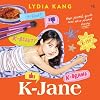
Life as a teen is anything but easy, and this tale embraces that in an adorable way.
Jane Choi's family immigrated from Korea...several generations ago. To say that they'd long stirred into the pot called American culture would be an understatement. This has never even been worth a second's thought to Jane before, who dances a bit to her own tune with two best friends at her side. Her parents are super busy in their careers but caring and lovable, all the same. When her mother becomes show more pregnant, Jane takes it with normal, life flow until she gets lab partnered with the hot guy at school, a 1st (sort of 2nd) generation immigrant. He's not only trilingual but has a family which still has roots in their origins. All of this would be fine, but he expects her to know all things Korean. And she doesn't have a clue, but she's not about to ruin the first signs of communication with someone like him. This pushes her to realize that everyone who meets her and knows her Korean name seems to think she's an expert on Korea, and it bugs her. So, she decides to become that which she hasn't been, and not only for the guy but for her unborn brother, who will suffer the same 'fate' if she doesn't become the Korean guru he can turn to in the future. But she only has three months to flip herself around. Add that she can't stand kimchi or K-dramas, and life is going to get rough on so many levels.
This tale takes the ridiculousness of teen life, ideas, and problems, and lets the drama soar. Jane's life is good, and she has no problem being who she is thanks to two great friends at her side, which is a refreshing beginning without baggage. So when one encounter with a seemingly-unreachable-but-school-heart-throb-guy suddenly has her questioning everything about herself, it's over-the-top and it fits. Now, while most teens might slide into a short phase and give up, this tale deliciously embraces the extreme of Jane's determination and lets her speed full-throttle into a clearly approaching crash. But her determination, love for family (although oddly expressed, at times), and lack of sense make her all that much fun to root for. Meaningly good but bad decisions come at every turn to add humor and cringe, while sliding in familiarity and food for thought. It's never overly heavy but impossible to miss. And her growth in all of this chaos makes it fun.
There is the romance, and this ignites the entire situation with the usual insta-attraction, which plagues YA novels...and might hit the truth closer than many like to admit. And while this flies wonderfully into extremes, at least, on Jane's end, the romance is sweet. It flows along the side as all of the other chaos sets in, letting the friendship difficulties often take forefront, too. Even with the romance, there's twists, which draw dislike but take surprising turns to show that all is not what it seems, since everyone has their own problems to work through.
All in all, this is an enjoyable read to sit back and easily enjoy. show less
Jane Choi's family immigrated from Korea...several generations ago. To say that they'd long stirred into the pot called American culture would be an understatement. This has never even been worth a second's thought to Jane before, who dances a bit to her own tune with two best friends at her side. Her parents are super busy in their careers but caring and lovable, all the same. When her mother becomes show more pregnant, Jane takes it with normal, life flow until she gets lab partnered with the hot guy at school, a 1st (sort of 2nd) generation immigrant. He's not only trilingual but has a family which still has roots in their origins. All of this would be fine, but he expects her to know all things Korean. And she doesn't have a clue, but she's not about to ruin the first signs of communication with someone like him. This pushes her to realize that everyone who meets her and knows her Korean name seems to think she's an expert on Korea, and it bugs her. So, she decides to become that which she hasn't been, and not only for the guy but for her unborn brother, who will suffer the same 'fate' if she doesn't become the Korean guru he can turn to in the future. But she only has three months to flip herself around. Add that she can't stand kimchi or K-dramas, and life is going to get rough on so many levels.
This tale takes the ridiculousness of teen life, ideas, and problems, and lets the drama soar. Jane's life is good, and she has no problem being who she is thanks to two great friends at her side, which is a refreshing beginning without baggage. So when one encounter with a seemingly-unreachable-but-school-heart-throb-guy suddenly has her questioning everything about herself, it's over-the-top and it fits. Now, while most teens might slide into a short phase and give up, this tale deliciously embraces the extreme of Jane's determination and lets her speed full-throttle into a clearly approaching crash. But her determination, love for family (although oddly expressed, at times), and lack of sense make her all that much fun to root for. Meaningly good but bad decisions come at every turn to add humor and cringe, while sliding in familiarity and food for thought. It's never overly heavy but impossible to miss. And her growth in all of this chaos makes it fun.
There is the romance, and this ignites the entire situation with the usual insta-attraction, which plagues YA novels...and might hit the truth closer than many like to admit. And while this flies wonderfully into extremes, at least, on Jane's end, the romance is sweet. It flows along the side as all of the other chaos sets in, letting the friendship difficulties often take forefront, too. Even with the romance, there's twists, which draw dislike but take surprising turns to show that all is not what it seems, since everyone has their own problems to work through.
All in all, this is an enjoyable read to sit back and easily enjoy. show less
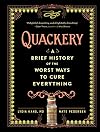
Equal parts mortifying, morbid and fascinating, Quackery is a guided tour through the horrifying world of medicine and health care in days gone by. I eat these kinds of books up like candy, who doesn't like lurid trivia of the not-so-good ol' days? I know I do! I really liked the layout, it's akin to my favorite magazine, Mental Floss with little factoids on every page to highlight the subject. Very well organized, full of stomach turning stories of medical mistakes and maladies, it kept me show more turning pages and very thankful I live in the modern day. show less
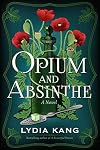
Misunderstood heiress Tillie Pembroke's mind buzzes with obsessive, somewhat nonsensical, thoughts. Moreover, a shoulder injury paves the way for her to become addicted to prescription painkillers. Then, on top of that, this unlikely heroine becomes an amateur sleuth when her sister is found murdered, vampire style, and the police in New York City c. 1899 inexplicably refuse to do anything about it. Add to these plot points a suitor and servants who have vested interests in keeping Tillie in show more a drug-induced fog, and it is clear even from this oversimplified description that this novel has a lot on its plate. Nonetheless, I enjoyed it. show less
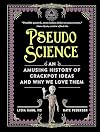
People love scamming other people, any which way they can. One method, which hurts far more than what happens to mere victims, is pseudoscience. In pseudoscience, scammers pretend to have discovered all manner of impossible scientific solutions, and foist them on the gullible who are always susceptible to the passing nonsense. It has given science a bad name, and nothing can stop it, it seems. In their book Pseudoscience, Lydia Kang and Nate Pedersen examine about a hundred of them, and the show more heights to which the scammers soared. The field is so well-populated, the authors didn’t even have to draw lines or limits. For example, they easily steer clear of religious pseudoscience, such as say, Scientology, and it is not missed in the mix of stories here. The book is both entertaining and instructive, as the authors are chatty and informal.
Pseudoscience can be as simple as a parrot telling fortunes, to the entire field of eugenics. Eugenics is a pseudoscience that enables its experts to predict intelligence by feeling and measuring the bumps on someone’s skull. It quickly became a racist tool in the USA, a way to keep non-whites away from anything whites wanted them away from. It led to the saying “You should get your head examined.” It was so important, it became automated, with highly wired helmets making the interpreter’s job a breeze. A printout quickly answered all questions, and on to the next victim. But for nearly a century, it was received medical science.
Another key to pseudoscience is finding deep meaning in meaningless things. We all do it; it is part of being wrong some of the time. But some people take it to extremes, and can fool a large number of people until and unless they are exposed by, say, facts. So finding human faces in scrambled eggs, or ghosts who can perform various tricks – but only in certain places at certain times, are examples. There’s even a word for it: pareidolia. Who knew?
Some of these totally unscientific scams are still around. The Briggs Meyers personality test is one that thousands must take in order to get a job, for example. It has no scientific basis whatsoever, just a household project between a mother and daughter. But it became a giant corporation with its own scientific (sort of) journal, and reaped – and continues to reap – a fortune, while inaccurately pigeon-holing and stereotyping millions of innocents.
Another that is very much with us still is astrology. Originally a way to try to predict what to plant and when in the coming year, it rather suddenly became about predicting individual lives from start to finish. Even the early astrologers would have told you up front that is totally absurd and can’t be done. Nonetheless, horoscopes are everywhere, and far too many run their lives by them, including Nancy and Ronald Reagan, Canadian Prime Minister Mackenzie King, and innumerable kings and queens and generals throughout history.
My favorite chapter concerns birds. People made decisions by counting the number of certain types of birds flying overhead, and in what direction, how fast they flew and how high or low. They were also used directly in fortune telling, as shown in India today, where trained parrots select cards from a deck and there your future is sealed. The Romans made the bird flight system mandatory, and also portable by carrying around chickens in cages, letting them out when a decision was needed. It was worth the bother for the armies of Rome, as they also provided eggs and meat if nothing else. Still, many a famous disaster is attributed to chickens.
What I like about the story is how the whole bird forecasting pseudoscience entered the language, and has remained there. The word auguries refers to bird flight making predictions. An auspicious day is one that birds have indicated would turn out well. Some indicator is said to augur well for the desired outcome. Augurs, who interpreted bird movements for the state, became a priestly class in Rome. And American presidents have traditionally been inaugurated to begin their term in office. And it all stems from – nothing. But a nothing that drove the whole Roman Empire.
Another interesting one is dowsing – the ability to find underground water and minerals by carrying a Y-shaped bare branch (and later, manufactured metal rods). Where it dips down is where one should dig. Its most famous early proponent was a woman, the Baroness Martine de Bertereau, a trained geologist. In the early 1600s it was completely impossible for a woman to be recognized as having scientific credentials, let alone a professional practice, so she hid behind her dowsing sticks. That was okay for everyone who accepted witchcraft and superstition over education and science (ie. most everyone), even though what she was really doing was noticing mineralization, surface sands, striation, and geological formations. Soon, dowsing had spread all over the world, and anyone could do it. It was a miracle of science!
From flat earthers (how come after all this time, no one has ever found the edge?) to fake moon landings, from gasoline pills to crop circles and from UFOs to the Bermuda Triangle, there’s lots to chuckle at, and stuff to learn too.
David Wineberg show less
Pseudoscience can be as simple as a parrot telling fortunes, to the entire field of eugenics. Eugenics is a pseudoscience that enables its experts to predict intelligence by feeling and measuring the bumps on someone’s skull. It quickly became a racist tool in the USA, a way to keep non-whites away from anything whites wanted them away from. It led to the saying “You should get your head examined.” It was so important, it became automated, with highly wired helmets making the interpreter’s job a breeze. A printout quickly answered all questions, and on to the next victim. But for nearly a century, it was received medical science.
Another key to pseudoscience is finding deep meaning in meaningless things. We all do it; it is part of being wrong some of the time. But some people take it to extremes, and can fool a large number of people until and unless they are exposed by, say, facts. So finding human faces in scrambled eggs, or ghosts who can perform various tricks – but only in certain places at certain times, are examples. There’s even a word for it: pareidolia. Who knew?
Some of these totally unscientific scams are still around. The Briggs Meyers personality test is one that thousands must take in order to get a job, for example. It has no scientific basis whatsoever, just a household project between a mother and daughter. But it became a giant corporation with its own scientific (sort of) journal, and reaped – and continues to reap – a fortune, while inaccurately pigeon-holing and stereotyping millions of innocents.
Another that is very much with us still is astrology. Originally a way to try to predict what to plant and when in the coming year, it rather suddenly became about predicting individual lives from start to finish. Even the early astrologers would have told you up front that is totally absurd and can’t be done. Nonetheless, horoscopes are everywhere, and far too many run their lives by them, including Nancy and Ronald Reagan, Canadian Prime Minister Mackenzie King, and innumerable kings and queens and generals throughout history.
My favorite chapter concerns birds. People made decisions by counting the number of certain types of birds flying overhead, and in what direction, how fast they flew and how high or low. They were also used directly in fortune telling, as shown in India today, where trained parrots select cards from a deck and there your future is sealed. The Romans made the bird flight system mandatory, and also portable by carrying around chickens in cages, letting them out when a decision was needed. It was worth the bother for the armies of Rome, as they also provided eggs and meat if nothing else. Still, many a famous disaster is attributed to chickens.
What I like about the story is how the whole bird forecasting pseudoscience entered the language, and has remained there. The word auguries refers to bird flight making predictions. An auspicious day is one that birds have indicated would turn out well. Some indicator is said to augur well for the desired outcome. Augurs, who interpreted bird movements for the state, became a priestly class in Rome. And American presidents have traditionally been inaugurated to begin their term in office. And it all stems from – nothing. But a nothing that drove the whole Roman Empire.
Another interesting one is dowsing – the ability to find underground water and minerals by carrying a Y-shaped bare branch (and later, manufactured metal rods). Where it dips down is where one should dig. Its most famous early proponent was a woman, the Baroness Martine de Bertereau, a trained geologist. In the early 1600s it was completely impossible for a woman to be recognized as having scientific credentials, let alone a professional practice, so she hid behind her dowsing sticks. That was okay for everyone who accepted witchcraft and superstition over education and science (ie. most everyone), even though what she was really doing was noticing mineralization, surface sands, striation, and geological formations. Soon, dowsing had spread all over the world, and anyone could do it. It was a miracle of science!
From flat earthers (how come after all this time, no one has ever found the edge?) to fake moon landings, from gasoline pills to crop circles and from UFOs to the Bermuda Triangle, there’s lots to chuckle at, and stuff to learn too.
David Wineberg show less
Lists
Awards


You May Also Like


Associated Authors
Statistics
- Works
- 15
- Also by
- 3
- Members
- 3,191
- Popularity
- #8,008
- Rating
- 3.7
- Reviews
- 134
- ISBNs
- 82
- Languages
- 5
- Favorited
- 1
