
Richard Preston (1) (1954–)
Author of The Hot Zone: A Terrifying True Story
For other authors named Richard Preston, see the disambiguation page.
About the Author
Richard Preston graduated summa cum laude from Pomona College in California and received a Ph.D. in English from Princeton University. He began his career as a journalist writing for the New York Times, Washington Post, National Geographic Traveler and Blair & Ketchum's Country Journal. He has also show more been a contributor to The New Yorker since 1985. One of Preston's earlier novels, "First Light," was a book on astronomy that won him the American Institute of Physics Award, and he has an asteroid the size of Mount Everest named after him. He also wrote "The Hot Zone," which is a true story about an outbreak of the Ebola virus near Washington, D.C. and inspired the movie Outbreak that starred Dustin Hoffman. "The Cobra Event" is a thriller about biological weapons and terrorism. He spent three years researching biological weapons and his sources included high-ranking government officials, and the scientists who invented and tested these weapons. The story tells of a medical doctor who works with the FBI to stop an act of bio-terrorism in New York City. Preston is now considered an expert in the areas of disease and biotechnology; and the FBI and President Clinton, in regards to disease and bio-warfare, have sought out his opinion. Preston has won several awards that include the McDermott Award in the Arts from the Massachusetts Institute of Technology, and the Overseas Press Club of America's Whitman Basso Award for the best reporting in any medium on environmental issues for "The Hot Zone." His title Micro with Michael Crichton made the New York Times Best Seller list for 2011. (Bowker Author Biography) show less
Series
Works by Richard Preston
Panic in Level 4: Cannibals, Killer Viruses, and Other Journeys to the Edge of Science (2008) 655 copies, 18 reviews
Crisis in the Red Zone: The Story of the Deadliest Ebola Outbreak in History, and of the Outbreaks to Come (2019) 389 copies, 15 reviews
Associated Works
Smallpox: The Death of a Disease: The Inside Story of Eradicating a Worldwide Killer (2009) — Preface — 113 copies, 3 reviews
Reader's Digest Select Editions 1998 v04 #238: The Street Lawyer / Message in a Bottle / The Cobra Event / Sooner or Later (1998) — Author — 39 copies
Tagged
Common Knowledge
- Canonical name
- Preston, Richard
- Birthdate
- 1954-08-05
- Gender
- male
- Education
- Wellesley High School (1972)
Pomona College (BA|1977)
Princeton University (Ph.D|1983) - Occupations
- journalist
- Organizations
- The New Yorker
- Relationships
- Preston, Douglas (brother)
Preston, David M.D (brother)
Preston, Michelle Parham (wife) - Short biography
- Richard Preston may be the only literary journalist who has had an asteroid named after him. Discovered by Carolyn and Eugene Shoemaker—the astronomers who were the subject of First Light (1987)—Asteroid Preston measures between three and five miles across. In a scenario that could come from one of his own books, Asteroid Preston will likely collide with Mars or the Earth during the next hundred thousand years.
Preston has developed a genre of literary journalism that lends scientific subjects—virology, astronomy, gene theory—the drama and excitement more often associated with great travel or adventure writing. His characters are pioneers, extending the boundaries of knowledge in much the way that the early American explorers did.
Preston was born in Cambridge, Massachusetts, on August 5, 1954. A mediocre high school student, he was rejected by every college to which he applied. He desperately wanted to attend Pomona College in California and badgered the dean into accepting him in time for the second semester.
In 1977, Preston was graduated summa cum laude with a degree in English and continued on to Princeton for graduate school. In 1979, he took John McPhee's "Literature of Fact" writing course—a famous incubator for literary journalists. "McPhee taught us precision in shaping words and sentences. He taught us absolute respect for facts."
In 1985, he received an advance from Atlantic Monthly Press to write about the astronomers at Caltech's seven-story-tall Hale telescope. First Light was praised for covering a difficult technical subject without either distorting or oversimpifying the facts and won the 1988 American Institute of Physics Science Writing Award.
American Steel (1991) tells the story of the Nucor Corporation's search for a new way to pour sheet steel, and the building of a new steel mill in the middle of a cornfield outside Crawfordsville, Indiana. "In the best tradition of John McPhee and Tracy Kidder, Preston captures the feel of the project through direct observation of people at work," writes Mark Reutter in The Washington Post.
In the early 1990s, Preston feared that AIDS was only the tip of the iceberg—that other deadly viruses would soon begin emerging from once-remote forests around the world. He learned of an outbreak of Ebola among monkeys in Reston, Virginia and reconstructed the events, tracking the virus from a cave in Uganda to Virginia. His expanded his New Yorker article, "Crisis In the Hot Zone," into The Hot Zone, which became an international bestseller. Stephen King called it "one of the most horrifying things I've ever read in my life."
Preston continued his exploration in two further volumes of what he calls his "dark biology" series. The first was a novel, The Cobra Event (1997). The third, The Demon in the Freezer (2002), about smallpox and other deadly viruses, was developed from a New Yorker article of the same title, which won the 2000 National Magazine Award for public interest writing.
Most recently, Preston learned little-known tree-climbing techniques in order to write about a botanist who studies the ecology of the California Redwood forest canopy, thirty-five stories above ground.
http://www.newnewjournalism.com/bio.p... - Nationality
- USA
- Birthplace
- Cambridge, Massachusetts, USA
- Places of residence
- New York, New York, USA
Hopewell, New Jersey, USA
Boston, Massachusetts, USA - Associated Place (for map)
- USA
Members
Reviews
***NO SPOILERS***
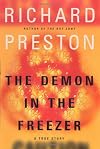
Several years after bringing Ebola to gruesome life in [b:The Hot Zone: The Terrifying True Story of the Origins of the Ebola Virus|16213|The Hot Zone The Terrifying True Story of the Origins of the Ebola Virus|Richard Preston|https://i.gr-assets.com/images/S/compressed.photo.goodreads.com/books/1413747743l/16213._SY75_.jpg|909325], Richard Preston returned to writing about infectious disease with The Demon in the Freezer. This book is different from The Hot Zone in that it show more explores how biological agents--smallpox and anthrax here--could be used as highly effective bioweapons. Preston’s gift for turning stories of disease into exciting thrillers is as apparent as ever. Just as The Hot Zone does with Ebola, The Demon in the Freezer transforms tiny, unthinking organisms into scheming villains.
Smallpox is a virus that scientists theorize jumped from an unknown animal to a human 10,000 to 3,000 years ago. By 1980, the world had successfully eradicated it as a disease, but the virus lives on in labs--officially the Centers for Disease Control in the U.S. and a lab in Siberia called Vector. Scientists have no doubt, however, that it’s being stored in additional locations for the express purpose of weaponization. Anthrax is a parasite that can lie dormant in soil for years and tends to infect grazing ungulates (such as cows and sheep). The spores can contaminate a space extensively, and anthrax is more likely to kill if inhaled.
Preston's strength when writing about diseases is in vividly illustrating their potential for large-scale destruction. A smallpox or anthrax attack would make the COVID-19 lockdown, not to mention COVID-19 itself, look like a cakewalk. As the book expresses numerous times, these tiny organisms, if weaponized, are the biological equivalent of a nuclear bomb--with the bonus of not ravaging the physical landscape. Additionally, while nuclear warfare kills instantly if one is hit by the weapon directly, biowarfare will torture victims first no matter where they are when that bomb hits. Most terrifying of all is that smallpox (stunningly contagious--forget six-foot distance and masks) and anthrax (not contagious from person to person but very easily inhaled) can be bio-engineered to be superbugs that resist existing vaccines and treatments. Preston visited a lab at the St. Louis University School of Medicine to show just how easy it is to do such bio-engineering.
The Demon in the Freezer is packed with statistics, memorable details, and dramatic scenes as it loosely traces the history of these diseases and what’s happening now. The dual focus is effective in that Preston hammered home the idea that anthrax and smallpox as weapons are equally able to cause widespread devastation. He painted a full picture of what these viruses look like and how, exactly, they behave, both in transmission and within the body. He showed this in a few tense scenes and a few graphic scenes, but one of the more powerful scenes is about anthrax and is neither tense nor graphic: Preston visited a researcher at the man’s home in Maryland. The researcher led Preston outside, where he demonstrated the nature of anthrax transmission by pumping a puff of baby powder into the air. It’s an unforgettable scene, as few people do not know how finely milled powder stays suspended in the air: The puff explodes in a gentle flurry and is instantly carried on the breeze, expanding as it goes, and then vanishing like steam. Anthrax is that kind of powder, an invisible threat that can travel for miles and also remain potent.
As intriguing as smallpox and anthrax are, there are some drawbacks to the book’s dual focus. There isn’t enough story and information about either organism to warrant a separate book for each, so it makes sense to put both in one; however, whereas The Hot Zone is tightly organized thanks to its singular focus, The Demon in the Freezer has clumsy organization. The smallpox and anthrax sections aren’t uniform in length, and they lack dedicated parts, such as a part one and part two. Instead, in discussion about one disease, attention suddenly shifts to the other for a while, then switches back. Preston gave credit where credit was due by introducing numerous scientists working at the forefront of smallpox and anthrax research but tried to add depth by throwing in some personal life details about a few main ones. These humanizing details aren’t uninteresting, but they appear out of nowhere, breaking the flow with details that are irrelevant and arbitrary. These are paragraphs about such things as the love life of one of the researchers and descriptions, sometimes unflattering, of people’s clothing and physiques. It feels like all description was inserted at an editor’s request--but the effort is so half-hearted and weird that no one ends up fleshed out. The stars of this book are the diseases, and fortunately Preston at least achieved what he set out to do there.
Smallpox and anthrax were abstract to me before reading this book. I also didn’t know how deadly they are, the “-pox” in “smallpox” leading me to believe smallpox isn’t much worse than chickenpox. I associated anthrax with contaminated mail that an unfortunate few occasionally come into contact with. I didn’t understand the mechanics of these diseases as bioweapons. Now I do know. Viruses and bacteria adapt easily, and smallpox and anthrax are out there and being worked with. Biowarfare is a threat. The Demon in the Freezer isn't exactly a know-your-enemy read that empowers--but those who’ve read The Hot Zone will know this about Preston. It’s a captivating and educational real-life horror story.
Update, January 8, 2023: 2022 documentary The Anthrax Attacks: In the Shadow of 9/11 answers a major question about the anthrax attacks that was still being investigated at the time of publishing. show less
Several years after bringing Ebola to gruesome life in [b:The Hot Zone: The Terrifying True Story of the Origins of the Ebola Virus|16213|The Hot Zone The Terrifying True Story of the Origins of the Ebola Virus|Richard Preston|https://i.gr-assets.com/images/S/compressed.photo.goodreads.com/books/1413747743l/16213._SY75_.jpg|909325], Richard Preston returned to writing about infectious disease with The Demon in the Freezer. This book is different from The Hot Zone in that it show more explores how biological agents--smallpox and anthrax here--could be used as highly effective bioweapons. Preston’s gift for turning stories of disease into exciting thrillers is as apparent as ever. Just as The Hot Zone does with Ebola, The Demon in the Freezer transforms tiny, unthinking organisms into scheming villains.
Smallpox is a virus that scientists theorize jumped from an unknown animal to a human 10,000 to 3,000 years ago. By 1980, the world had successfully eradicated it as a disease, but the virus lives on in labs--officially the Centers for Disease Control in the U.S. and a lab in Siberia called Vector. Scientists have no doubt, however, that it’s being stored in additional locations for the express purpose of weaponization. Anthrax is a parasite that can lie dormant in soil for years and tends to infect grazing ungulates (such as cows and sheep). The spores can contaminate a space extensively, and anthrax is more likely to kill if inhaled.
Preston's strength when writing about diseases is in vividly illustrating their potential for large-scale destruction. A smallpox or anthrax attack would make the COVID-19 lockdown, not to mention COVID-19 itself, look like a cakewalk. As the book expresses numerous times, these tiny organisms, if weaponized, are the biological equivalent of a nuclear bomb--with the bonus of not ravaging the physical landscape. Additionally, while nuclear warfare kills instantly if one is hit by the weapon directly, biowarfare will torture victims first no matter where they are when that bomb hits. Most terrifying of all is that smallpox (stunningly contagious--forget six-foot distance and masks) and anthrax (not contagious from person to person but very easily inhaled) can be bio-engineered to be superbugs that resist existing vaccines and treatments. Preston visited a lab at the St. Louis University School of Medicine to show just how easy it is to do such bio-engineering.
The Demon in the Freezer is packed with statistics, memorable details, and dramatic scenes as it loosely traces the history of these diseases and what’s happening now. The dual focus is effective in that Preston hammered home the idea that anthrax and smallpox as weapons are equally able to cause widespread devastation. He painted a full picture of what these viruses look like and how, exactly, they behave, both in transmission and within the body. He showed this in a few tense scenes and a few graphic scenes, but one of the more powerful scenes is about anthrax and is neither tense nor graphic: Preston visited a researcher at the man’s home in Maryland. The researcher led Preston outside, where he demonstrated the nature of anthrax transmission by pumping a puff of baby powder into the air. It’s an unforgettable scene, as few people do not know how finely milled powder stays suspended in the air: The puff explodes in a gentle flurry and is instantly carried on the breeze, expanding as it goes, and then vanishing like steam. Anthrax is that kind of powder, an invisible threat that can travel for miles and also remain potent.
As intriguing as smallpox and anthrax are, there are some drawbacks to the book’s dual focus. There isn’t enough story and information about either organism to warrant a separate book for each, so it makes sense to put both in one; however, whereas The Hot Zone is tightly organized thanks to its singular focus, The Demon in the Freezer has clumsy organization. The smallpox and anthrax sections aren’t uniform in length, and they lack dedicated parts, such as a part one and part two. Instead, in discussion about one disease, attention suddenly shifts to the other for a while, then switches back. Preston gave credit where credit was due by introducing numerous scientists working at the forefront of smallpox and anthrax research but tried to add depth by throwing in some personal life details about a few main ones. These humanizing details aren’t uninteresting, but they appear out of nowhere, breaking the flow with details that are irrelevant and arbitrary. These are paragraphs about such things as the love life of one of the researchers and descriptions, sometimes unflattering, of people’s clothing and physiques. It feels like all description was inserted at an editor’s request--but the effort is so half-hearted and weird that no one ends up fleshed out. The stars of this book are the diseases, and fortunately Preston at least achieved what he set out to do there.
Smallpox and anthrax were abstract to me before reading this book. I also didn’t know how deadly they are, the “-pox” in “smallpox” leading me to believe smallpox isn’t much worse than chickenpox. I associated anthrax with contaminated mail that an unfortunate few occasionally come into contact with. I didn’t understand the mechanics of these diseases as bioweapons. Now I do know. Viruses and bacteria adapt easily, and smallpox and anthrax are out there and being worked with. Biowarfare is a threat. The Demon in the Freezer isn't exactly a know-your-enemy read that empowers--but those who’ve read The Hot Zone will know this about Preston. It’s a captivating and educational real-life horror story.
Update, January 8, 2023: 2022 documentary The Anthrax Attacks: In the Shadow of 9/11 answers a major question about the anthrax attacks that was still being investigated at the time of publishing. show less

I'd just as soon have not read Richard Preston's The Demon in the Freezer if it meant I could remain blissfully ignorant of the disturbing reality that vaccine-resistant smallpox and anthrax is undoubtedly already in the unhinged hands of jihadists or other sadistic dogmatists around the world, and that a large scale bioterrorism attack on North American soil is more a question of when than if. Yet with the bumbling bureaucratic bozos at the Pentagon running amok recently, FedEx'ing live show more samples of anthrax by mistake to more than fifty unsuspecting laboratories across the States and overseas, perhaps the deadliest likes of Isis are the least of the Western world's worries after all. Look in the mirror for a change, drunk Uncle Sam!
The Demon in the Freezer makes me wish I didn't know how to read -- almost -- it's that unnerving. I'd rather not know that the former Soviet Union was producing weapons-grade smallpox by the ton as late as 2001 on the eve of 9/11, and that today -- or so say several Russian scientists who've since defected to the U.S. -- the authorities in the former-USSR have no idea where those tons of weapons-grade smallpox went. Despite the worldwide "eradication" of smallpox in India in 1978, the USA and the former-USSR decided to freeze samples of the virus in order to keep it "safely stored," presumably as a "safeguard" pretext in the event it got into the "wrong hands" and a vaccine needed to be manufactured from the stored samples in an emergency.
Had our wise global protectors simply destroyed all smallpox in the first place, like they were supposed to do when whatever treaty it was got signed and contractually obliged them to do so, no one would have to worry about any virulent vials of smallpox getting smuggled into the wrong hands would they? Oh, but it's more politically complicated than that, Freeque, simply doing the right thing and destroying every ounce of it. Yeah, and only because the bigwigs in this world don't trust each another enough to follow through on their historic, much ballyhooed agreements.
The Demon In The Freezer reads like the finest of John le Carré's espionage thrillers, replete as it is with international intrigue and suspense. Can you imagine United Nations inspectors today confronting Vladimir Putin's covert bioweapons operations in Russia? Neither can I. Good luck, Doomed Earth, against vaccine-resistant smallpox and anthrax! show less
The Demon in the Freezer makes me wish I didn't know how to read -- almost -- it's that unnerving. I'd rather not know that the former Soviet Union was producing weapons-grade smallpox by the ton as late as 2001 on the eve of 9/11, and that today -- or so say several Russian scientists who've since defected to the U.S. -- the authorities in the former-USSR have no idea where those tons of weapons-grade smallpox went. Despite the worldwide "eradication" of smallpox in India in 1978, the USA and the former-USSR decided to freeze samples of the virus in order to keep it "safely stored," presumably as a "safeguard" pretext in the event it got into the "wrong hands" and a vaccine needed to be manufactured from the stored samples in an emergency.
Had our wise global protectors simply destroyed all smallpox in the first place, like they were supposed to do when whatever treaty it was got signed and contractually obliged them to do so, no one would have to worry about any virulent vials of smallpox getting smuggled into the wrong hands would they? Oh, but it's more politically complicated than that, Freeque, simply doing the right thing and destroying every ounce of it. Yeah, and only because the bigwigs in this world don't trust each another enough to follow through on their historic, much ballyhooed agreements.
The Demon In The Freezer reads like the finest of John le Carré's espionage thrillers, replete as it is with international intrigue and suspense. Can you imagine United Nations inspectors today confronting Vladimir Putin's covert bioweapons operations in Russia? Neither can I. Good luck, Doomed Earth, against vaccine-resistant smallpox and anthrax! show less
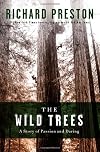
A quick read, but vividly told. The first tale of Steve Sillett and Marwood Harriss freeclimbing a redwood to the top made my tummy clench in a vicarious fear of heights. Preston is particularly good at making the experience of climbing immediate and real. He also pulls together the various people who have interacted with these trees and tells their stories. But central to the book is the place of these millennium-old trees. He notes that the ecology of the canopy is one of great show more biodiversity, but one that becomes more diverse as the whole grove ages, and thus a tree of only 500 years hasn't had a chance to accumulate the full complement of lichens, and ferns, and even epiphytic bushes and trees that a true old-growth forest accumulates. This is a window on time as much as the volume of previously unexplored habitat. But the stories of leaping from tree to tree are still scary. Do you see the two climbers pictured on the cover? I didn't for weeks. show less
This is singlehandedly the most terrifying book I’ve ever read, and LITERALLY kept me up all night. To think this was published in the early 2000’s is even more terrifying — I’m not sure I want a modern update.
Although I love and am fascinated by epidemiology (thus I read many books on the topic), I am a notorious fainter and this particular book made me queasy on multiple occasions. Usually if I reach the point where something is so gross that I feel an episode coming on, I stop show more immediately, but in this instance the audiobook was so compelling that I briefly paused to catch my bearings, then continued listening… but physically cringing and on the quietest possible volume. It was like I was watching a train wreck through my fingers. I couldn’t look away. show less
Although I love and am fascinated by epidemiology (thus I read many books on the topic), I am a notorious fainter and this particular book made me queasy on multiple occasions. Usually if I reach the point where something is so gross that I feel an episode coming on, I stop show more immediately, but in this instance the audiobook was so compelling that I briefly paused to catch my bearings, then continued listening… but physically cringing and on the quietest possible volume. It was like I was watching a train wreck through my fingers. I couldn’t look away. show less
Lists
Read These Too (1)
Page Turners (1)
Awards


You May Also Like


Associated Authors
Statistics
- Works
- 12
- Also by
- 9
- Members
- 13,772
- Popularity
- #1,681
- Rating
- 4.0
- Reviews
- 309
- ISBNs
- 184
- Languages
- 17
- Favorited
- 6
