
Matt Richtel
Author of An Elegant Defense
About the Author
Matt Richtel is a Pulitzer Prize-winning reporter at the New York Times. He lives in San Francisco.
Disambiguation Notice:
Theron Heir is a pseudonym Matt Richtel uses to write his comic strip "Rudy Park."
Image credit: Courtesy of the Pulitzer Prizes
Series
Works by Matt Richtel
A Deadly Wandering: A Tale of Tragedy and Redemption in the Age of Attention (2014) 367 copies, 16 reviews
Inspired: Understanding Creativity: A Journey Through Art, Science, and the Soul (2022) 69 copies, 3 reviews
Tagged
Common Knowledge
- Canonical name
- Richtel, Matt
- Other names
- Heir, Theron
Jewell, A. B. - Birthdate
- 1966-10-02
- Gender
- male
- Education
- University of California, Berkeley
Columbia University - Occupations
- journalist
- Organizations
- The New York Times
- Awards and honors
- Pulitzer Prize (National Reporting, 2010)
- Nationality
- USA
- Birthplace
- Los Angeles, California, USA
- Places of residence
- San Francisco, California, USA
- Disambiguation notice
- Theron Heir is a pseudonym Matt Richtel uses to write his comic strip "Rudy Park."
- Associated Place (for map)
- California, USA
Members
Discussions
Found: Some people get "frozen" in time; others do not, why? in Name that Book (December 2024)
Reviews
An Elegant Defense: The Extraordinary New Science of the Immune System: A Tale in Four Lives by Matt Richtel
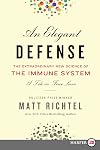
If you dislike narratives that jump around in time and space, this is not the book for you. But I like that kind of thing, and learning about the immune system through the stories of real people (patients, doctors, and researchers) made it easier to understand and very interesting. The author also makes an intriguing analogy between the body with its immune system distinguishing between "self" and "not self", and society functioning in the same way. Food for thought.
 This review was written for LibraryThing Early Reviewers.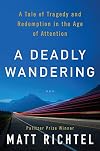
First and foremost, this book is an example of American journalism at its very best. If you happen to subscribe to the notion promoted by one of our former presidents that the news media are the “enemy of the people,” read this book and if you have half a brain, you’ll quickly jettison that belief. This is a story that continues to be told, unfortunately, over and over: the story of auto deaths as a result of “distracted driving.” And, of course, as we all know, much of that show more distracted driving is from the use of cell phones by the driver, either talking or, more often, texting while driving. Matt Richtel cites many statistics in his book, but maybe the most concerning and telling is this: 98% of drivers polled agreed that texting and driving was dangerous. That sounds about right. But, of those 98%, a full 45% admit to texting and driving themselves. That is mind blowing. And think of your own experiences with drivers you’ve seen using cell phones, even after states have one by one passed laws making using cell phones illegal. Think of the last time you were behind another car at a stop light and the light changed to green. If that car just sat there while you waited to proceed, chances are pretty good that the driver is texting. Many times motorists will be talking on their cell phone in full view of anyone around them. And, after all, the chances of being pulled over for that are slim and none. Richtel’s book focuses on one case in Utah of distracted driving causing not one death but two, both fathers and both in the prime of their careers as rocket scientists. Utah is one of what I call “Don’t Tell Me What To Do” states, states that think requiring parents to have their children in child seats in the car is an infringement of their rights. Other states in this category are Mississippi, South Carolina, and even my own home state of Indiana. Since this accident happened in 2006, Utah and many of the rest of the DTMWTD states have come around and have passed texting and driving laws. Matt Richtel’s reporting, which resulted in a Pulitzer Prize, is largely responsible for getting the ball rolling. This book is that important. In fact, I think any driver taking Drivers’ Education should be required to read it as part of the course. One last thing: I listened to this book in its audio version. Kudos to narrator Fred Berman. If you’ve listened to any books, you know how important the reader is. Fred Berman did justice to this very important book. show less
Elegant Defense, An: The Extraordinary New Science of the Immune System: A Tale in Four Lives by Matt Richtel
The human immune system is not an easy thing to get your head around, even for professionals. In the last twenty-five years, there have been massive leaps in the medications available to treat autoimmune diseases, where the body attacks itself. This story discusses some of those great discoveries as well as the building of the knowledge about a very complex system of the body. Matt Richtel does a great job in explaining this in terms non-professionals can understand as well as introducing show more people with these diseases.
The story starts personally as a childhood friend of the author develops Hodgkin’s lymphoma, a form of blood cancer. Things are not going well but Jason is determined to fight. Over the course of the book, we also meet Bob who has HIV and a remarkable immune system. Then there’s Linda and Merredith, who have autoimmune diseases and have had different experiences with treatment. In between their stories is the history of immunology and how pieces of the puzzle have been found over the decades. Some of the researchers who have made big breakthroughs are also familiar to a post-COVID reader – Anthony Fauci and Peter Doherty. Richtel explains their discoveries and others clearly and simply. He notes when things are about to get more complex. I didn’t mind this (he’s more fascinating than 90% of the immunology lecturers I’ve had) but some might find it annoying.
Yes, the science is simplified a lot but that’s OK. It’s not a textbook, it’s a non-scientist explaining the science in an entertaining way that puts a human face to those behind the blood tests, examinations and medications. This book really cemented how intertwined cancer is with the immune system and how immunotherapy takes a novel (but totally logical) way of treating it. It also makes all the side effects of immunotherapy make sense because they are immune-related. I do wish there had been a bit more on CAR-T cell therapy, where the patient’s own T cells (a type of white blood cell) are collected and engineered to fight an increasing number of cancers. But it’s hard to remember how common this was pre-COVID, plus it’s expensive so it probably wasn’t used as commonly.
The strength in this book is the patient stories, with Jason’s story being the most emotional and the common thread throughout the book. Richtel uses his journalism skills to allow the reader to really get to know each of them and cheer them on. I found the ending quite emotional given the human faces of the story, knowing that non-fiction doesn’t always get a happy ending. It’s a very readable book and I devoured it. Highly recommended for those who want to know more about the immune system in an easy to read fashion.
http://samstillreading.wordpress.com show less
The story starts personally as a childhood friend of the author develops Hodgkin’s lymphoma, a form of blood cancer. Things are not going well but Jason is determined to fight. Over the course of the book, we also meet Bob who has HIV and a remarkable immune system. Then there’s Linda and Merredith, who have autoimmune diseases and have had different experiences with treatment. In between their stories is the history of immunology and how pieces of the puzzle have been found over the decades. Some of the researchers who have made big breakthroughs are also familiar to a post-COVID reader – Anthony Fauci and Peter Doherty. Richtel explains their discoveries and others clearly and simply. He notes when things are about to get more complex. I didn’t mind this (he’s more fascinating than 90% of the immunology lecturers I’ve had) but some might find it annoying.
Yes, the science is simplified a lot but that’s OK. It’s not a textbook, it’s a non-scientist explaining the science in an entertaining way that puts a human face to those behind the blood tests, examinations and medications. This book really cemented how intertwined cancer is with the immune system and how immunotherapy takes a novel (but totally logical) way of treating it. It also makes all the side effects of immunotherapy make sense because they are immune-related. I do wish there had been a bit more on CAR-T cell therapy, where the patient’s own T cells (a type of white blood cell) are collected and engineered to fight an increasing number of cancers. But it’s hard to remember how common this was pre-COVID, plus it’s expensive so it probably wasn’t used as commonly.
The strength in this book is the patient stories, with Jason’s story being the most emotional and the common thread throughout the book. Richtel uses his journalism skills to allow the reader to really get to know each of them and cheer them on. I found the ending quite emotional given the human faces of the story, knowing that non-fiction doesn’t always get a happy ending. It’s a very readable book and I devoured it. Highly recommended for those who want to know more about the immune system in an easy to read fashion.
http://samstillreading.wordpress.com show less
An Elegant Defense: The Extraordinary New Science of the Immune System: A Tale in Four Lives by Matt Richtel
Wow!
I’m almost at a loss for words to describe AN ELEGANT DEFENSE and emphasize not only how important but also how interesting this book is. So I begin my comments with an exclamation (wow).
This is a science book. But (whoa, don’t go away) it is probably unlike any science book you’ve had experience with. It is casual and easy to understand. And even though it does contain scientific words, Matt Richtel occasionally reminds the reader what they mean and how they are applicable to what show more he then describes.
I am not a scientific or medical person. I only decided to read this because Richtel is a Pulitzer Prize winner for his A DEADLY WANDERING. And was I surprised that someone could make the science of the immune system so darned interesting. Honestly, it was as if I was reading an exciting thriller last night when I stayed up reading this book until I fell asleep sometime past midnight. Maybe that’s because he gives real-life examples of what he is talking about.
Richtel divides AN ELEGANT DEFENSE into five parts, each perfectly named (as are the chapters). First he introduces us to four people, examples for “the extraordinary new science of the immune system.” Next comes the science, which Richtel still manages to keep casual, even humorous at times. And he sometimes adds to this part other real-life examples. The remainder of the book concentrates more on the people he began with.
Much, maybe most, of AN ELEGANT DEFENSE is personal. Yes, I learned a lot. But I think, even with these readable explanations and examples showing how our immune systems are so important to everything about our bodies, this book absorbed me because Richtel makes it personal, especially Jason. Jason is the reason I stayed awake past midnight last night.
I won the ARC of AN ELEGANT DEFENSE through librarything.com. show less
I’m almost at a loss for words to describe AN ELEGANT DEFENSE and emphasize not only how important but also how interesting this book is. So I begin my comments with an exclamation (wow).
This is a science book. But (whoa, don’t go away) it is probably unlike any science book you’ve had experience with. It is casual and easy to understand. And even though it does contain scientific words, Matt Richtel occasionally reminds the reader what they mean and how they are applicable to what show more he then describes.
I am not a scientific or medical person. I only decided to read this because Richtel is a Pulitzer Prize winner for his A DEADLY WANDERING. And was I surprised that someone could make the science of the immune system so darned interesting. Honestly, it was as if I was reading an exciting thriller last night when I stayed up reading this book until I fell asleep sometime past midnight. Maybe that’s because he gives real-life examples of what he is talking about.
Richtel divides AN ELEGANT DEFENSE into five parts, each perfectly named (as are the chapters). First he introduces us to four people, examples for “the extraordinary new science of the immune system.” Next comes the science, which Richtel still manages to keep casual, even humorous at times. And he sometimes adds to this part other real-life examples. The remainder of the book concentrates more on the people he began with.
Much, maybe most, of AN ELEGANT DEFENSE is personal. Yes, I learned a lot. But I think, even with these readable explanations and examples showing how our immune systems are so important to everything about our bodies, this book absorbed me because Richtel makes it personal, especially Jason. Jason is the reason I stayed awake past midnight last night.
I won the ARC of AN ELEGANT DEFENSE through librarything.com. show less
This review was written for LibraryThing Early Reviewers.Lists
Awards


You May Also Like


Associated Authors
Statistics
- Works
- 20
- Members
- 1,479
- Popularity
- #17,373
- Rating
- 3.4
- Reviews
- 89
- ISBNs
- 83
- Languages
- 7
