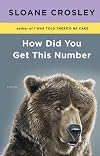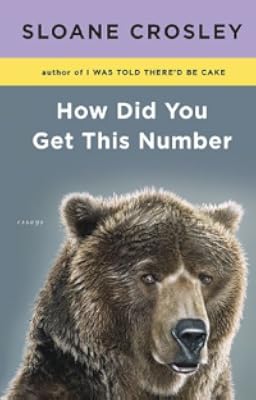
How Did You Get This Number: Essays
by Sloane Crosley
On This Page
Description
Crosley's easy, charming voice in the face of minor suffering or potential drudgery has been described as a mix between Dorothy Parker and David Sedaris. In these hilarious and insightful essays, she packs up her sensibility and takes readers with her to Paris, to Portugal (where she falls in with a group of Portuguese clowns), and to Alaska (where she discovers wearing bear bells is a matter of self-defense). Then it's back to New York, where new apartments beckon and taxi rides go awry.Tags
Recommendations
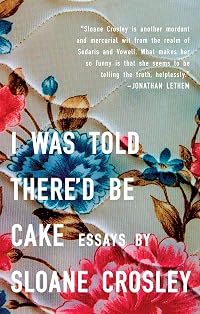

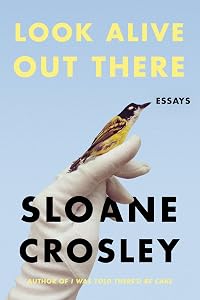






Member Reviews
This book of short personal essays started out about like Crosley's first, I Was Told There Would Be Cake. They weren't everything I would hope for from David Sedaris, but then what is?
The first couple essays were decent, peppered with funny moments, but they have a strong case of New-York-Itis, the disease that runs through books, the symptoms of which include referencing New York, talking about how New York is a strange and wonderful place, and attempting to describe the way in which New Yorkers are tough, savvy, or whatever (although to be fair, she does acknowledge that New Yorkers do revel in squalor at times, which was nice). I think this happens as so many publishers are in New York, and because so many writers work with show more publishers in some capacity before getting published, New York becomes the center of the book world. Having never been there, I hesitate to say much more about it, but I get that subways are crowded, cabs range from unpleasant to unholy, and when you concentrate a shitload of people in a tiny space you are bound to be constrained by different types of shit. However, Crosley handles most of it well, and she does some linguistic backflips that are worth a laugh on their own merit.
And the book really picks up. In "Light Pollution" Crosley describes a trip made to Alaska for a wedding, and though it's already funny, it takes a turn that brings it to a very human and very dark place. And the real gem, the final essay called "Off the Back of a Truck" is one of the better chronicles of the beginning and end of a relationship. She's smart, she makes a lot of wise statements, and people will be quoting pieces of this to crying friends over the phone for years to come. And the best part is that just when she's about to break your heart, she throws in a line that makes you laugh without destroying the tension. There's a balancing act there, and she pulls it off perfectly.
Read that last one first. I kid you not. If you like it, then read the rest show less
The first couple essays were decent, peppered with funny moments, but they have a strong case of New-York-Itis, the disease that runs through books, the symptoms of which include referencing New York, talking about how New York is a strange and wonderful place, and attempting to describe the way in which New Yorkers are tough, savvy, or whatever (although to be fair, she does acknowledge that New Yorkers do revel in squalor at times, which was nice). I think this happens as so many publishers are in New York, and because so many writers work with show more publishers in some capacity before getting published, New York becomes the center of the book world. Having never been there, I hesitate to say much more about it, but I get that subways are crowded, cabs range from unpleasant to unholy, and when you concentrate a shitload of people in a tiny space you are bound to be constrained by different types of shit. However, Crosley handles most of it well, and she does some linguistic backflips that are worth a laugh on their own merit.
And the book really picks up. In "Light Pollution" Crosley describes a trip made to Alaska for a wedding, and though it's already funny, it takes a turn that brings it to a very human and very dark place. And the real gem, the final essay called "Off the Back of a Truck" is one of the better chronicles of the beginning and end of a relationship. She's smart, she makes a lot of wise statements, and people will be quoting pieces of this to crying friends over the phone for years to come. And the best part is that just when she's about to break your heart, she throws in a line that makes you laugh without destroying the tension. There's a balancing act there, and she pulls it off perfectly.
Read that last one first. I kid you not. If you like it, then read the rest show less
The charming and relentless Ms. Crosley is perhaps slightly off her game in this avowedly "darker" follow-up to her surprise hit I WAS TOLD THERE'D BE CAKE. She can be both funny and thoughtful, all right, but that extra level of piercing self-awareness that elevates reflections like these into literary Valhalla is nowhere evident. She's better when she's kind of bitchy, less so when she's philosophical.
I don't understand if I just share the author's sense of humor or if the other people who reviewed this book don't have a sense of humor at all, but I was absolutely entranced by Sloane Crosley.
It's been a while since I've read a funny book, and her short essays about things which happen to us all are poignantly hilarious because we can relate. We understand. And we laugh along with her as she makes mistakes. Like we all do. Except for the part where we cry about the baby bear.
With stories about the humiliating game "Girl Talk" and holding hands under bathroom stalls, Sloane incorporates movie references and song lyrics which fit all too well in her puzzle of Mad Hatter madness called life. "I was a good girl--but I did not love show more horses or Jesus and I'd burn America to the ground in exchange for a sliver of my former happiness."
This book has given me faith that you CAN write a witty book and still focus on the abstract. You can have your cake and eat it too. You can confess in Notre Dame to a father who only speaks French or Japanese. And you can laugh about it. Which is what we all really need, wouldn't you say? show less
It's been a while since I've read a funny book, and her short essays about things which happen to us all are poignantly hilarious because we can relate. We understand. And we laugh along with her as she makes mistakes. Like we all do. Except for the part where we cry about the baby bear.
With stories about the humiliating game "Girl Talk" and holding hands under bathroom stalls, Sloane incorporates movie references and song lyrics which fit all too well in her puzzle of Mad Hatter madness called life. "I was a good girl--but I did not love show more horses or Jesus and I'd burn America to the ground in exchange for a sliver of my former happiness."
This book has given me faith that you CAN write a witty book and still focus on the abstract. You can have your cake and eat it too. You can confess in Notre Dame to a father who only speaks French or Japanese. And you can laugh about it. Which is what we all really need, wouldn't you say? show less
How Did You Get This Number (apparently, no question mark in that title) is a collection of nine essays, ranging in topic. In the opening essay, Crosley takes an impromptu, off-season jaunt to Portugal for no apparent reason, and meets a troupe of clown college students; later, she discusses the relative merits and demerits of Alaska, when she attends a friend’s wedding in “Light Pollution;” and later still she discusses getting thrown out of Paris (“I do not think you should come to this place again”), and having a dealer of furniture who will get you things “Off the Back of a Truck.”
These essays are always witty and sometimes funny. There’s no real connection between any of them, but Crosley has a way with words that show more is often poignant and rings true. Sometimes her ramblings don’t make total sense, but I found myself laughing out loud numerous times while reading these essays. Crosley always manages to remain pragmatic about her experiences, even as she dates a guy who turns out to be no good, or accidentally breaks into a stranger’s courtyard in Paris, or shopping for roommates on Craigslist (been there, done that!). Embarrassing experiences like these are prime fodder for Crosley’s self-deprecating style, and she can even be philosophical about childhood games like Girl Talk (a game from my own adolescence I remember very well...). What I like about Crosley’s essays is that her experiences are so relatable.
There are some weak essays in the book (the two subjects of the last one in particular don’t seem to go together, and I didn’t quite “get” the one about taxis. In all, however, this is a very strong collection of essays, and a great follow-up to I Was Told There’d Be Cake. Definitely worth reading if you’re looking for a humorous memoir where the author doesn’t take herself too seriously. show less
These essays are always witty and sometimes funny. There’s no real connection between any of them, but Crosley has a way with words that show more is often poignant and rings true. Sometimes her ramblings don’t make total sense, but I found myself laughing out loud numerous times while reading these essays. Crosley always manages to remain pragmatic about her experiences, even as she dates a guy who turns out to be no good, or accidentally breaks into a stranger’s courtyard in Paris, or shopping for roommates on Craigslist (been there, done that!). Embarrassing experiences like these are prime fodder for Crosley’s self-deprecating style, and she can even be philosophical about childhood games like Girl Talk (a game from my own adolescence I remember very well...). What I like about Crosley’s essays is that her experiences are so relatable.
There are some weak essays in the book (the two subjects of the last one in particular don’t seem to go together, and I didn’t quite “get” the one about taxis. In all, however, this is a very strong collection of essays, and a great follow-up to I Was Told There’d Be Cake. Definitely worth reading if you’re looking for a humorous memoir where the author doesn’t take herself too seriously. show less
Sloane Crosley’s How Did You Get This Number is a fun ticket for travel adventure. I’ve spent my long week-end in Portugal, Alaska and especially New York City without leaving the comfort of my bedroom. She gave me a lot to laugh about (and the vicarious experience of being a young writer in New York City)
The poignant and painful are often the well from which the funniest is drawn. Because I come from a family with a variety of neurological and learning problems, I found the chapter “Lost in Space” cutting very close to home. And therefore the talk of right-left brain discrepancy and “having the village idiot camped out in half your brain” established a print cameraderie that kept me from putting this book down. How could I show more not fall in love with someone who confesses near the beginning of the book that she’s never met a clock that works properly and has resorted to going to Canada to avoid the trauma of a week-end bus trip to her sister’s house?)
This book is very funny, in that subtle, laugh to yourself and underline portions so that you can read them to your friends way. show less
The poignant and painful are often the well from which the funniest is drawn. Because I come from a family with a variety of neurological and learning problems, I found the chapter “Lost in Space” cutting very close to home. And therefore the talk of right-left brain discrepancy and “having the village idiot camped out in half your brain” established a print cameraderie that kept me from putting this book down. How could I show more not fall in love with someone who confesses near the beginning of the book that she’s never met a clock that works properly and has resorted to going to Canada to avoid the trauma of a week-end bus trip to her sister’s house?)
This book is very funny, in that subtle, laugh to yourself and underline portions so that you can read them to your friends way. show less
 This review was written for LibraryThing Early Reviewers.
Sloane Crosley's debut novel I Was Told There'd Be Cake earned her a spot on the "writers to watch" list for many people, myself included. Now I can say without a doubt that I will purchase anything Sloane Crosley happens to publish from here on out, I don't care if it's a grocery list. She's a delight, a fantastic wordsmith whose small observations are to be cherished as comic gold. Indeed, it's often the sentences spoken as asides that have me laughing out loud in the presence of strangers. Her command of language means that she always seems to have the perfect phrasing for the most bizarre or whimsical circumstance... and she knows when to let the simple description of a thing speak for itself. She, herself, is credibly droll even in show more the moment (as opposed to reflectively looking back on the event) with a knack for locating the absurd and mapcap in everyday situations... though her own poor luck (or good luck as far as the reader goes) does tend to stretch these scenarios into the farcical. As a twenty-something New Yorker with thirty looming on the horizon, she strikes an obvious chord with me, but I think that her humor should be accessible to anyone... or at least any reasonably intelligent person who understands that we all have our own flaws and if we can't laugh at them once in a while, then we're in for a long, dull ride.
I Was Told There'd Be Cake was so fresh and funny that I worried that there might be too much pressure placed on Crosley for book two, but if anything, I think she's gotten better. As with all delicious things, there is the dangerous tendency to gobble down How Did You Get This Number without any time to breathe. Try to take some time between stories so you can savor the humor... or maybe just re-read it all over again as soon as you finish the first read-through. The stories seem a bit longer, but that's only because she takes her time with each, exploring multiple emotions and ideas that can all be wrapped up in a single experience. She's a little older and a little wiser, so there are fewer foolish events and a greater number of wry observations, though there's still plenty of ridiculous inner turmoil. Part of Crosley's charm for me is the fact that she's very much a New Yorker and the stories in this collection are often set in New York, though she ventures out for various reasons, ultimately always desperate to get back. She starts off with "Show Me on the Doll," describing an impromptu solo journey to Lisbon that gives us all ample justification for not taking more impromptu solo journeys the way our ten-year-old selves might have thought we would when the definition of adulthood encompassed doing whatever we wanted. "Le Paris!" discusses two different trips to Paris, one of which involves a contender for "most awkward conversation" in Crosley's life as she finds herself in confession at Notre Dame, despite the fact that she's Jewish and the priest only speaks French and Japanese. In "Lost In Space," Crosley describes her mother's dreams of a genius child quickly thwarted after discovering that Sloane has a learning disability resulting in terrible spatial relation skills. You might not think this is funny, but wait until you read about Crosley's method for cheating at the SATs which involves padding her bra with post-its. "Take a Stab at It" and "It's Always Home You Miss" are both very New York tales of apartment woe and cab smells, respectively, while "Light Pollution" sees Crosley head to Alaska for a friend's wedding (where "bear bells" are part of the wedding favors). "If You Sprinkle" is a story that any girl can relate to, describing the horror of middle school and then "An Abbreviated Gift of Tongues" is for everyone with a catalog of family pets buried in the backyard, though the Crosley family pets are all interred in duct-tape sealed tupperware. The final story, "Off the Back of a Truck," is perhaps the most poignant of all as a shady arrangement to furnish her apartment with stolen merchandise is described alongside a doomed love affair. This might be the true gem of the collection, for while Crosley often admits to faults and flaws, in "Off the Back of a Truck," she manages to convey emotional vulnerability, heightened by the sense that the wound hasn't quite healed. Through it all, Crosley presents a fantastic image of a strong and independent Manhattan woman... who never has it all quite as together as she might wish. It's easy to relate to Crosley on nearly every level and by the end of each story, you feel as though you've just been told a hilarious story by an old friend over cocktails.
If you need to compare Sloane Crosley to any other popular writer out there, then the closest you'd get is David Sedaris... except Crosley is female, straight, and the epitome of the neurotic New Yorker. She also manages to tell hysterical stories without giving the impression that she's completely exploiting her family and friends. Indeed, despite the presence of those people in her stories, somehow it's Crosley that always comes out as the ridiculous one or, more often, the situation itself is hilarious without injuring or offending any named parties (well, except the one about a bitchy classmate in grade school, but she deserved it). You can toss in some comparisons to Dorothy Parker, but Crosley retains her optimism and sense of whimsy as opposed to cynicism (though there certainly is enough of a New Yorker's suspicion). If you have not yet been privileged enough to read a book by Sloane Crosley, I pity you... but consider this your chance to set things right. Go out to get How Did You Get This Number and pick up I Was Told There'd Be Cake for good measure. I dare you to glance at the first page of either one and not get sucked in by her wit and charm. show less
I Was Told There'd Be Cake was so fresh and funny that I worried that there might be too much pressure placed on Crosley for book two, but if anything, I think she's gotten better. As with all delicious things, there is the dangerous tendency to gobble down How Did You Get This Number without any time to breathe. Try to take some time between stories so you can savor the humor... or maybe just re-read it all over again as soon as you finish the first read-through. The stories seem a bit longer, but that's only because she takes her time with each, exploring multiple emotions and ideas that can all be wrapped up in a single experience. She's a little older and a little wiser, so there are fewer foolish events and a greater number of wry observations, though there's still plenty of ridiculous inner turmoil. Part of Crosley's charm for me is the fact that she's very much a New Yorker and the stories in this collection are often set in New York, though she ventures out for various reasons, ultimately always desperate to get back. She starts off with "Show Me on the Doll," describing an impromptu solo journey to Lisbon that gives us all ample justification for not taking more impromptu solo journeys the way our ten-year-old selves might have thought we would when the definition of adulthood encompassed doing whatever we wanted. "Le Paris!" discusses two different trips to Paris, one of which involves a contender for "most awkward conversation" in Crosley's life as she finds herself in confession at Notre Dame, despite the fact that she's Jewish and the priest only speaks French and Japanese. In "Lost In Space," Crosley describes her mother's dreams of a genius child quickly thwarted after discovering that Sloane has a learning disability resulting in terrible spatial relation skills. You might not think this is funny, but wait until you read about Crosley's method for cheating at the SATs which involves padding her bra with post-its. "Take a Stab at It" and "It's Always Home You Miss" are both very New York tales of apartment woe and cab smells, respectively, while "Light Pollution" sees Crosley head to Alaska for a friend's wedding (where "bear bells" are part of the wedding favors). "If You Sprinkle" is a story that any girl can relate to, describing the horror of middle school and then "An Abbreviated Gift of Tongues" is for everyone with a catalog of family pets buried in the backyard, though the Crosley family pets are all interred in duct-tape sealed tupperware. The final story, "Off the Back of a Truck," is perhaps the most poignant of all as a shady arrangement to furnish her apartment with stolen merchandise is described alongside a doomed love affair. This might be the true gem of the collection, for while Crosley often admits to faults and flaws, in "Off the Back of a Truck," she manages to convey emotional vulnerability, heightened by the sense that the wound hasn't quite healed. Through it all, Crosley presents a fantastic image of a strong and independent Manhattan woman... who never has it all quite as together as she might wish. It's easy to relate to Crosley on nearly every level and by the end of each story, you feel as though you've just been told a hilarious story by an old friend over cocktails.
If you need to compare Sloane Crosley to any other popular writer out there, then the closest you'd get is David Sedaris... except Crosley is female, straight, and the epitome of the neurotic New Yorker. She also manages to tell hysterical stories without giving the impression that she's completely exploiting her family and friends. Indeed, despite the presence of those people in her stories, somehow it's Crosley that always comes out as the ridiculous one or, more often, the situation itself is hilarious without injuring or offending any named parties (well, except the one about a bitchy classmate in grade school, but she deserved it). You can toss in some comparisons to Dorothy Parker, but Crosley retains her optimism and sense of whimsy as opposed to cynicism (though there certainly is enough of a New Yorker's suspicion). If you have not yet been privileged enough to read a book by Sloane Crosley, I pity you... but consider this your chance to set things right. Go out to get How Did You Get This Number and pick up I Was Told There'd Be Cake for good measure. I dare you to glance at the first page of either one and not get sucked in by her wit and charm. show less
This review was written for LibraryThing Early Reviewers.I am in love with Sloane Crosley, now that I’ve finally read How Did You Get This Number. Somehow I missed reading her fabulous first book I Was Told There’d Be Cake, but I’ve found her latest book to be full of fresh personal essays about her “not-supposed-to-be-funny-but-still-terribly-hilarious” tales from her life ranging from her spatial dysphasia disorder that get’s her lost in Lisbon, Paris, New York, and pretty much everywhere she goes, to her bathroom stalking for a research paper where she was once asked to pop a blister on the foot of a complete stranger who had just told her “I can’t have strangers touching my feet.” To be honest, Sloane had me at the first sentence in her book - “There is only one answer show more to the question: Would you like to see a three a.m. performance of amateur Portuguese circus clowns?”
Once you’ve secured a copy of this book, prepare for the kind of laugh that starts deep in your belly and has you possibly wetting your pants. Much of Sloane’s skills as a writer comes from her witty observations and the ability to know when to not hold back. Less is not more when it comes to Sloane Crosley. A young thirty-something woman of the world, Sloane mixes her adventures abroad in Paris and Portugal with tales from her childhood and her present life in New York to her bridesmaid adventure in Alaska.
My favorite stories come from the If You Sprinkle chapter, where Ms. Crosley weaves pop culture memories into her strained friendship with a pre-queen bee of a girl named Zooey. Not only did Sloane have to help walk this girl through her first attempt at inserting a tampon (Oh, how I laughed when I recalled my own “first tampon experience” when my own friend talked me through mine so I could attend a Bryan Adams concert without worries) by using “the Lamaze breathing techniques I had seen in talking-baby movies” but she fed Zooey the ammo to destroy a new girl in town who had two moms. You’d think Sloane would go for the jugular, but she convinced Zooey she this poor girl wasn’t from California, the state she had just moved from. The story comes full circle in another bathroom, but I won’t spoil it for you here.
You can read the rest of my review here:
http://thegirlfromtheghetto.wordpress.com/2010/06/19/how-did-you-get-this-number... show less
Once you’ve secured a copy of this book, prepare for the kind of laugh that starts deep in your belly and has you possibly wetting your pants. Much of Sloane’s skills as a writer comes from her witty observations and the ability to know when to not hold back. Less is not more when it comes to Sloane Crosley. A young thirty-something woman of the world, Sloane mixes her adventures abroad in Paris and Portugal with tales from her childhood and her present life in New York to her bridesmaid adventure in Alaska.
My favorite stories come from the If You Sprinkle chapter, where Ms. Crosley weaves pop culture memories into her strained friendship with a pre-queen bee of a girl named Zooey. Not only did Sloane have to help walk this girl through her first attempt at inserting a tampon (Oh, how I laughed when I recalled my own “first tampon experience” when my own friend talked me through mine so I could attend a Bryan Adams concert without worries) by using “the Lamaze breathing techniques I had seen in talking-baby movies” but she fed Zooey the ammo to destroy a new girl in town who had two moms. You’d think Sloane would go for the jugular, but she convinced Zooey she this poor girl wasn’t from California, the state she had just moved from. The story comes full circle in another bathroom, but I won’t spoil it for you here.
You can read the rest of my review here:
http://thegirlfromtheghetto.wordpress.com/2010/06/19/how-did-you-get-this-number... show less
Members
- Recently Added By
Lists

Books Read in 2014
2,343 works; 86 members
Author Information

14+ Works 5,231 Members
Awards and Honors
Awards
Distinctions
Common Knowledge
- Canonical title
- How Did You Get This Number: Essays
- Original title
- How Did You Get This Number
- Original publication date
- 2010
- Important places
- New York, New York, USA; Lisbon, Portugal; Paris, France; Anchorage, Alaska, USA
- Epigraph
- He had no especial desire to meet or to know any of these people; all he demanded was the right to look on and conjecture, to watch the pageant.... He was now entirely rid of his nervous misgivings, of his forced aggressivene... (show all)ss, of the imperative desire to show himself different from his surroundings. He felt now that his surroundings explained him. Nobody questioned the purple; he only had to wear it passively. He had only to glance down at his attire to reassure himself that here it would be impossible for anyone to humiliate him. --Willa Cather, "Paul's Case," 1905
- First words
- There is only one answer to the question: Would you like to see a three a.m. performance of amateur Portuguese circus clowns?
- Last words
- (Click to show. Warning: May contain spoilers.)Because without meaning, it was all just a bunch of somebody else's stuff.
- Blurbers
- Sedaris, David
Classifications
Statistics
- Members
- 813
- Popularity
- 33,893
- Reviews
- 55
- Rating
- (3.50)
- Languages
- English
- Media
- Paper, Audiobook, Ebook
- ISBNs
- 8
- ASINs
- 9