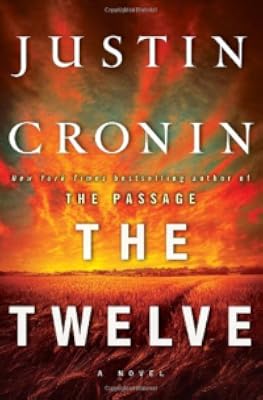
On This Page
Description
Survivors of a government-induced apocalypse endure their violent and disease-stricken world while protecting their loved ones; while a century into the future, members of a transformed society determinedly search for the original twelve virals.Tags
Recommendations

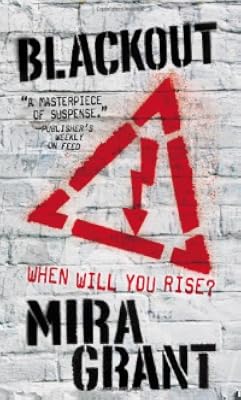
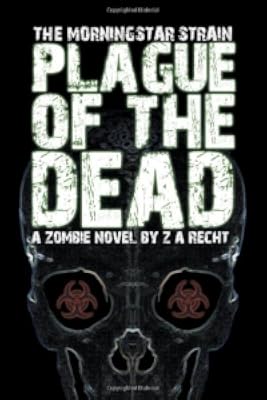
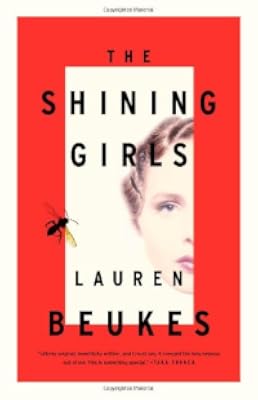
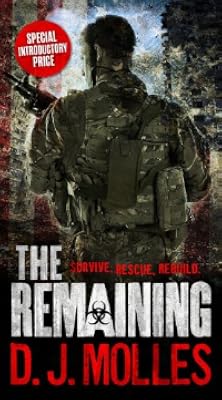

Member Recommendations

Member Reviews
Cut my finger cooking so typing is a pain and then a vampire came and sucked all the blood out of me and transformed me into a primal, bloodthirsty beast haunting a post-apocalyptic nightmare landscape, in the thrall of one of twelve death-row inmates, telepathic monsters-in-chief of the twelve tribes of nosferati, so not only was dinner a bit late, but I'm not up to writing a long review because my finger hurts and savage bloodlust is crowding out my critical faculties. It's a big, meaty, dripping, throbbing, nyum nyum sequel to The Passage, notable for being written with a rare literary focus on style and character though not without neglecting the horror and the action. A bit too long maybe but I enjoyed it all. Now excuse me. Nom show more nom nom. show less
This is book two in Cronin's Passage trilogy, in which the world (or at the very least the United States) has been overrun by vampiric creatures created from an extremely ill-advised piece of military research.
And my opinion of this series hasn't changed from the first book. I still think the idea and the basic setup are good. I like a sprawling post-apocalyptic epic, after all, and the monsters are decently scary and fairly original, as vampiric creatures go. But the execution just isn't living up to that potential. The story is readable enough, but it drags. It drags a lot. I feel like I perhaps shouldn't say this until I've read the entire series, because for all I know book three might be something else altogether, but I'm going to show more go out on a limb anyway and say that I believe the story would be much, much improved if it were whittled down from three thick volumes to one medium-longish one.
I'm also not impressed by Cronin's supposedly rather "literary" writing. His style is all right, but it's not what I'd call beautiful, and it sometimes flirts with either pretentiousness or cliche. And I'll repeat what I think I said about the first volume: giving characters long, melodramatic backstories isn't actually the same thing as making them interesting.
I will say that this one was at least a somewhat faster read than the first one, probably mostly by virtue of not being quite as long. And there were one or two decent action scenes. On the other hand, the monsters, which I find far and away the most interesting thing about these books, are much less of a presence throughout most of this one than they were in the first book. So it's probably kind of a wash.
Since I already have book three, I'm sure I'll continue on with it eventually, but, as was the case with this one, I'm not going to be in any burning hurry to get to it. show less
And my opinion of this series hasn't changed from the first book. I still think the idea and the basic setup are good. I like a sprawling post-apocalyptic epic, after all, and the monsters are decently scary and fairly original, as vampiric creatures go. But the execution just isn't living up to that potential. The story is readable enough, but it drags. It drags a lot. I feel like I perhaps shouldn't say this until I've read the entire series, because for all I know book three might be something else altogether, but I'm going to show more go out on a limb anyway and say that I believe the story would be much, much improved if it were whittled down from three thick volumes to one medium-longish one.
I'm also not impressed by Cronin's supposedly rather "literary" writing. His style is all right, but it's not what I'd call beautiful, and it sometimes flirts with either pretentiousness or cliche. And I'll repeat what I think I said about the first volume: giving characters long, melodramatic backstories isn't actually the same thing as making them interesting.
I will say that this one was at least a somewhat faster read than the first one, probably mostly by virtue of not being quite as long. And there were one or two decent action scenes. On the other hand, the monsters, which I find far and away the most interesting thing about these books, are much less of a presence throughout most of this one than they were in the first book. So it's probably kind of a wash.
Since I already have book three, I'm sure I'll continue on with it eventually, but, as was the case with this one, I'm not going to be in any burning hurry to get to it. show less
Justin Cronin’s [The Twelve] picks up the apocalyptic and dystopian story he began with [The Passage]. Some 100 years after the destruction of most of civilization at the hands of a race of beastly vampires, several bands of humans try to rebuild. At the center of the story is one particular group from an outpost in California and a young girl who has been infected with the same virus that created the vampire plague.
It’s difficult to distill the story Cronin tells with [The Twelve], just as it was with the first book in the series. The sheer depth and breadth of the story is measure. Cronin adroitly shifts back and forth in time, picking up loose threads from the original story and weaving them into the story as it has grown with show more time. We find the backstory of a new band of survivors from Kerrville, TX, and how they fit into the new events surrounding Amy and Peter. We learn more about the history of the original twelve vampires. And we learn how the twelve have found a way to begin to organize and harvest the blood they need to survive without extinction. But the thrust of the story is the coming war between the vampires and the survivors.
The fact that the story is hard to distill reflect the principal strengths of Cronin’s storytelling. First, the story is humungous – epic is such a trite word, and humungous is really more fitting. Second, with such a large story, in time and space and character, it would be easy to lose track of some of the threads. But Cronin’s narrative never loses focus and his characters are never empty or inconsistent. Finally, the space such a big novel creates leaves a lot of room for Cronin to show off his prose. Such a big space might prove too big to fill, but Cronin takes his time and each line, each paragraph, each chapter hits just the right note. I never got tired or impatient with the story or with Cronin. The book is a great object lesson for writers in taking your time and letting your voice find its own pace.
Bottom Line: Humungous story but one that never gets lost, hitting just the right note.
4 ½ bones!!!!! show less
It’s difficult to distill the story Cronin tells with [The Twelve], just as it was with the first book in the series. The sheer depth and breadth of the story is measure. Cronin adroitly shifts back and forth in time, picking up loose threads from the original story and weaving them into the story as it has grown with show more time. We find the backstory of a new band of survivors from Kerrville, TX, and how they fit into the new events surrounding Amy and Peter. We learn more about the history of the original twelve vampires. And we learn how the twelve have found a way to begin to organize and harvest the blood they need to survive without extinction. But the thrust of the story is the coming war between the vampires and the survivors.
The fact that the story is hard to distill reflect the principal strengths of Cronin’s storytelling. First, the story is humungous – epic is such a trite word, and humungous is really more fitting. Second, with such a large story, in time and space and character, it would be easy to lose track of some of the threads. But Cronin’s narrative never loses focus and his characters are never empty or inconsistent. Finally, the space such a big novel creates leaves a lot of room for Cronin to show off his prose. Such a big space might prove too big to fill, but Cronin takes his time and each line, each paragraph, each chapter hits just the right note. I never got tired or impatient with the story or with Cronin. The book is a great object lesson for writers in taking your time and letting your voice find its own pace.
Bottom Line: Humungous story but one that never gets lost, hitting just the right note.
4 ½ bones!!!!! show less
The great viral plague has devastated humanity leaving pockets of humans struggling to survive nearly a century after Year 0. Having killed the one called Babcock, a small band of scattered individuals have felt the call to turn the tables. They must pick up the fight against the rest of the twelve who control the hordes of undead and answer to The Zero. But can the enigmatic Amy, the half-viral super-soldier Alicia and the rest find a way to turn the tide? And ultimately, where do their loyalties actually lie?
“Because that's what heaven is...it's opening the door of a house in twilight and everyone you love is there.”
The Twelve is the sequel to the blockbuster novel The Passage a planned trilogy about the struggle of humanity show more during the aftermath of a viral apocalypse. It is insufficient to say The Twelve picks up where The Passage left off. In actuality, the first 200 pages actually takes us back to the initial days of the outbreak and fills in some of the untold stories, introducing some additional characters. I hadn’t expected this approach to what is always the most difficult book in a trilogy – the middle one – where you are trying to bridge the gap between the explosive beginning and the hopefully satisfying ending.
I found Justin Cronin’s treatment to be an interesting departure from the usual sequel and appreciated the additional backstory to the early days we didn’t get to see in The Passage. However, the sacrifice was that the story didn’t have the forward momentum throughout much of the book that the first one did. Even once we catch up with where we left off in The Passage, there is a bit less angst – a bit less tension until the last third of the book.
That is not to say The Twelve isn’t a really good story. Frankly, it is. The characters – especially Peter, Amy and Alicia – pull the reader deeply into their world. Cronin does an amazing job of fleshing out each one of his characters, giving them a purpose and allowing each one their own personalities and conflicts. This is no easy task with a story covering so much real estate. In particular, I found Lila to be a truly special character that takes center stage in this book and delivers an internal conflict for the ages. You will have to read it yourself to get the details, but Cronin’s treatment alone is a good reason to buy the book.
Ultimately, Cronin produces a worthy second installment in his trilogy with The Twelve. The writing is superb and the characters are vividly portrayed. While it doesn’t read as cleanly from start to finish as The Passage, it does produce a lot of great moments and a nail-biting conclusion that keeps you guessing about the final book – to be published in 2014. It also doesn’t suffer from series bloat, coming in at 200 fewer pages than The Passage. I continue to highly recommend this series and insist that you are best served by reading them in order. I’m very much looking forward to the finale. show less
“Because that's what heaven is...it's opening the door of a house in twilight and everyone you love is there.”
The Twelve is the sequel to the blockbuster novel The Passage a planned trilogy about the struggle of humanity show more during the aftermath of a viral apocalypse. It is insufficient to say The Twelve picks up where The Passage left off. In actuality, the first 200 pages actually takes us back to the initial days of the outbreak and fills in some of the untold stories, introducing some additional characters. I hadn’t expected this approach to what is always the most difficult book in a trilogy – the middle one – where you are trying to bridge the gap between the explosive beginning and the hopefully satisfying ending.
I found Justin Cronin’s treatment to be an interesting departure from the usual sequel and appreciated the additional backstory to the early days we didn’t get to see in The Passage. However, the sacrifice was that the story didn’t have the forward momentum throughout much of the book that the first one did. Even once we catch up with where we left off in The Passage, there is a bit less angst – a bit less tension until the last third of the book.
That is not to say The Twelve isn’t a really good story. Frankly, it is. The characters – especially Peter, Amy and Alicia – pull the reader deeply into their world. Cronin does an amazing job of fleshing out each one of his characters, giving them a purpose and allowing each one their own personalities and conflicts. This is no easy task with a story covering so much real estate. In particular, I found Lila to be a truly special character that takes center stage in this book and delivers an internal conflict for the ages. You will have to read it yourself to get the details, but Cronin’s treatment alone is a good reason to buy the book.
Ultimately, Cronin produces a worthy second installment in his trilogy with The Twelve. The writing is superb and the characters are vividly portrayed. While it doesn’t read as cleanly from start to finish as The Passage, it does produce a lot of great moments and a nail-biting conclusion that keeps you guessing about the final book – to be published in 2014. It also doesn’t suffer from series bloat, coming in at 200 fewer pages than The Passage. I continue to highly recommend this series and insist that you are best served by reading them in order. I’m very much looking forward to the finale. show less
Taking place five years after the final scene in The Passage, The Twelve continues Justin Cronin’s saga in true genre-busting fashion. Amy and her friends have scattered across the Texas territory, finding their niche in the rugged community that continues to thrive. After five years of fighting the Virals, everyone is just a little more exhausted and less optimistic as to their long-term survival. This sense of dogged determination sets the tone for the rest of the novel as the good guys and the bad ones learn that they are just pawns in the grand design of The Twelve.
Like every sequel ever written, there is a manipulative feel to the story, as Mr. Cronin has to get his plot and his characters to where it and they need to be before show more the opening act of the final novel. In working to achieve this goal, he makes the world of The Twelve more identifiable and therefore more familiar. We get better glimpses of cities long destroyed, of entire infrastructures that were allowed to sink back to their natural state. We also see how creatively the survivors used this infrastructure to not just live but to thrive. Plus, thanks to the introduction of new characters, we get a better feel for those final days in the U.S., before the Virals had free reign of the country. In this way, The Twelve provides useful information for placing you inside this lost world.
I personally feel The Twelve is better than The Passage. I appreciate the characters and the world-building more than I did in the first novel. The action is more cerebral, as is the enemy. With the first novel, I felt like I was hanging on to a roller coaster without a seat restraint. The sequel makes me feel like I do when I sit down each month to close the books and publish financial reports – everything is familiar which allows me to concentrate on the details, and the details are where the heartbeat of the story reside. Plus, because it is a slower-paced story, Mr. Cronin’s writing ability truly shines. His post-apocalyptic world is fully imagined, and you can miss these gems if you are rushing from one catastrophe to another, as we did in the first novel.
The Twelve may not be as exciting as the first book in the series, but do not count out its importance. There is no doubt that Cronin places a plethora of key information within its self-contained story line that will prove vital for the finale. Everything about The Twelve is getting readers and characters alike ready for the finale. Thankfully, we do not have to wait much longer to find out what happens. show less
Like every sequel ever written, there is a manipulative feel to the story, as Mr. Cronin has to get his plot and his characters to where it and they need to be before show more the opening act of the final novel. In working to achieve this goal, he makes the world of The Twelve more identifiable and therefore more familiar. We get better glimpses of cities long destroyed, of entire infrastructures that were allowed to sink back to their natural state. We also see how creatively the survivors used this infrastructure to not just live but to thrive. Plus, thanks to the introduction of new characters, we get a better feel for those final days in the U.S., before the Virals had free reign of the country. In this way, The Twelve provides useful information for placing you inside this lost world.
I personally feel The Twelve is better than The Passage. I appreciate the characters and the world-building more than I did in the first novel. The action is more cerebral, as is the enemy. With the first novel, I felt like I was hanging on to a roller coaster without a seat restraint. The sequel makes me feel like I do when I sit down each month to close the books and publish financial reports – everything is familiar which allows me to concentrate on the details, and the details are where the heartbeat of the story reside. Plus, because it is a slower-paced story, Mr. Cronin’s writing ability truly shines. His post-apocalyptic world is fully imagined, and you can miss these gems if you are rushing from one catastrophe to another, as we did in the first novel.
The Twelve may not be as exciting as the first book in the series, but do not count out its importance. There is no doubt that Cronin places a plethora of key information within its self-contained story line that will prove vital for the finale. Everything about The Twelve is getting readers and characters alike ready for the finale. Thankfully, we do not have to wait much longer to find out what happens. show less
FEB, 2013:
I didn't hate The Passage, but I didn't think it lived up to the hype. The Twelve, I'm happy to report, enriches and improves on the story. Lots more character development, a surer hand in the writing. Still could have been much shorter, but overall, a vast improvement over the first book. Looking forward to the last one now.
SECOND READ THROUGH, THREE YEARS LATER:
I enjoyed this reading far more thoroughly this time around than I did the first time. There was more of a story arc, and character arcs. It was also interesting to come back around to characters from book one that you didn't expect to see again. Originally, I ranked this as three stars. I've bumped that to four this time around.
I didn't hate The Passage, but I didn't think it lived up to the hype. The Twelve, I'm happy to report, enriches and improves on the story. Lots more character development, a surer hand in the writing. Still could have been much shorter, but overall, a vast improvement over the first book. Looking forward to the last one now.
SECOND READ THROUGH, THREE YEARS LATER:
I enjoyed this reading far more thoroughly this time around than I did the first time. There was more of a story arc, and character arcs. It was also interesting to come back around to characters from book one that you didn't expect to see again. Originally, I ranked this as three stars. I've bumped that to four this time around.
Members
- Recently Added By
Lists

Best Science Fiction Novels
816 works; 430 members

Best Horror Books
281 works; 85 members

Best Dystopias
280 works; 271 members

Best Post-Apocalyptic Stories
143 works; 88 members

Bloody Good Vampire Books
394 works; 28 members

Dystopian and Apocalyptic Literature
350 works; 74 members

Best 21st Century Books (So Far)
670 works; 86 members

Top Five Books of 2013
1,562 works; 721 members

Iowa
1 work; 2 members

Best Survival Stories
97 works; 15 members

Books With Numbers in the Title
308 works; 13 members

Books on my Kindle
162 works; 3 members

Books Read in 2019
4,052 works; 110 members

Creatures of Various Kinds
15 works; 3 members

Top Five Books of 2017
757 works; 231 members

BingoDOG - Genre Benders
74 works; 14 members

2010s
241 works; 3 members

Books Read in 2016
4,666 works; 199 members
Books Read in 2015
3,299 works; 129 members

Top Five Books of 2012
55 works; 11 members

Books Read in 2013
1,630 works; 51 members
Books Read in 2012
816 works; 34 members

GoodReads Horror Choice Awards
160 works; 4 members
Author Information

16 Works 19,011 Members
Justin Cronin is a graduate of the Iowa Writer's Workshop, and a professor of creative writing at La Salle University in Philadelphia. His work has appeared in many literary journals. (Publisher Provided) Justin Cronin was born and raised in New England. He is a graduate of Harvard University and the Iowa Writers' Workshop. He has written several show more books including The Summer Guest, The Passage Trilogy, and Mary and O'Neil, which won the PEN/Hemingway Award and the Stephen Crane Prize. He taught creative writing and was the author in-residence at La Salle University from 1992 to 2005. He is currently a professor of English at Rice University. (Bowker Author Biography) show less
Awards and Honors
Awards
Series

Belongs to Publisher Series
Fiction [Mondadori] (2013)
Work Relationships
Is contained in
Common Knowledge
- Canonical title
- The Twelve
- Original title
- The Twelve
- Original publication date
- 2012-10-16
- People/Characters
- Tim Fanning aka "The Zero"; Giles Babcock; Joseph Morrison; Victor Chávez; John Baffes; Thaddeus Turrell (show all 71); David Winston; Rupert Sosa; Martin Echols; Horace Lambright; Julio Martinez; William Reinhardt; Anthony Carter; Bernard Kittridge; April; Timothy; Danny Chayes; Lila Kyle; Lawrence Grey; Horace Guilder; Major Frances Porcheki; Vera; Ignacio; Nelson; Shawna; Rita Chernow; Pastor Don; Wood; Delores; Jamal; Mrs. Bellamy; Joe Robinson; Linda Robinson; Boy Jr.; Curtis Vorhees; Delia "Dee" Vorhees; Boz Vorhees; Nitia "Nina" Vorhees; Siri Vorhees; Nathan Crukshank; Tifty Lamont; Amy Harper Bellafonte; Peter Jaxon; Alicia Donadio; Colonel Gunnar Apgar; Major Alexander Henneman; Lieutenant Satch Dodd; Lucius Greer; Hollis Wilson; Dunk Withers; Abram Fleet; Victoria Sanchez; Sister Peg; Sister Catherine; Caleb Jaxon; Michael Fisher; Lore DeVeer; Juan "Ceps" Sweeting; Ed Pope; Dan Karlovic; Jackie; Eustace; Vale; Whistler; Sod; Dr. Verlyn; Virkram Suresh; Jenny Apgar; Fred Wilkes; Aidan Hoppel; Sara Fisher
- Important places
- Denver, Colorado, USA; Kerrville, Texas, USA; Roswell, New Mexico, USA; Fort Powell, Iowa, USA; Freeport, Texas, USA; The Field (show all 7); The Homeland
- Epigraph
- She stood beside me for years, or was it a moment? I cannot remember. Maybe I loved her, maybe I didn’t. There was a house, and then no house. There were trees, but none remain. When no one remembers, what is there? You, wh... (show all)ose moments are gone, who drift like smoke in the afterlife, tell me something, tell me anything. - Mark Strand, "In the Afterlife"
- Dedication
- For Leslie, foot-to-foot
- First words
- For it came to pass that the world had grown wicked, and men had taken war into their hearts, and committed great defilements upon every living thing, so that the world was a dream of death;
- Quotations
- Watch the clock. Know the location of the nearest hardbox. When in doubt, run.
Hence the major problem with immortality, apart from the peculiar diet: everything began to bore you.
Give people hope, and you could make them do just about anything. And not just your average, everyday kind of hope--for food or clothes or the absence of pain or good suburban schools or low down payments with easy financing.... (show all) What people needed was a hope beyond the visible world, the world of the body and its trials, of life's endless dull parade of things. A hope that all was not as it appeared.
They became their enemy, as all must do; they ceased to be slaves, and so became alive.
"Because that's what heaven is," said Amy. "It's opening the door of a house in twilight and everyone you love is there." - Last words
- (Click to show. Warning: May contain spoilers.)You bastard. Here I come.
- Blurbers
- King, Stephen
- Canonical DDC/MDS
- 813.54
- Canonical LCC
- PS3553.R542
- Disambiguation notice
- This "Work" contains copies without enough information. The title might refer to a book by Justin Cronin, by William Gladstone, by Stuart Neville, or by Nick McDowell. This "Work" should not be combined with any of these. ... (show all)If you are an owner of one of these copies, please add information such as author name or ISBN that can help identify its rightful home. After editing your copy, it might still need further separation and recombination work. Feel free to ask in the Combiners! group if you have questions or need help. Thanks.
Classifications
Statistics
- Members
- 4,080
- Popularity
- 3,800
- Reviews
- 177
- Rating
- (3.85)
- Languages
- 14 — Danish, Dutch, English, Estonian, Finnish, French, German, Hungarian, Italian, Polish, Spanish, Swedish, Turkish, Portuguese (Portugal)
- Media
- Paper, Audiobook, Ebook
- ISBNs
- 52
- ASINs
- 20