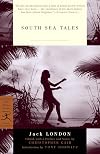
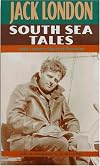
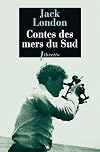
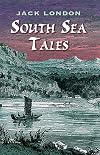
South Sea Tales
by Jack London
On This Page
Description
Set sail for nautical adventure with Jack London, the author of the action/adventure classic Call of the Wild. These stories are set on islands, ships, and the open sea, and all offer the vivid descriptions and bracing action for which London was best known. A must-read for fans of ripping sea yarns..
Tags
Recommendations


























Member Recommendations
Member Reviews
Estos cuentos aventureros, a veces nostálgicos y otras violentos, ofrecen una visión ambivalente del colonialismo: en ocasiones lo idealizan, en otras lo critican, y en algunos casos —lamentablemente— caen en estereotipos racistas. Sin embargo, cada relato destaca por su trama bien definida, sus personajes memorables y, sobre todo, por un dominio excepcional de los escenarios, que casi se convierten en protagonistas por derecho propio.
En general, todos son de gran calidad, pero si tuviera que elegir uno, me quedaría con Koolau, el leproso: combina aventura, profundidad psicológica y un retrato crudo de la exclusión social.
En general, todos son de gran calidad, pero si tuviera que elegir uno, me quedaría con Koolau, el leproso: combina aventura, profundidad psicológica y un retrato crudo de la exclusión social.
I enjoyed this collection a lot more than I thought I would. Some stories are much better than others, as is the case in general with these sorts of collections, but on the whole, I thought each story had something of interest to offer. What surprised me the most was London’s portrayal of the harsh realities of colonialism and how the islanders suffer from colonial greed and brutality. The sympathy to the islanders was what drew me to many of these stories, since these are, to some extent, criticisms of the colonial way.
Favorites from this collection: The House of Mapuhi, Mauki, “Yah! Yah Yah!” The Inevitable White Man. There were no stories in this collection that I straight up disliked, but those four were ones that I greatly show more enjoyed. London’s depiction of the islands effortlessly drew me in; they were so detailed and vibrant, that I felt as if I were there. I also loved his characters; they felt so real, that I can’t help but think that they must have been based on real people.
Definitely pick it up if you’re a London fan; if you’re at all interested in colonial writings, this is something to check out as well. I wouldn’t say it’s a must-read, but it’s interesting and provides some insight to life in the colonized islands.
Also posted on Purple People Readers. show less
Favorites from this collection: The House of Mapuhi, Mauki, “Yah! Yah Yah!” The Inevitable White Man. There were no stories in this collection that I straight up disliked, but those four were ones that I greatly show more enjoyed. London’s depiction of the islands effortlessly drew me in; they were so detailed and vibrant, that I felt as if I were there. I also loved his characters; they felt so real, that I can’t help but think that they must have been based on real people.
Definitely pick it up if you’re a London fan; if you’re at all interested in colonial writings, this is something to check out as well. I wouldn’t say it’s a must-read, but it’s interesting and provides some insight to life in the colonized islands.
Also posted on Purple People Readers. show less
A theme current in much of London's work is a Darwinian struggle to survive. His works epitomize a sort of literary naturalism. And never more so than in the collection of stories contained in South Sea Tales. Probably the most notable of them is the last one in the collection, "The Seed of McCoy," where a schooner in distress anchors outside Pitcairn's Island, the home of the descendants who mutinied aboard the HMS Bounty. During the course of the story, McCoy recounts the fate of the mutineers, and the captain of the endangered schooner realizes it is the blood of those men that runs through McCoy's veins and is all that stands between him and death. "The Seed of McCoy" is also one of London's best pure adventure tales, with disaster show more nipping at the heels of the crew and captain unceasingly until the very end.
As South Sea stories go, these are among the very best. But always look beneath the mere adventure to the motivations that power London's stories. The White Man's Burden, the natural virtues of the Wild Men of the islands, the overwhelming forces of nature--they are all there commenting on our ability to survive. show less
As South Sea stories go, these are among the very best. But always look beneath the mere adventure to the motivations that power London's stories. The White Man's Burden, the natural virtues of the Wild Men of the islands, the overwhelming forces of nature--they are all there commenting on our ability to survive. show less
I found these stories quite gripping at times. The South Pacific islands weren't holiday destinations in the nineteenth-century but were riddled with hurricanes, cannibals and disease, a perfect setting for these stories. Also the narrator does a great job in bringing these stories to life.
Jack London is still a modern writer. He did live in the 19th and very early 20th centuries but his writing still seems fresh and current. His South Sea Tales do speak of the racism of the time but his writing about the people of the islands is respectful and admiring. In some stories the characters with bad characters are the white Americans and the good people are the islanders. London gathered his information about the South Pacific on his sailing trip on the Snark, a sailing ship he had built to his specifications. It was a costly trip, the ship was badly built and had to be nearly rebuilt in Hawaii. He and most of the crew became very ill from various tropical diseases and London spent several months in an Australian hospital show more before he was well enough to travel home to California. But the firsthand knowledge he gains informs the stories and makes them very real. show less
Good short stories on XIX century adventures in the Pacific, vivid, imaginative, but dated perhaps in its handling of les Noirs
Members
- Recently Added By
Lists

The Works of Jack London
44 works; 1 member
Author Information

1,806+ Works 81,940 Members
One of the pioneers of 20th century American literature, Jack London specialized in tales of adventure inspired by his own experiences. London was born in San Francisco in 1876. At 14, he quit school and became an "oyster pirate," robbing oyster beds to sell his booty to the bars and restaurants in Oakland. Later, he turned on his pirate show more associates and joined the local Fish Patrol, resulting in some hair-raising waterfront battles. Other youthful activities included sailing on a seal-hunting ship, traveling the United States as a railroad tramp, a jail term for vagrancy and a hazardous winter in the Klondike during the 1897 gold rush. Those experiences converted him to socialism, as he educated himself through prolific reading and began to write fiction. After a struggling apprenticeship, London hit literary paydirt by combining memories of his adventures with Darwinian and Spencerian evolutionary theory, the Nietzchean concept of the "superman" and a Kipling-influenced narrative style. "The Son of the Wolf"(1900) was his first popular success, followed by 'The Call of the Wild" (1903), "The Sea-Wolf" (1904) and "White Fang" (1906). He also wrote nonfiction, including reportage of the Russo-Japanese War and Mexican revolution, as well as "The Cruise of the Snark" (1911), an account of an eventful South Pacific sea voyage with his wife, Charmian, and a rather motley crew. London's body broke down prematurely from his rugged lifestyle and hard drinking, and he died of uremic poisoning - possibly helped along by a morphine overdose - at his California ranch in 1916. Though his massive output is uneven, his best works - particularly "The Call of the Wild" and "White Fang" - have endured because of their rich subject matter and vigorous prose. (Bowker Author Biography) show less
Some Editions
Series
Belongs to Publisher Series
Work Relationships
Contains
Mauki by Jack London
Common Knowledge
- Canonical title
- South Sea Tales
- Original title
- South Sea Tales
- Alternate titles*
- Die Perle
- Original publication date
- 1911
- Important places*
- Stille Südsee
- First words
- Despite the heavy clumsiness of her lines, the Aorai handled easily in the light breeze, and her captain ran her well in before he hove to just outside the suck of the surf.
- Last words
- (Click to show. Warning: May contain spoilers.)"And now," said McCoy, "I must see about getting back to Pitcairn."
- Original language*
- Englisch
*Some information comes from Common Knowledge in other languages. Click "Edit" for more information.
Classifications
Statistics
- Members
- 642
- Popularity
- 45,208
- Reviews
- 11
- Rating
- (3.76)
- Languages
- 12 — Czech, Danish, Dutch, English, Estonian, French, German, Italian, Norwegian (Bokmål), Portuguese, Spanish, Swedish
- Media
- Paper, Audiobook, Ebook
- ISBNs
- 158
- UPCs
- 1
- ASINs
- 38