On This Page
Description
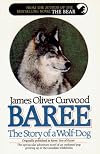
The follow-up to his popular 1914 novel Kazan, Baree, Son of Kazan follows the life of little Baree, the wolf/dog mix that is the son of the noble Kazan. Through a perilous chain of events, Baree becomes separated from the pack and is eventually rescued by a young girl and her father, a trapper. This gripping novel is a must-read for Jack London fans..
Tags
Recommendations















Member Reviews
3.5 stars rounded up. The beginning third of the book is a young Baree learning to survive in the wild which doesn't interest me so much. As far as the type of melodramatic story common for when it was first published in 1017, it is pretty typical. I overall enjoyed the book and will provide exerpts so you can get a flavor of the book.
I remember reading the book before this one, Kazan the Wolf Dog, and liking it more.
Another common theme is a run in with wolves:
A red ferocity grew in Baree’s eyes as he snarled in the direction of last night’s fight with the wolves. They were no longer his people. They were no longer of his blood. Never again could the hunt call lure him or the voice of the pack rouse the old longing. In him there show more was a thing newborn, an undying hatred for the wolf, a hatred that was to grow in him until it became like a disease in his vitals, a thing ever present and insistent, demanding vengeance on their kind. Last night he had gone to them a comrade. Today he was an outcast. Cut and maimed, bearing with him scars for all time, he had learned his lesson of the wilderness. Tomorrow, and the next day, and for days after that without number, he would remember the lesson well.
After the call of wild part, Baree is befriended by a part native lady:
'That was the wonder of it. She had been reckless—and Baree had not bitten her! It was then, with her eyes shining at Pierrot, and the smile fading slowly from her lips, that she spoke softly the word “Baree,” which in her tongue meant “the wild dog”—a little brother of the wolf.'
Our fair maiden is pursued by an evil villian Bush McTaggart. The story has enough expected moments when you think all is lost. There is death but not the kind us dog lovers hate. I liked this bit regarding dogs and death:
'No man has ever looked clearly into the mystery of death as it is impressed upon the senses of the northern dog. It comes to him, sometimes, with the wind. Most frequently it must come with the wind, and yet there are ten thousand masters in the northland who will swear that their dogs have given warning of death hours before it actually came; and there are many of these thousands who know from experience that their teams will stop a quarter or half a mile from a strange cabin in which there lies unburied dead.'
One final bit to set the mood of the book:
'If old Tuboa had been there that night it is possible he would have read strange warnings in the winds that whispered now and then softly in the treetops, Ie was such a night; a night when the Red Gods whisper low among themselves, a carnival of glory in which even the dipping shadows and the high stars seemed to quiver with the life of a potent language.'
So I enjoyed the book but like parts with people and dogs interacting. show less
I remember reading the book before this one, Kazan the Wolf Dog, and liking it more.
Another common theme is a run in with wolves:
A red ferocity grew in Baree’s eyes as he snarled in the direction of last night’s fight with the wolves. They were no longer his people. They were no longer of his blood. Never again could the hunt call lure him or the voice of the pack rouse the old longing. In him there show more was a thing newborn, an undying hatred for the wolf, a hatred that was to grow in him until it became like a disease in his vitals, a thing ever present and insistent, demanding vengeance on their kind. Last night he had gone to them a comrade. Today he was an outcast. Cut and maimed, bearing with him scars for all time, he had learned his lesson of the wilderness. Tomorrow, and the next day, and for days after that without number, he would remember the lesson well.
After the call of wild part, Baree is befriended by a part native lady:
'That was the wonder of it. She had been reckless—and Baree had not bitten her! It was then, with her eyes shining at Pierrot, and the smile fading slowly from her lips, that she spoke softly the word “Baree,” which in her tongue meant “the wild dog”—a little brother of the wolf.'
Our fair maiden is pursued by an evil villian Bush McTaggart. The story has enough expected moments when you think all is lost. There is death but not the kind us dog lovers hate. I liked this bit regarding dogs and death:
'No man has ever looked clearly into the mystery of death as it is impressed upon the senses of the northern dog. It comes to him, sometimes, with the wind. Most frequently it must come with the wind, and yet there are ten thousand masters in the northland who will swear that their dogs have given warning of death hours before it actually came; and there are many of these thousands who know from experience that their teams will stop a quarter or half a mile from a strange cabin in which there lies unburied dead.'
One final bit to set the mood of the book:
'If old Tuboa had been there that night it is possible he would have read strange warnings in the winds that whispered now and then softly in the treetops, Ie was such a night; a night when the Red Gods whisper low among themselves, a carnival of glory in which even the dipping shadows and the high stars seemed to quiver with the life of a potent language.'
So I enjoyed the book but like parts with people and dogs interacting. show less
Book 2 (Book 1 is "Kazan")
Baree, Son of Kazan is a novel about a wild wolfdog pup sired by Kazan (1/4 wolf, 3/4 dog) and born of blind Greywolf (pure wolf). It explores Baree's survival after he is separated as a young pup from his parents. He eventually is cared for by Nepeese and her father Pierrot, a trapper.
He bonds with Nepeese, and the novel develops from there. James Oliver Curwood took the well-used "a boy and his dog" formula, and created a great adventure story about a girl and her dog.He used this theme of a strong heroine, rather than a male hero, in many of his stories.
-Wikipedia
Baree, Son of Kazan is a novel about a wild wolfdog pup sired by Kazan (1/4 wolf, 3/4 dog) and born of blind Greywolf (pure wolf). It explores Baree's survival after he is separated as a young pup from his parents. He eventually is cared for by Nepeese and her father Pierrot, a trapper.
He bonds with Nepeese, and the novel develops from there. James Oliver Curwood took the well-used "a boy and his dog" formula, and created a great adventure story about a girl and her dog.He used this theme of a strong heroine, rather than a male hero, in many of his stories.
-Wikipedia
3.5 stars rounded up. The beginning third of the book is a young Baree learning to survive in the wild which doesn't interest me so much. As far as the type of melodramatic story common for when it was first published in 1017, it is pretty typical. I overall enjoyed the book and will provide exerpts so you can get a flavor of the book.
I remember reading the book before this one, Kazan the Wolf Dog, and liking it more.
Another common theme is a run in with wolves:
A red ferocity grew in Baree’s eyes as he snarled in the direction of last night’s fight with the wolves. They were no longer his people. They were no longer of his blood. Never again could the hunt call lure him or the voice of the pack rouse the old longing. In him there show more was a thing newborn, an undying hatred for the wolf, a hatred that was to grow in him until it became like a disease in his vitals, a thing ever present and insistent, demanding vengeance on their kind. Last night he had gone to them a comrade. Today he was an outcast. Cut and maimed, bearing with him scars for all time, he had learned his lesson of the wilderness. Tomorrow, and the next day, and for days after that without number, he would remember the lesson well.
After the call of wild part, Baree is befriended by a part native lady:
'That was the wonder of it. She had been reckless—and Baree had not bitten her! It was then, with her eyes shining at Pierrot, and the smile fading slowly from her lips, that she spoke softly the word “Baree,” which in her tongue meant “the wild dog”—a little brother of the wolf.'
Our fair maiden is pursued by an evil villian Bush McTaggart. The story has enough expected moments when you think all is lost. There is death but not the kind us dog lovers hate. I liked this bit regarding dogs and death:
'No man has ever looked clearly into the mystery of death as it is impressed upon the senses of the northern dog. It comes to him, sometimes, with the wind. Most frequently it must come with the wind, and yet there are ten thousand masters in the northland who will swear that their dogs have given warning of death hours before it actually came; and there are many of these thousands who know from experience that their teams will stop a quarter or half a mile from a strange cabin in which there lies unburied dead.'
One final bit to set the mood of the book:
'If old Tuboa had been there that night it is possible he would have read strange warnings in the winds that whispered now and then softly in the treetops, Ie was such a night; a night when the Red Gods whisper low among themselves, a carnival of glory in which even the dipping shadows and the high stars seemed to quiver with the life of a potent language.'
So I enjoyed the book but like parts with people and dogs interacting. show less
I remember reading the book before this one, Kazan the Wolf Dog, and liking it more.
Another common theme is a run in with wolves:
A red ferocity grew in Baree’s eyes as he snarled in the direction of last night’s fight with the wolves. They were no longer his people. They were no longer of his blood. Never again could the hunt call lure him or the voice of the pack rouse the old longing. In him there show more was a thing newborn, an undying hatred for the wolf, a hatred that was to grow in him until it became like a disease in his vitals, a thing ever present and insistent, demanding vengeance on their kind. Last night he had gone to them a comrade. Today he was an outcast. Cut and maimed, bearing with him scars for all time, he had learned his lesson of the wilderness. Tomorrow, and the next day, and for days after that without number, he would remember the lesson well.
After the call of wild part, Baree is befriended by a part native lady:
'That was the wonder of it. She had been reckless—and Baree had not bitten her! It was then, with her eyes shining at Pierrot, and the smile fading slowly from her lips, that she spoke softly the word “Baree,” which in her tongue meant “the wild dog”—a little brother of the wolf.'
Our fair maiden is pursued by an evil villian Bush McTaggart. The story has enough expected moments when you think all is lost. There is death but not the kind us dog lovers hate. I liked this bit regarding dogs and death:
'No man has ever looked clearly into the mystery of death as it is impressed upon the senses of the northern dog. It comes to him, sometimes, with the wind. Most frequently it must come with the wind, and yet there are ten thousand masters in the northland who will swear that their dogs have given warning of death hours before it actually came; and there are many of these thousands who know from experience that their teams will stop a quarter or half a mile from a strange cabin in which there lies unburied dead.'
One final bit to set the mood of the book:
'If old Tuboa had been there that night it is possible he would have read strange warnings in the winds that whispered now and then softly in the treetops, Ie was such a night; a night when the Red Gods whisper low among themselves, a carnival of glory in which even the dipping shadows and the high stars seemed to quiver with the life of a potent language.'
So I enjoyed the book but like parts with people and dogs interacting. show less
Heartbreaking and beautiful. His books alway make me cry, but leave me feeling hopeful.
Cause & Effect, Story Elements, Compare/Contrast
Traduit par Léon Bocquet, Illustrations de Harry Eliott
Ratings
Members
- Recently Added By
Lists

Wolf hybrids (half wolf, half dog) -- children's/young adult fiction
19 works; 1 member

Dogs -- children's/young adult fiction
1,317 works; 9 members

Nonhuman Protagonists
245 works; 35 members

1910s
90 works; 16 members

Out of Copyright
244 works; 14 members

Best Books About Animals
143 works; 46 members

Best Dog Stories
109 works; 13 members

Books Read in 2023
5,638 works; 147 members
Author Information

112+ Works 2,209 Members
James Oliver Curwood lived most of his life in Owosso, Michigan, where he was born on June 12, 1878. His first novel was The Courage of Captain Plum (1908) and he published one or two novels each year thereafter, until his death on August 13, 1927. Owosso residents honor his name to this day, and Curwood Castle (built in 1922) is the town's main show more tourist attraction. During the 1920s Curwood became one of America's best selling and most highly paid authors. This was the decade of his lasting classics The Valley of Silent Men (1920) and The Flaming Forest (1921). He and his wife Ethel were outdoors fanatics and active conservationists show less
Series

Belongs to Publisher Series
Work Relationships
Is contained in
Common Knowledge
- Canonical title
- Baree, Son of Kazan
- Original title
- Baree, Son of Kazan
- Alternate titles
- A Son of Kazan
- Original publication date
- 1917
- First words
- To Baree, for many days after he was born, the world was a vast gloomy cavern.
- Last words
- (Click to show. Warning: May contain spoilers.)And Carvel, out of his heart, thanked God.
- Disambiguation notice
- Baree, Son of Kazan (Republished as: Baree, the Story of a Wolf-Dog)
This series has been separated at least twice from a Manga series of the same name. The Manga series is now named "Kazan Manga".
Classifications
Statistics
- Members
- 221
- Popularity
- 146,835
- Reviews
- 6
- Rating
- (3.74)
- Languages
- 13 — Czech, Danish, Dutch, English, Finnish, French, German, Norwegian (Bokmål), Norwegian, Polish, Russian, Spanish, Swedish
- Media
- Paper, Audiobook, Ebook
- ISBNs
- 76
- ASINs
- 21